Complete Guide to Hikone Castle: A Thorough Explanation of its National Treasure Keep, Important Cultural Properties, History, and Access
Located in Hikone City, Shiga Prefecture, Hikone Castle is a magnificent castle built in the early Edo period and is one of the most valuable castles in Japan with an existing keep. It boasts numerous important cultural properties, including the keep designated as a National Treasure, and is also designated as a Special Historic Site. This article provides a detailed explanation of everything you need to know before visiting Hikone Castle, from its historical value and architectural highlights to tourist information and access methods.
What is Hikone Castle?: An Overview of a Famous Castle
Hikone Castle is located on the eastern shore of Lake Biwa and served as the political and economic center of the Hikone Domain for approximately 260 years as the residence of the Ii family. It was built over approximately 20 years by Ii Naotsugu and Naotaka, sons of Ii Naomasa, one of the Four Heavenly Kings of Tokugawa, following the wishes of their father.
Basic Information on Hikone Castle
- Location: 1-1 Konki-cho, Hikone City, Shiga Prefecture
- Year of Construction: Completed in 1622 (Genna 8)
- Lord: Ii Family (Fudai Daimyo)
- Rice Yield: 300,000 koku (later 350,000 koku)
- Other Name: Konki-jo Castle
- Designation: National Treasure (Keep), National Special Historic Site, Important Cultural Property (Turrets, Gates, etc.)
Hikone Castle is one of the five keeps designated as National Treasures, along with Himeji Castle, Matsumoto Castle, Inuyama Castle, and Matsue Castle, and is also counted as one of the 12 existing keeps.
The History of Hikone Castle: From Construction to the Present
The Circumstances of Construction and Tokugawa Ieyasu’s Strategy
Ii Naomasa, who greatly contributed to the Eastern Army’s victory at the Battle of Sekigahara (1600), was granted Sawayama Castle, the former territory of Ishida Mitsunari, by Tokugawa Ieyasu. However, Naomasa died in 1602 from wounds sustained in the Battle of Sekigahara. His son, Ii Naotsugu (later Naotaka took de facto command), inherited his will and planned the construction of a new castle with superior defenses.
The chosen site for the castle was Konkiyama, facing Lake Biwa. This location was a strategic point connecting Kyoto and the northern provinces, controlling the Tokaido and Nakasendo roads. It is believed that Tokugawa Ieyasu ordered the construction of a strong castle here as a defense against the Toyotomi family in Osaka.
Construction Process and Technology
Construction of Hikone Castle began in 1604 and was completed in 1622. This construction utilized the “Tenka Fushin” system, mobilizing daimyo (feudal lords) from across the country. Notably, the “relocated castle” method was employed, involving the relocation and reuse of building materials from other castles.
- Tenshu: The prevailing theory is that it was relocated from Otsu Castle.
- Tenbin Yagura: Relocated from Nagahama Castle.
- Taiko-mon Yagura: Relocated from Sawayama Castle.
- Nishinomaru Sanju Yagura: Possibly relocated from Odani Castle.
This method significantly shortened the construction period and, by utilizing buildings with combat experience, resulted in a highly defensible castle.
The Ii Family and the Turmoil of the Late Edo Period
The Ii family of the Hikone Domain held a special position within the Tokugawa Shogunate. In particular, Ii Naosuke, the Grand Elder during the late Edo period, played a crucial role in Japanese history.
Ii Naosuke assumed the position of Grand Elder in 1858 and signed the Treaty of Amity and Commerce between Japan and the United States. He also carried out the Ansei Purge, which suppressed opposition. However, on March 3, 1860, he was attacked and assassinated by ronin from the Mito domain outside the Sakuradamon Gate of Edo Castle (the Sakuradamon Incident).
This incident symbolized the decline of the shogunate’s authority and accelerated the movement towards the Meiji Restoration.
Hikone Castle After the Meiji Restoration
After the Meiji Restoration, while many castles were demolished under the castle demolition decree, Hikone Castle also faced the threat of demolition at one point. However, an anecdote remains that in 1878, Emperor Meiji visited Hikone during his tour of the Hokuriku region, and its preservation was decided thanks to a petition by Okuma Shigenobu.
In 1952, the castle tower was designated a National Treasure, and in 1956, the entire castle grounds were designated a Special Historic Site. Currently, it is a valuable cultural heritage site that almost perfectly preserves its Edo period appearance, attracting over 500,000 tourists annually.
National Treasure Castle Tower: The Charm of Hikone Castle Tower
Architectural Style and Characteristics of the Castle Tower
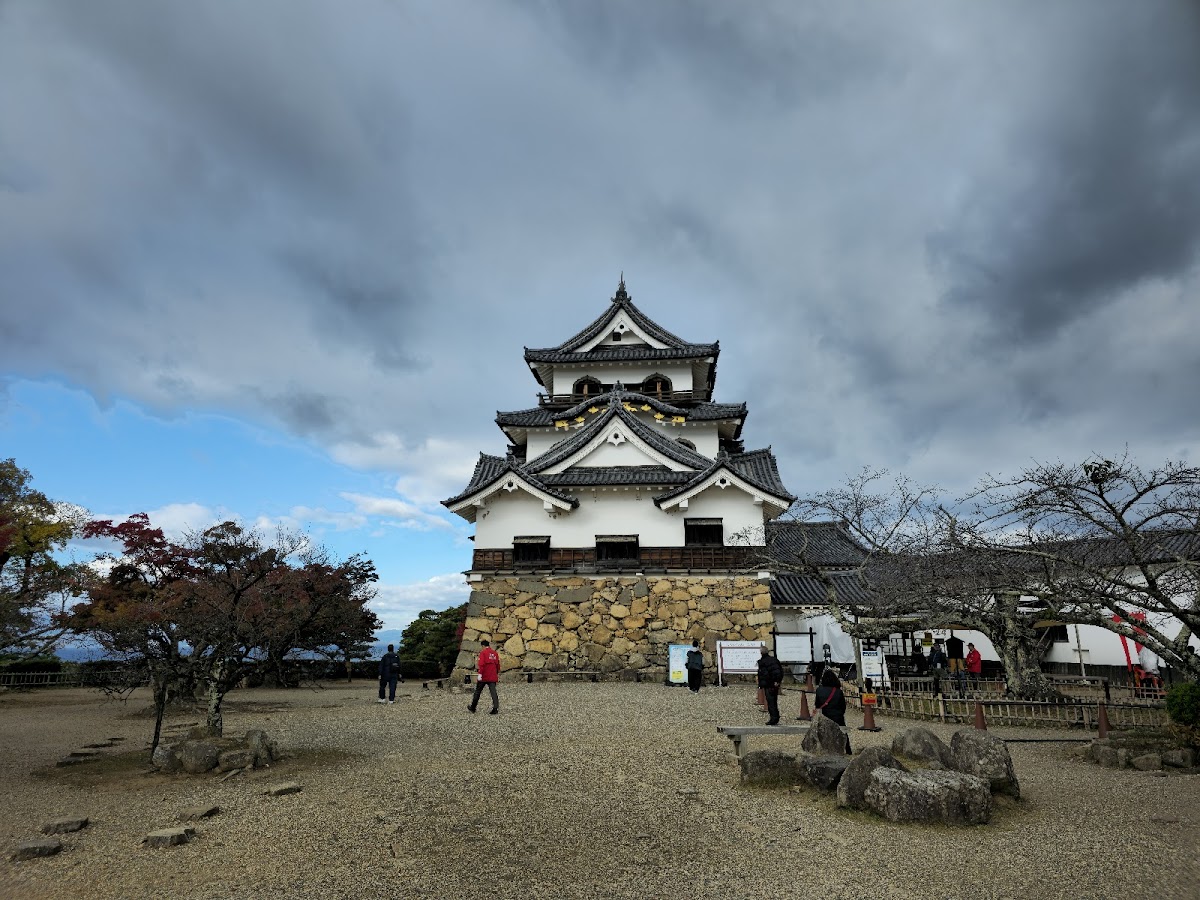
Hikone Castle’s castle tower is a complex watchtower-type tower with a three-story exterior and three floors inside with one basement level. At approximately 21 meters tall, it is relatively small compared to other National Treasure castle towers, but it is highly regarded for its beauty and exquisite craftsmanship.
Main Features of the Castle Tower:
- Diversity of Gables: Various types of gables, such as hipped gables, gabled roofs, and curved gables, are combined to form a complex and elegant exterior.
- Flower-shaped windows: Uniquely shaped windows, also known as flower-shaped windows, are strategically placed, enhancing the decorative appeal.
- Gold-leafed shachi: Gold-leafed shachi are placed at both ends of the roof, signifying dignity.
- Black and white plaster: Black and white plaster are used on the walls, creating a beautiful contrast.
- Steep staircase: The interior staircase has a steep incline of approximately 60 degrees, a design choice made with defense in mind.
View from the castle tower
From the top floor of the castle tower, you can enjoy a panoramic view of Lake Biwa, Hikone city, and Mount Ibuki. In particular, it’s a spectacular spot where you can see Chikubu Island floating in Lake Biwa, and on clear days, even the Hira mountain range. You can enjoy the scenery of each season, from cherry blossoms in spring to autumn leaves in fall.
Important Cultural Property Buildings: Turrets and Gates
Besides the main keep, Hikone Castle has many other buildings designated as Important Cultural Properties.
Tenbin Yagura (Balance Turret)
The Tenbin Yagura is one of Hikone Castle’s representative turrets, with a rare structure symmetrically positioned on both sides of the corridor bridge. Its name comes from its symmetrical design, like a balance scale.
- Structure: Two-story turrets positioned at both ends of the bridge
- Function: A defensive structure capable of attacking enemies crossing the bridge from both sides
- Features: Believed to have been relocated from Nagahama Castle, it has a practical design.
The corridor bridge also had the function of a “drop bridge,” which could be lowered when the enemy attacked.
Taikomon Yagura (Drum Gate Turret)
The Taikomon Yagura is an important defensive stronghold protecting the entrance to the main keep. This tower was named after the drum that was beaten here to announce the time.
- Structure: Two-story tower gate
- Function: Defensive structure protecting a key point on the approach to the castle
- Features: Believed to have been relocated from Sawayama Castle
Nishinomaru Three-Story Tower
The Nishinomaru Three-Story Tower is an important tower protecting the western side of Hikone Castle. It has a three-story structure and played a role in defending against enemies approaching from the direction of Lake Biwa.
- Structure: Three-story turret
- Function: Western defense and surveillance
- Features: It has been suggested that it may have been relocated from Odani Castle.
Other Important Cultural Properties
- Ninomaru Sawaguchi Tamon Turret: A long, barrack-like turret used for storing weapons and provisions.
- Stable: A rare stable still existing within the castle grounds, designated as an Important Cultural Property.
- Tenshu-tsuki Turret and Tamon Turret: Defensive facilities attached to the castle tower.
Genkyu-en Garden: A daimyo garden designated as a National Place of Scenic Beauty
Genkyu-en Garden is a daimyo garden located northeast of Hikone Castle and is designated as a National Place of Scenic Beauty. It is also recognized as a Japan Heritage site, along with the adjacent Rakuraku-en Garden, as part of “Lake Biwa and its Waterside Landscape – Water Heritage of Prayer and Life.”
History and Characteristics of Genkyu-en Garden
Genkyu-en Garden was constructed in 1677 (Enpo 5) by Ii Naooki, the fourth lord of the domain. It is a pond-centered strolling garden modeled after the Eight Views of Xiaoxiang and the Eight Views of Omi in China, featuring islands in a large pond and skillfully placed bridges and tea houses.
Main Highlights:
- Hōshōdai: A tea house facing the pond, offering a spectacular view of the garden and castle tower.
- Ōike: A pond modeled after Lake Biwa, where you can enjoy watching carp swim.
- Gyoyakushō: A pond designed to resemble fish leaping.
- Ryūgabashi: A stone bridge shaped like a reclining dragon.
- Rinchikaku: The former villa of the feudal lord.
Beauty in Every Season
Genkyūen Garden displays different expressions in each of the four seasons. You can enjoy different beauty depending on when you visit: cherry blossoms in spring, fresh greenery in early summer, autumn leaves in fall, and snowscapes in winter. Especially during the autumn foliage season, nighttime illuminations are held, creating a magical atmosphere.
Hikone Castle Museum: The History and Culture of the Ii Family
The Hikone Castle Museum, built on the site of the former main palace, houses approximately 90,000 items, including works of art, crafts, and historical documents passed down through the Ii family.
Main Exhibits
- Armor Held by the Ii Family: Including Ii Naomasa’s “Red Armor”
- Swords: Numerous famous swords, including National Treasures and Important Cultural Properties
- Noh Masks and Costumes: Items related to Noh theater, which the Ii family cherished
- Tea Ceremony Utensils: Famous tea bowls and tea caddies
- Historical Documents: Valuable historical materials that convey the history of the Ii family
- Paintings: Works by the Kano school and others
The exhibits are regularly changed, so there are new discoveries with each visit. You can also visit a part of the reconstructed main palace, experiencing the living space of a daimyo (feudal lord).
Hikonyan: Hikone Castle’s Mascot Character
Hikonyan was created in 2007 as the mascot character for the “400th Anniversary of the Construction of Hikone Castle, a National Treasure.” A white cat character wearing the red helmet of the Ii family, its adorable appearance has made it popular nationwide, and it continues to serve as Hikone City’s mascot character today.
Hikonyan’s Appearance Schedule
Hikonyan appears daily inside Hikone Castle and the Hikone Castle Museum. Appearance times vary seasonally, so it’s recommended to check the official website for the latest information.
General Appearance Schedule:
- 1st Appearance: Around 10:30 AM
- 2nd Appearance: Around 1:00 PM
- 3rd Appearance: Around 3:00 PM
Hikonyan cannot speak, but its unique movements and performances entertain tourists. Photo opportunities are available, making it a popular spot enjoyed by both children and adults.
Hikone Castle Highlights: Sightseeing Routes and Estimated Time Required
Recommended Sightseeing Route
Standard Course (Estimated Time: Approx. 2-3 Hours)
- Omote-mon Bridge → 2. Tenbin-yagura Tower → 3. Taiko-mon Tower → 4. Tenshukaku (Main Tower) → 5. Nishinomaru (Western Bailey) → 6. Genkyu-en Garden → 7. Hikone Castle Museum
In-Depth Course (Estimated Time: Approx. 4-5 Hours)
In addition to the above, this course also includes visits to Ninomaru (Second Bailey), Yamazaki-kuruwa (Yamazaki Bailey), and Kuro-mon Gate Ruins, allowing you to fully appreciate the entire castle complex. It also includes time to leisurely view the exhibits at the museum.
Points to Note When Visiting the Castle
- Steep Stairs: The stairs inside the castle keep are approximately 60 degrees steep, so comfortable clothing and shoes are essential.
- Crowded Seasons: The castle is especially crowded during cherry blossom season (early April), Golden Week, and autumn foliage season (mid-to-late November).
- Waiting Time to Enter the Castle Keep: During peak times, you may have to wait 30 minutes to over an hour to enter the castle keep.
- Photo Spots: The castle keep from Genkyu-en Garden, the Tenbin-yagura tower and corridor bridge, and the view of Lake Biwa from the castle keep are must-sees.
Enjoying the Castle by Season
Spring (Late March to Early April): Approximately 1,200 cherry trees bloom, and the castle is selected as one of “Japan’s Top 100 Cherry Blossom Viewing Spots.” Nighttime cherry blossom illuminations are also held.
Summer (July to August): The fresh greenery is beautiful, and the castle is relatively less crowded. Heat protection is essential.
Autumn (Mid-to-Late November): The autumn leaves are at their peak, especially the spectacular foliage at Genkyu-en Garden. A light-up event is also held.
Winter (December-February): The snow-covered castle tower is magical, and with fewer tourists, it’s a quiet and peaceful place to visit.
Tourist Spots Around Hikone Castle
Yumekyobashi Castle Road
Located about a 5-minute walk from Hikone Castle, this shopping street recreates an Edo-period castle town. The rows of townhouses with white walls and black latticework create a retro atmosphere. Omi beef restaurants, Japanese confectionery shops, and souvenir shops line the street, offering opportunities for street food and shopping.
Yonbancho Square
This area recreates a Taisho-era townscape, featuring cafes, general stores, and galleries. Its retro-modern atmosphere is its charm.
Ryotanji Temple
The family temple of the Ii clan, and the burial place of Ii Naosuke. The gardens are beautiful, and it’s a place where you can quietly feel the history.
Takejima and Chikubujima Islands
These islands float in Lake Biwa and can be accessed by sightseeing boat from Hikone Port. Chikubujima Island, in particular, is popular as a power spot, with places like Hogonji Temple and Tsukubusuma Shrine.
Access Information: How to Get to Hikone Castle
Access by Train
From JR Hikone Station
- Walking: Approximately 15 minutes
- Bus: Approximately 5 minutes by Hikone Castle Town Loop Bus, get off at “Hikone Castle” bus stop.
Access Time from Major Cities
- From Tokyo Station: Approximately 2 hours and 10 minutes by Tokaido Shinkansen to Maibara Station, then approximately 5 minutes by JR Tokaido Main Line to Hikone Station
- From Nagoya Station: Approximately 50 minutes by JR Tokaido Main Line Special Rapid Service
- From Kyoto Station: Approximately 45 minutes by JR Tokaido Main Line Special Rapid Service
- From Osaka Station: Approximately 1 hour and 10 minutes by JR Tokaido Main Line Special Rapid Service
Access by Car
Using Expressways
- Approximately 10 minutes from Meishin Expressway “Hikone IC”
- Approximately 15 minutes from Hokuriku Expressway “Maibara IC”
Parking Information
- There are several paid parking lots around Hikone Castle (approximately 400 yen/day for regular cars).
- During cherry blossom and autumn foliage seasons, it gets crowded, so using public transportation is recommended.
Convenient Transportation Options for Sightseeing
Hikone Castle Town Loop Bus
This bus circulates around major tourist spots such as Hikone Castle, Yumekyobashi Castle Road, and Yonbancho Square, starting from Hikone Station. A one-day pass (300 yen) is available for a more economical sightseeing experience.
Admission Fees and Opening Hours
Hikone Castle Admission Fees
- Hikone Castle Only: Adults 800 yen, Elementary and Junior High School Students 200 yen
- Hikone Castle + Genkyu-en Garden: Adults 800 yen, Elementary and Junior High School Students 200 yen (Combined Ticket)
- Hikone Castle + Hikone Castle Museum: Adults 1,500 yen, Elementary and Junior High School Students 550 yen (Combined Ticket)
- Hikone Castle + Genkyu-en Garden + Hikone Castle Museum: Adults 1,500 yen, Elementary and Junior High School Students 550 yen (Combined Ticket)
*Prices are subject to change, so please check the official website for the latest information.
Opening Hours
- Hikone Castle: 8:30 AM – 5:00 PM (Open all year round)
- Genkyu-en Garden: 8:30 AM – 5:00 PM (Open all year round)
- Hikone Castle Museum: 8:30 AM – 5:00 PM (Last entry at 4:30 PM, closed during the New Year holidays)
Cultural Value of Hikone Castle
Significance of National Treasure Designation
The reasons why Hikone Castle’s keep is designated a National Treasure are as follows:
- Ancient Construction: The keep, built in the early Edo period (completed in 1622), remains almost entirely in its original form.
- Advanced Architectural Techniques: Complex gable combinations and exquisite woodworking techniques.
- Historical Importance: A castle that functioned as a key point for the Tokugawa Shogunate’s control of western Japan.
- Excellent State of Preservation: It was not demolished after the Meiji Restoration and is preserved in good condition.
- Cultural Value: A valuable historical site showcasing the characteristics of Edo period castle architecture.
Hikone Castle as a Special Historic Site
Hikone Castle is designated as a National Special Historic Site for its entire castle grounds. Special Historic Sites are the highest rank of designation, limited to particularly important historical sites, and there are only about 60 such sites nationwide.
Reasons for Hikone Castle’s designation as a Special Historic Site:
- The layout (design) of the Edo period castle remains almost completely intact.
- Elements constituting the castle, such as the keep, turrets, gates, and moats, are well-preserved.
- The historical landscape of the entire castle grounds, including the daimyo garden (Genkyu-en), is maintained.
Efforts toward World Heritage Registration
Hikone Castle aims for World Heritage registration, following Himeji Castle, and the “Hikone Castle World Heritage Registration Promotion Council” has been established. The high value of the castle, having received dual designations as a National Treasure keep and a Special Historic Site, and its representation of the perfected form of Edo period castle architecture, are cited as the basis for World Heritage registration.
Preservation and Restoration of Hikone Castle
Continuous Preservation Activities
At Hikone Castle, continuous preservation and restoration activities are carried out to pass on the cultural property to future generations. Experts conduct surveys and restoration work, including seismic assessments of the keep and turrets, replacement of roof tiles, and restoration of the stone walls.
In recent years, as part of the Heisei-era major repairs, the entire roof of the keep was replaced, and the plaster walls were repainted. These works were carried out using traditional construction methods, providing an opportunity for the transmission of craftsmanship.
Citizen Participation in Preservation Activities
In Hikone City, citizen-participatory preservation activities are thriving, such as cleaning activities by citizen volunteers and weeding of the stone walls. Furthermore, awareness-raising activities are conducted by citizen groups, such as the “Citizens’ Association Supporting the Registration of Hikone Castle as a World Heritage Site.”
Recommended Information for Visiting Hikone Castle
Food & Gourmet Information
Omi Beef: Shiga Prefecture, including Hikone, is the production area of “Omi Beef,” one of Japan’s three major wagyu beef brands. There are many restaurants serving Omi Beef around Yumekyobashi Castle Road.
Funazushi: A traditional fermented food from Lake Biwa, characterized by its unique flavor.
Red Konnyaku: A specialty of Hikone, this konnyaku is colored red with iron(III) oxide.
Accommodation Information
There are various accommodations around Hikone Castle, from business hotels to traditional inns. Staying at a resort hotel on the shores of Lake Biwa and enjoying the lake scenery is also recommended. Furthermore, accommodations are concentrated around Hikone Station, making it convenient for sightseeing.
Souvenir Information
- Hikonyan Goods: A variety of items including plush toys, sweets, and stationery.
- Omi Beef Products: Tsukudani (simmered beef), curry, hamburgers, etc.
- Umoregi: A famous Hikone confection, a Japanese sweet made with mochi (rice cake) wrapped in monaka (wafer).
- Detchi Yokan: Steamed yokan (sweet bean jelly) wrapped in bamboo leaves.
Summary: Experience the Charm of Hikone Castle
Hikone Castle is a comprehensive historical and cultural heritage site with a variety of attractions, including its national treasure keep, important cultural properties such as turrets and gates, a beautiful daimyo garden, and a museum exhibiting valuable historical materials. The keep, a masterpiece of Edo-period castle architecture, strategically placed defensive structures, the Genkyu-en garden showcasing seasonal beauty, and the history and culture of the Ii family’s 350,000 koku domain continue to fascinate visitors.
It is easily accessible from major cities such as Tokyo, Nagoya, Osaka, and Kyoto, making day trips perfectly feasible. However, if you want to thoroughly explore the castle grounds and enjoy strolling through the surrounding castle town and sightseeing around Lake Biwa, a 1-night, 2-day trip is recommended.
Hikone Castle shows different faces depending on the time of year you visit: cherry blossom season, fresh green season, autumn foliage season, and snowy season. Meeting Hikonyan is also one of the highlights. Hikone Castle can be enjoyed by a wide range of people, from history buffs and architecture enthusiasts to garden lovers and families. Please do visit Hikone Castle. This national treasure castle with over 400 years of history will transport you to the world of the Edo period.