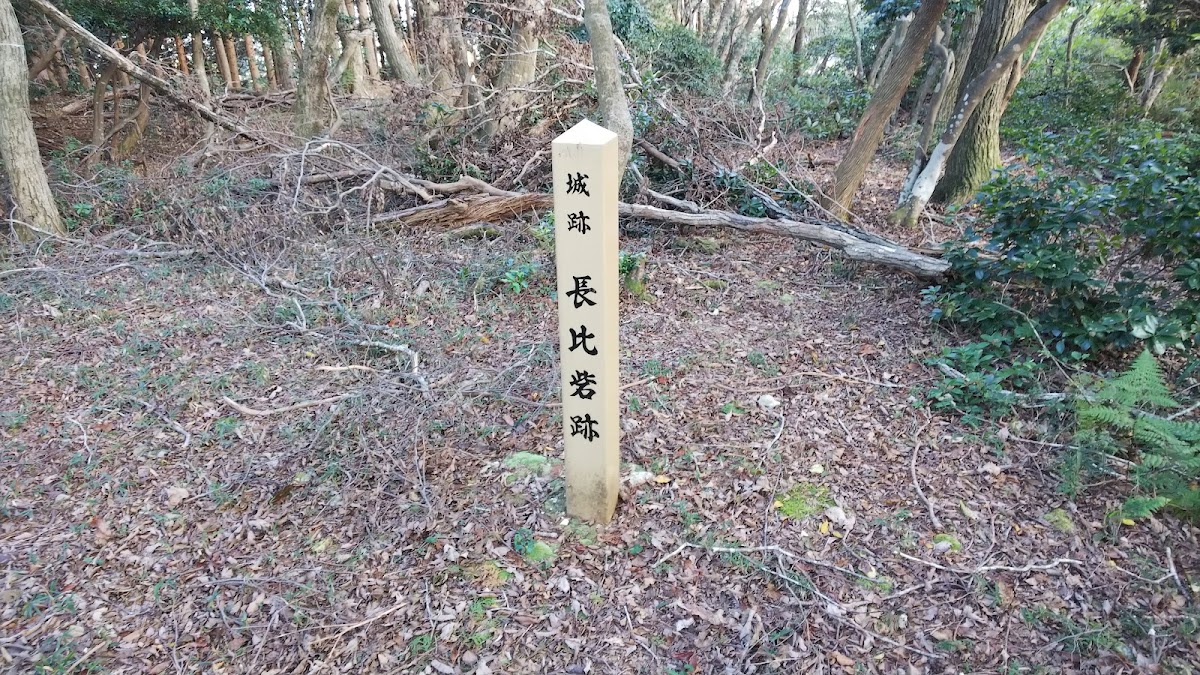
Takekurabe Castle (Maibara City, Shiga Prefecture) Complete Guide | History, Remains, and Access Information
What is Takekurabe Castle?
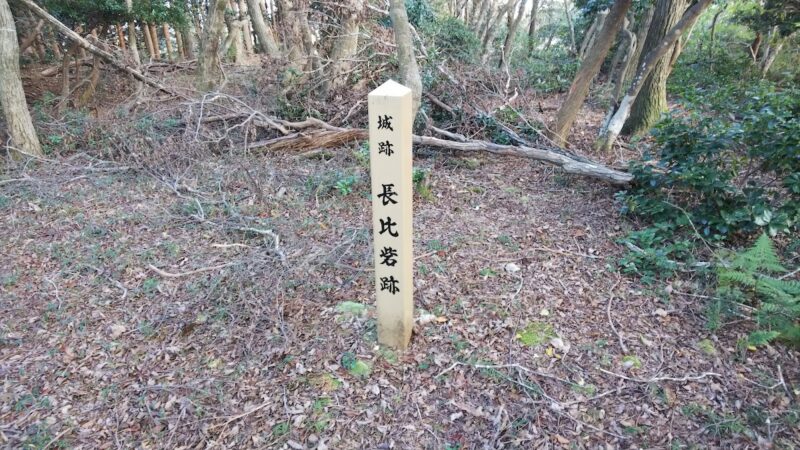
Takekurabe Castle (Takekurabe-jo) is a medieval mountain castle located on the summit of Mt. Noseyama (elevation 390.9m) in Kashiwabara, Maibara City, Shiga Prefecture. Also known as Takekurabe Fort, Noseyama Castle, and Noseyama Castle, it is a typical “border castle” built on the border between Omi and Mino provinces.
Mt. Noseyama, which branches off from Mt. Ibuki, is a strategically important location straddling Shiga and Gifu prefectures, and the castle ruins offer a view overlooking the Higashiyama Road (Nakasendo Road). Due to this strategic location, Takekurabe Castle functioned as an important base for border security and monitoring transportation routes.
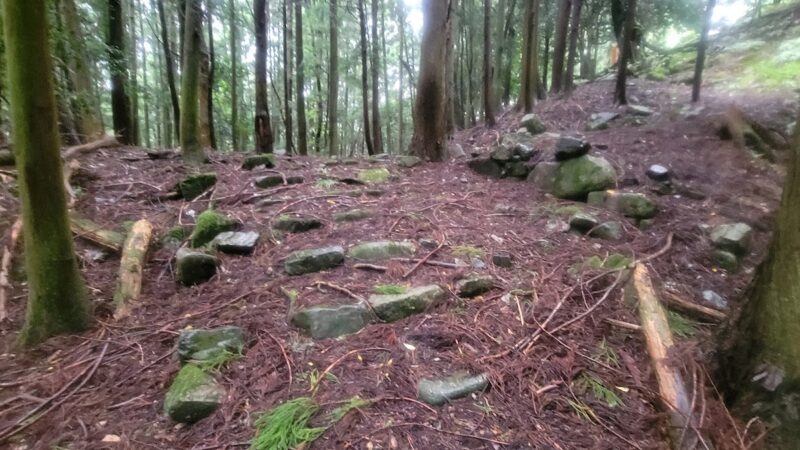
Even today, the layout, centered on the eastern and western baileys, remains well-preserved, and defensive remains such as gates, earthworks, and vertical moats are clearly visible, making it a valuable mountain castle site.
History of Nagahisa Castle
Background of Construction and Asai Nagamasa
The exact date of construction of Nagahisa Castle is unclear, but it is believed to have been developed in connection with Oda Nobunaga’s attack on the Asakura clan in 1570.
The Maibara region was a border area where multiple forces intersected: the Rokkaku clan of Konan, the Kyogoku clan of Kohoku, and the Asai clan. Furthermore, it bordered Mino Province (present-day Gifu Prefecture) to the east, making it a truly “border region” with high military tension.
Asai Nagamasa, despite being allied with Oda Nobunaga, betrayed Nobunaga in 1570, prioritizing his long-standing alliance with Asakura Yoshikage. This incident, known as the “Retreat from Kanegasaki,” forced Nobunaga to abandon his invasion of Echizen and retreat abruptly.
Role as a Border Castle
With his conflict with Nobunaga becoming decisive, Asai Nagamasa was compelled to construct a defensive line in preparation for an Oda army invasion. The Noseyama area, located on the border between Omi and Mino provinces, was truly the front line.
Nagahi Castle was built in a strategic location controlling the Higashiyama-do, a major highway, and functioned as a “border castle” to monitor and block enemy movements from the Mino region. It is believed that several other mountain castles, such as Sugawayama Fort, were also located in this area, forming a coordinated defensive network.
Abandonment and Aftermath
When the Asai clan was destroyed by Oda Nobunaga in 1572, it is presumed that Nagahi Castle ceased to serve its purpose. Historical records regarding the castle’s subsequent use are scarce, and details are unclear, but it is thought to have been abandoned with the end of the Sengoku period.
Even after losing its function as a castle, the remains on the summit of Noseyama Mountain are well-preserved, and today it attracts attention from castle researchers and history enthusiasts as a valuable Sengoku period mountain castle site.
Layout and Structure of Nagahisa Castle
Structure of Separate Castle Enclosures
The most distinctive feature of Nagahisa Castle is its layout, known as “separate castle enclosures.” This refers to a form in which two main enclosures, the East Enclosure and the West Enclosure, are arranged like independent castles, yet together form a single castle complex.
This arrangement, utilizing the summit of Noseyama Mountain, offered a defensive advantage: even if an attacker captured one enclosure, they would be counterattacked from the other. It also provided tactical flexibility, allowing resistance to continue from the other even if one enclosure fell.
Characteristics of the East Enclosure
The East Enclosure is positioned as the main enclosure of Nagahisa Castle and has a relatively large, flat surface. Earthen ramparts surround the enclosure, and particularly the northern and eastern ramparts, which remain at a height of 1-2 meters, convey their function as defensive structures to this day.
A gate (koguchi) is provided at the entrance to the East Enclosure, and its structure shows ingenuity in restricting enemy intrusion. From within the enclosure, the view opens up towards Mount Ibuki and the Mino region, giving a clear sense of its role as a surveillance point.
Features of the West Enclosure
The West Enclosure is slightly smaller than the East Enclosure, but possesses a highly independent structure. This enclosure is also surrounded by earthen ramparts, and the southern rampart, in particular, remains relatively well-preserved.
There is a saddle between the West and East Enclosures, serving as a connecting route between the two, and this section may also have incorporated defensive features. The West Enclosure offers views of the surrounding area and is ideally positioned for monitoring the Higashiyama Road.
Structure of the Enclosures
Multiple entrances have been identified at Nagahisa Castle, including different types such as flat entrances and square-shaped entrances.
A flat entrance is a relatively simple structure, utilizing a gap in the earthen rampart as an entry point. On the other hand, a square-shaped entrance is a more sophisticated defensive structure, designed to lure intruders into a square-shaped space, allowing for attacks from three sides.
The placement and structure of these gates provide important clues to understanding the castle’s defensive plan.
Vertical Moats and Defensive Structures
Multiple vertical moats can be seen on the slopes of Nagahisa Castle. Vertical moats are trench-like structures dug vertically into the mountain slopes, serving to prevent enemy soldiers from moving laterally and limiting their attack routes.
In particular, clear vertical moats remain on the slopes surrounding the eastern and western enclosures, indicating their function as part of a defensive system that made approaching the castle difficult. These vertical moats are among the most impressive remains when visiting the site.
Highlights of Nagahisa Castle
Well-Preserved Earthworks
The most noteworthy remains when visiting Nagahisa Castle are the earthworks. The earthworks surrounding both the eastern and western enclosures are relatively well-preserved, and you can actually see earthworks about 1-2 meters high.
Walking along the earthen ramparts allows you to experience the castle’s structure from the defender’s perspective and imagine how they prevented enemy incursions. The clear difference in elevation between the inside and outside of the ramparts provides valuable clues to understanding the defensive philosophy of the time of its construction.
Diverse Forms of Entrances
As mentioned earlier, Nagahisa Castle has two different types of entrances: flat entrances and square-shaped entrances. Comparing and observing these allows us to understand the development of defensive techniques in mountain castles and the intentions of the castle’s builders.
The square-shaped entrance, in particular, demonstrates relatively advanced construction techniques, indicating that Nagahisa Castle was not merely a simple fort, but a systematically designed military facility.
Clear Vertical Moats
The vertical moats carved into the slopes are essential remains for understanding Nagahisa Castle’s defensive system. In some places, multiple vertical moats are arranged in parallel, suggesting that it was built under a systematic defensive plan.
While vertical moats are often easily buried over time, they remain relatively clear at Nagahisa Castle, demonstrating the excellent state of preservation of mountain castle remains.
View from the Summit
One of Nagahisa Castle’s greatest attractions is the view from the summit. From the eastern and western enclosures, you can see the surrounding mountains, including Mount Ibuki, and the route of the old Higashiyama Road (Nakasendo) that runs along the foot of the mountain.
This view allows you to truly appreciate why the castle was built in this location and what its strategic value was. Especially on a clear day, you can see as far as Mino Province, experiencing its location as a border castle.
Layout of the Separate Enclosures
The structure of the “separate enclosures,” where the eastern and western enclosures are independent yet interconnected, is best understood by actually walking around the site. Moving between the two enclosures, you can feel their individual independence and the overall unity.
This castle layout is an important example of the evolution of defensive thinking in mountain castles during the Sengoku period, and is a highly valuable historical site from the perspective of castle research.
Access Information
Access by Public Transportation
The nearest station to Nagahisa Castle is Kashiwabara Station on the JR Tokaido Main Line. The castle ruins are accessible on foot from Kashiwabara Station, taking approximately 15-20 minutes to reach the trailhead.
From the station to the trailhead, generally follow the old Higashiyama Road in a northeasterly direction. Since there are few signs along the way, it is recommended to check the route beforehand using a map or GPS app.
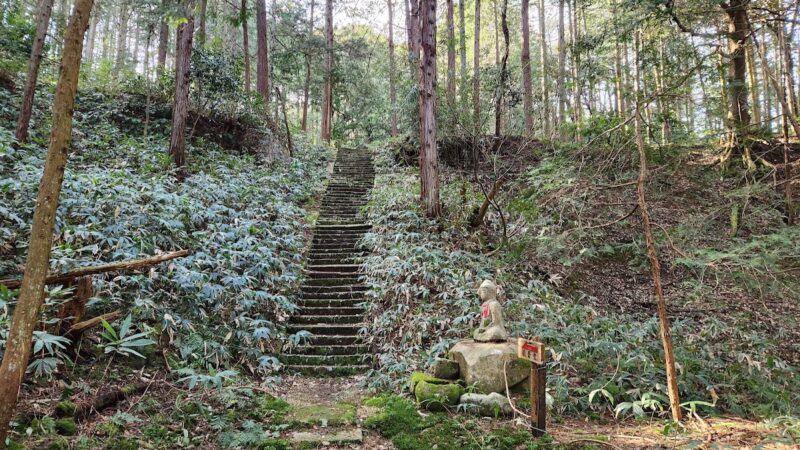
From the trailhead to the castle ruins at the summit, the trail is relatively well-maintained and takes about 30-40 minutes to climb. While there are some steep sections, full-fledged mountaineering equipment is not necessary; light hiking gear is sufficient.
Access by Car
If accessing by car, you can use the Sekigahara Interchange or the Maibara Interchange on the Meishin Expressway. From any interchange, take National Route 21 to the Kashiwara area.
There is no dedicated parking lot near the trailhead, but you can use wide areas on the roadside or local public spaces. However, please be considerate of local residents. If possible, it is best to use a parking lot near Kashiwara Station and access the site on foot from there.
Precautions when climbing the castle
Nagahi Castle is a mountain castle ruin, not a well-maintained tourist facility. Please pay attention to the following points when climbing the castle:
- Clothing and Equipment: Wear comfortable clothing and non-slip shoes (such as trekking shoes). The ground can be particularly slippery after rain.
- Drinking Water: There is no water source at the summit, so bring plenty of drinking water.
- Season: In summer, take precautions against insects; in winter, take precautions against the cold.
- Time Allocation: Allow at least 2-3 hours from the start to the descent.
- Solo Activity: It is preferable to climb the castle in a group if possible. If you are hiking alone, be sure to inform your family or friends of your hiking plan.
Nearby Tourist Attractions
Sugawayama Fort
Like Nagahisa Castle, this is a border castle built by the Asai clan. Located south of Nagahisa Castle, it was part of a network of fortified castles forming a defensive line. Visiting both Nagahisa Castle and Sugawayama Fort will give you a deeper understanding of the defense system of the time.
Kashiwabara-juku
Kashiwabara-juku, which flourished as a post town on the old Nakasendo road, retains the atmosphere of the Edo period with its townscape and historical sites. You can stop by before or after climbing Nagahisa Castle and enjoy a historical stroll.
Mount Ibuki
Mount Ibuki, one of Japan’s 100 Famous Mountains, is a famous mountain that can be viewed from Nagahisa Castle. From its 1,377-meter-high summit, you can enjoy a panoramic view of Lake Biwa and the surrounding mountains, offering a different scale of scenery than that from Nagahisa Castle.
Battlefield of Sekigahara
Heading east from Nagahisa Castle, you’ll find the Battlefield of Sekigahara, the site of the decisive battle for control of Japan. Visiting this historical site, a turning point from the Sengoku period to the Edo period, allows you to place Nagahisa Castle within a broader historical context.
Points to Enjoy Nagahisa Castle
Recommended Prior Study
Before visiting Nagahisa Castle, gaining some basic knowledge about the relationship between Asai Nagamasa and Oda Nobunaga, and the Battle of Kanegasaki in 1570, will make your visit to the castle ruins much more fulfilling.
In particular, understanding the concept of a “border castle” will clarify why the castle was built in this location and what role it played.
Utilizing the Castle Layout Map
Since it’s difficult to grasp the overall layout of the remains on-site, it’s recommended to obtain a castle layout map beforehand. Walking around the site while referring to the map will make it easier to understand the arrangement and function of earthworks, gates, and trenches.
You can obtain castle layout maps from castle-related websites and books, so print them out or save them on your smartphone and bring them with you.
Photography Tips
When photographing the remains of Nagahisa Castle, keep the following points in mind:
- Earthworks: To show the elevation differences, photograph from an angle to create a sense of depth.
- Vertical Moats: Photographing from above or below makes the ditch-like structure easier to understand.
- Views: The best visibility is on sunny mornings.
- Gate Entrance: Photograph from the front and side to show the shape of the passageway.
Seasonal Differences in Attractions
Nagahisa Castle has different charms depending on the season.
- Spring: The fresh greenery is beautiful, and climbing to the castle is pleasant.
- Summer: The greenery is dense, making the remains somewhat difficult to see, but you can enjoy the cool atmosphere of the mountain castle.
- Autumn: The autumn foliage is beautiful, making it ideal for photography. – Winter: The ruins are most easily visible due to the falling leaves. However, cold weather gear is necessary.
Preservation and Future of Nagahisa Castle
Although Nagahisa Castle is not designated as a national historic site, it is recognized as a valuable historical heritage site of the region. While the ruins are relatively well-preserved, appropriate conservation activities are still necessary.
Visitors are requested to observe proper etiquette, such as not damaging the ruins and taking all trash with them. Each of us’s considerations will help pass on this valuable historical heritage to future generations.
Summary
Nagahisa Castle is a Sengoku period mountain castle built on Noseyama in Maibara City, Shiga Prefecture. Built by Asai Nagamasa, it functioned as a “border castle” protecting the border between Omi and Mino provinces. The castle’s layout, consisting of an eastern and western enclosure, well-preserved earthworks and trenches, and diverse gate structures, among other valuable remains for learning about mountain castle defensive techniques, are all present.
Easily accessible on foot from JR Kashiwara Station, and with a relatively low difficulty level for climbing, this castle ruin can be enjoyed by a wide range of people, from beginners to advanced mountain castle enthusiasts. The view from the summit is magnificent, allowing you to enjoy both historical and natural scenery.
Exploring the remains of Nagahisa Castle while feeling the history of this tense border region during the Sengoku period will surely create unforgettable memories. When you visit Maibara City in Shiga Prefecture, be sure to stop by Nagahisa Castle.