Kita-Akitsu Castle (Saitama Prefecture) Complete Guide: The Mysterious History of a Medieval Castle and its Current Remains
What is Kita-Akitsu Castle?
Kita-Akitsu Castle (Kita-Akitsu-jo) is the site of a medieval castle that once stood in Kita-Akitsu, Tokorozawa City, Saitama Prefecture. Also known as “Ohoriyama-kan,” it was located on a hill in the present-day Kita-Akitsu district of Tokorozawa City. It is known as a castle with very few historical records, and many details remain unknown.
Currently, most of the castle site has been lost due to residential development, but some remains such as earthworks and dry moats remain, making it a valuable historical site as the remains of a powerful local clan’s residence in Musashi Province during the medieval period.
Basic Information on Kita-Akitsu Castle
- Location: Kita-Akitsu, Tokorozawa City, Saitama Prefecture
- Alternate Name: Ohoriyama-kan
- Castle Structure: Hilltop Castle (Mansion Ruins)
- Construction Period: Kamakura Period to Sengoku Period (Estimated)
- Builder: Unknown (Various Theories Exist)
- Main Lords: Oishi Tōtōmi-no-kami Nobushige, Murayama-tō Kume Clan, etc. (Estimated)
- Abandonment Period: Unknown
- Remains: Part of earthworks and dry moats
- Designated Cultural Property: None
History of Kita-Akitsu Castle
Background and Era of Construction
While there are no definitive records regarding the construction period of Kita-Akitsu Castle, the Tokorozawa City History speculates that it was a mansion of a powerful local clan from the Kamakura period onward. This region was a crucial transportation hub within Musashi Province, and an important point along the Kamakura Road.
In medieval Musashi Province, local samurai groups established residences in various locations, using them as bases for managing their territories. Kita-Akitsu Castle is thought to have been one such residence, playing a role in regional control and defense.
Various Theories Regarding the Castle Lord
There are several theories regarding the lord of Kita-Akitsu Castle.
The Theory of Oishi Tōtōmi-no-kami Nobushige
Kurihara Nakamichi, author of “History and Culture of the Yanasegawa River Basin,” identifies Kita-Akitsu Castle as the residence of Oishi Tōtōmi-no-kami Nobushige. The Oishi clan was a powerful samurai group in Musashi Province and served the Later Hōjō clan during the Sengoku period.
Oishi Nobushige is thought to be a relative of Oishi Sadahisa, also known as the lord of Takiyama Castle, and this may have been an important base indicating the Oishi clan’s sphere of influence in this region.
The Theory of the Murayama Party Kume Clan
The Tokorozawa City History introduces the theory that Kita-Akitsu Castle may have been the residence of the Murayama Party Kume Clan, given the existence of Kume-gō near Kita-Akitsu Castle. The Murayama clan was one of the seven clans of Musashi Province, a samurai group that held power in the Tama and Iruma regions.
The Kume clan is thought to have maintained power in this region as a branch of the Murayama clan, and a connection to the place name Kita-Akitsu has also been pointed out.
Local Powerful Clan Theory (Kamakura Period and Later)
Some views do not specify a particular clan, but rather consider it the residence of a local powerful clan that ruled this region from the Kamakura period to the Muromachi period. This theory also considers the possibility that the castle lord changed over time.
Relationship with the Later Hojo Clan
During the Sengoku period, many areas of Musashi Province came under the control of the Later Hojo clan. There is a theory that Kita-Akitsu Castle was renovated and used by the Later Hojo clan.
Considering its geographical location and transportation network with Takiyama Castle, Hachioji Castle, and the nearby Takino Castle (Tokorozawa City), it is quite possible that Kita-Akitsu Castle functioned as some kind of base facility within the Later Hojo clan’s system of rule.
The Later Hojo clan adopted a policy of renovating existing residences and castles to utilize them as subsidiary castles and forts in their territorial management. Kita-Akitsu Castle may have been used as part of this policy, serving as a road monitoring and communication base.
Description in “Musashino-wa”
The Edo period geographical record “Musashino-wa” contains the description, “There is a castle site in that area, but it is unknown whose castle it was.” This description indicates that details of Kita-Akitsu Castle were already unknown during the Edo period.
From this description, we can infer that a considerable amount of time had passed since the castle was abandoned, and that the castle lord and history had been lost from the local memory.
Time of Abandonment
There are no clear records of when Kita-Akitsu Castle was abandoned. Generally, it is believed that many subsidiary castles were abandoned after Toyotomi Hideyoshi’s siege of Odawara in 1590, along with the fall of the Later Hojo clan.
Similarly, it is highly likely that Kita-Akitsu Castle also ceased its military role around this time. It is presumed that the area was subsequently used as farmland and residential land, and that the traces of the castle gradually disappeared.
Structure and Layout of Kita-Akitsu Castle
Location and Topography
Kita-Akitsu Castle was built on a hill approximately 10 meters high south of the Yanase River. This hill overlooked the surrounding plains, making it a suitable location for defense and surveillance.
Tea plantations spread to the east, and an NTT Docomo transmission tower still stands there today. It is believed that the location of this tower was the central part of the former castle.
Castle Scale
The exact scale of Kita-Akitsu Castle is unknown, but it is presumed to have been a standard size for a medieval residence. It is possible that multiple enclosures were arranged around the main enclosure.
Based on the extent of the currently identifiable remains, the main enclosure is thought to have measured approximately 50 meters east-west and 60 meters north-south.
Defensive Structures
Earthworks
A portion of the earthworks is believed to still exist on the northern edge of the main enclosure of Kita-Akitsu Castle. Earthworks are earthen walls designed to prevent enemy intrusion and were a common defensive structure in medieval castles.
The remaining earthworks are estimated to be approximately 1.5 to 2 meters high, suggesting they may have been higher in the past, with fences or other structures on top.
Dry Moat
Traces of a dry moat are also believed to remain alongside the earthworks. Dry moats are moats that do not hold water and served to hinder enemy approach.
Currently, a path used as a moat road remains in part, and it has been suggested that this may be a remnant of the former dry moat. The moat is estimated to have been approximately 3 to 5 meters wide and 2 meters deep.
Entrance (Koguchi)
The exact location of the castle’s entrance (koguchi) is unclear, but based on the topography, it is highly likely that it was located on the south or west side.
Layout of the Enclosures
It is believed that the castle was arranged with the main enclosure at the center, surrounded by the second and third enclosures, but the detailed structure is unknown due to residential development.
The main enclosure likely housed the lord’s residence and administrative offices. The second and subsequent enclosures are presumed to have contained the residences of retainers, warehouses, and stables.
Current Remains and Points of Interest
Current State of the Remains
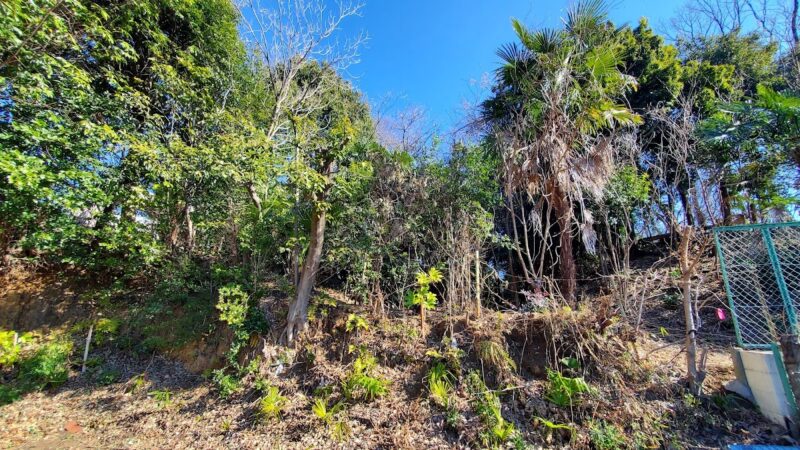
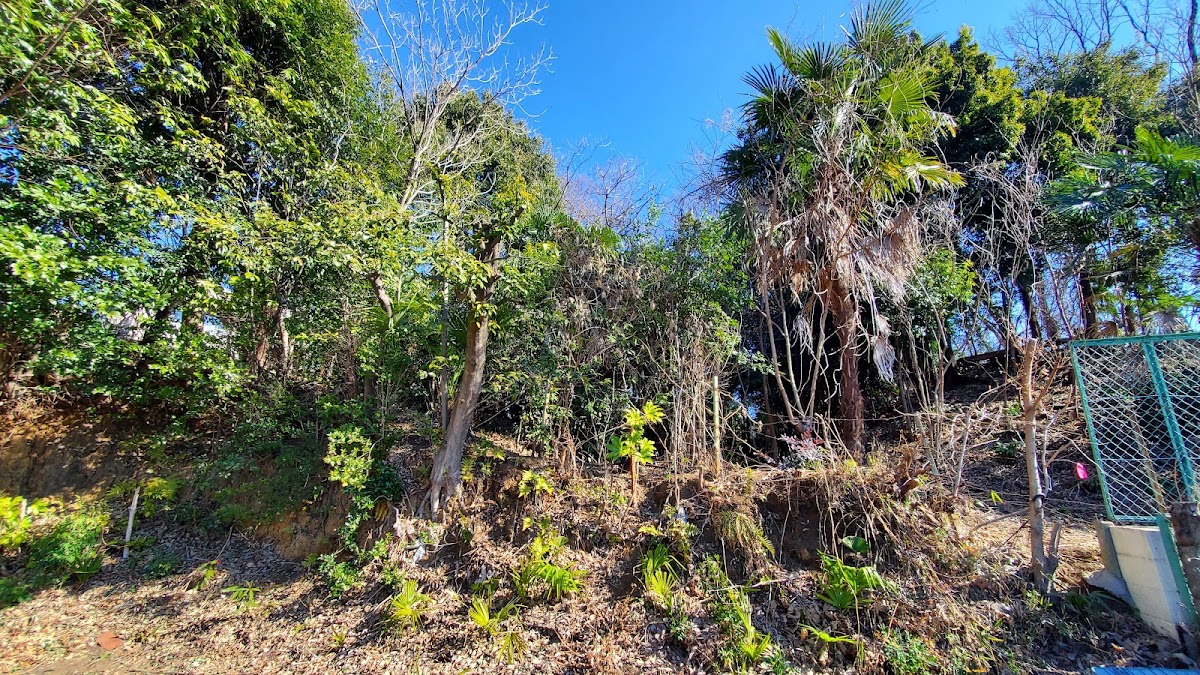
The Kita-Akitsu Castle site has been almost completely destroyed due to residential development, making it difficult to imagine its former appearance. Apartments and houses now line the central part of the castle site.
While some earthworks and dry moats are said to remain, they are located on private property and within apartment complexes, making them inaccessible. Even visiting the castle site makes it difficult to clearly identify the remains.
Photography Tips
According to reports from castle enthusiasts who have visited the site, it is possible to photograph distant views from nearby parking lots and public roads. The NTT Docomo transmission tower serves as a landmark, allowing you to confirm the former castle’s location.
By photographing the elevated area from the tea plantation side and the paths believed to be moats, you can record the faint traces of the castle.
Relationship with Nichigetsu Shrine
Near the Kita-Akitsu Castle ruins is the Nichigetsu Shrine. This shrine has been suggested to be related to the castle, and is worth visiting in conjunction with a castle tour.
Nichigetsu Shrine may have functioned as the castle’s guardian shrine, and may have been a place where the lord and retainers prayed for victory and safety. From the shrine grounds, you can also observe the surrounding topography.
Surrounding Moats
Around the Kita-Akitsu Castle ruins, there are remnants of “moat paths,” where former dry moats are now used as roads. Walking along these moat paths allows you to trace the castle’s defensive lines.
These moat paths are still used as local roads today, making them valuable historical traces that convey the region’s history.
Access Methods
Access by Train
The nearest station to Kita-Akitsu Castle Ruins is Seibu Railway Tokorozawa Station.
- Approximately 15 minutes on foot from Seibu Ikebukuro Line/Shinjuku Line “Tokorozawa Station”
- Head towards Kita-Akitsu from the east exit of Tokorozawa Station
- It’s easy to find if you aim for Nichigetsu Shrine
Tokorozawa Station is a major station on the Seibu Railway, accessible in approximately 30 minutes from Ikebukuro Station and approximately 40 minutes from Shinjuku Station.
Access by Car
If visiting by car, the following route is convenient:
- Approximately 15 minutes from Kan-Etsu Expressway “Tokorozawa Interchange”
- Take National Route 463 towards Kita-Akitsu
Parking Information
There is no dedicated parking lot at Kita-Akitsu Castle Ruins. While you may be able to use the parking space for visitors to Nichigetsu Shrine, please avoid long-term parking.
We recommend using a nearby coin-operated parking lot or parking your car in a parking lot near Tokorozawa Station and accessing the site on foot.
Points to Note When Visiting
- Most of the castle site is private property. Please do not enter the grounds of houses or apartment buildings.
- While many of the remains are not visible, you can get a sense of the castle’s atmosphere by observing the surrounding terrain and moats.
- When taking photographs, please be considerate of residents’ privacy.
- Admission is free, but there are no designated viewing facilities.
Kita-Akitsu Castle and Surrounding Castles
Relationship with Taki Castle
Taki Castle (Tokorozawa City Castle) is located approximately 3 kilometers southwest of Kita-Akitsu Castle. Taki Castle was built by the Later Hojo clan, and well-preserved remains still exist.
Based on the relative locations of the two castles, Kita-Akitsu Castle may have functioned as a branch castle or communication base for Taki Castle. When visiting Taki Castle, visiting Kita-Akitsu Castle as well will help you understand the castle network in this region.
Connection to Takiyama Castle
Takiyama Castle (Hachioji City, Tokyo), the base of the Oishi clan, is located approximately 15 kilometers south of Kita-Akitsu Castle. If the theory that Oishi Tōtōmi-no-kami Nobushige was the lord of Kita-Akitsu Castle is correct, then the two castles must have had a close relationship.
The route from Takiyama Castle, via Kita-Akitsu Castle, to the Kawagoe area is thought to have been an important military and transportation route during the Sengoku period.
Distance to Kawagoe Castle
Kawagoe Castle, an important base in Musashi Province, is located approximately 8 kilometers north of Kita-Akitsu Castle. During the Later Hōjō clan era, Kawagoe Castle was the center of control of Musashi Province.
Kita-Akitsu Castle is located on the route connecting Kawagoe Castle and Takiyama/Hachioji Castles, indicating its strategic importance.
Historical Significance of Kita-Akitsu Castle
Position in Musashi Province Castle Research
Although details of Kita-Akitsu Castle are unknown, it holds significant importance in the study of medieval castles and residences in Musashi Province.
It is a valuable example for considering the form of medieval local lords’ residences, many of which have been lost in historical records, and how they were incorporated into later Sengoku daimyo (feudal lord) systems.
Importance in Regional History
In the history of Tokorozawa City, Kita-Akitsu Castle is evidence that this region held a certain political and military importance during the medieval period.
While present-day Tokorozawa City has developed as a commuter town for Tokyo, Kita-Akitsu Castle tells the story of its strategic importance during the medieval period, where it served as a base for samurai groups.
Lessons from the Loss of Historical Remains Due to Urbanization
The near-total loss of Kita-Akitsu Castle’s remains serves as a case study that prompts reflection on the balance between urban development and cultural property preservation.
Since the period of rapid economic growth, many castle sites have been lost due to residential development. Kita-Akitsu Castle is one such example, offering important lessons for considering the future of cultural property preservation.
Recommended Course for Visiting Kita-Akitsu Castle
Half-Day Course
This is a half-day sightseeing course starting from Tokorozawa Station.
- Seibu Railway Tokorozawa Station (Start)
- 15-minute walk to Nichigetsu Shrine
- Stroll around the Kita-Akitsu Castle Ruins from Nichigetsu Shrine (30 minutes)
- On the way back towards Tokorozawa Station, stroll through Tokorozawa City
- If time permits, visit Tokorozawa Aviation Memorial Park
Full-Day Course (Tour of Surrounding Castles)
This is a full-day course touring castles around Tokorozawa City.
- Kita-Akitsu Castle Ruins (Morning)
- Travel by car to Takino Castle (Lunch)
- Further visit to Kawagoe Castle Honmaru Palace (Afternoon)
- Stroll through Kawagoe’s historic warehouse district
This course allows you to efficiently visit castles related to the Later Hojo clan: Kita-Akitsu Castle, Takino Castle, and Kawagoe Castle.
Materials and Research on Kita-Akitsu Castle
Main References
For those who want to learn more about Kita-Akitsu Castle, we recommend referring to the following documents.
- “Tokorozawa City History”: The official history book of Tokorozawa City, containing basic information about Kita-Akitsu Castle.
- “History and Culture of the Yanasegawa River Basin” (by Nakamichi Kurihara): Discusses in detail the connection with Oishi Tōtōmi-no-kami Nobushige.
- “Musashino-wa”: An Edo period geographical record containing a description of Kita-Akitsu Castle.
- “Tokorozawa Historical Tales”: A book that clearly explains the history of Tokorozawa City, also mentioning Kita-Akitsu Castle.
Current Status and Challenges of Research
Currently, research on Kita-Akitsu Castle has not progressed significantly due to a lack of historical materials. Future research topics include:
- Detailed understanding of the remains through archaeological investigations
- Identification of the castle lord through document research of the Oishi clan and the Murayama clan
- Clarification of the position of Kita-Akitsu Castle in the documents of the Later Hōjō clan
- Research on its relationship with surrounding castles
Unfortunately, opportunities for archaeological excavations are limited due to the progress of residential development. However, new insights may be gained through a historical approach based on historical documents and comparative studies with surrounding castles.
Place Name and History of Kita-Akitsu
Origin of “Akitsu”
There are several theories regarding the origin of the place name “Akitsu” in Kita-Akitsu. One theory suggests it derives from the ancient “Akitsushima” (an honorific name for Japan), while another suggests it derives from “Aki-no-tsu” (a port or ferry crossing).
Given its location along the Yanase River, it’s also possible the name is related to a river ferry crossing or water transport.
History of Kita-Akitsu Village
In 1889 (Meiji 22), with the implementation of the town and village system, this area became an independent municipality as Kita-Akitsu Village. Later, in 1943 (Showa 18), it merged with Tokorozawa Town and became part of Tokorozawa City.
Currently, Kita-Akitsu has developed as a residential area, but some farmland remains, preserving the appearance of a former rural village.
Summary
Kita-Akitsu Castle is a mysterious castle site shrouded in mystery, with many details unknown. However, this very mystery gives it a captivating historical charm.
Various possibilities have been proposed, including the theory that it was the residence of Oishi Tōtōmi-no-kami Nobushige, the residence of the Murayama clan’s Kume family, and a base of the Later Hōjō clan. Further research is anticipated.
Although most of the remains have been lost, observing the surrounding topography and moats allows one to feel the atmosphere of a medieval castle. Visiting it in conjunction with Nichigetsu Shrine will allow you to delve deeper into the history of Kita-Akitsu.
Its convenient location within walking distance of Tokorozawa Station makes it easily accessible, so please consider visiting it in conjunction with tours of other nearby castles such as Takino Castle and Kawagoe Castle. From the few remaining traces of the Middle Ages amidst urbanization, you can surely feel the history of Musashi Province.
We hope that research and preservation of Kita-Akitsu Castle will continue to advance, ensuring that this valuable historical heritage is passed down to future generations.