
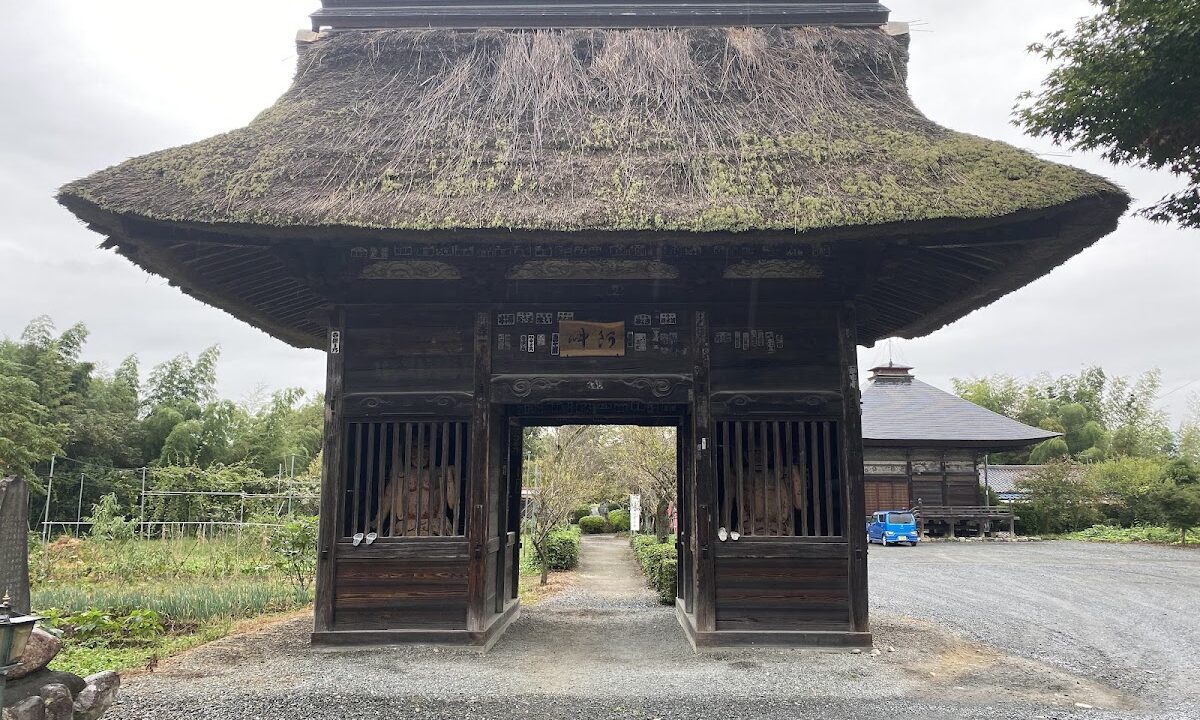
Nagata Jinya Ruins (Saitama Prefecture) Complete Guide: A Historical Heritage Site Continuing from the Ina Clan’s Flood Control Base to the Present
Located in Tsuchiya, Nishi-ku, Saitama City, Saitama Prefecture, the Nagata Jinya Ruins are a valuable historical heritage site dating back to the early Edo period. Built by Ina Tadatsugu, who served Tokugawa Ieyasu as the Kanto Regional Governor, it served as a base for flood control of the Arakawa River system and land reclamation. Remains such as the nagaya-mon (long gatehouse) and sasarako-bei (bamboo fence) are still well-preserved. This article provides a thorough explanation of the Nagata Jinya Ruins, including its detailed history, highlights, access methods, and surrounding information.
What are the Nagata Jinya Ruins?: Basic Information and Overview
The Nagata Jinya Ruins, also known as the “Tsuchiya Jinya Ruins,” are historical buildings. Designated as a Saitama Prefecture Important Historic Site, the existing nagaya-mon and sasarako-bei are protected as Saitama City Designated Tangible Cultural Properties (buildings).
Location and Basic Data
- Location: 5 Tsuchiya, Nishi-ku, Saitama City, Saitama Prefecture 331-0062
- Designation Classification: Saitama Prefecture Designated Important Historic Site, Saitama City Designated Tangible Cultural Property (Building)
- Main Remains: Nagaya-mon Gate, Sasako Wall, Moat Remains
- Admission Fee: Free (Exterior viewing only)
- Visiting Hours: Always open (Entry into the site is prohibited as it is private property)
The Nagata Jinya site is still inhabited by descendants of the Nagata family, so entry into the site is prohibited. However, the Nagaya-mon Gate and Sasako Wall can be viewed from along Saitama Prefectural Road 57 (Saitama-Konosu Line).
History of Nagata Jinya: From Ina Tadatsugu to the Nagata Clan
Early Edo Period: Establishment of the Jinya by Ina Tadatsugu
The history of Nagata Jinya dates back to the early Edo period, the 1590s. When Tokugawa Ieyasu entered the Kanto region, his retainer, Ina Tadatsugu, was appointed as the Kanto Regional Governor, entrusted with the important mission of flood control and land reclamation in the Kanto Plain.
Ina Tadatsugu established a military camp in Tsuchiya to efficiently promote flood control and irrigation of the Arakawa River system. This location was strategically situated overlooking the Arakawa River basin, making it an ideal location for directing river improvement projects. From this camp, Tadatsugu energetically promoted projects such as the diversion of the Arakawa River, the construction of embankments, and the development of irrigation canals.
Achievements of the Ina Clan, Kanto Regional Governors
Ina Tadatsugu and his successors made significant contributions to the development of the Kanto region. His main achievements include the following:
- Arakawa River Improvement: Construction of embankments and improvement of the river channel to mitigate flood damage
- Construction of the Minuma-dai Irrigation Canal: Supply of irrigation water to vast farmlands
- Promotion of New Rice Field Development: Conversion of wetlands and wasteland into rice paddies, contributing to an increase in rice yield
- Introduction of Flood Control Technology: Dissemination of advanced civil engineering technology to the Kanto region
These projects contributed to the development of the Kanto region as the economic base of the Edo Shogunate.
1642: Relocation to Akayama Jinya and Granting of Land to the Nagata Clan
In 1642 (Kanei 19), the Ina clan built a new jinya (fortified residence) in Akayama, Kawaguchi City (Akayama Jinya) and moved their base there. Following this relocation, the Tsuchiya jinya was given to Nagata Yahei Kanenaga, a retainer of the Ina clan.
Nagata Yahei Kanenaga was a meritorious figure who dedicated himself to the Arakawa River improvement and new rice field development projects under the Ina clan. The Nagata family, who received the jinya (fortified residence), continued to reside in this area for generations, playing an important role as local village headmen.
Late Edo Period: Construction of Existing Structures
The nagaya-mon (long gatehouse) and sasako-bei (rafter wall) that can be seen today are believed to have been constructed in the late Edo period. These structures represent the pinnacle of architectural technology at the time and are valuable relics that convey the beauty of wooden Japanese architecture to the present day.
After the Meiji Restoration: Transition to Modernity and Preservation
Even after the Meiji Restoration, the Nagata family remained in this area and continued to maintain the buildings. In the Showa period, their historical value was recognized, and they were designated as cultural properties by Saitama Prefecture and Saitama City. To this day, descendants of the Nagata family continue to reside here, protecting this valuable historical heritage.
Highlights of the Nagata Jinya Site: Details of Existing Relics
Nagaya-mon: A Structure Demonstrating the Dignity of a Samurai Residence
The greatest highlight of the Nagata Jinya Site is the magnificent nagaya-mon. A nagaya-mon is a type of gate with rooms on both sides, a style of architecture commonly found in samurai residences and high-ranking private houses.
Characteristics of a Nagaya-mon
- Structure: A stately wooden structure with a tiled roof
- Decoration: Equipped with wooden anti-climbing devices for security
- Interior: A palanquin hangs inside the gate, evoking the lifestyle of the time
- Preservation Status: Well-maintained and retains its original appearance
A nagaya-mon was not merely an entrance, but an important structure indicating the status of the residence. The nagaya-mon of the Nagata Jinya is particularly well-preserved among the remaining Jinya architecture in the Kanto region, making it a valuable resource for learning about Edo period architectural techniques.
Sasara-ko-bei (Sasara-ko Wall): A traditional earthen wall
The sasara-ko-bei is designated as a cultural property along with the nagaya-mon. Sasako-bei is a traditional type of wall constructed by arranging bamboo or wood in a lattice pattern, then applying earthen plaster to it, and finally roofing it with tiles.
Characteristics of Sasako-bei
- Structure: A mud wall constructed by layering earthen plaster over a bamboo framework.
- Design: The tiled roof creates a beautiful curve.
- Function: Serves as a screen and provides security.
- Landscape: Harmonizes with the surrounding environment and creates a historical atmosphere.
Sasako-bei are highly formal walls often used in samurai residences and temple architecture. The Sasako-bei at Nagata Jinya, integrated with the Nagaya-mon gate, expresses the dignity of the Jinya and conveys the atmosphere of an Edo-period samurai residence to this day.
Remains of a Moat: Traces of Defensive Facilities
The Jinya site still retains traces of a moat that once surrounded it. The moat served a defensive function and may have also been used as an experimental site for flood control research in the Arakawa River system.
Although much of the moat has been filled in, the terrain’s undulations and the layout of the site allow us to estimate its original scale. The moat-enclosed fortified residence was not merely a residential facility, but rather a military and administrative center.
Spatial Configuration of the Fortified Residence Site
The Nagata Fortified Residence Site has a typical samurai residence layout, with a long gatehouse as the entrance, the main building at the back, and outbuildings surrounding it. While entry into the grounds is prohibited, its scale and prestige can be appreciated from the exterior.
Access: How to Get to the Nagata Fortified Residence Site
Access by Public Transportation
The nearest station to the Nagata Fortified Residence Site is Sashioji Station on the JR Kawagoe Line.
Access from Sashioji Station
- Walking distance from JR Kawagoe Line Sashioji Station: Approximately 15-20 minutes
- Distance: Approximately 1.2 km
- Route: Exit the station and head southwest along Saitama Prefectural Road 57 (Saitama-Konosu Line)
Sashioji Station is located about 10 minutes from Omiya Station on the Kawagoe Line, making it relatively easy to access from central Tokyo. The path from the station to the Jinya Ruins is a quiet route through a residential area, suitable for a walk.
Access by Bus
If using the bus from Sashioji Station, you can use local buses such as Seibu Bus. However, since the number of buses is limited, it is recommended to check the timetable in advance.
Access by Car
- Metropolitan Expressway: Approximately 20 minutes from Yono IC
- National Route 17: Approximately 25 minutes from Omiya via Prefectural Road 57
- Parking: No dedicated parking (use nearby paid parking)
There is no dedicated parking at the Nagata Jinya Ruins. Therefore, if you are visiting by car, you will need to use the parking lot of a nearby public facility such as the Mamiya Community Center, or find a nearby coin-operated parking lot.
Landmarks in the Area
- Mamiya Community Center: Across Prefectural Road 57
- Prefectural Road 57 Saitama-Konosu Line: The Jinya Ruins are located along the prefectural road
- Google Maps: Searchable for “Nagata Jinya Ruins”
Notes and Manners for Visitors
Consideration for Private Property
The Nagata Jinya Ruins are currently private property where descendants of the Nagata family reside. Please note the following points when visiting:
- No entry onto the grounds: Please view from outside the gate.
- Photography: Exterior photography is permitted, but please be considerate of privacy.
- Quiet: Please be mindful that this is a residential area and avoid loud noises.
- Take your trash with you: Please cooperate in keeping the surrounding environment clean.
Best time and season for visiting
The Nagata Jinya Ruins are an outdoor historical site and can be visited year-round. However, considering the following points will make your visit more enjoyable:
- Spring: The surrounding scenery is beautiful during cherry blossom season.
- Autumn: The autumn foliage is beautiful, harmonizing with the historical building.
- Time of day: Bright daylight hours are best for photography.
- Time to avoid: Visiting is difficult on extremely hot summer days or during rainy weather.
Estimated visit duration
If you only wish to view the exterior, 15-30 minutes is sufficient. However, if you wish to observe carefully while gaining a deeper understanding of the historical background, it is recommended to allow about an hour.
Nearby Historical Sites and Tourist Attractions
When visiting the Nagata Jinya Ruins, exploring the surrounding historical sites will provide a deeper understanding.
Akayama Jinya Ruins (Kawaguchi City)
This is the site of the Jinya (fortified residence) where the Ina clan relocated from the Nagata Jinya. It has been developed as Akayama Castle Ruins Park, where you can learn about the history of the Ina clan. It is approximately a 30-minute drive from the Nagata Jinya Ruins.
Minuma-dai Irrigation Canal
This irrigation canal was dug by the Ina clan and is still used for agricultural purposes. A walking path has been developed along the Minuma-dai Irrigation Canal, and it is a beautiful spot lined with cherry trees.
Hikawa Shrine (Omiya)
A historic shrine known as the Ichinomiya (first-ranked shrine) of Musashi Province. It is said that the Ina clan also worshipped here, making it an important spot for understanding the history of the Kanto region.
Kawagoe’s Traditional Storehouse District
Kawagoe, about 20 minutes from Sashioji Station on the JR Kawagoe Line, preserves a district with traditional storehouse-style buildings that retain the atmosphere of the Edo period. Visiting it in conjunction with the Nagata Jinya Ruins will allow you to gain a deeper understanding of Edo period architectural culture.
The Cultural Value of the Nagata Jinya Ruins
Significance as a Saitama Prefecture Designated Important Historical Site
The Nagata Jinya Ruins are designated as a Saitama Prefecture Designated Important Historical Site. This means that it has been recognized as an important historical site for understanding the history of the prefecture.
Examples of existing Edo period jinya (fortified residence) architecture are rare nationwide, and are particularly valuable in the Kanto region. The Nagata Jinya Ruins have high value both in terms of their historical background as a flood control project by the Ina clan and the existing structures.
Saitama City Designated Tangible Cultural Property (Building)
The Nagaya Gate and Sasako Wall are designated as Saitama City Designated Tangible Cultural Properties (Buildings). These structures are highly valued for the following reasons:
- Architectural Techniques: Exhibits excellent wooden construction techniques from the late Edo period.
- Condition: Well-maintained and in low need of restoration.
- Historical Value: Witnesses to the history of the Ina and Nagata clans.
- Scenic Value: Harmonizes with the surrounding environment and forms the historical landscape of the region.
Role in Local History Education
The Nagata Jinya Ruins are also used as teaching materials for history lessons in local elementary and junior high schools. By actually seeing Edo-period structures, children and students can feel closer to history.
Furthermore, the Nagata Jinya Ruins are cherished by local residents as a source of local pride. The Nagata Jinya Ruins play an important role in passing on the region’s history to future generations.
Preservation of the Nagata Jinya Ruins and Future Challenges
Current Preservation Status
The Nagata Jinya Ruins are well-preserved under the private management of the Nagata family. The nagaya-mon (long gatehouse) and sasako-bei (rafter wall) undergo regular maintenance, maintaining their original appearance. Saitama City also provides technical support and subsidies as needed from the perspective of cultural property protection, and preservation activities are being carried out through public-private cooperation.
Future Challenges and Prospects
There are several challenges in preserving the Nagata Jinya Ruins:
Measures Against Deterioration of Structures
The wooden structures, such as the Nagaya-mon gatehouse and Sasako-bei wall, are inevitably subject to deterioration over time. Regular repairs and securing craftsmen with traditional architectural skills will be future challenges.
Balancing Public Access and Preservation
As it is privately owned land, there are limitations to public access. However, some degree of public access is necessary to widely publicize its value as a cultural property. The challenge lies in balancing the owner’s privacy with the protection of cultural properties.
Preservation of the Surrounding Environment
The area around the Jinya Ruins is becoming increasingly residential, making the preservation of the historical landscape a challenge. A comprehensive preservation plan, including not only the structures but also the surrounding environment, is required.
Construction of a Digital Archive
For future preservation, the construction of a digital archive, including detailed 3D scans and photographic records of the buildings, is anticipated. This will enable restoration in the event of a disaster.
The Value of Visiting the Nagata Jinya Ruins: A Message to History Enthusiasts
Although not large in scale, the Nagata Jinya Ruins are a valuable spot where you can experience the history of the Edo period firsthand. It is especially recommended for the following people:
Castle and Jinya Enthusiasts
For enthusiasts who travel around Japan visiting castles and jinya (fortified residences), the Nagata Jinya Ruins are a must-see. The existing nagaya-mon (long gatehouse) and sasako-bei (wall) are valuable examples of jinya architecture and also valuable as materials for castle research.
Those Interested in Flood Control and Civil Engineering History
The flood control projects by the Ina clan occupy an important position in the history of Japanese civil engineering. The Nagata Jinya Ruins functioned as a base for these flood control projects, making it a significant historical site for those interested in civil engineering history and water management history.
For those interested in architectural history and cultural properties
The Nagata Jinya Ruins, where you can see firsthand the wooden construction techniques of the late Edo period, are an excellent learning resource for those interested in architectural history and cultural property preservation.
For those who want to learn about local history
For those who want to deeply understand the history of Saitama City and Saitama Prefecture, the Nagata Jinya Ruins are an essential spot. By learning about the achievements of the Ina clan and the history of regional development, you can understand how present-day Saitama Prefecture was formed.
Summary: The Edo period legacy conveyed by the Nagata Jinya Ruins
The Nagata Jinya Ruins (Nishi Ward, Saitama City, Saitama Prefecture) were a base for flood control and land reclamation built in the early Edo period by Ina Tadatsugu, the Kanto regional governor. It is a valuable historical heritage site that was later granted to the Nagata clan and maintained to the present day.
The existing nagaya-mon (long gatehouse) and sasako-bei (rafter wall) are protected as Saitama City designated tangible cultural properties, conveying the architectural techniques of the Edo period and the atmosphere of a samurai residence. Designated as a Saitama Prefecture Important Historical Site, it plays a crucial role in understanding the region’s history.
Access is relatively easy, about a 15-20 minute walk from JR Kawagoe Line’s Sashioji Station, and admission is free. However, please note that as it is private property, entry into the grounds is not permitted, and only the exterior can be viewed.
Visiting the Nagata Jinya Ruins allows you to experience the history of development after Tokugawa Ieyasu’s arrival in the Kanto region, the importance of the Ina clan’s flood control projects, and the architectural culture of the Edo period. Although small in scale, its historical and cultural value is immeasurable.
When visiting Saitama Prefecture, be sure to visit the Nagata Jinya Ruins and feel the weight of history that has continued from the Edo period to the present day. Visiting related historical sites in the surrounding area will provide a deeper understanding of history.
For history enthusiasts, those interested in architecture and cultural properties, and those who want to learn about local history, the Nagata Jinya Ruins are a must-see spot. In the midst of modern urbanization, the fact that such historical heritage sites are preserved in such good condition reminds us of the importance of history.


