

Complete Guide to Kin Gusuku (Okinawa Prefecture): History, Remains, and Access
Located in Kin Town, Kunigami District, Okinawa Prefecture, Kin Gusuku is a valuable gusuku (castle) ruin, the only one confirmed to exist within Kin Town. Believed to have been built between the 14th and 15th centuries, this gusuku is an important historical site that tells the history of the Ryukyu Kingdom, attracting attention from local history enthusiasts and tourists alike.
This article comprehensively explains everything you need to know before visiting Kin Gusuku, including its historical background, existing remains, highlights, and access methods.
What is Kin Gusuku?
Basic Information about the Gusuku
Kin Gusuku is a gusuku ruin located in Kin Town, in the central part of Okinawa Island. It was built on a hilly area called “Winumou,” behind the current Kin Public Hall.
Location: Kin, Kin-cho, Kunigami-gun, Okinawa Prefecture
Construction Period: Estimated 14th-15th century
Builder: Unknown
Current Status: Developed as a park, only some remains survive.
Gusuku refers to castles and sacred sites built during the Ryukyu Kingdom era, and many exist throughout Okinawa. Kin Gusuku is believed to have played a central role in politics and military affairs within Kin Magiri (present-day Kin-cho and part of Ginoza-mura), which once controlled a vast area.
The Role of Gusuku in Kin-cho
Kin-cho has a long history; the discovery of pottery and other artifacts around the Okukubi River suggests that people lived there as early as the Jomon period. During the Gusuku period, which is believed to have begun in the 11th-12th centuries, development centered in the inland areas.
By the mid-17th century, the area encompassing present-day Kin-cho and Ginoza-mura was called “Kin Magiri.” Within this vast region, Kin Gusuku is the only confirmed gusuku (castle) site, making it extremely important for understanding the region’s history.
History of Kin Gusuku
Background and Era of Construction
The 14th and 15th centuries, when Kin Gusuku was built, fall under the “Three Kingdoms Period” in Ryukyuan history. During this period, Okinawa Island was divided into three powers: Hokuzan, Chuzan, and Nanzan, with local Anji (local powerful families) ruling their respective territories.
It is presumed that Kin Gusuku was also built during this period by the Anji who ruled the Kin region. Gusuku were not merely military facilities, but also served as centers of politics, economy, and religion.
Kin Anji and Prince Shokyu
While there are various theories about the owner of the gusuku, the most likely candidate is the Kin Anji. Furthermore, records indicate that “Shokyu,” the third son of King Sho Gen, the fifth king of the Second Sho Dynasty of Ryukyu, was associated with Kin Gusuku.
Shokyu’s Japanese name was “Okinosuke Choko,” and he had deep ties to the Kin region. However, it remains unclear whether Shokyu himself was the builder of the castle, as there is no reliable historical evidence.
Decline and Transformation of Gusuku
In the late 15th century, when the three kingdoms were unified by Sho Hashi of Chuzan and the Ryukyu Kingdom was established, the gusuku in various regions gradually lost their military function. Kin Gusuku was no exception; as the kingdom became more centralized, its role as a local gusuku diminished.
Subsequently, with the passage of time, the gusuku structures were lost, and only limited remains remain today.
Remains and Highlights of Kin Gusuku
Kin Castle Gate Stone (Kin Castle Gate Stone)
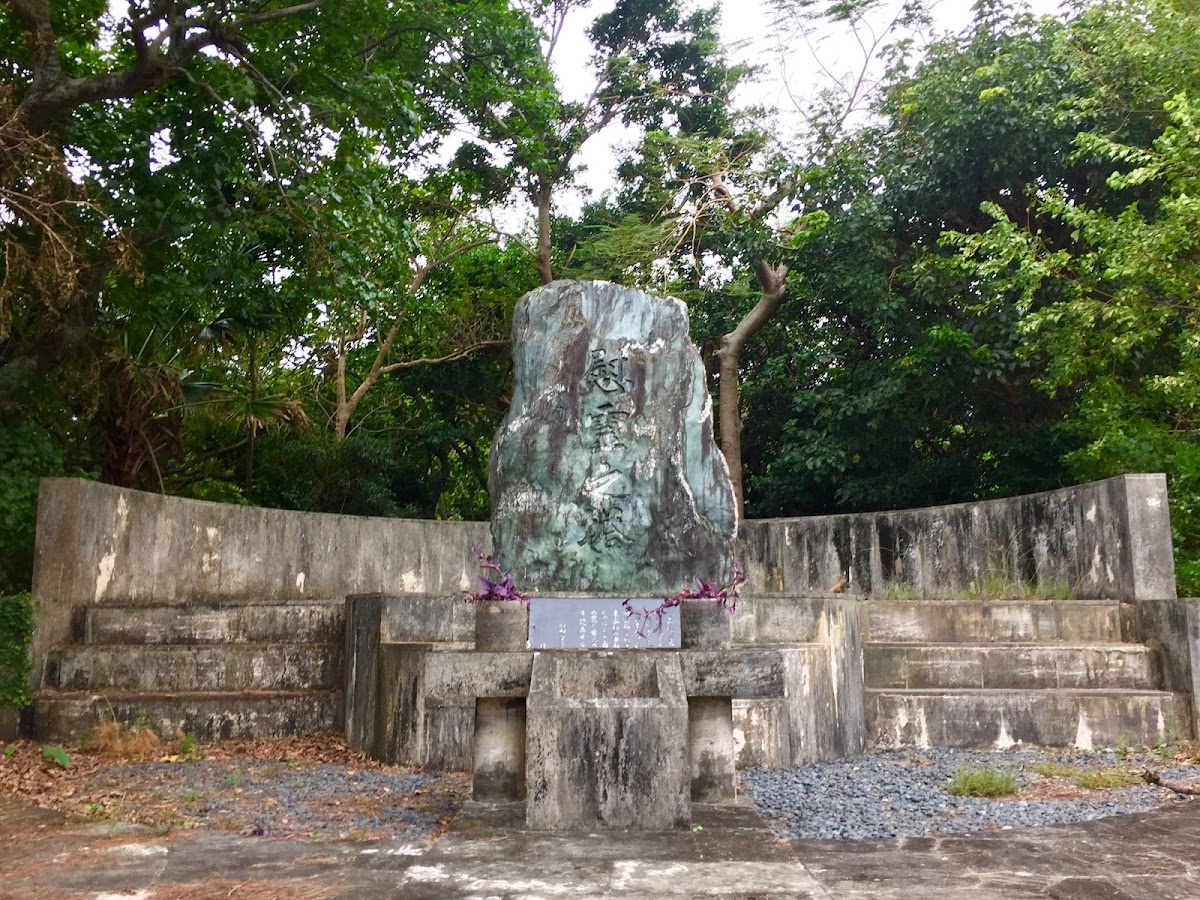
The most important remains of Kin Gusuku are the “Kin Castle Gate Stones.” These stones are valuable relics believed to have been used in the castle’s gate, and are currently preserved and displayed in front of the Kin Public Hall.
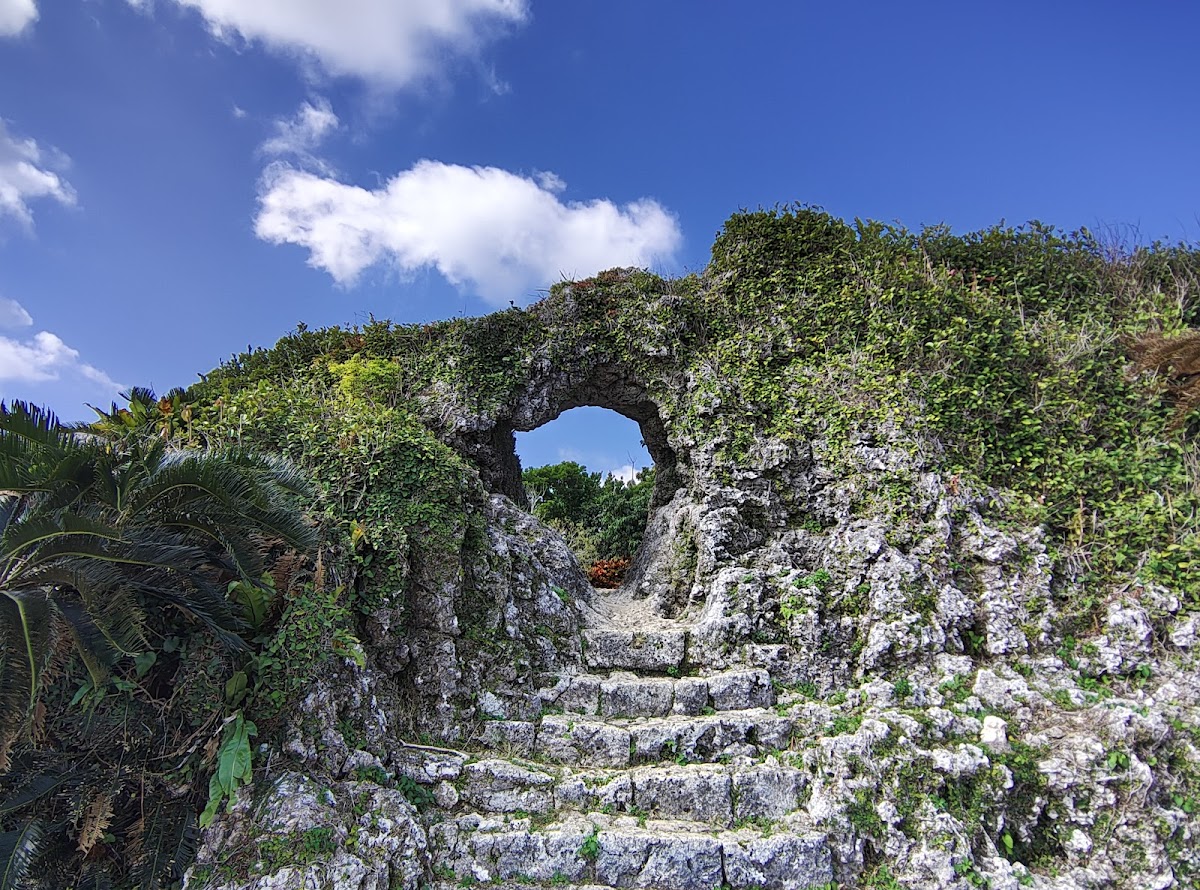
The gate stones are thought to be part of the stonework that made up the castle’s entrance, providing important clues to understanding the stonework techniques and architectural styles of the time. Although weathered, they retain the unique texture of Ryukyu limestone and exude a sense of history.
Kami Nuke Park
The site of Kin Gusuku is now developed as “Kami Nuke Park.” The park stretches from the west side to the back of the Kin Public Hall, allowing visitors to experience the former location of the castle.
From within the park, you can overlook the town of Kin, helping you understand how strategically important the castle’s location was. The location, taking advantage of the hilly terrain, offered excellent conditions for both defense and surveillance.
Topography and Layout
Kin Gusuku was built skillfully utilizing the natural hilly terrain. Its location on a hill called Kami-nuke provided both excellent views of the surrounding area and strong defensive capabilities against enemy attacks.
Although most of the structures are now lost, the undulations and layout of the terrain allow us to infer the former size and structure of the gusuku. Expert research suggests the possibility of multiple enclosures (kuruwa).
Attractions Around Kin Gusuku
Kin Kannon-ji Temple
When visiting Kin Gusuku, we recommend also visiting the nearby Kin Kannon-ji Temple. Kin Kannon-ji Temple is a rare temple on Okinawa Island built inside a limestone cave, and has been a place of worship since the Ryukyu Kingdom era.
Kin Gusuku and Kin Kannon-ji Temple are geographically close and belong to the same Kin historical and cultural sphere. Visiting both locations will allow you to gain a deeper understanding of the history of the Kin region.
History and Culture of Kin Town
Kin Town is known as a unique town where rich nature and American culture coexist. While the presence of a U.S. military base gives it an American atmosphere, ancient Ryukyu culture and traditions remain strong.
Kin Gusuku is a place that can be considered the origin of Kin Town’s long history. Many other historical sites and cultural assets are scattered throughout the town, making it an ideal area for historical walks.
How to Access Kin Gusuku
Access by Car
The most convenient way to access Kin Gusuku is by car.
From Naha City:
- Take the Okinawa Expressway and exit at Kin IC (approximately 50 minutes).
- Head north on National Route 329 towards Kin Town.
- Aim for Kin Public Hall.
From National Route 329:
- Turn left at the sign for Kin Kannon-ji Temple.
- You have arrived when you see Kin Public Hall.
Parking Information
There are parking lots around Kin Public Hall, but when using public facility parking lots, please be considerate and limit your visit to a short time. Consider using nearby paid parking lots or public parking lots.
Access by Public Transportation
Route Bus:
- Take a Ryukyu Bus or Okinawa Bus bound for Nago from Naha Bus Terminal.
- Get off at the “Kin” bus stop (approximately 1 hour 30 minutes).
- Kin Public Hall is approximately a 5-minute walk from the bus stop.
If using public transportation, please check the timetable in advance as the number of buses is limited.
Points to Note and Highlights for Visiting
Best Season for Visiting
Since Kin Gusuku is an outdoor historical site, it is recommended to visit on a day with good weather. Considering Okinawa’s climate, the following times are comfortable:
Recommended Time to Visit:
- October to April: The temperature is relatively mild and pleasant.
- It’s best to avoid the rainy season (May to June) and typhoon season (July to September).
Clothing and Items to Bring for Your Visit
- Comfortable Walking Shoes: The park has uneven terrain, so comfortable walking shoes such as sneakers are recommended.
- Sun Protection: Hat, sunscreen, sunglasses, etc.
- Hydration: Essential, especially in summer, to prevent heatstroke.
- Camera: For photographing the ruins and scenery.
Estimated Visit Time
If you are only visiting Kin Gusuku, 30 minutes to 1 hour is sufficient. However, if you plan to visit nearby Kin Kannon-ji Temple and other sites, it is recommended to allow 2 to 3 hours.
Kin Gusuku and Okinawa’s Gusuku Culture
What is a Gusuku?
Gusuku refers to castles and sacred sites built during the Ryukyu Kingdom era. While generally translated as “castle,” these sites served not only as military facilities but also as centers of politics, religion, and daily life.
More than 300 gusuku (castle) sites have been identified throughout the Ryukyu Islands, primarily on Okinawa Island. Of these, nine sites, particularly those in excellent condition and of high historical value, were registered as a World Heritage Site in 2000 under the name “Gusuku Sites and Related Properties of the Kingdom of Ryukyu.”
Kin Gusuku and World Heritage Gusuku
Kin Gusuku is not included in the World Heritage Site, but it is an important site for understanding the region’s history. While its state of preservation and scale are inferior to the gusuku registered as World Heritage Sites, it provides valuable historical information about the rule of the Anji (local lord) in the Kin region and the local governance of the Ryukyu Kingdom.
World Heritage Site Gusuku (Castle Sites):
- Nakijin Castle Ruins
- Zakimi Castle Ruins
- Katsuren Castle Ruins
- Nakagusuku Castle Ruins
- Shuri Castle Ruins
Visiting these famous gusuku, along with local gusuku like Kin Gusuku, allows for a deeper understanding of the multifaceted history of the Ryukyu Kingdom.
Current Status and Challenges of Kin Gusuku Research
Archaeological Investigation
Regarding Kin Gusuku, only limited, full-scale excavation surveys have been conducted to date. Therefore, many aspects, such as the construction date, builder, and detailed structure of the gusuku, remain unknown.
In recent years, with the advancement of gusuku research in Okinawa Prefecture, the need for new investigations into Kin Gusuku has been pointed out. It is hoped that future investigations will shed light on the history of the Kin region and the realities of the Ryukyu Kingdom’s local rule.
Preservation and Utilization Efforts
Kin Town is working on the preservation and utilization of local historical and cultural heritage, including Kin Gusuku. By developing it as Kami-Nuke Park, it has become a place that residents and tourists can easily visit.
In the future, efforts are needed to convey the history of the gusuku (castle) to more people, such as installing information boards and improving explanatory materials.
Tourism and Historical Walks in Kin Town
Points for Kin Town Tourism
When visiting Kin Gusuku, you can have a more fulfilling travel experience by also visiting other tourist spots in Kin Town.
Main Tourist Spots:
- Kinbu Kannon-ji Temple: Famous as a temple located inside a limestone cave
- Okukubi River: A river rich in nature with lush mangrove forests
- Nature Mirai-kan: A facility where you can observe the mangroves of the Okukubi River
- Kinbu Town’s Taco Rice Birthplace: Kinbu Town is known as the birthplace of taco rice
Historical Walking Tour Model Course
Half-Day Course (Approx. 3 Hours):
- Kinbu Gusuku Castle & Kinbu Public Hall (30 minutes)
- Kinbu Kannon-ji Temple (30 minutes)
- Stroll through Kinbu Town and enjoy taco rice (1 hour)
- Okukubi River & Nature Mirai-kan (1 hour)
This course allows you to experience Kinbu Town’s history, nature, and modern culture all at once.
Summary: The Charm and Significance of Visiting Kin Gusuku
Although the remains of Kin Gusuku are limited, it is the only remaining gusuku (castle) site in Kin Town, making it a valuable resource that conveys the region’s history to the present day. The fact that the builder and detailed history are unknown only adds to its historical romance.
While it lacks the grandeur of a World Heritage site gusuku, Kin Gusuku offers important clues to understanding how local lords governed their territories and how the Ryukyu Kingdom controlled its regions.
When visiting Kin Town, be sure to stop by Kin Gusuku and gaze upon the town from the hill of Kami-Nuke. Perhaps the lords who once ruled this land saw the same view. This sense of historical romance is arguably Kin Gusuku’s greatest charm.
When visiting central Okinawa Island, we recommend visiting not only famous tourist spots but also locally rooted historical sites like Kin Gusuku. There, you’ll find another side of Okinawan history that you won’t find in guidebooks.
.png)