.png)
Okawa Gusuku (Ginoza Village, Okinawa Prefecture): The Full Picture and Historical Value of a Complex Ruin with Stone Walls
What is Okawa Gusuku?
Okawa Gusuku is a castle ruin from the Ryukyu Kingdom era, located in Ginoza, Ginoza Village, Kunigami District, Okinawa Prefecture. Also known as the “Ginoza Nu Kojima Ruins,” it is the only gusuku in Ginoza Village with stone walls, making it an important historical site that tells the story of the region.
This site is not merely a castle, but is classified as a complex ruin, possessing a distinctive structure that integrates the living space of the Anji (local lord), ritual facilities, and settlement functions. Currently, facilities such as parking lots and restrooms have been developed, making it a popular and easily accessible historical spot in the region.
Geographical Characteristics and Location of Okawa Gusuku
Topographical Characteristics
The hill on which Okawa Gusuku was built skillfully utilizes the natural topography at an elevation of approximately 50 meters. This topography has the following notable characteristics:
The northeast side is a steep, cliff-like terrain, forming a natural defensive wall leading to the Ginoza Fukuchi River. This cliff is thought to have functioned as a natural fortress to prevent enemy incursions.
The west side** features terraced fields on the slope, still used for agriculture today. This terrain suggests the living area and agricultural production site of the time, providing important clues to understanding the economic base of the Gusuku period.
The south side is the only gently sloping terrain, leading towards the current Ginoza High School. This direction is presumed to have been the main access route, functioning as a communication route between settlements and other areas.
Relationship with the Surrounding Environment
Okawa Gusuku is located near the geographical center of Ginoza Village, and traces of human habitation from ancient times have been confirmed in various surrounding areas. The Ginoza Fukuchi River basin is rich in water resources, and archaeological investigations have revealed that paddy rice cultivation was practiced there in the 15th century.
This river system served as both a foundation for agricultural production and a vital transportation route. Access to the river from the gusuku (castle) was likely essential for transporting goods and engaging in trade with other regions.
Structure as a Complex Site
Characteristics of the Stone Masonry
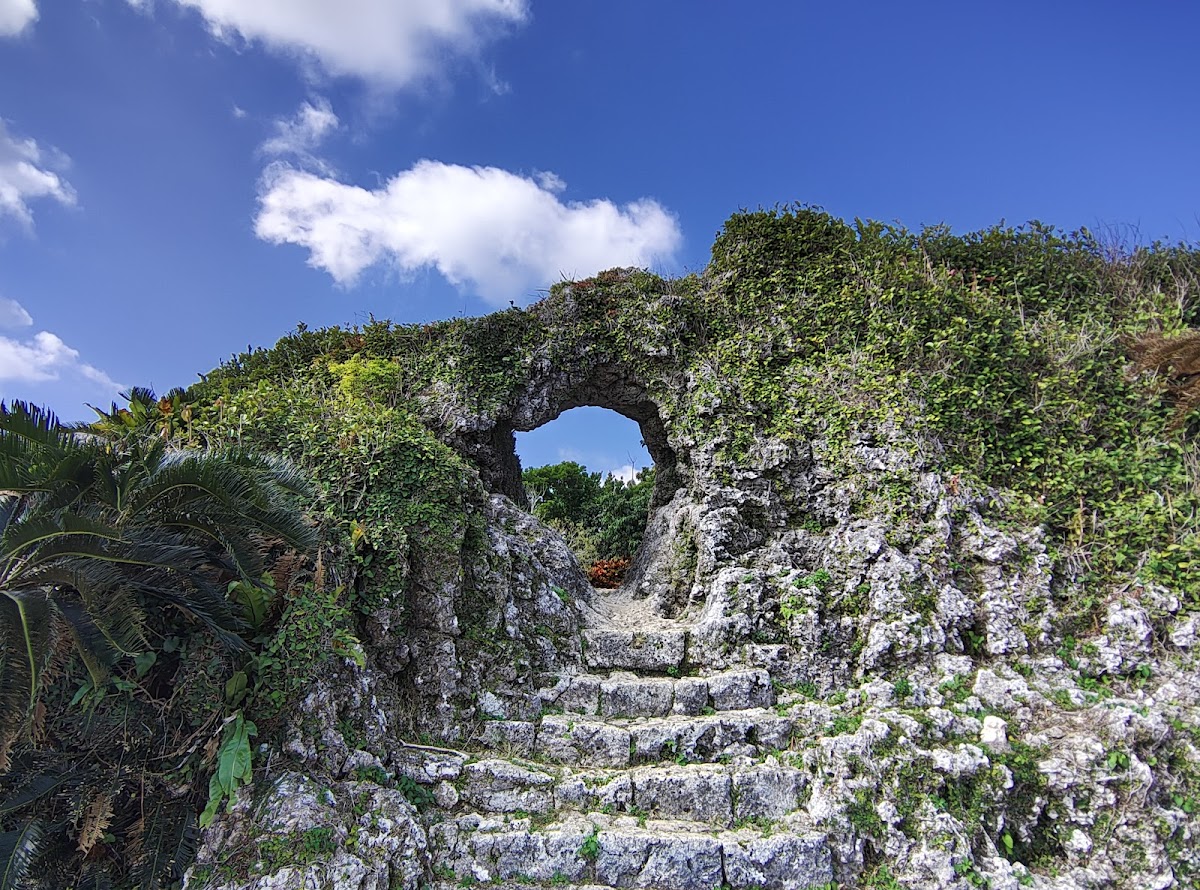
Okawa Gusuku is known as the only gusuku in Ginoza Village that features stone masonry. While many Okinawan gusuku are castle-type structures surrounded by stone walls, the stone masonry at Okawa Gusuku is presumed to have functioned more as a boundary or foundation rather than a defensive structure.
The stone masonry structure exhibits the nozurazumi (rough-stone masonry) technique using Ryukyu limestone, making it a valuable resource illustrating the evolution of stonework techniques from the gusuku period to the Ryukyu Kingdom period. Some of the stone masonry remains at the site, preserving the architectural techniques of that time.
Nuru-denchi (Ritual Facility)
Within Okawa Gusuku, the remains of a ritual facility called “Nuru-denchi” have been confirmed. Nuru refers to traditional female priestesses in Ryukyu, and the Nuru Palace was the center of their religious activities.
During the Ryukyu Kingdom era, Noro (Nuru) were stationed in each region to oversee local religious ceremonies. The Nuru Palace at Okawa Gusuku was a center of faith in the Ginoza region, and it is believed that rituals for fertility, safe voyages, and protection against disease were performed there.
Even today, numerous Utaki (sacred groves) are scattered around the area, and these are cherished as places of local worship. Excavations at these religious sites have yielded Gusuku pottery and Sue ware, demonstrating continuity from the Gusuku period.
Okawa Anji Residence Site
The Okawa Anji Residence was the living space of the Anji (local lord) who ruled this area. Anji were powerful figures who ruled the region from the Sanzan period (before the Ryukyu Kingdom), using Gusuku as their base to control the surrounding area.
From the remains of the residence, trade ceramics of Chinese and Southeast Asian origin have been collected, suggesting that the Okawa Anji (lord) may have been involved in overseas trade. These unearthed artifacts are important evidence that Ryukyu played a role in East Asian maritime trade during the 15th and 16th centuries.
The layout of the residence exhibits a unique Ryukyuan spatial configuration, where ritual and living spaces are clearly separated yet function as an integrated whole, making it a valuable example in gusuku (castle) research.
Aspects of the Ginoza-nu-Kojima Site
Scope and Characteristics of the Site
Okawa Gusuku is also known as the “Ginoza-nu-Kojima Site,” which refers to a broader group of ruins including the gusuku. The name “Kojima” is a common place name in Okinawa, signifying an old settlement or historically significant land.
This site is not a single castle site, but rather a settlement site with a complex combination of residential, production, and ritual areas. Excavations have unearthed Gusuku pottery, Sue ware-like pottery, and trade ceramics, confirming a long period of human activity from the 12th to the 16th centuries.
History Told by Excavated Artifacts
A diverse range of artifacts from various periods have been discovered around Okawa Gusuku.
Gusuku pottery is pottery used in Okinawa from the 11th to the 15th centuries, and includes cooking jars and storage pots. These are important materials that show traces of daily life.
Sue ware-like pottery is pottery similar to Sue ware from mainland Japan, and is attracting attention as evidence of exchange between Ryukyu and mainland Japan.
Trade ceramics include Chinese celadon and white porcelain, and Thai pottery from Southeast Asia, illustrating the reality of international trade during the time when Ryukyu functioned as a “bridge to the world.”
These unearthed artifacts indicate that Okawa Gusuku was not merely a local fortress, but a hub integrated into a wide-area trade network.
Historical Background of Ginoza Village
Ginoza during the Ryukyu Kingdom Era
The area of present-day Ginoza Village was part of Kin Magiri during the Ryukyu Kingdom era. The 1649 “Illustrated Village Register” records four villages: Kochiya (present-day Matsuda), Ginoza, Sokei, and Kanna, which were collectively known as the “Upper Four Villages” of Kin Magiri.
This region is believed to have belonged to the sphere of influence of the Hokuzan Kingdom from the Gusuku period to the Sanzan period. Hokuzan was a power based at Nakijin Castle and controlled the northern part of Okinawa Island until it was destroyed by Sho Hashi of Chuzan in 1416.
Okawa Gusuku likely functioned as a local base during the Hokuzan Kingdom era, and it is presumed that after the fall of Hokuzan, it was incorporated into the local administrative organization of the Ryukyu Kingdom. ### The Establishment of Ginoza Village in the Modern Era
The current Ginoza Village is a relatively new municipality, established on April 1, 1946, when four districts—Kochi, Ginoza, Sokei, and Kanna—separated from Kin Village (present-day Kin Town).
Although Ginoza Village was formed during the post-war period of municipal reorganization, its historical roots are ancient. Ruins such as Okawa Gusuku prove that people have lived in this region since ancient times and cultivated a unique culture.
Currently, Ginoza Village is nationally known as the spring training camp site for the Hanshin Tigers, and is carving a new history as a village of sports and tourism. However, historical heritage such as Okawa Gusuku is carefully preserved as the core of the village’s cultural identity.
The Positioning of Gusuku and Okawa Gusuku in Ginoza Village
Distribution of Gusuku within the Village
Without Okawa Gusuku, no other clearly defined castle-type gusuku have been confirmed within the Ginoza Village area. This suggests that this region was within the sphere of influence of surrounding large gusuku (castles), such as Kin Gusuku, and therefore did not require its own large-scale fortress.
Okawa Gusuku is rather a settlement-like site where regional administrative, religious, and residential functions were integrated, and it is thought to have developed differently from a castle primarily intended for defense.
Relationship with Surrounding Gusuku
North of Ginoza Village lies Kin Town, where Kin Gusuku was an important base. Kin Gusuku is considered one of the important bases of the Hokuzan Kingdom, and Okawa Gusuku may have been under its control.
Furthermore, large gusuku representative of Okinawa Island exist, such as Nakijin Castle to the north and Katsuren Castle to the south. Okawa Gusuku is thought to have functioned as a regional base within a network connecting these large castles.
Cultural Value of Okawa Gusuku
Archaeological Value
Okawa Gusuku is a valuable site that shows the changes in settlement forms from the gusuku period to the Ryukyu Kingdom period. It is considered to have high academic value, particularly in the following respects. 1. Structure as a Complex Site: The spatial configuration, which integrates the functions of residence, ritual, and production, is important for understanding the settlement formation process of the Ryukyu Islands.
- Stone Masonry Techniques: As the only gusuku (castle) in Ginoza Village with stone masonry, its position in the history of regional architectural technology is noteworthy.
- Diversity of Excavated Artifacts: The diverse artifacts from both Japan and abroad are valuable resources for research into the history of Ryukyu trade.
- Long-Term Continuity: The traces of long-term use from the 12th to the 16th centuries demonstrate the stability and continuity of the local community.
Significance in Regional Culture
Okawa Gusuku is cherished by local residents as a symbol of Ginoza Village’s historical identity. The religious space, integrated with the surrounding sacred sites (utaki), remains central to local rituals and ceremonies, possessing aspects of a living cultural heritage.
It is also used as teaching material for local history in local schools, playing an important role in passing on history to future generations.
Access and Visiting Information
Basic Information
Okawa Gusuku is known as a gusuku (castle) with a well-maintained and easily accessible environment.
Location: Ginoza, Ginoza Village, Kunigami District, Okinawa Prefecture
Elevation: Approximately 50 meters
Relative Height: Approximately 40 meters
Parking: Available
Restrooms: Available
Visiting Hours: Open (However, consideration is required when entering ritual facilities)
Access Methods
Access by Car: Approximately 5 minutes from the Ginoza IC on the Okinawa Expressway. Turn onto the village road from National Route 329 and follow the signs.
Public Transportation: Take a Ryukyu Bus or Okinawa Bus route bus and get off at the Ginoza bus stop, then walk for approximately 15 minutes.
Precautions During Visits
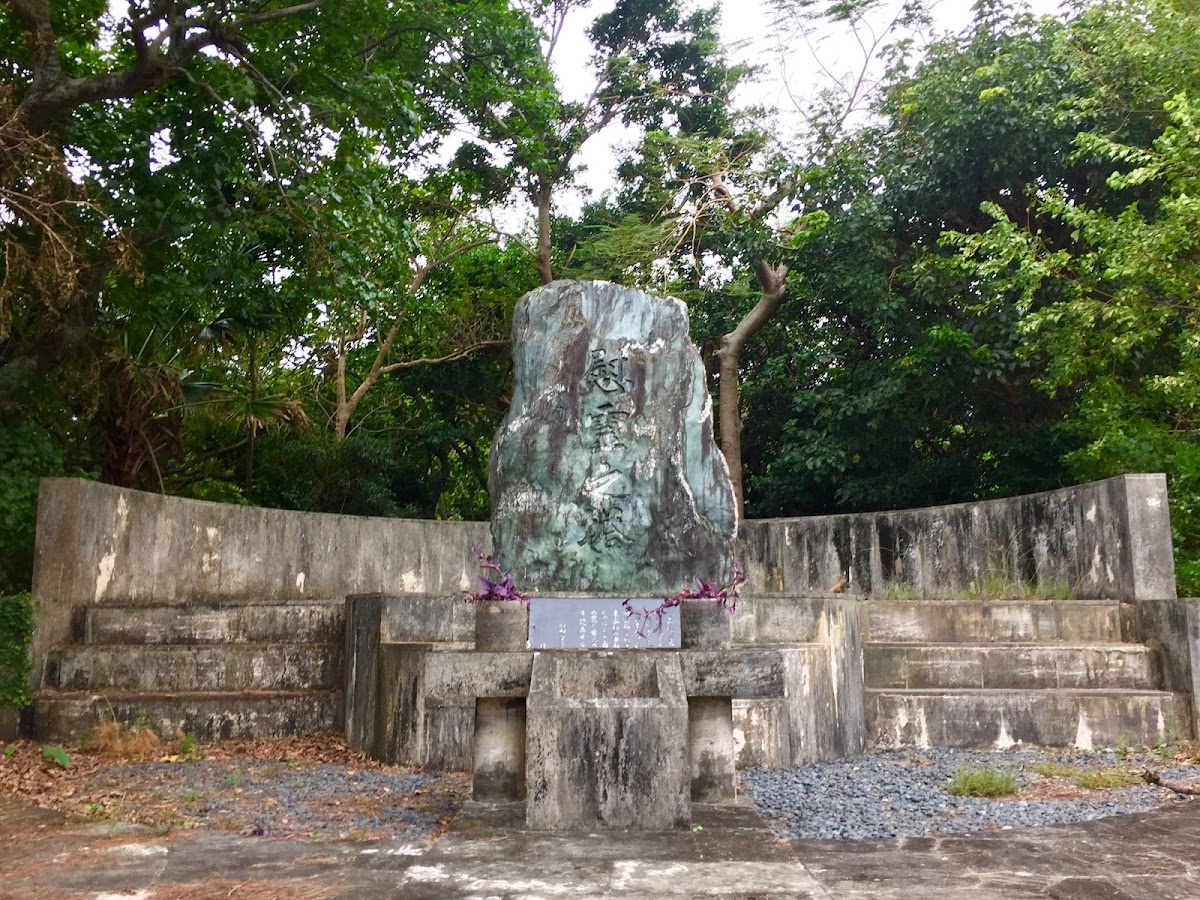
- Consideration for Ritual Facilities: The sacred groves and the Nuru-denchi ruins are still objects of worship. Sufficient consideration is required when entering or taking photographs.
- Protection of the Natural Environment: Please be careful not to damage the vegetation or topography around the ruins.
- Safety Check: The northeast side is a steep cliff, so please watch your step.
- Protection of Artifacts: Pottery fragments and other artifacts may be scattered on the surface; please do not take them.
Okawa Gusuku and Okinawa’s Gusuku Culture
What is a Gusuku?
Gusuku is a general term for the unique castle ruins of Okinawa. It is believed that more than 300 gusuku were built throughout Okinawa between the 11th and 16th centuries.
Gusuku can be broadly categorized into the following types:
Castle-type Gusuku: Large-scale castles surrounded by stone walls, such as Shuri Castle and Nakijin Castle.
Settlement-type Gusuku: Those with a strong settlement character, where residence and religious rites are integrated, like Okawa Gusuku.
Ritualistic Gusuku: Gusuku primarily served as sacred sites with religious functions.
Okawa Gusuku is positioned as a complex gusuku, possessing elements of both settlement-type and ritualistic gusuku.
The Role of Gusuku in Ryukyu History
Gusuku played diverse roles in Ryukyu history.
Political Center: As the residence of local lords called Anji, it was the center of regional governance.
Economic Center: It managed surrounding farmland and fishing grounds, and served as a place for the collection and distribution of agricultural products.
Ritual Site: Rituals were performed by Noro (Nuru), serving as the spiritual pillar of the region.
Trading Hub: Goods traded with overseas countries gathered there, making it a nexus connecting the regional economy with international trade.
Okawa Gusuku is believed to have functioned as a comprehensive regional center possessing all of these functions.
Expectations for Future Research and Preservation
Unresolved Issues
Many aspects of Okawa Gusuku remain unresolved.
- Identification of Construction Period: The exact construction date and duration of use will need to be determined through future archaeological excavations.
- Genealogy of the Anji (Lord): Much remains unknown regarding the lineage and power dynamics of the Okawa Anji.
- Size of the Settlement: Further research is needed to determine the population size and specific settlement structure surrounding the gusuku.
- Circumstances of Abandonment: Further research is needed to determine when and why the gusuku lost its function.
Preservation and Utilization Efforts
In Ginoza Village, efforts are underway to preserve Okawa Gusuku as a valuable cultural asset and to utilize it as a tourist resource and educational material.
With the development of parking lots and restrooms, a comfortable environment for visitors has been created, and the site is also being used as a place for learning about local history.
In the future, along with the promotion of further academic research, new forms of cultural property utilization are expected, such as the recording and preservation of the ruins using digital technology and the recreation of its appearance in the past through virtual reconstruction.
Summary
Okawa Gusuku (Ginoza Nu-no-Kojima Ruins) is a valuable historical heritage site remaining in Ginoza Village, Okinawa Prefecture. As the only gusuku in the village with stone walls, and as a complex site integrating residential, religious, and production functions, it occupies an important position in understanding the history of Ryukyu.
Okawa Gusuku, which retains the remains of the residence of the Anji (local lord) who ruled this land from the Gusuku period to the Ryukyu Kingdom period, religious facilities such as the Nuru-denchi, and traces of daily life, is a valuable witness that conveys the social structure and culture of that time.
The unearthed trade ceramics demonstrate that Ryukyu, despite being a small regional base, was integrated into the East Asian maritime trade network, illustrating Ryukyu’s role as a “bridge to all nations.”
Today, Okawa Gusuku is well-preserved and a popular historical site open to visitors. With facilities such as parking and restrooms, it’s easily accessible for anyone interested in Okinawan history.
As a core element of Ginoza Village’s historical identity and an important resource for Ryukyu history research, Okawa Gusuku will undoubtedly continue to increase in value. When visiting Okinawa, why not stand on this tranquil hillside and reflect on the history of Ryukyu?