A Complete Guide to the History and Highlights of Mitsuboshi Castle (Mimasaka City, Okayama Prefecture) | The Goto Clan’s Residence and the Battles with the Ukita Clan
Mitsuboshi Castle, located in Akemi, Mimasaka City, Okayama Prefecture, is a mountain castle that served as the residence of the Goto clan during the Sengoku period. Preserved as a Mimasaka City designated historical site, it remains a valuable historical heritage site with many surviving structures. This article provides a detailed explanation of everything about Mitsuboshi Castle, including its history, the battles between its lord Goto Katsumoto and Ukita Naoie, notable remains, and access information.
Overview of Mitsuboshi Castle
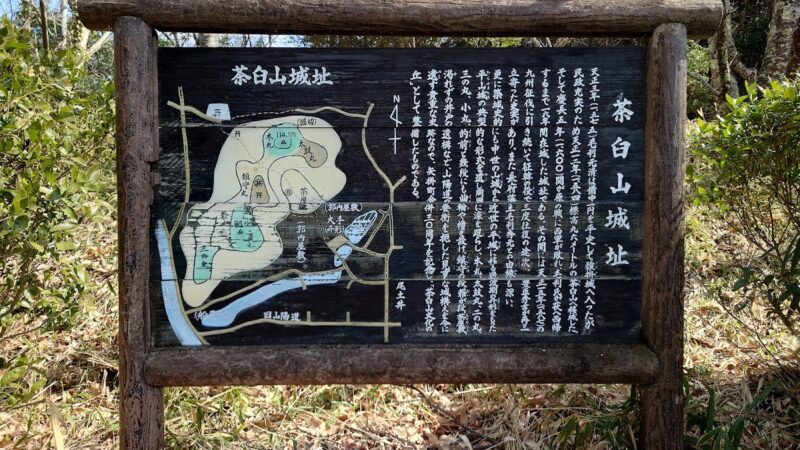
Mitsuboshi Castle was a Japanese castle (mountain castle) located in Akemi, Mimasaka City, Okayama Prefecture, and is designated as a Mimasaka City historical site. Built on the summit of Mount Mitsuboshi (elevation 233m, relative height approximately 150m), it was situated at a strategic transportation hub where the Kajinami River and Yoshino River intersected.
The castle’s name, “Mitsuboshi,” is said to have originated from the mountain’s shape with three peaks, and the entire mountain functioned as a natural fortress. The Yoshino River flowed to the east, and the Kajinami River to the west, forming a natural defensive line.
Location and Geographical Importance of Mitsuboshi Castle
Mitsuboshi Castle was built at a crucial point for river and land transportation in the Mimasaka region. Overlooking the confluence of the Yoshino River and the Kajinami River, it was an extremely important base for monitoring and controlling logistics and military movements in the region.
To the south lay Mikuradayama Castle, and defensive facilities were also positioned on the opposite bank of the Kajinami River to the west, suggesting that it functioned as part of a coordinated defense network involving multiple castles.
History and Development of Mitsuboshi Castle
Ōhō to Ryakuō Periods: Castle Construction Period
The history of Mitsuboshi Castle is ancient, dating back to the Ōhō period (1161-1163). The first person to establish a residence in this area was Watanabe Shinzaemon Nagahiro, who built a residence here and named it “Mitsuboshi.” The Watanabe family ruled this area for two generations.
Later, in 1339 (Ryakuō 2), Gotō Yasumoto obtained the position of Jitō (land steward) of Shioyu-gō and began to reside in this area. This is considered the beginning of the relationship between the Gotō family and Mitsuboshi Castle.
Sengoku Period: The Gotō Family’s Rule and Relationship with the Amago and Mōri Clans
During the Sengoku period, Mitsuboshi Castle developed as the residence of the Gotō family. It is counted as one of the 54 castles listed in the Shōhō Records, and its lords were Gotō Settsu-no-kami Katsumoto, and later Gotō Katsumoto.
During the time of Gotō Katsumoto, Mitsuboshi Castle was subordinate to the Amago clan, a Sengoku daimyo of Izumo Province. However, when the Amago clan was defeated by the Mori clan in 1566, the situation changed dramatically. Goto Katsumoto chose to align himself with Urakami Munekage, a powerful daimyo of Bizen Province, in order to preserve his power.
Tensho Era: Ukita Naoie’s Invasion and the Fall of Mitsuboshi Castle
The fate of Mitsuboshi Castle was sealed by Ukita Naoie’s invasion of Mimasaka Province during the Tensho era. Ukita Naoie had expanded his power from Bizen Province and was attempting to advance into the Mimasaka region.
Goto Katsumoto resisted from Mitsuboshi Castle, but defense proved extremely difficult against the Ukita clan’s powerful military force. After fierce fighting, Mitsuboshi Castle fell, and Goto Katsumoto is said to have been killed in battle.
This “Battle of Mitsuboshi Castle” was a crucial step in the Ukita clan’s conquest of Mimasaka and a turning point in the Sengoku history of this region.
After the Fall of the Castle and the Present
After the fall of Mitsuboshi Castle, the castle was abandoned. Later, the tomb (a five-tiered pagoda) of Goto Katsumoto was erected at the foot of the Mitsuboshi Castle ruins, serving as a place to commemorate the achievements of the castle lord.
Currently, the Mitsuboshi Castle ruins are preserved as a designated historical site of Mimasaka City, and many remains are well-preserved. Hiking trails have been developed around the castle ruins, making it a popular tourist spot for history enthusiasts and castle fans.
Origin of the Name of Mitsuboshi Castle
The name Mitsuboshi Castle originates from the fact that the mountain on which the castle was built has three peaks. The most likely theory is that it was named “Mitsuboshi” (Three Stars) because the shape of Mount Mitsuboshi resembles three stars.
These three peaks were each used as baileys (kuruwa), with the main bailey, western bailey, and eastern bailey located there. The castle adopted a “sogamae” (total defensive structure) format, utilizing the entire mountain as a fortress, with each peak working in conjunction to provide defensive functions.
Remains and Highlights of Mitsuboshi Castle
The remains of Mitsuboshi Castle are home to many structures that exemplify the characteristics of a mountain castle from the Sengoku period, making it a valuable historical site for castle research.
Enclosures (Kuruwa)
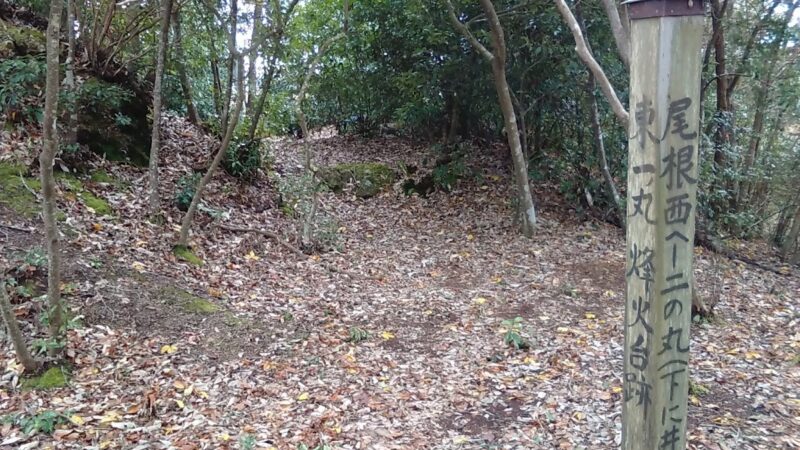
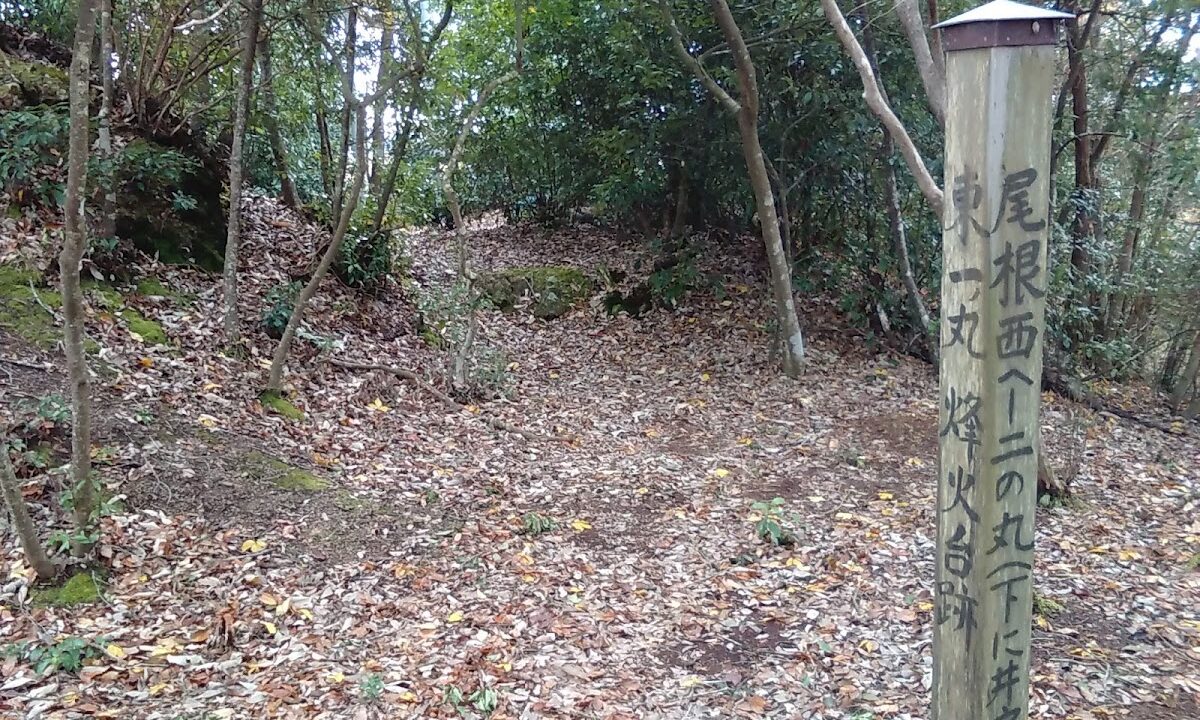
Multiple enclosures (kuruma) can be identified at Mitsuboshi Castle. Centered around the main enclosure, flat areas such as the West Enclosure and East Enclosure remain, utilizing the mountain’s terrain. These enclosures were used for troop garrisons, supply storage, and command posts.
While the scale of each enclosure is relatively small, indicating that it was a medium-sized mountain castle, the strategically placed enclosures created an effective defensive system.
Earthworks of the West Enclosure
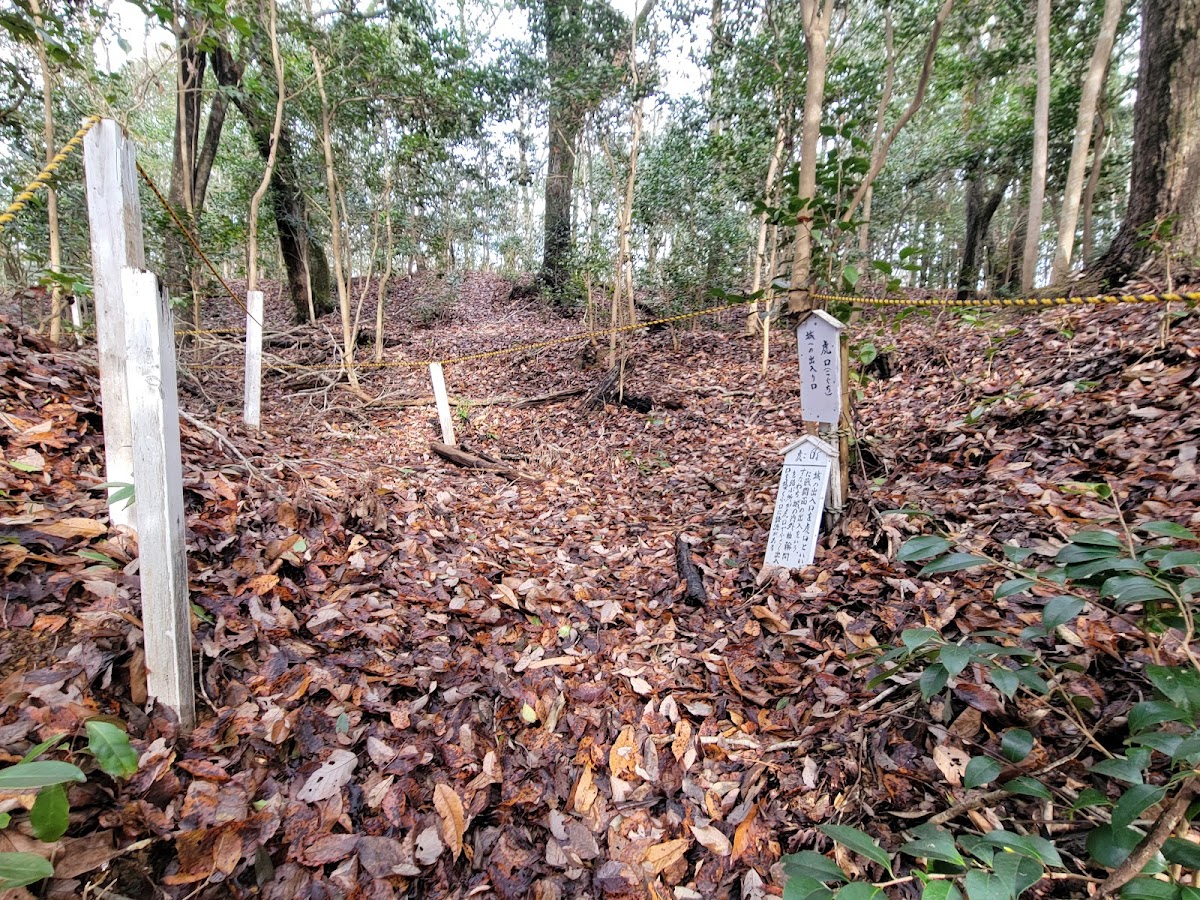
Among the remains of Mitsuboshi Castle, the earthworks of the West Enclosure are particularly impressive. The clearly remaining earthworks are tall, demonstrating the advanced castle-building techniques of the time.
The earthworks are earthen walls built to prevent enemy intrusion, surrounding the West Enclosure. This earthen rampart is well-preserved and is a valuable historical site where you can actually see a defensive structure from the Sengoku period.
Ridge-shaped Vertical Moat Group
Below the Nishinomaru (Western Bailey), you can see a distinctive defensive structure called the Ridge-shaped Vertical Moat Group. Ridge-shaped vertical moats are multiple vertical moats (ditches running vertically) dug at equal intervals on the slope of a mountain. They were constructed to hinder the enemy’s lateral movement and make attacks difficult.
This ridge-shaped vertical moat group is an important historical site demonstrating the development of castle construction technology in the late Sengoku period, and is thought to be a defensive structure added when Mitsuboshi Castle was finally renovated. The ridge-shaped structure carved into the slope can still be clearly observed today, making it a must-see point for castle enthusiasts.
Ascending Earthen Rampart
The Ascending Earthen Rampart, which extends along the slope from the Nishinomaru, is also one of the distinctive historical structures of Mitsuboshi Castle. The ascending earthworks were structures designed to attack enemies climbing the mountain slopes from the flanks. By constructing the earthworks along the slope, they effectively extended the defensive line.
This ascending earthwork is also well-preserved, allowing us to see the mounds of earth extending along the slope.
Moats (Horikiri)
Moats, an important defensive structure for mountain castles, also remain at Mitsuboshi Castle. Moats are dug to cut across ridges and were constructed to prevent enemy advances.
The moats at Mitsuboshi Castle were positioned to separate the main enclosure from other enclosures, functioning as a final line of defense to prevent enemy intrusion into the main enclosure even if part of an enclosure was captured.
Vertical Moats (Tatebori)
Several vertical moats, dug along the slope, can also be seen. Vertical moats served as drainage channels for rainwater and also played an important role as defensive structures that hindered enemy lateral movement.
Well Remains
Securing water was a matter of life and death for mountain castles, and well remains are still found at Mitsuboshi Castle. While digging wells on mountaintops was technically difficult, securing a water source in preparation for a siege was essential.
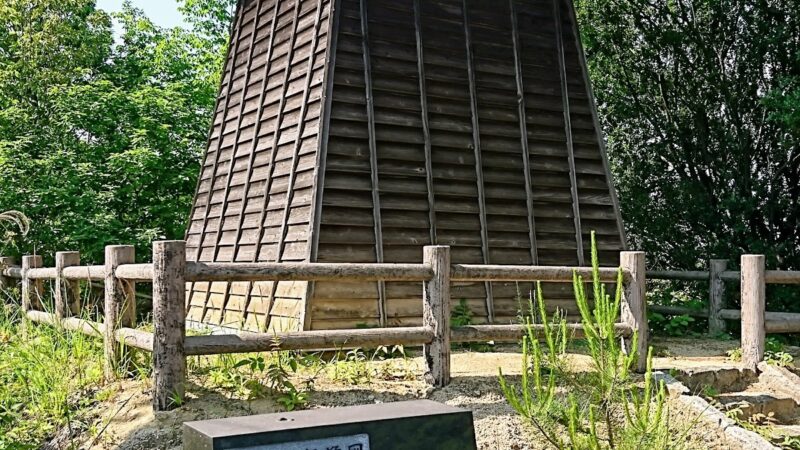
Even today, a depression believed to be the site of a well can be seen, allowing us to imagine life at the castle in those days.
Myoken Mitsuboshi Inari Shrine
At the trailhead to the Mitsuboshi Castle ruins is the Myoken Mitsuboshi Inari Shrine. Marked by a red torii gate, it is located next to Mimasaka Central Hospital. A hiking trail from this shrine leads to the castle ruins at the summit.
The shrine itself is a historical place, deeply connected to Mitsuboshi Castle, and attracts local faith.
Historical Background Around the Time of the Fall of Mitsuboshi Castle
The Tensho era, when Mitsuboshi Castle fell, was a turbulent time throughout the Chugoku region. The Mori clan had conquered the San’in and Sanyo regions, and Ukita Naoie was rising to power in Bizen.
Ukita Naoie was known as a “genius of strategy,” expanding his power through the skillful use of tactics and military force. While the Mimasaka region was under the influence of the Mori clan, many local lords maintained their own power, making it a crucial area for the Ukita clan to expand their influence from Bizen to Mimasaka and further into Harima.
Goto Katsumoto belonged to Urakami Munekage, but the Urakami clan itself was weakened by the rise of Ukita Naoie. Ukita Naoie grew to surpass the power of his lord, Urakami Munekage, and eventually chose to become independent from the Urakami clan.
During this process, many castles in Mimasaka were attacked by the Ukita clan, and Mitsuboshi Castle was no exception. Goto Katsumoto resisted to the end, but he could not withstand the great tide of the times, and Mitsuboshi Castle disappeared from the stage of history.
Sōkoku-ji Temple and the Grave of Gotō Katsumoto
At the foot of Mitsuboshi Castle lies Sōkoku-ji Temple, where a five-tiered pagoda believed to be the grave of Gotō Katsumoto stands. Sōkoku-ji Temple, as a temple associated with the Gotō clan, is an important place that conveys the history of the region to the present day.
The five-tiered pagoda is a common form of tombstone for samurai warriors of the Sengoku period, and it is a valuable historical site that commemorates the achievements of Gotō Katsumoto and the history of Mitsuboshi Castle. When visiting the Mitsuboshi Castle ruins, we recommend stopping by Sōkoku-ji Temple and praying for the repose of the castle lord’s soul.
Access and Transportation Information to Mitsuboshi Castle
This section provides information on how to access the Mitsuboshi Castle ruins.
Access by Car
- Approximately 15 minutes from Mimasaka IC on the Chugoku Expressway
- Head towards Mimasaka Central Hospital; the trailhead is at the Myoken Mitsuboshi Inari Shrine next to the hospital.
- There is parking space around the shrine, but please note that the number of spaces is limited.
Access by Public Transportation
- Approximately 30 minutes on foot from JR Kishin Line Mimasaka-Emi Station
- Approximately 5 minutes by taxi.
About Climbing the Castle
- Approximately 30-40 minutes on foot from the trailhead at Myoken Mitsuboshi Inari Shrine to the castle ruins at the summit.
- The hiking trail is well-maintained, but since it is a mountain castle, comfortable walking shoes such as athletic shoes are essential.
- The elevation gain is 150m, so please prepare according to your physical fitness.
- Don’t forget insect repellent in the summer and warm clothing in the winter.
- Bringing drinking water and light snacks is recommended.
Precautions During Visit
- Please be careful not to damage the remains in order to protect the historical site.
- Please take your trash with you.
- Avoid climbing the castle on days with bad weather or after rain, as the ground can be slippery.
- Visiting with others is safer than climbing alone.
Related Historical Sites Around Mitsuboshi Castle
When visiting Mitsuboshi Castle, visiting the surrounding related historical sites will allow you to gain a deeper understanding of the Sengoku period history of the Mimasaka region.
Mikuradayama Castle
A mountain castle located south of Mitsuboshi Castle, it played a role in the defense of the region in cooperation with Mitsuboshi Castle.
Castles of Mimasaka
Many mountain castles are scattered throughout the Mimasaka region, which were the stage for fierce battles during the Sengoku period. If time permits, you can enjoy a “mountain castle tour” visiting multiple castle ruins.
Best Season to Visit Mitsuboshi Castle
Mitsuboshi Castle ruins are accessible year-round, but each season offers a different charm.
Spring (March-May)
The fresh greenery is beautiful, the weather is mild, and it’s ideal for climbing the castle. You can also enjoy wildflowers.
Summer (June-August)
The lush greenery makes it a good season for observing the ruins, but precautions against heat and insects are necessary. Early morning visits are recommended.
Autumn (September-November)
The beautiful autumn foliage and stable weather make this the most suitable season for visiting.
Winter (December-February)
The fallen leaves make the ruins easier to observe, but precautions against cold and freezing are necessary.
Historical Value and Modern Significance of Mitsuboshi Castle
Mitsuboshi Castle is a valuable historical site that conveys the political and military realities of the Mimasaka region during the Sengoku period. As the stage for the historical event of Ukita Naoie’s invasion of Mimasaka, and as a site exhibiting late Sengoku period castle construction techniques such as ridged trenches and ascending earthworks, it holds significant value in castle research.
Currently, Mimasaka City is protecting the Mitsuboshi Castle ruins as a city-designated historical site and is working to pass it on to future generations as a regional historical heritage. Local residents are continuing their preservation efforts, and history enthusiasts are conducting ongoing research and investigations, so the historical value of Mitsuboshi Castle will undoubtedly become even clearer in the future.
Summary
Mitsuboshi Castle in Mimasaka City, Okayama Prefecture, is a mountain castle that flourished as the residence of the Goto clan and fell to an invasion by Ukita Naoie. The castle’s layout, utilizing the three peaks of Mount Mitsuboshi, and the remains such as the earthworks of the western bailey and the rows of vertical trenches, make it a valuable historical site that conveys the appearance of a Sengoku period mountain castle to the present day.
You can climb to the castle from the Myoken Mitsuboshi Inari Shrine next to Mimasaka Central Hospital, and after a 150m elevation gain, you can experience the view that the castle lords of the time saw. While reflecting on the battles between Goto Katsumoto and Ukita Naoie, and the Sengoku history of the Mimasaka region, please visit the Mitsuboshi Castle ruins.
This historical site is recommended not only for history buffs and castle enthusiasts, but also for those who enjoy hiking. With the right equipment and preparations, you can safely enjoy the history and nature of Sanxing City.