Bitchu Fukuyama Castle (Soja City, Okayama Prefecture) Complete Guide | The Charm and Highlights of a National Historic Site that served as the setting for the Taiheiki
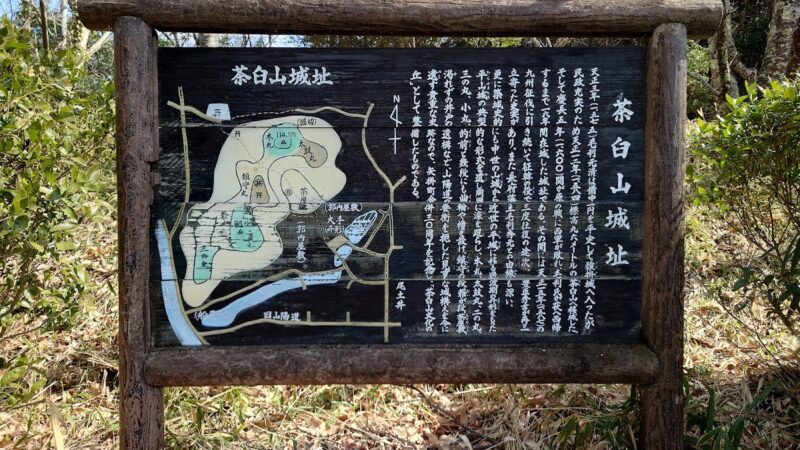
Located in Kiyone-San’in, Soja City, Okayama Prefecture, Bitchu Fukuyama Castle is a valuable mountain castle ruin that conveys the turmoil of the Nanboku-cho period. Known as the setting for the “Battle of Fukuyama,” which appears in the military chronicle “Taiheiki,” it was designated a national historic site in 1936. Built on the summit of Mt. Fukuyama at an altitude of 302 meters, the castle boasts a superb location overlooking the Soja Plain, making it a popular spot not only for history buffs but also for hiking enthusiasts.
Overview and Basic Information of Bitchu Fukuyama Castle
Castle Location and Geographical Characteristics
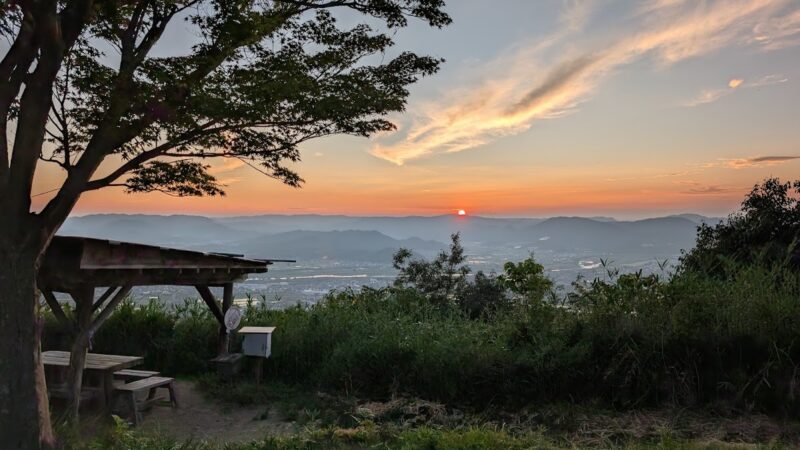
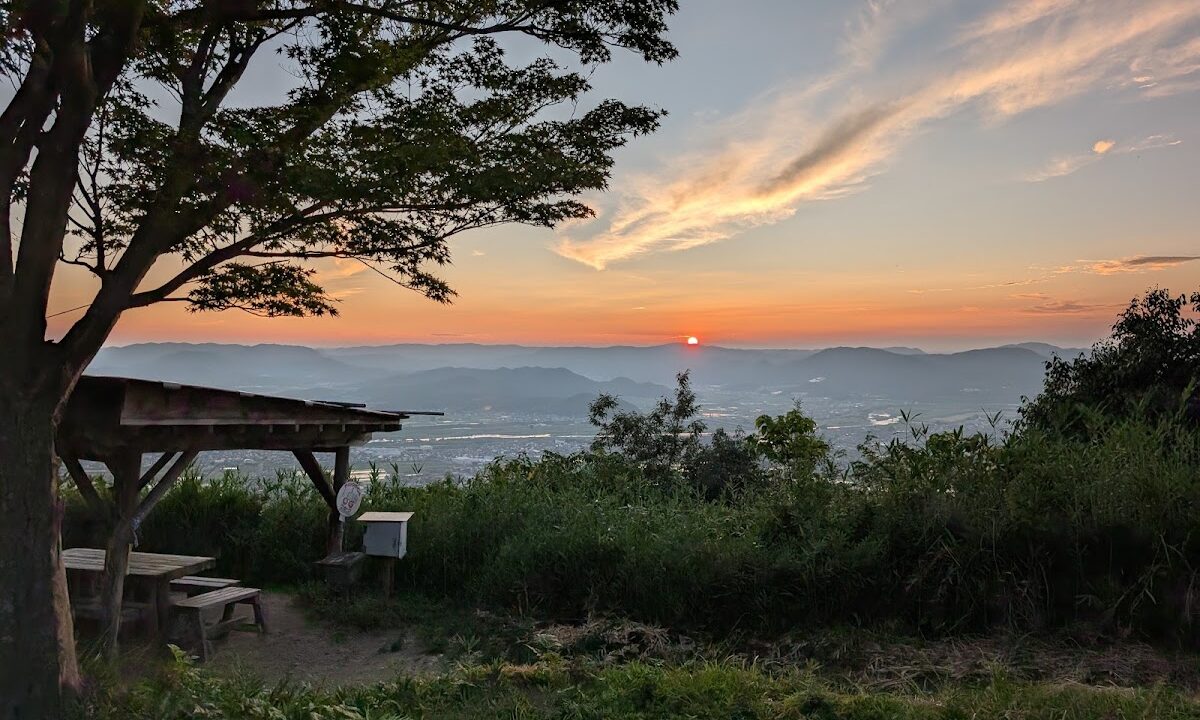
Bitchu Fukuyama Castle is a multi-bailey mountain castle built on Mt. Fukuyama (302m above sea level) in the Kiyone-San’in area in the southern part of Soja City, Okayama Prefecture. Located at a strategic point near the border of Bizen and Bitchu provinces, this mountain boasts an excellent location overlooking the Soja Plain. From the summit, a 360-degree panoramic view unfolds, and on clear days, the Seto Inland Sea can be seen in the distance.
Together with the adjacent Koyama (elevation 301m), it is known as the “Mountain of Happiness,” and the walking trail connecting the two mountains is named the “Path of Happiness.” This name was chosen with the hope of bringing happiness to visitors and is beloved by local residents.
Basic Data
- Location: Kiyone San’in, Soja City, Okayama Prefecture
- Castle Structure: Renka-shiki Yamashiro (mountain castle with multiple enclosures)
- Elevation: 302 meters
- Construction Period: Late Kamakura period to early Nanboku-cho period
- Builder: Makabe Koroku Korehisa (one theory says Sho Kanesuke)
- Main Lords: Sho clan, Makabe clan
- Abandonment Period: Unknown (estimated to be late Sengoku period)
- Cultural Property Designation: National Historic Site (designated December 16, 1936)
- Remains: Main enclosure site, castle gate site, stone walls, dry moat, well site, earthworks
History of Fukuyama Castle
Pre-Construction History: The Era of Fukuyama-ji Temple
Before Fukuyama Castle was built, a mountain temple called “Fukuyama-ji” existed on this site from the Nara period to the Heian period. During the height of mountain Buddhism, Fukuyama is believed to have been a sacred site for Shugendo practitioners, attracting many followers. The temple complex and facilities of Fukuyama-ji undoubtedly formed the foundation for the later construction of the castle.
Late Kamakura to Nanboku-cho Period: The Birth of the Castle
There are several theories regarding the construction of Fukuyama Castle. One theory suggests it was built by Makabe Koroku Korehisa at the end of the Kamakura period, while another suggests it was renovated and transformed into a castle by Sho Kanesuke in the early Nanboku-cho period. In any case, it is certain that the local lord who ruled this area developed it as a defensive base during the turbulent times of the decline of the Kamakura shogunate and the turmoil of the Nanboku-cho period.
During the Nanboku-cho period, Bitchu Province was one of the front lines of fierce conflict between the Southern and Northern Courts. Due to its strategic importance, Fukuyama Castle became a focal point of the struggle between the two forces.
The Battle of Fukuyama: A Fierce Battle as Recounted in the Taiheiki
Background of the Battle
In May 1336 (Engen 1st year/Kenmu 3rd year), a large-scale siege battle, representative of the Nanboku-cho period, unfolded at Fukuyama Castle. This is the “Battle of Fukuyama,” which is recorded in detail in the Taiheiki.
At the time, Fukuyama Castle was defended by the Sho clan, a general of the Southern Court. Meanwhile, the large army of the Northern Court, led by Ashikaga Takauji, was on its way from Kyoto to western Japan and needed to capture this castle. Leaving Fukuyama Castle, a stronghold of the Southern Court, undefended while advancing westward would have endangered their rear.
A Battle of Overwhelming Numerous Disparities
The most striking feature of the Battle of Fukuyama is the disparity in troop numbers. The Northern Court’s attacking army, including Ashikaga Takauji’s main force, numbered approximately 200,000, while the Southern Court defending the castle had only about 1,500 soldiers. The enemy’s troop numbers were more than 100 times greater than the enemy’s, a situation that would normally make a battle impossible.
However, the defending army, led by the Sho clan, made full use of the mountain castle’s terrain and employed skillful defenses. They resisted the enemy army climbing the steep mountain paths by dropping rocks, shooting arrows, and launching night attacks, employing every tactic at their disposal.
The Course and Outcome of the Battle
According to the *Taiheiki*, the Northern Court attempted several all-out attacks, but each time they encountered fierce resistance from the defenders, suffering heavy losses. Concerned about the difficulty and time wasted in capturing the mountain castle, Ashikaga Takauji avoided a direct assault and instead besieged the castle, attempting to starve the defenders.
Ultimately, Fukuyama Castle fell, but there are various theories regarding the process and exact timing. One theory suggests it was surrendered through a peace agreement, while another suggests it was due to surrender after a prolonged siege and the depletion of supplies. In any case, the valiant efforts of the defenders, who held out for a long period despite being overwhelmingly outnumbered, were passed down to future generations through the *Taiheiki* (The Chronicle of Great Peace).
Historical Significance of the Battle of Fukuyama
The Battle of Fukuyama was not merely a siege in a single region, but one of the important turning points in the Nanboku-cho period (Northern and Southern Courts period). This battle delayed Ashikaga Takauji’s pacification of western Japan, giving the Southern Court a considerable amount of time. Furthermore, it is believed to have influenced castle construction techniques during the later Sengoku period (Warring States period) as an example demonstrating the effectiveness of mountain castle defense.
Fukuyama Castle After the Sengoku Period
Even after the end of the Nanboku-cho period, Fukuyama Castle continued to function as an important base in Bitchu Province. During the Sengoku period, Bitchu Province became the stage for power struggles between clans such as the Mori, Ukita, and Mimura, and small-scale battles were repeatedly fought around Fukuyama Castle.
In particular, during the Bitchu Rebellion of the 1570s, the conflict took on the characteristics of a proxy war between the Mori and Oda clans, and the surrounding subsidiary castles such as Okaya Castle, Koyama Castle, and Kuroda Old Castle were also caught up in the fighting. However, after the Battle of Sekigahara and the arrival of the peaceful Edo period, it is believed that Fukuyama Castle ceased to serve its military role and was abandoned.
Highlights of the Castle Remains
Main Enclosure Site
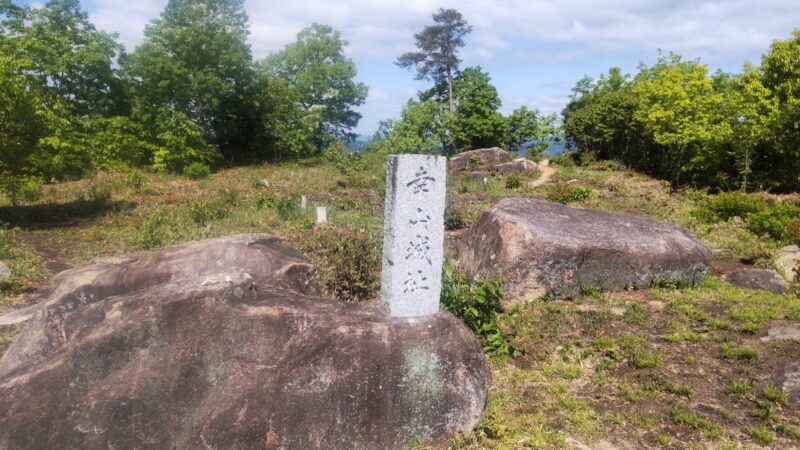
Located on the mountaintop at an altitude of 302 meters, the main enclosure site is the central part of Fukuyama Castle. Currently a flat area, traces of the former buildings can be seen. The view from the main enclosure is magnificent, offering a panoramic view of the entire Soja Plain. On a clear day, you can see the Seto Inland Sea to the south and the Kibi Plateau mountain range to the north, giving a real sense of the castle’s strategic importance.
Stone Walls of the Castle Gate Site
The most impressive remains of Fukuyama Castle are the stone walls remaining at the castle gate site. Built using the Nozurazumi technique, which involves stacking natural stones, this structure is a valuable resource showcasing stonework techniques from the Nanboku-cho period to the Sengoku period. Although some sections have collapsed, it still conveys the high level of stonework technology of the time.
From the structure of the gate remains, it is clear that the castle gate (koguchi) was not straight, but rather employed a “staggered koguchi” style, designed to prevent enemy intrusion.
Dry Moat and Earthworks
The dry moat and earthworks, defensive structures unique to mountain castles, remain in good condition. The dry moat was dug to block the ridgeline, serving to prevent enemy intrusion. The depth varies depending on the location, but the deepest point is over 3 meters.
The earthworks were constructed by piling up soil excavated from the dry moat and functioned as a defensive wall. Earthworks approximately 1-2 meters high can still be seen today.
Well Remains
The well remains near the summit illustrate the importance of securing a water source, a lifeline during a siege. To withstand a prolonged battle like the Battle of Fukuyama, a stable water source was essential. Even today, parts of the well’s stone structure remain, allowing us to imagine life at that time.
Securing water at a mountaintop over 300 meters above sea level was not easy, highlighting the crucial role this well played in supporting Fukuyama Castle’s defenses.
Happiness Path and Surrounding Attractions
Happiness Path
The walking trail connecting Fukuyama and the neighboring Koyama is named the “Happiness Path” and is maintained as a hiking course. This approximately 2-kilometer-long path features moderate ups and downs, making it a popular route for enjoying forest bathing while exploring history.
Information boards are installed along the way, allowing you to learn about the history and remains of Fukuyama Castle as you stroll. The fresh greenery in spring and the autumn foliage are beautiful, allowing you to enjoy the changing seasons.
Koyama Castle
Koyama Castle, which functioned as a subsidiary castle of Fukuyama Castle, is located on the summit of Mt. Koyama (elevation 301m). It is connected to Fukuyama Castle by a ridge, and they worked together in defense. Remains such as baileys and moats still exist today, and visiting both Fukuyama Castle and Okayama Castle allows for a deeper understanding of the castle network of the time.
Okayama Castle and Surrounding Castles
Okaya Castle is located approximately 2 kilometers northeast of Fukuyama Castle. A tragic legend remains that Ishikawa Hisashige committed seppuku (ritual suicide) at this castle during the Bitchu War of the Sengoku period. In addition, a network of castles centered around Fukuyama Castle exists, including Kuroda Old Castle, Karubeyama Castle, and Misu Castle. Visiting these castles will provide a deeper understanding of the medieval history of Bitchu Province.
Access Information
Access by Car
Nearest Interchange: Approximately 15 minutes from Okayama-Soja IC or Kurashiki IC on the Sanyo Expressway
After exiting Okayama-Soja IC, head south on National Route 180 and follow the signs for the Kiyone area. There is a small parking space at the Fukuyama Castle trailhead, but spaces are limited, so early arrival is recommended on weekends.
Access by Public Transportation
Nearest Station: Approximately 30 minutes on foot from Kiyone Station on the JR Hakubi Line to the trailhead
The trailhead is approximately 2 kilometers from Kiyone Station. Taxis are not always available in front of the station, so walking or renting a bicycle (available at the Soja City Tourism Association) is recommended.
About the Hiking
From the trailhead to the main castle ruins at the summit, it takes approximately 40-50 minutes on foot along a well-maintained hiking trail. There are steep sections along the way, so comfortable walking shoes such as athletic shoes are essential. Particular caution is needed after rain, as the trail can become slippery. Important Notes for Hiking:
- Bring drinking water (there are no vending machines at the summit)
- Bring insect repellent spray in the summer
- In winter, the sun sets early, so it is recommended to start descending by 3 PM
- Cell phone reception is good near the summit, but there are unstable areas along the way
Best Season and Time Required for Visiting
Recommended Season
Spring (Late March to May): Beautiful fresh greenery and comfortable temperatures make it ideal for hiking. You can also enjoy cherry blossom viewing in the village at the foot of the mountain during cherry blossom season.
Autumn (October to November): The autumn foliage is magnificent, the air is clear, and the views are superb. This is the most popular hiking season.
Summer (June to August): It is cool in the forest, but there are many insects, and heatstroke is a concern. Early morning hiking is recommended.
Winter (December-February): There is little snowfall, but roads may be icy. The air is clear and the views are excellent during this season.
Estimated Time Required
- From trailhead to summit: 40-50 minutes
- Sightseeing and rest at the summit: 30-60 minutes
- Descent: 30-40 minutes
- Total: Approximately 2-3 hours
If you plan to hike the circular route including the Happiness Path, please allow an additional 1-2 hours.
Combining with Soja City Tourist Spots
Here are some Soja City tourist spots you might want to visit before or after your visit to Fukuyama Castle.
Bitchu Kokubunji Temple
A representative tourist spot in Soja City, this ancient temple boasts a beautiful five-story pagoda. It’s about a 15-minute drive from Fukuyama Castle and is a popular base for cycling in the Kibiji region.
Kinojo Castle
An ancient mountain castle selected as one of Japan’s 100 Famous Castles, offering an experience of a mountain castle from a different era than Fukuyama Castle. Approximately 25 minutes by car from Fukuyama Castle.
Soja Shrine
An ancient shrine known as the main shrine of Bitchu Province, possessing high historical value. Approximately 10 minutes by car from Fukuyama Castle.
Hofuku-ji Temple
Known as the temple where the renowned painter Sesshu trained, it boasts a beautiful garden. Approximately 20 minutes by car from Fukuyama Castle.
Precautions when visiting Fukuyama Castle
Safety Precautions
- As it is a mountain castle, there are areas with unstable footing. Please wear trekking shoes or athletic shoes.
- Be careful of wasps and venomous snakes during the summer months.
- Avoid climbing alone; it is recommended to visit with multiple people if possible.
- If the weather deteriorates, do not force yourself to continue and turn back.
Manners and Rules
- As this is a nationally designated historical site, please do not damage the remains or take any stones.
- Please take all your trash with you.
- The use of fire is strictly prohibited.
- The collection of plants is prohibited.
Facilities
- There are no toilets at the summit. Please use the restroom before climbing.
- There are no vending machines, so please bring your own drinking water.
- Facilities such as rest areas and gazebos are minimal.
The Cultural Value of Fukuyama Castle
Significance of National Historic Site Designation
There are several important factors behind Fukuyama Castle’s designation as a national historical site in 1936.
Firstly, it is a castle clearly recorded in the important historical document, the “Taiheiki.” The correspondence between the document and the actual remains is rare.
Secondly, the remains of the mountain castle from the Nanboku-cho period are well-preserved. The stone walls, dry moats, and earthworks retain their original appearance.
Thirdly, it has high educational value as the stage for the historical event known as the Battle of Fukuyama. The battle, fought amidst overwhelming military disparity, is a crucial episode in Japanese history.
Progress in Academic Research
In recent years, archaeological excavations and surveys have been conducted at Fukuyama Castle, revealing details of its structure. In particular, analysis of the castle’s layout (design) is shedding light on the renovation process from the Nanboku-cho period to the Sengoku period.
Furthermore, research is progressing on its relationship with surrounding subsidiary castles, revealing a comprehensive picture of the castle network centered around Fukuyama Castle. These research findings provide important insights into the study of medieval mountain castles.
Summary: The Charm of Bitchu Fukuyama Castle
Bitchu Fukuyama Castle is a historical site with multifaceted charms that go beyond mere castle ruins.
For history enthusiasts, it is a valuable place to actually visit the setting of the “Taiheiki” (The Chronicle of Great Peace) and reflect on the turmoil of the Nanboku-cho period. Standing on the site of the Battle of Fukuyama, fought with an overwhelming numerical disadvantage of 200,000 against 1,500, allows you to feel the tension of that time firsthand.
For castle enthusiasts, it’s an excellent learning resource for studying mountain castle technology of the Nanboku-cho period. The remains, such as stone walls, dry moats, and earthworks, are well-preserved, clearly demonstrating the characteristics of a medieval mountain castle.
For hiking enthusiasts, it’s a course that offers a moderate amount of exercise and magnificent views. As the name “Path of Happiness” suggests, you can enjoy the joy of walking through nature.
When visiting Soja City, be sure to visit Bitchu Fukuyama Castle. The spectacular view of the Soja Plain from the 302-meter-high summit, and the historical romance of 700 years ago, continue to captivate visitors. With its value as a national historical site, its status as the battlefield described in the Taiheiki, and its approachable nature as the “Mountain of Happiness”—all these elements combine to make Bitchu Fukuyama Castle one of Okayama Prefecture’s representative historical heritage sites.