Complete Guide to Kurakake Castle (Bungo-Takada City, Oita Prefecture) | History, Highlights, and Access Explained in Detail
Kurakake Castle, located in Sano, Bungo-Takada City, Oita Prefecture, is an important mountain castle indispensable to the history of the Kunisaki Peninsula. Also known as “Sano Kurakake Castle,” it boasts a distinctive structure with all-stone walls and preserves valuable remains from the late Sengoku period to the early modern period. This article thoroughly explains everything you need to know before visiting Kurakake Castle, including its historical background, the characteristics of its castle structure, its highlights, and detailed access information.
Basic Information on Kurakake Castle
Kurakake Castle is a mountain castle located in Sano, Bungo-Takada City, Oita Prefecture, built on a hill approximately 170 meters above sea level. The castle ruins remain in good condition, and its distinctive structure with all-stone walls is a particularly important historical site demonstrating the development of castle architecture in this region.
Location and Geographical Characteristics
Kurakake Castle was built in a strategic location on the western side of the Kunisaki Peninsula, within the Bungo-Takada City area. Overlooking the road leading inland from the plains facing the Suo Sea, it was a strategically important base both militarily and economically. Although relatively low in elevation, its topographical advantage, offering a panoramic view of the surrounding plains, provided excellent conditions for both defense and surveillance.
The area surrounding the castle is still characterized by rural landscapes, with scattered settlements in the Sano district that retain traces of the former castle town. This region has long been under the influence of Usa Shrine and is known as a place where the Rokugo Manzan culture flourished.
Castle Size and Structural Overview
Kurakake Castle is a relatively compact castle complex, consisting of a main keep (Honmaru) surrounded by a second bailey (Ninmaru). However, despite its small size, a major feature is the use of advanced castle-building techniques, including the construction of entirely stone walls. The stone walls of the main keep and the second bailey are valuable historical remains that demonstrate the development of stonework techniques in the early modern period, and are attracting attention from castle researchers.
The overall layout of the castle grounds skillfully utilizes the terrain, creating a defensive system that maximizes the use of limited space. The arrangement of the baileys and the construction methods of the stone walls suggest the application of the latest technology of the time.
History of Kurakake Castle
Construction History and Lords
There are various theories regarding the construction period of Kurakake Castle, but it is believed to have been built during the mid-to-late Sengoku period by local lords who ruled this region. The Kunisaki Peninsula in Bungo Province, while under the influence of the Otomo clan, was a region where many local lords maintained their own power, and Kurakake Castle was one of the bases of such local forces.
Regarding the lords, it is believed that the castle was the residence of powerful local lords, primarily the Sano clan. The Sano clan held considerable power in the Kunisaki Peninsula and governed the region while maintaining relations with the Otomo clan.
The Tahara Chikatsura Rebellion and Kurakake Castle
The most important event in the history of Kurakake Castle is the “Tahara Chikatsura Rebellion,” which occurred in 1579. This rebellion was a large-scale civil war that divided Bungo Province in two, initiated by Tahara Chikatsura, a senior retainer of the Otomo clan, against his lord, Otomo Sorin.
Tahara Chikatsura was a powerful vassal of the Otomo clan, but he rebelled due to disagreements over Sorin’s Christian policies and control of his retainers. Kurakake Castle became one of the main battlefields during this rebellion, with fierce fighting taking place. The castle is believed to have played an important role as a base for the Tahara forces and a defensive stronghold for the Otomo forces.
Although the Tahara Chikatsura Rebellion ultimately ended in victory for the Otomo forces, this battle significantly weakened the Otomo clan’s power and contributed to the subsequent invasion by the Shimazu clan. Kurakake Castle was also significantly affected by this conflict, and it is possible that the castle underwent renovations and expansions.
Transition to the Early Modern Period and Abandonment
After the Shimazu clan’s invasion of Bungo Province in 1586 (the Toyo-Satsuma War), Bungo Province was incorporated into a new system of rule by Toyotomi Hideyoshi after his conquest of Kyushu. Subsequently, after the Battle of Sekigahara and the beginning of the Edo period, this region came under the rule of small domains and shogunate territories.
It is believed that Kurakake Castle had already been abandoned by the early Edo period. During the transition to early modern castles, as mountain castles were replaced by flatland castles and hill castles, medieval mountain castles like Kurakake Castle ceased to serve their military purpose. However, due to its characteristic all-stone construction, it has been suggested that the castle may not have been abandoned until relatively late, and that it may have been used in some form until the early modern period.
Castle Structure and Layout
Structure of the Main Enclosure
The main enclosure of Kurakake Castle is located at the highest point of the castle and is surrounded by stone walls. Although the main enclosure (Honmaru) is relatively small in scale, it is large enough to adequately function as the main citadel.
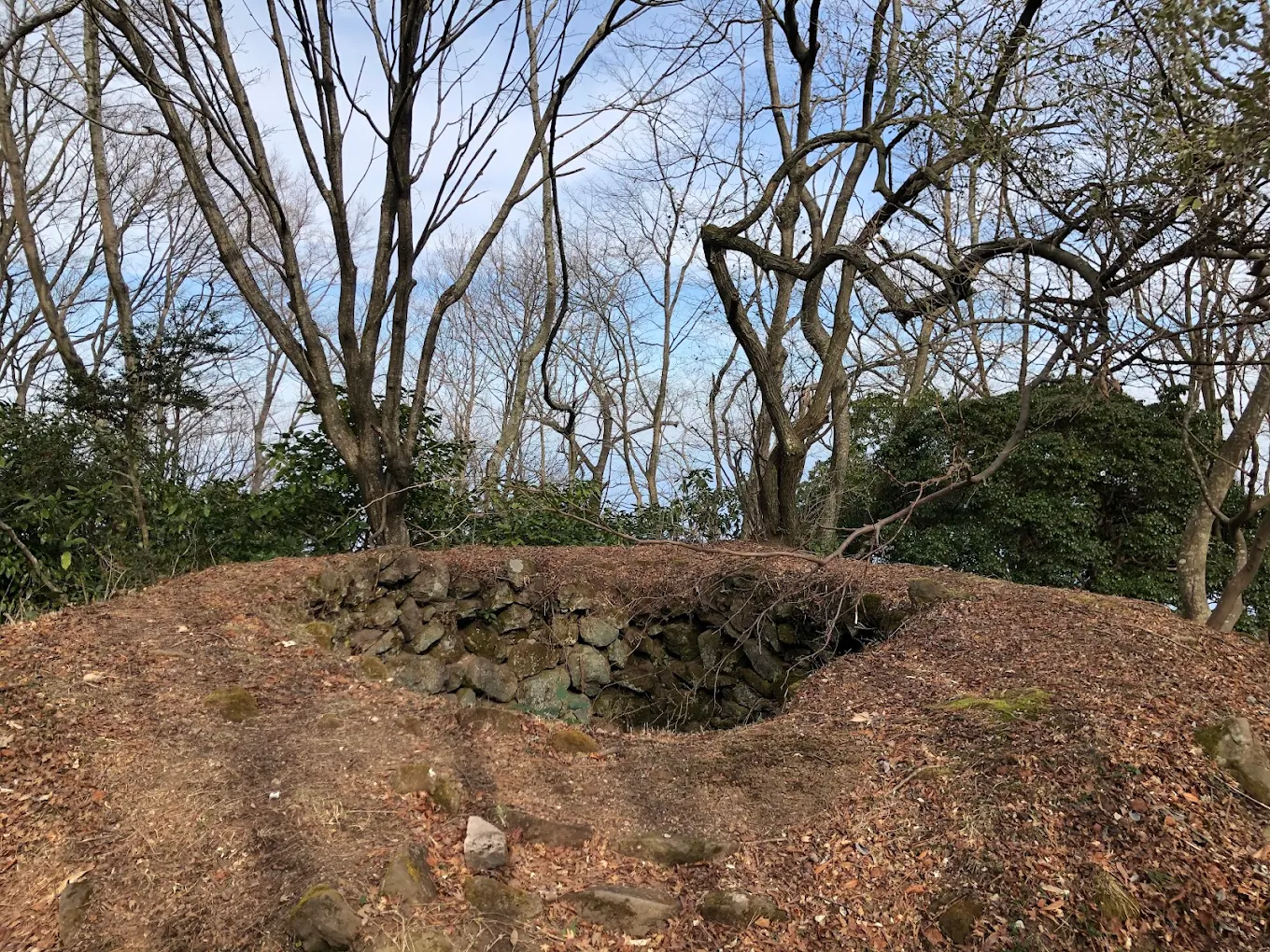
The stone walls of the Honmaru exhibit transitional techniques from rough-hewn stonework to fitted stonework, revealing the stage of development in stonework technology at the time through the selection of stones and stacking methods. The height of the stone walls varies depending on the location, but the highest points reach several meters, indicating that it fully served its function as a defensive structure.
Within the Honmaru, remains such as building foundations and post holes have been confirmed, suggesting that the lord’s residence or important facilities were located there. Although now covered with trees, it was likely once a space with excellent views overlooking the surrounding area.
Second Enclosure and Defensive System
The second enclosure (Ninmaru), positioned to surround the Honmaru, played a crucial role in its defense. The second enclosure is also surrounded by stone walls, forming a robust defensive system in conjunction with the Honmaru.
There is a clear boundary between the second enclosure and the Honmaru, and the placement of the entrances (koguchi) is designed with defense in mind. Numerous features demonstrate ingenuity in making enemy intrusion difficult, showcasing the skillful use of limited space in the castle’s layout.
The second bailey is believed to have housed facilities such as samurai residences and granaries. Furthermore, during wartime, it functioned as the front line of defense, playing a crucial role in preventing enemy approaches to the main bailey.
Characteristics of the All-Stone Wall Construction
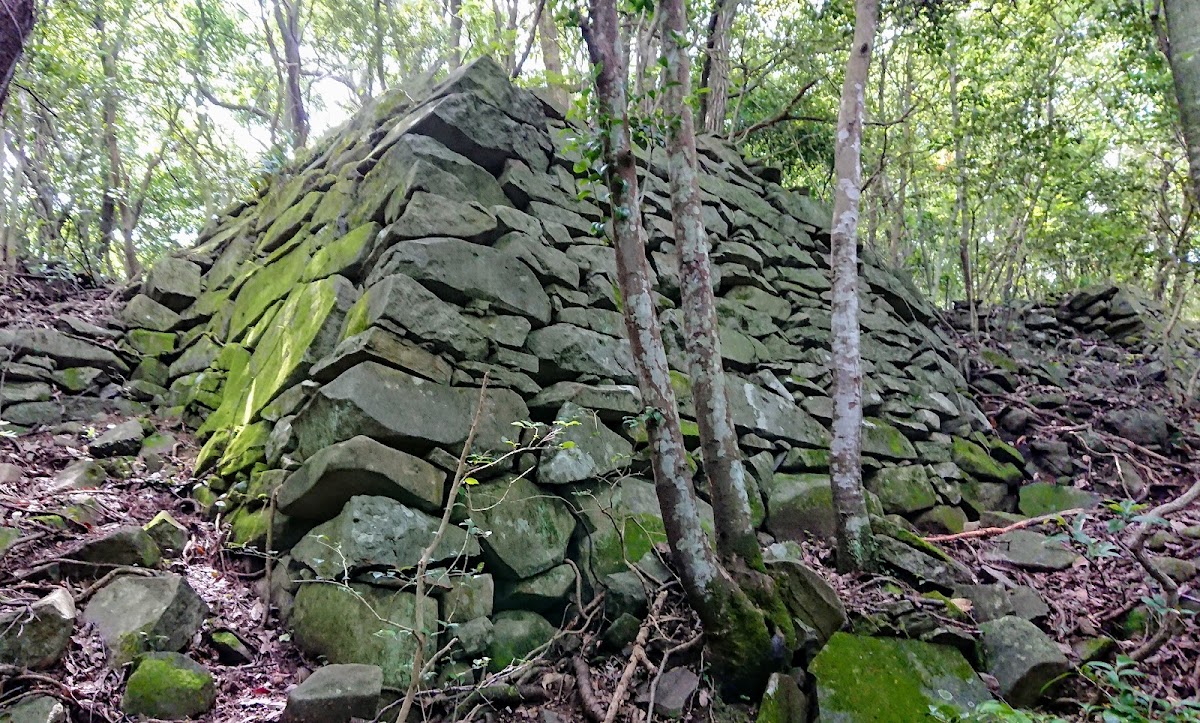
The most distinctive feature of Kurakake Castle is its all-stone wall construction. While most medieval mountain castles relied primarily on earthen ramparts for defense, Kurakake Castle employed advanced construction techniques for its time, surrounding almost the entire perimeter of the bailey with stone walls.
This all-stone wall construction is an important feature indicating a transitional period to early modern castles, illustrating the development of castle construction technology from the late Sengoku period to the early Edo period. While the basic technique of stacking the stones is the “nozurazumi” method, some ingenuity in the processing and arrangement of the stones can be seen, indicating a transition to more advanced techniques.
The stonework uses locally sourced stone, and the design takes into account the efficiency of transportation and processing. The stone walls are relatively well-preserved and are valued as a valuable historical structure that conveys the appearance of the castle at the time of its construction.
Entrance and Passageway
The entrance to the castle, the “koguchi,” is one of the most important defensive structures. The entrance to Kurakake Castle has a structure that can be considered a prototype of a masugata koguchi (square-shaped entrance) utilizing stone walls, and is designed to effectively prevent enemy intrusion.
The stone walls around the entrance are particularly sturdily built, strengthening its function as a key defensive point. Furthermore, the passageway connecting the main keep and the second keep is also arranged in a winding pattern, consciously designed for defense, preventing direct intrusion.
The structure of these entrances and passageways reflects knowledge gained from actual combat experience during the Sengoku period and is an important historical site demonstrating the development of castle defense technology.
Highlights of Kurakake Castle
Observation Points for the Stone Wall Remains
The biggest highlight of a visit to Kurakake Castle is undoubtedly the remains of its entirely stone walls. The stone walls surrounding the main keep and the second keep remain in relatively good condition even after more than 400 years, allowing for direct observation of the castle-building techniques of the time.
Of particular note is the variation in the way the stones are stacked. Differences in stone size and stacking methods can be seen in different locations, revealing differences in construction periods and traces of repairs. By observing the transition from the simple technique of rough-hewn stonework to more orderly stacking methods, you can experience the development of stone wall technology.
The treatment of the corners of the stone walls (sanuki-zumi) is also an interesting point of observation. While not the perfected sanuki-zumi seen in early modern castles, the intention to reinforce the corners is evident, making it a valuable example of a transitional period in technology.
View from the Main Keep
Standing on the site of the main keep, you can enjoy a panoramic view of the surrounding terrain. At an elevation of approximately 170 meters, the castle offers a panoramic view of the surrounding plains, allowing us to imagine the scenery seen by the castle’s former lords.
To the north, one can see the Suo Sea, and to the west, the city of Bungo-Takada, giving a real sense of the castle’s strategic location for monitoring important transportation hubs. On clear days, one can even see the mountains and coastline of the Kunisaki Peninsula, making it a truly spectacular viewpoint.
Layout of Enclosures and Utilization of Terrain
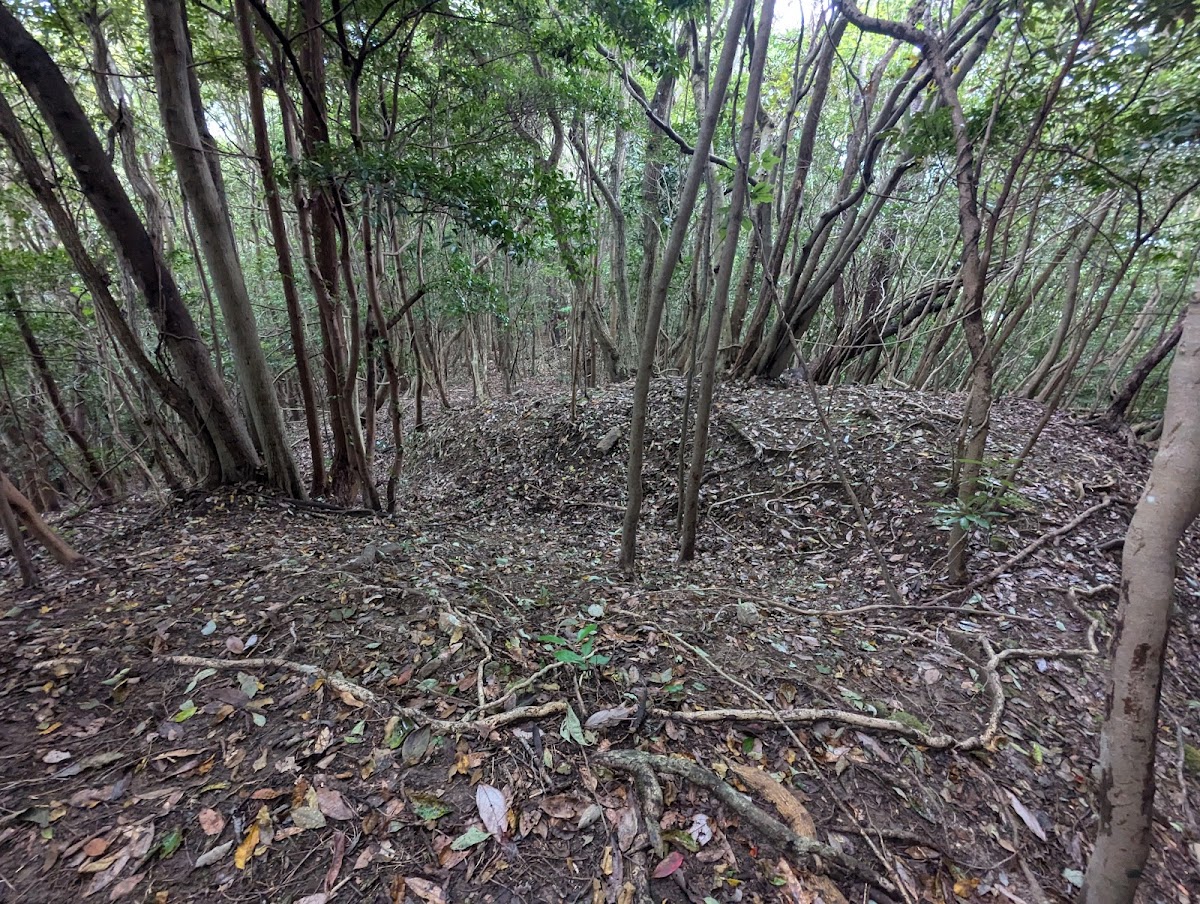
The layout of Kurakake Castle skillfully utilizes the natural terrain. The placement of enclosures, taking advantage of ridges and valleys, demonstrates ingenuity in achieving maximum defensive effectiveness with limited resources.
By observing the elevation differences and layout relationships between each enclosure, one can understand the castle’s overall defensive system. The way defensive lines were constructed to counter anticipate enemy invasion routes serves as valuable educational material for understanding the castle-building philosophy of the Sengoku period.
Surrounding Historical Landscape
The Sano district, a settlement that retains traces of its castle town, surrounds Kurakake Castle. While now a quiet rural area, it was once a community centered around the castle.
The rural landscape viewed from the castle ruins tells the story of land use history dating back to the Sengoku period, and is an important element in considering the relationship between the castle and the local community. Furthermore, temples and shrines related to the Rokugo Manzan culture are scattered throughout the area, allowing visitors to experience the rich history and culture of this region.
Visitor Guide
Precautions for Visiting
There are several points to note when visiting Kurakake Castle ruins. First, as it is a mountain castle, appropriate clothing and equipment are necessary for climbing. Wear athletic shoes or trekking shoes, and choose those with non-slip soles.
The castle ruins are protected as a historical site, so care must be taken not to damage the stone walls or remains. Avoid climbing on the stone walls or touching them unnecessarily. Also, the collection of plants and soil is prohibited.
In summer, vegetation can be overgrown, making it difficult to see the ruins. Insect repellent is also necessary. Winter is a relatively easy time to visit, but be careful as fallen leaves can make the ground slippery.
Estimated Time and Visiting Route
It takes approximately 15-20 minutes on foot from the entrance to the main keep. Including time to carefully observe the ruins around the main keep, allow 1-1.5 hours for the entire visit.
The basic visiting route is from the entrance, via the second bailey, to the main keep. After enjoying the stone walls and views at the main keep, it’s common to return along the same path. If you have extra time, it’s recommended to slowly explore the castle grounds, observing the layout of the stone walls and baileys in each area.
Photography Tips
When photographing the stone wall ruins of Kurakake Castle, the morning light is relatively good. To capture the texture and construction characteristics of the stone walls, the time of day when the light hits from an angle is ideal.
When photographing the view from the main keep, it’s important to choose a day with good weather. Especially during the clear air from autumn to winter, you can capture sharp images of distant scenery.
A wide-angle lens makes it easier to capture the entire stone wall and the expanse of the castle grounds. Using a macro lens to photograph the construction of the stone walls and the characteristics of the stones in close-up shots would also be interesting.
Detailed Access Information
Access by Public Transportation
When visiting Kurakake Castle by public transportation, the nearest stations are Usa Station or Nakatsu Station on the JR Nippo Main Line.
Access from Usa Station:
Take the Oita Kotsu bus “North Liner bound for Oita Airport” from Usa Station and get off at the “Sano” bus stop. It’s about an 8-minute walk from the bus stop to the castle entrance. Since the number of buses is limited, it’s recommended to check the timetable in advance.
Access from Nakatsu Station:
You can also use the Oita Kotsu bus from Nakatsu Station, but access via Usa Station is often easier. Please check the Oita Kotsu official website in advance for route and travel time information.
The path from the bus stop to the castle entrance follows local signs. The road through the Sano district settlement is relatively easy to follow, but if you are unsure, ask a local for directions; they will kindly assist you.
Access by Car
Access by car is the most convenient. From the Usa IC or Bungo Takada IC on the Higashi-Kyushu Expressway, it takes approximately 20-30 minutes via local roads to reach the vicinity of the castle entrance.
From Usa IC:
Exit the IC and head north on National Route 10 towards Bungo Takada City. Along the way, follow the signs and take the prefectural road to the Sano district.
From Bungo Takada IC:
There is also a route from the city center towards the Sano district after exiting the IC. Access is possible from either IC, but if using a car navigation system, it is recommended to set “Sano, Bungo Takada City, Oita Prefecture” as your destination.
There is a limited parking area near the castle entrance. However, since it is not an official parking lot, please be considerate of local residents. Avoid street parking and park in a location that does not obstruct traffic.
Combining with Nearby Facilities
We also recommend visiting other tourist spots in Bungo-Takada City in conjunction with your visit to Kurakake Castle.
Showa Town:
Located in the central urban area of Bungo-Takada City, “Showa Town” is a tourist spot that recreates the townscape of the 1950s, allowing visitors to enjoy a nostalgic atmosphere. It is about a 15-minute drive from Kurakake Castle.
Fukiji Temple:
A representative ancient temple of the Kunisaki Peninsula, it houses a National Treasure, the Great Hall. As a temple representing the Rokugo Manzan culture, it is a must-see spot for history buffs.
Maki Daido Temple:
This is also an important temple related to the Rokugo Manzan culture, housing many Buddhist statues. You can gain a deep understanding of the history and culture of the Kunisaki Peninsula.
By combining these tourist spots with Kurakake Castle, you can create a fulfilling itinerary that allows you to comprehensively experience the history and culture of Bungo-Takada City.
Surrounding Castles
Yayama Castle
There are other interesting castle ruins scattered around Kurakake Castle. Yayama Castle is a mountain castle that, like Kurakake Castle, functioned as a base for local forces on the Kunisaki Peninsula.
Yayama Castle is located in a different area of Bungo-Takada City and has different characteristics from Kurakake Castle. Comparing the two castles allows you to understand the diversity of castle architecture in this region. If you have time, we recommend visiting Yayama Castle as well to explore the castle culture of the Kunisaki Peninsula more deeply.
Other Castles on the Kunisaki Peninsula
The Kunisaki Peninsula has many castle ruins that were built from the Sengoku period to the early Edo period. These castles were bases for local forces that were responsible for the stability and defense of the region under the rule of the Otomo clan.
Each castle possesses its own unique characteristics, differing in topography, construction techniques, and historical background. Starting from Kurakake Castle, a tour of the castles on the Kunisaki Peninsula would be an attractive journey for history enthusiasts.
Kurakake Castle and the Local History and Culture
Connection to the Rokugo Manzan Culture
The Kunisaki Peninsula, where Kurakake Castle is located, is known as a region where the unique mountain Buddhist culture of “Rokugo Manzan” flourished. Rokugo Manzan was a cultural sphere of syncretism of Shinto and Buddhism centered around Usa Shrine, with many temples built in the mountains.
It is believed that the lords of Kurakake Castle and local forces had deep connections to this Rokugo Manzan culture. The history of this region reveals aspects of an era when samurai and monks were closely intertwined, acting as protectors of temples and shrines, and as bearers of faith.
Relationship with Usa Shrine
Usa Shrine, as the head shrine of all Hachiman shrines nationwide, boasted immense power from ancient times to the Middle Ages. The Kunisaki Peninsula developed as a manor of Usa Shrine, and was economically and culturally under the influence of the shrine.
The castles in the region, including Kurakake Castle, may have also played a role in managing and defending the Usa Shrine manor. The relationship between medieval samurai groups and Usa Shrine was complex, sometimes involving cooperation and sometimes conflict. Understanding the relationship with Usa Shrine is a crucial element in comprehending the history of this region.
The Otomo Clan’s Rule and Local Lords
During the Sengoku period, Bungo Province was under the rule of the Otomo clan, which grew from a shugo daimyo (provincial governor) to a sengoku daimyo (warring states lord). The Otomo clan built a vast territory in northern Kyushu and, at its peak, boasted the greatest power in Kyushu.
The local lords (local rulers) of the Kunisaki Peninsula, including the lord of Kurakake Castle, maintained a degree of autonomy while being incorporated into the Otomo clan’s vassal system. While they participated in the Otomo clan’s military actions, they also acted independently in matters of regional governance and defense.
The relationship between daimyo (feudal lords) and local lords is a crucial theme in understanding regional society during the Sengoku period (Warring States period). The history of Kurakake Castle can be seen as a microcosm of that era.
Research and Preservation Activities
Academic Evaluation
Kurakake Castle has attracted attention in the field of castle research due to its distinctive feature of being entirely constructed of stone walls. As a site representing the transitional period from medieval mountain castles to early modern castles, it occupies an important position in the study of the history of castle construction technology.
In particular, the construction methods and structure of the stone walls have been investigated and analyzed by multiple researchers, providing valuable data for elucidating the development process of stone wall technology in the Kyushu region. Furthermore, the creation of layout maps and surveying work have been carried out, gradually revealing the overall picture of the castle.
Preservation Status and Challenges
While the remains of Kurakake Castle are in relatively good condition, there are preservation challenges, such as deterioration due to the natural environment and the impact of tree growth. Some parts of the stone walls are at risk of collapse, requiring continuous monitoring and necessary preservation measures.
While local education boards and cultural heritage preservation groups are carrying out preservation activities, budget and personnel constraints mean that adequate preservation measures are not being taken. Further development and implementation of a more organized preservation plan are expected.
Collaboration with the Community
The understanding and cooperation of local residents are essential for the preservation and utilization of Kurakake Castle. Residents of the Sano district recognize the castle ruins as a valuable cultural heritage site and are cooperating in its preservation.
Local history enthusiast groups also conduct regular cleaning activities and organize guided tours, demonstrating community-based preservation efforts. These grassroots activities support the preservation of the castle ruins and their transmission to future generations.
Summary
Kurakake Castle, located in Sano, Bungo-Takada City, Oita Prefecture, is a valuable historical site, a mountain castle from the late Sengoku period to the early modern period, characterized by its all-stone wall construction. It played a crucial role in the Tahara Chikanu Rebellion of 1579 and is an indispensable part of the history of this region.
With its castle structure centered around the main keep and second bailey, remains demonstrating the development of stonework techniques, and strategic location, Kurakake Castle boasts many attractions, making it a worthwhile place to visit for castle enthusiasts and history buffs alike.
While access by public transport is somewhat inconvenient, it is relatively easy to visit by car. Combining a visit to the castle with a trip to the surrounding Showa-era town and the temples of Rokugo Manzan will create a comprehensive experience of Bungo Takada City’s rich history and culture.
With appropriate equipment and preparation, be sure to visit Kurakake Castle and feel the breath of history from over 400 years ago. Reflecting on the traces of time etched into the stone walls, the view from the main keep, and the lives of the people who lived during the Sengoku period will deepen your understanding of history.
Kurakake Castle may not be flashy, but it is a valuable heritage site that conveys a solid history and culture to the present day. Understanding its value and passing it on to future generations is our responsibility as those living in the modern age.