Complete Guide to Hitotsudo Castle (Oita Prefecture): A Border Fortress Valued by Kuroda Kanbei and the Hosokawa Clan
What is Hitotsudo Castle?
Hitotsudo Castle is a mountain castle located in Hitotsudo, Miyazono, Yamakage-machi, Nakatsu City, Oita Prefecture. Also known as Nakama Castle, it was built in a strategic location near the border between Buzen Province and Bungo/Chikugo Provinces. Built on the summit of a steep, rocky mountain at an altitude of 364.5 meters and a relative height of approximately 220 meters, this castle functioned as an important base for regional control from the Sengoku period to the early Edo period.
Currently, the castle ruins retain remnants such as stone walls, baileys, and moats, believed to have been constructed during the Hosokawa clan’s era, and are protected as a designated historical site of Nakatsu City (designated December 1, 1978). Combining steep terrain with characteristics of Oda-Toyotomi style castles, this castle is a valuable historical site that castle enthusiasts should not miss.
History of Ichitsuto Castle
Construction by the Nakama Clan and Early History
Ichitsuto Castle is said to have been built around 1195 by Tomosugi Minbu. The Tomosugi clan, also known as the Nakama, Ichinohe, and Oe clans, were local lords who ruled this region. The Nakama clan, as lords of Ichitsuto, held power in the mountainous region of southern Buzen Province, maintaining their own sphere of influence while cooperating with surrounding local lords.
Throughout the Sengoku period, the Nakama clan sought to survive amidst powerful forces such as the Otomo and Mori clans, using this rugged mountain castle as their base. Ichitsuto Castle’s location, at the intersection of the three provinces of Buzen, Bungo, and Chikugo, held a strategically important position both militarily and economically.
Kuroda Kanbei’s Entry into Buzen Province and Nakama Munetane’s Submission
In 1587, after Toyotomi Hideyoshi’s conquest of Kyushu, Kuroda Kanbei (Kuroda Yoshitaka) was appointed lord of Buzen Province and entered Nakatsu. The castle lord at this time was Nakama Munetane.
Upon the Kuroda clan’s entry into Buzen, the surrounding local lords, including Nakama Munetane, initially showed resistance. This resistance movement, known as the Buzen Local Lords’ Rebellion, was a backlash from local forces against the new rulers. However, through Kuroda Kanbei’s skillful diplomacy and military power, Nakama Munetane ultimately chose to join Kanbei’s ranks.
After the rebellion was suppressed, the Kuroda clan recognized the strategic importance of Hitotsudo Castle. Located near the border with Bungo and Chikugo Provinces, and capable of monitoring the Yamakuni River basin, the castle was an indispensable base for governing their territory. Therefore, Nakama Munetane remained at Hitotsuto Castle as the castle guard and continued to exist as part of the Kuroda clan’s retainer group.
Castle Improvement by the Hosokawa Clan
After the Battle of Sekigahara in 1600, the Kuroda clan was transferred to Fukuoka in Chikuzen Province, and in their place, Hosokawa Tadaoki took up residence in Nakatsu in Buzen Province. The Hosokawa clan, as a powerful daimyo with a domain of 399,000 koku, began to seriously manage their territory.
Hosokawa Tadaoki continued to value Hitotsuto Castle and granted his retainer Arakawa Katsubei 3,000 koku, appointing him as castle lord. The stone walls remaining at the castle site today are thought to have been constructed during this Hosokawa period.
Although Arakawa Katsubei’s personal stipend was only 3,000 koku, judging from the scale of the existing Oda-Toyotomi style stone walls and baileys, this is thought to have been part of the Hosokawa clan’s systematic castle improvement project. The Hosokawa clan strategically built castles throughout their territory, establishing their system of rule. Ichitsuto Castle was one of their important strongholds.
The One Castle Per Province Decree and Castle Abolition
In 1615 (Genna 1), the Edo Shogunate issued the One Castle Per Province Decree. This ordered each domain to demolish castles other than their own. The Hosokawa clan’s residence was Nakatsu Castle, and Ichitsuto Castle was abolished under this decree.
Subsequently, in 1632 (Kanei 9), the Hosokawa clan was transferred to Kumamoto in Higo Province, and the Ogasawara clan took over Nakatsu. Since Ichitsuto Castle had already been abandoned, it disappeared from the historical stage thereafter.
Castle Structure and Highlights
Location and Layout
Ichitsuto Castle is built on the summit of a rocky mountain overlooking a tunnel on the border between Yamakuni-machi and Yamakuni-machi in Nakatsu City, Oita Prefecture. This mountain castle, situated at an elevation of 364.5 meters and approximately 220 meters above the base, makes full use of the steep terrain.
The castle’s layout features a series of baileys arranged along the ridge, skillfully utilizing the natural terrain. Due to its steep, rocky slope, it was an extremely difficult fortress to attack.
Stone Walls
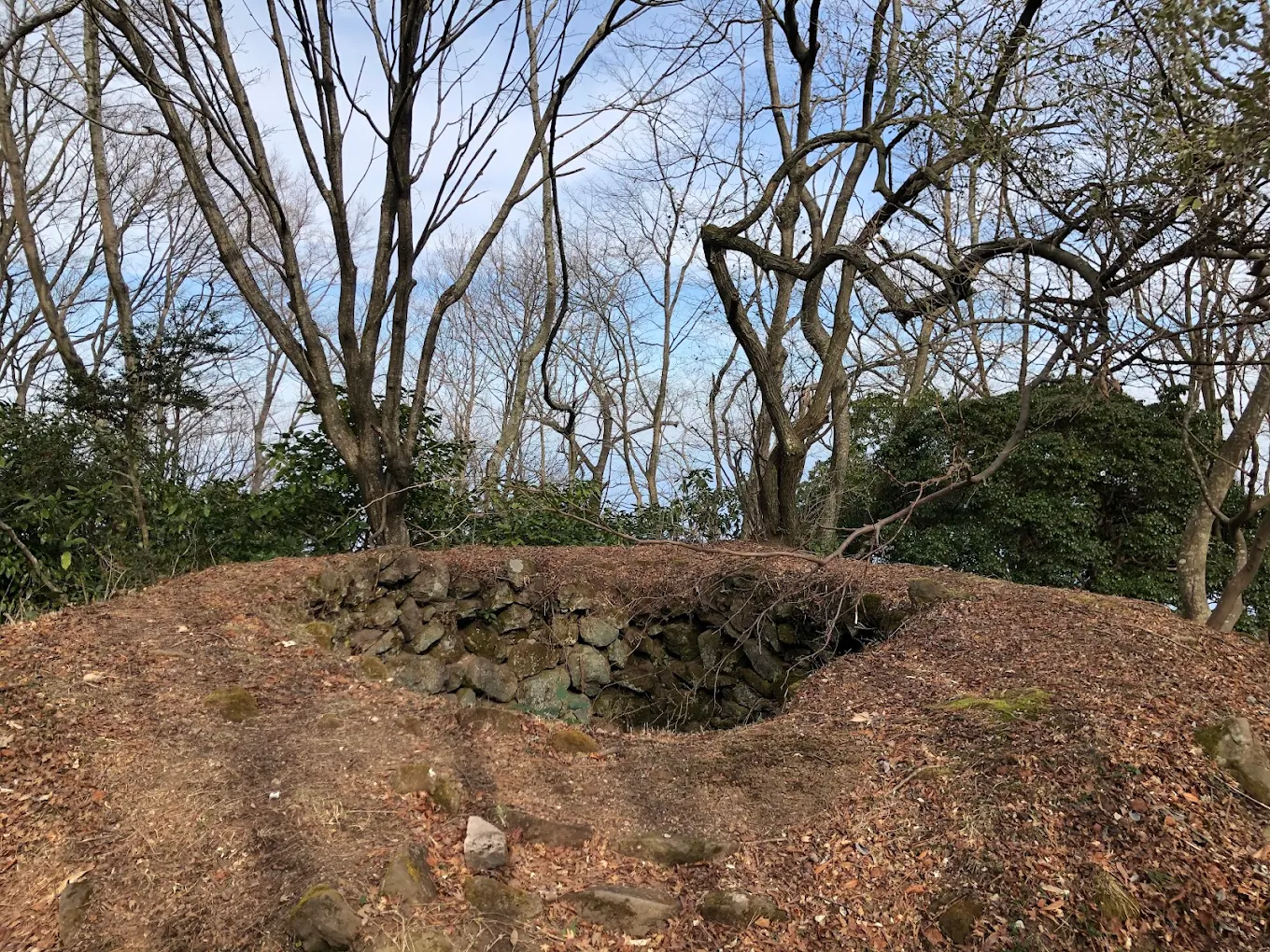
The greatest highlight of Hitotsudo Castle is its stone walls, believed to have been constructed during the Hosokawa clan’s era. Near the summit, within the grove of trees, remnants of the original stone walls can be seen.
These stone walls exhibit characteristics of castles from the Oda-Toyotomi period and are relatively neatly constructed. It is noteworthy that, despite being a mountain castle, it incorporates techniques from early modern castle construction. The stone walls near the castle gate are particularly well-preserved, making them valuable relics that convey the castle-building techniques of the time.
Baileys (Enclosures)
Several baileys can be identified within the castle grounds. The castle grounds are arranged in a stepped fashion along the ridge, centered around the main enclosure, each of which is understood to have functioned as a defensive stronghold.
The main enclosure is a relatively large, flat area, and it is presumed that the lord’s residence and important facilities were located here. The surrounding enclosures are thought to have been used as troop garrisons and storage areas for supplies.
Moats and Vertical Moats
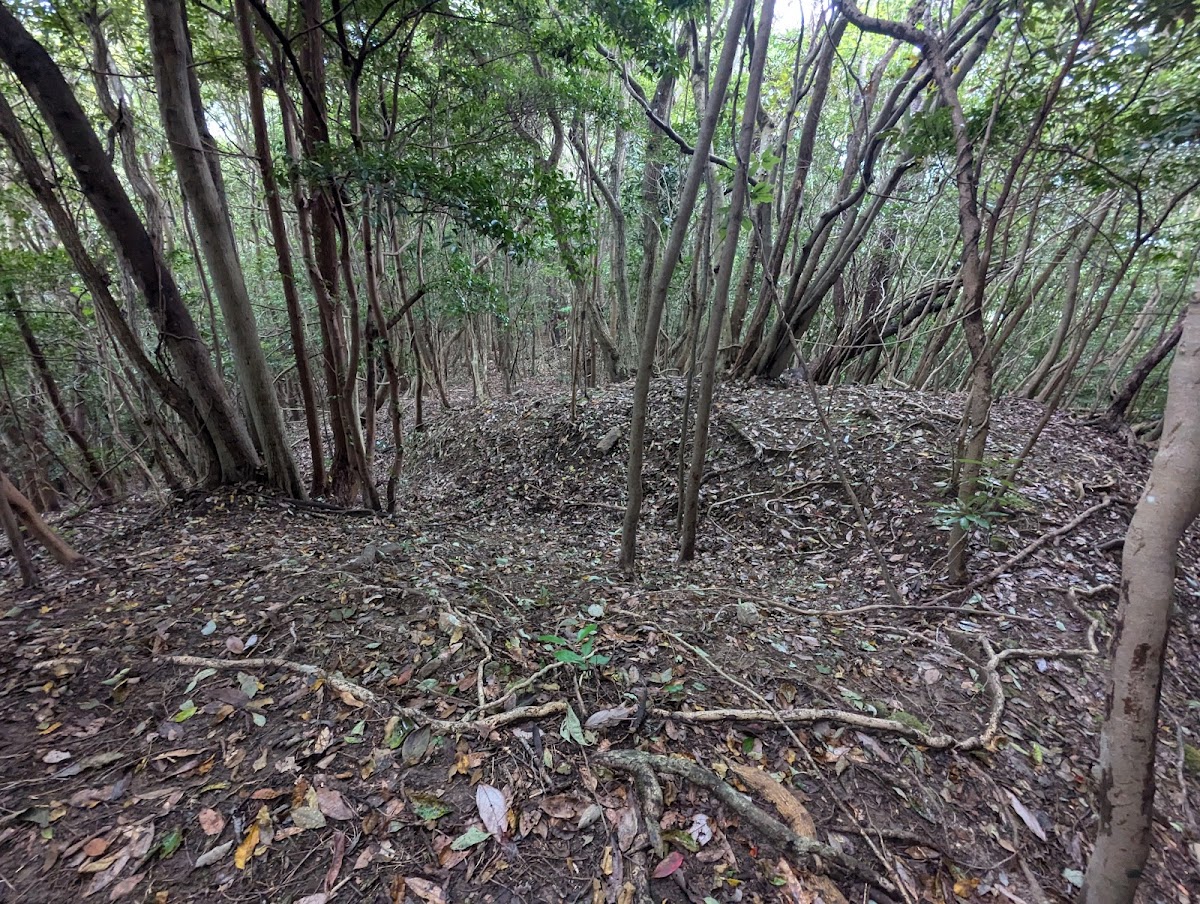
Defensive structures such as moats that divide the ridge and vertical moats descending the slope can also be observed. These were important defensive lines to prevent enemy incursions, and the castle utilizes defensive techniques unique to mountain castles.
Moats were placed at key points on the ridge and served to halt enemy advances. Vertical moats restricted the movement of enemy soldiers attempting to climb the slope, enabling a more advantageous battle for the defenders.
Castle Gate Remains
Near the summit, there is a site believed to be the remains of a castle gate. Part of the stone wall remains here, indicating that a gate once stood here. This castle gate was designed so that the main enclosure could not be reached without passing through it, and it functioned as the final line of defense.
Access and Visiting Guide
Location
Address: Ichitsudo, Miyazono, Yamakage-machi, Nakatsu City, Oita Prefecture
Access by Car
Access to Ichitsudo Castle is most convenient by car. It takes approximately 30 minutes from the Nakatsu Interchange on the Higashi-Kyushu Expressway via National Route 212. There is limited parking space near the entrance to the castle, accommodating only a few cars.
Ascent Route
The entrance to the castle is located along a forest road. Be aware that there may be a gate at the entrance. It takes approximately 30 to 40 minutes on foot from the entrance to the main enclosure.
The trail follows a ridge, and there are steep sections, so appropriate clothing and shoes for hiking are necessary. Particular caution is required during and after rain, as the ground can become slippery.
Points to Note When Visiting
- Mountaineering Equipment: Please bring trekking shoes or athletic shoes, drinking water, a towel, etc.
- Season: Insect repellent spray is necessary in summer, and warm clothing is necessary in winter.
- Time: Please allow 1.5 to 2 hours round trip.
- Mobile Phone: There are areas in the mountains where cell phone reception is poor.
- Solo Travel: Visiting with multiple people is recommended if possible.
- Gate: If the forest road gate is closed, you will need to arrive on foot.
Best Season for Visiting
Spring (April-May) and autumn (October-November) are suitable for visiting. Summer is hot and insect-filled, and winter may have snow or ice, so it is recommended for experienced hikers.
Nearby Tourist Attractions
Yabakei
The Yabakei region, where Hitotsudo Castle is located, is a scenic spot known as one of Japan’s three great natural wonders. You can enjoy the diverse beauty of the valleys, including Shin-Yabakei, Ura-Yabakei, and Hon-Yabakei. It’s especially crowded with tourists during the autumn foliage season.
Nakatsu Castle
Nakatsu Castle, built by Kuroda Kanbei and expanded by Hosokawa Tadaoki, is a must-see spot when visiting Hitotsudo Castle. Currently, a replica keep stands, and the castle grounds now house a museum where you can learn about the history of the Kuroda and Hosokawa clans.
Aonodomon Cave
Aonodomon Cave, a famous landmark in Yabakei, is known as a tunnel dug by Zenkai, a Buddhist monk, over a period of 30 years. It’s about a 15-minute drive from Hitotsudo Castle.
Rakanji Temple
Rakanji Temple, one of Japan’s three great temples housing 500 Arhats, is also a popular nearby tourist spot. You can take a lift up the mountain and view the 500 Arhats enshrined in the caves.
Historical Significance of Hitotsuto Castle
Role as a Border Fortress
The most distinctive feature of Hitotsuto Castle is its location in the border region where the three provinces of Buzen, Bungo, and Chikugo meet. This location meant the castle transcended being merely a local lord’s residence, possessing the character of a large-scale military base.
The fact that both the Kuroda and Hosokawa clans, the two lords of Buzen Province, considered this castle important and continuously stationed castle guards there speaks to its high strategic value. Hitotsuto Castle played a crucial role in monitoring the Yamakuni River basin, defending against invasions from the Bungo region, and serving as a symbol of territorial control.
Transition from Local Lord to Vassal of a Modern Daimyo
The history of the Nakama clan is a classic example of the process by which local lords of the Sengoku period were incorporated into the vassal system of modern daimyo. While initially resisting, Nakama Munetane’s choice to adapt to the new system of rule and survive as a vassal symbolizes the situation faced by many local lords.
The Spread of Oda-Toyotomi Castle Construction Techniques to the Provinces
The stone walls remaining at Hitotsuto Castle are a valuable example demonstrating the introduction of Oda-Toyotomi castle construction techniques to regional mountain castles. The restoration work carried out by the Hosokawa clan is important historical material for understanding the process of the spread of early modern castle construction techniques.
Constructing stone walls on a steep mountain castle was a significant burden, both technically and economically. Nevertheless, the fact that they still undertook the construction of a stone-walled castle clearly demonstrates the importance of Hitotsuto Castle to the Hosokawa clan’s rule over their territory.
The Current State and Preservation of Hitotsuto Castle
The Hitotsuto Castle ruins were designated a historical site by Nakatsu City on December 1, 1978, and are protected. However, due to its mountainous location, daily management is not easy, and some of the remains are suffering from natural erosion.
In recent years, research and presentations by local history enthusiasts and castle researchers have progressed, and awareness among castle fans is gradually increasing. It is hoped that an increase in visitors will lead to a renewed recognition of its value as a historical site and contribute to better preservation.
When visiting, it is important to observe proper etiquette, such as being careful not to damage the ruins and always taking your trash with you. Individual awareness is crucial in passing on these valuable historical legacies to future generations.
Summary: The Charm of Hitotsuto Castle
Hitotsuto Castle is a unique mountain castle, built on a rugged mountainous terrain, yet possessing stone walls characteristic of castles from the Oda-Toyotomi period. Its history of being consistently valued as a border fortress throughout the changing rulers from the Nakama clan to the Kuroda clan and then the Hosokawa clan speaks to its high strategic value.
When visiting Nakatsu City in Oita Prefecture, be sure to visit Hitotsuto Castle along with Nakatsu Castle. While the climb is challenging, the view from the summit and the stone walls, imbued with a sense of history, will surely reward your efforts. As a valuable historical site where you can feel the history of Buzen Province firsthand, Hitotsuto Castle quietly conveys its former glory.
Using the information boards and maps as a guide, why not reflect on the role this border fortress played? Be sure to see for yourself the castle that was so highly regarded by famous generals like Kuroda Kanbei and Hosokawa Tadaoki.