Hoshikuma Castle (Hita City, Oita Prefecture) – A Thorough Explanation of the History and Highlights of the Temporary Residence of Mitsuru Ogawa
What is Hoshikuma Castle?
Hoshikuma Castle is a castle ruin located in Tomoda, Hita City, Oita Prefecture, and is now a popular park for local residents. This castle has a unique history, having been used only as a temporary residence for a short period of three years in the early Edo period.
Built on a hill overlooking the Mikuma River, Hoshikuma Castle is strategically located for controlling the Hita Basin. Hita City has three hills known as the “Mikuma Three Mountains (Hita Three Hills),” and Hoshikuma Castle was built on one of them, Hoshikuma Mountain. The other two are Tsukikuma Mountain, where Tsukikuma Castle (Maruyama Castle) was built, and Higuma Mountain, where Higuma Castle was built.
History of Hoshikuma Castle
Background of Construction and the Arrival of Ogawa Mitsuuji
The history of Hoshikuma Castle begins in 1601 (Keicho 6). In this year, Ogawa Mitsuuji became the lord of Hita County in Bungo Province, with a domain of 20,000 koku. Ogawa Mitsuuji was a samurai who served Toyotomi Hideyoshi, and was granted the Hita region as a reward for his services after the Battle of Sekigahara.
From the beginning, Ogawa Mitsuuji planned to build a full-fledged castle on Tsukikuma Mountain. However, castle construction requires a considerable amount of time. Therefore, while awaiting the completion of Tsukikuma Castle (Maruyama Castle), he decided to use Hoshikuma Castle, utilizing or renovating existing facilities, as a temporary residence.
Three Years as a Temporary Residence
For a mere three years, from 1601 to 1604 (Keicho 9), Hoshikuma Castle functioned as the political center of Hita County. During this short period, it is believed that Ogawa Mitsuru established a system of governance for his territory and proceeded with the construction of Tsukikuma Castle.
Upon completion of Tsukikuma Castle, Ogawa Mitsuru promptly moved his residence there, and Hoshikuma Castle ceased to serve its purpose. It is presumed that Hoshikuma Castle was abandoned after the relocation to Tsukikuma Castle, the main castle. Its short period of use—only three years—is a remarkable example in the history of castles throughout Japan.
History after Abandonment
Although detailed records of Hoshikuma Castle after its abandonment are scarce, it is believed that after losing its function as a castle, it gradually returned to nature. The castle ruins were neglected throughout the Edo period, and remained largely unused after the Meiji Restoration.
In modern times, the castle ruins came to be recognized as a place of recreation for local residents, and are now maintained as Hoshikuma Park. While some of the remains have been altered due to the park’s development, the historical value of the castle ruins is preserved.
Structure and Layout of Hoshikuma Castle
Location and Utilization of Topography
Hoshikuma Castle was built on a hill overlooking the Mikuma River, utilizing the river as a natural moat. Although relatively low in elevation, it was situated on a higher level than the surrounding plains, offering a geographical advantage overlooking the Hita Basin.
Given its nature as a temporary residence, it is believed that large-scale stone walls and keeps were not constructed. It is presumed to have been a simple structure utilizing existing facilities with minimal modifications.
Existing Remains
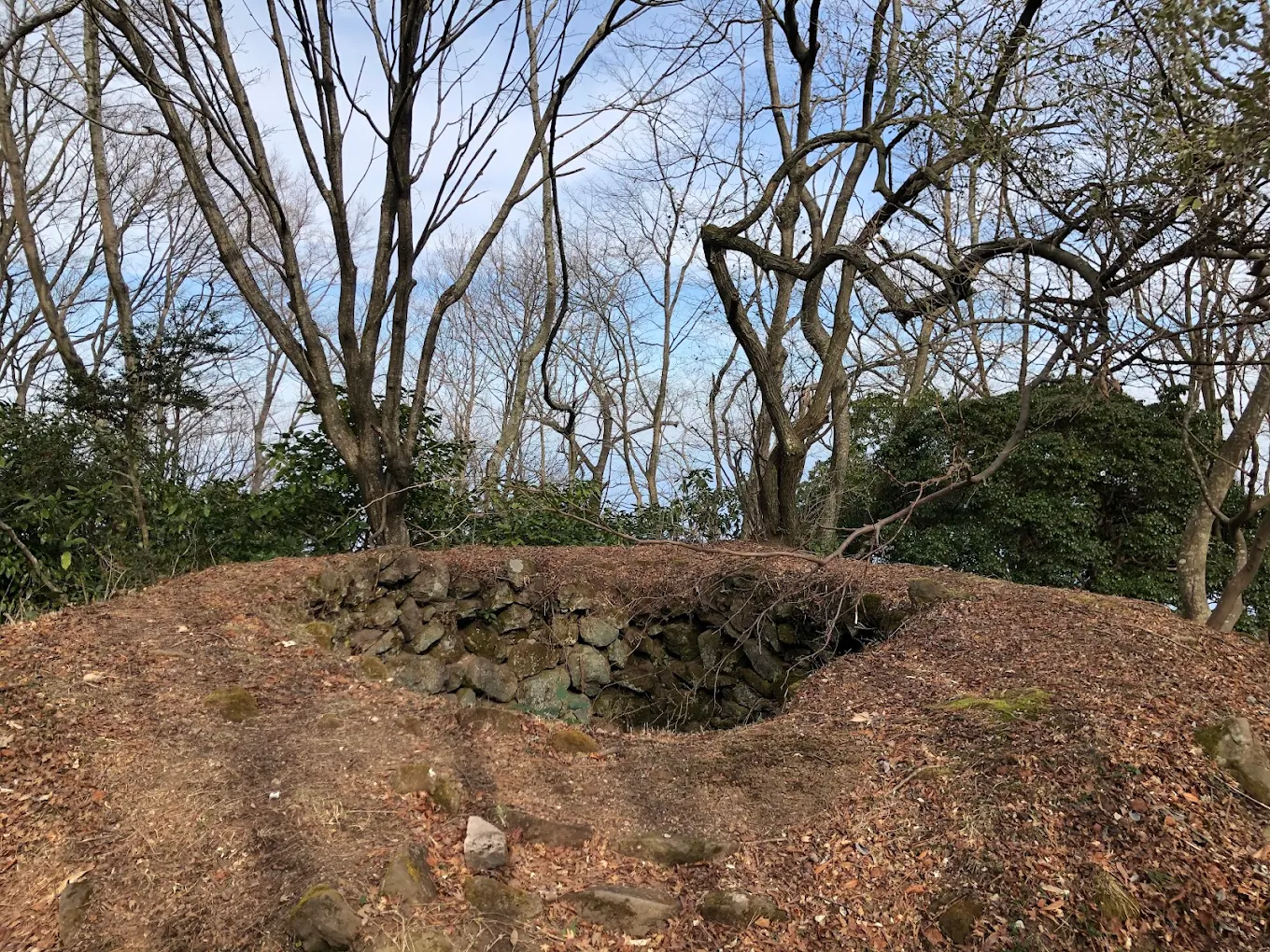
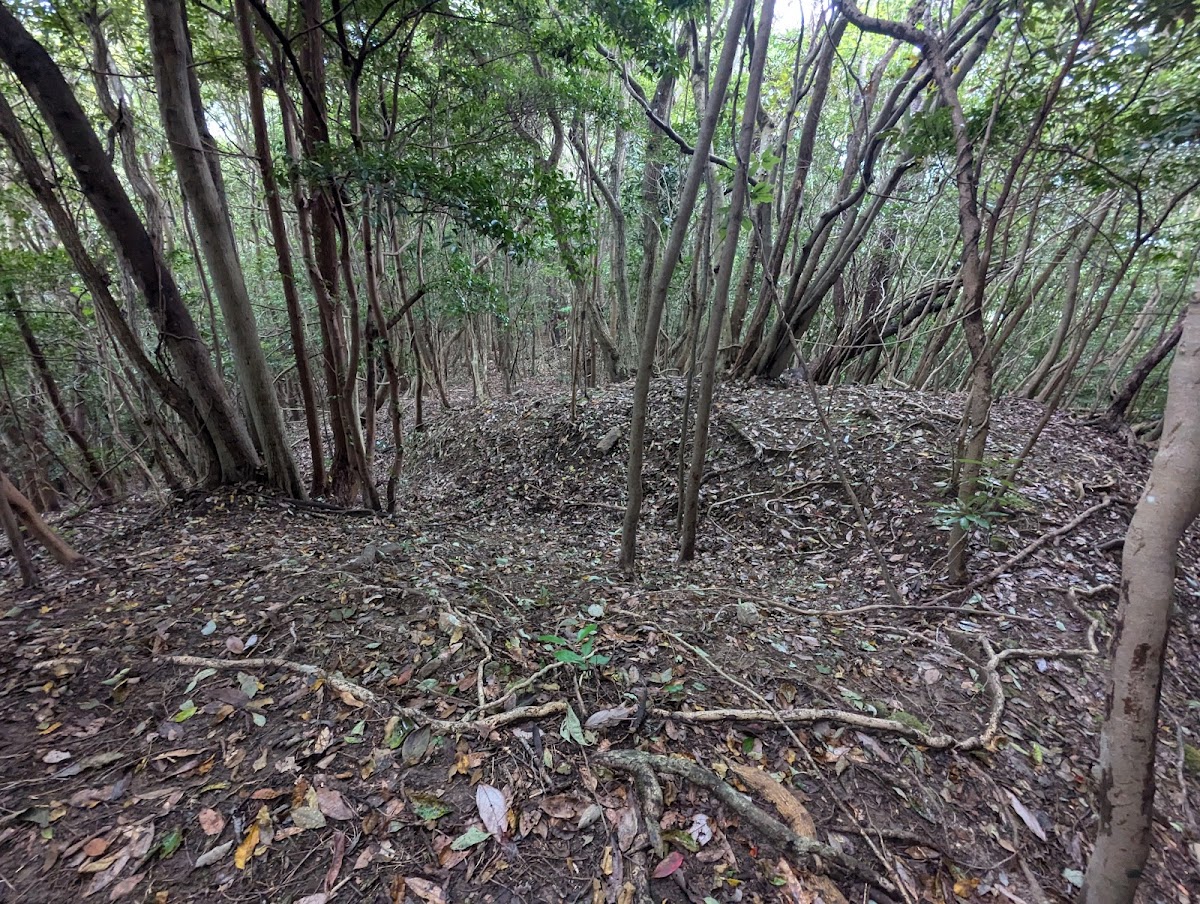
Currently, very few clear castle remains remain at the Hoshikuma Castle site. Due to topographical alterations during the park’s development, it is difficult to confirm the original layout of the baileys or traces of the moats.
However, given its hilly location and relationship to the Mikuma River, it is possible to imagine the castle’s layout to some extent. Furthermore, some place names and hamlet names in the surrounding area seem to be related to the castle site, allowing us to sense its historical significance.
Current Status as Hoshikuma Park
Park Development Status
The current site of Hoshikuma Castle has been developed into Hoshikuma Park, a place of relaxation for local residents. Walking paths have been created within the park, allowing visitors to enjoy strolling. Cherry trees have also been planted, making it a popular spot for cherry blossom viewing in spring.
From the park, visitors can enjoy views of the Mikuma River, and it is known as a viewpoint offering panoramic views of the opposite bank and the townscape of Hita. Perhaps the former lord of the castle, Ogawa Mitsuuji, gazed upon this view while awaiting the completion of Tsukikuma Castle.
Information Boards and Historical Introduction
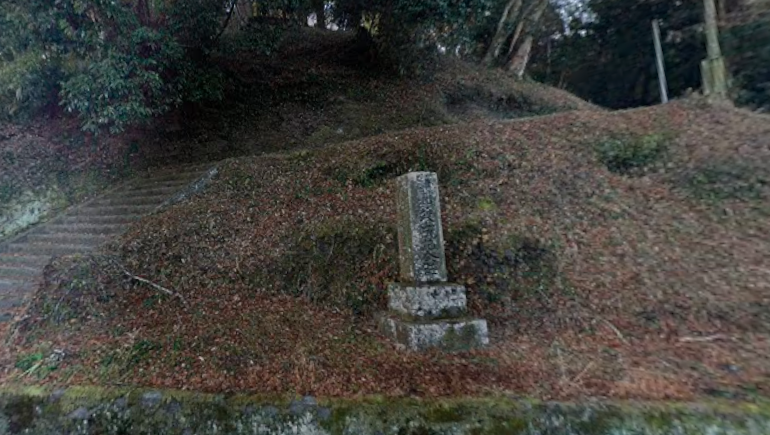
Within Hoshikuma Park, there are information boards explaining the history of Hoshikuma Castle. The boards provide a brief explanation of the castle’s history and Ogawa Mitsuuji, allowing visitors to learn about the historical background of the castle site.
However, since only limited information is available regarding detailed explanations of the remains and the results of archaeological excavations, those who wish to learn more are advised to research related books and materials beforehand.
Highlights of Hoshikuma Castle
View of the Mikuma River
The greatest highlight of Hoshikuma Castle ruins is the view overlooking the Mikuma River. From the spot where the former lord likely surveyed his territory, you can enjoy the modern landscape of Hita. Especially on clear days, you can see the distant mountains, giving you a real sense of the Hita Basin’s topography.
The Mikuma River is deeply intertwined with Hita’s history, playing a crucial role as a key point for water transport and defense. Hoshikuma Castle’s layout was also designed with this river in mind, suggesting it likely served a function of monitoring and controlling river traffic.
Value as part of the Mikuma Three Mountains (Hita Three Hills)
Hoshikuma Castle is located on one of the three hills known as the “Mikuma Three Mountains” or “Hita Three Hills.” Visiting the other two, Tsukikuma Mountain (Tsukikuma Castle and Maruyama Castle ruins) and Higuma Mountain (Higuma Castle ruins), allows for a more comprehensive understanding of Hita’s castle history.
Tsukikuma Castle, in particular, was the main castle succeeding Hoshikuma Castle and is indispensable for tracing the changes in Ogawa Mitsuuji’s castle management. Higuma Castle was built before Hoshikuma Castle and was renovated by magistrates under the Toyotomi regime, such as Miyagi Toyomori and Mori Takamasa. Visiting these three castle ruins allows you to experience the history of Hita from the late Sengoku period to the early Edo period.
A Stroll Filled with Historical Romance
Hoshikuma Castle lacks flashy stone walls or reconstructed buildings, but precisely because of this, it is a place where you can quietly reflect on history. Its unique history as a temporary residence used for only a short period of three years stimulates the visitor’s imagination.
What kind of affairs did Ogawa Mitsuuji conduct in this area, and what were his thoughts as he awaited the completion of Tsukikuma Castle? Enjoying such historical speculation while strolling is one of the great pleasures of visiting castle ruins.
Access Information
Location
877-0025 Tomoda, Hita City, Oita Prefecture
Access by Public Transportation
Approximately a 15-minute walk from JR Kyudai Main Line “Hita Station”. From Hita Station, head southeast along the Mikuma River. The route from the station is relatively flat, and you can enjoy the scenery of Hita town along the way.
If using the bus, take a local bus bound for “Tomoda” within Hita city, get off at the nearest bus stop, and walk for a few minutes. However, since bus services are limited, it is recommended to check the timetable in advance.
Access by Car
Approximately 10 minutes from the Oita Expressway “Hita IC”. Proceed towards Hita city center via National Route 210, etc., and follow the route along the Mikuma River.
Regarding parking, there is no large-scale parking lot specifically for Hoshikuma Park, so you will need to use nearby public parking lots or find a place to park on the street. There are also accommodations in the Hita Onsen area, and if you are staying there, you can use their parking lot.
Points to Note When Visiting
Hoshikuma Park is always open, and there is no entrance fee. However, the park is minimally maintained, and signage is limited, so it is recommended that first-time visitors check the location on a map beforehand.
Since there are almost no remains of the castle, those expecting a “castle ruin landscape” may be disappointed. It is recommended to visit as a place to quietly appreciate history, with an understanding of its historical background.
Nearby Tourist Spots
Tsukikuma Castle Ruins (Maruyama Castle Ruins)
If you visit Hoshikuma Castle, you should definitely also visit Tsukikuma Castle Ruins. This was the main castle to which Ogawa Mitsuru moved from Hoshikuma Castle, and it is essential for understanding the history of Hoshikuma Castle. Tsukikuma Castle is also currently maintained as a park, and its topography suggests that it was a larger castle than Hoshikuma Castle. ### Higuma Castle Ruins
The Higuma Castle Ruins, one of the three mountains of Mikuma, are not to be missed. Built in 1594 (Bunroku 3) by Miyagi Toyomori, it underwent extensive renovations the following year by Mori Takamasa, who took over the domain. It is said that a five-story keep and a three-story moon-viewing tower were added at this time, suggesting it was a more magnificent castle than Hoshikuma Castle or Tsukikuma Castle.
The Higuma Castle Ruins are now part of Kameyama Park, complete with a parking lot. The park features guide signs and walking paths, making it more accessible as a tourist destination than Hoshikuma Castle Ruins.
Hita Onsen
Nearby the Hoshikuma Castle Ruins are numerous accommodations in Hita Onsen (hot spring resort). You can relax and unwind after exploring the castle ruins at hot spring inns along the Mikuma River, such as “Hita Onsen Hananoki RIVER TERRACE” and “Little Kyoto no Yu Mikuma Hotel.”
Higuma Castle Ruins are now part of Kameyama Park, complete with a parking lot. Information boards and walking paths are well-maintained within the park, making it more accessible as a tourist destination than Hoshikuma Castle Ruins.
Hita Onsen
Nearby accommodations in Hita Onsen are scattered throughout the area surrounding Hoshikuma Castle Ruins. You can soothe your fatigue after visiting the castle ruins at hot spring inns along the Mikuma River, such as “Hita Onsen Hananoki RIVER TERRACE” and “Little Kyoto no Yu Mikuma Hotel.” Hita Onsen is a hot spring resort surrounded by the clear waters of the Mikuma River and abundant nature, offering a taste of Hita’s charm, often called “Kyushu’s Little Kyoto.” A trip combining castle ruins and hot springs is recommended for both history buffs and hot spring lovers.
Historical Spots in Hita City
Hita City also boasts numerous historical sites, including the Kangien Garden ruins and the old townscape of Mameda-machi. Kangien was a private school founded by Hirose Tansō in the late Edo period, attracting many students from all over Japan. It is now designated a national historical site and includes a museum.
Mameda-machi preserves its historical townscape of Edo-period merchant houses and has been designated an Important Preservation District for Groups of Traditional Buildings. Combined with a castle ruins tour, it offers a comprehensive experience of Hita’s history and culture.
The History of Hoshikuma Castle and Hita
Hita under the Toyotomi Regime
The construction of Hoshikuma Castle was influenced by Toyotomi Hideyoshi’s conquest of Kyushu and the subsequent reorganization of his territories. After the conquest of Kyushu in 1587 (Tensho 15), Hita became a direct territory of the Toyotomi clan, and was governed by a magistrate.
In 1594, Miyagi Toyomori was appointed as the magistrate and built Hoshikuma Castle. The following year, 1595, Mori Takamasa succeeded him and extensively renovated Hoshikuma Castle. During this period, Hita was positioned as an important base in the Toyotomi regime’s control of Kyushu.
The Battle of Sekigahara and Changes in Lords
The Battle of Sekigahara in 1600 (Keicho 5) had a significant impact on the history of Hita. As a result of the battle, Tokugawa Ieyasu seized power, and changes in lords occurred throughout the country. In Hita, Ogawa Mitsuuji succeeded Mori Takamasa as the new lord.
Although Ogawa Mitsuuji was a vassal of the Toyotomi family, he sided with the Eastern Army at the Battle of Sekigahara and was granted 20,000 koku of land in Hita for his service. Upon his arrival, he decided to build Tsukikuma Castle as his main castle, rather than the existing Higuma Castle, and used Hoshikuma Castle as a temporary residence until its completion.
The Ogawa Clan’s Rule of Hita
Ogawa Mitsuuji began governing Hita in 1601, but his rule did not last long. In 1614 (Keicho 19), when the Winter Siege of Osaka broke out, Ogawa Mitsuuji sided with the Toyotomi and participated in the battle. However, this decision proved fatal, and he was dispossessed of his territory after the war.
Although his rule of Hita lasted only 13 years, the achievements of the Ogawa clan, including the construction of Tsukikuma Castle, left a definite mark on the history of Hita. Hoshikuma Castle was the earliest base of operations for the Ogawa clan, marking the starting point of their management of Hita.
Hita after the Ogawa Clan
After the Ogawa clan’s downfall, Hita once again became a shogunate-controlled territory (tenryo). Subsequently, several daimyo, including the Ishikawa and Matsudaira clans, ruled it for short periods, but ultimately, from 1639 (Kanei 16) until the end of the Edo period, it remained a tenryo, governed by magistrates and district magistrates.
During the tenryo period, Hita played a crucial role as a shogunate base in Kyushu. The Hita magistrate’s office (later the district magistrate’s office) oversaw tenryo throughout Kyushu, becoming the center of the shogunate’s control over the region. During this period, Hoshikuma Castle was also abandoned, and the town lost its character as a castle town.
Significance of Visiting Hoshikuma Castle
The Uniqueness of a “Temporary Residence”
Hoshikuma Castle’s character as a temporary residence, used for only three years, is extremely unique in the history of Japanese castles. While many castles were used for decades, and sometimes even centuries, Hoshikuma Castle was only intended as a temporary structure from the start.
The existence of such a short-lived castle symbolizes the turbulent period from the late Sengoku period to the early Edo period. There were frequent changes in feudal lords, and new lords needed to quickly establish governing systems. Hoshikuma Castle was a practical facility designed to meet the demands of that era.
Value in Local History
Although Hoshikuma Castle is not widely known nationwide, it is indispensable for understanding the local history of Hita. The three castle ruins built on the Mikuma Three Mountains were constructed at different times and by different lords, each telling the story of the changing history of Hita.
Visiting Hoshikuma Castle offers an opportunity to experience local history that is not found in textbooks. You will realize that history is not only about large castle ruins and famous castles, but also about these small castle ruins that have their own unique history and stories.
The Charm of a Quiet Historical Stroll
Castle ruins that have not been commercialized for tourism have a unique charm. Without the ostentatious restored buildings and the hustle and bustle of tourists, you can quietly contemplate history. Imagine yourself in the tranquil atmosphere of Hoshikuma Park, where, over 400 years ago, Ogawa Mitsu stood on this site, formulating his vision for a new form of governance.
Listening to the gentle murmur of the Mikuma River, reflect on the scenery of that time. Such a quiet historical experience may be the greatest significance of visiting Hoshikuma Castle.
Summary
Hoshikuma Castle is a small castle ruin remaining in Hita City, Oita Prefecture, but its history is a valuable mirror reflecting Japan’s turbulent period. Used as a temporary residence for Ogawa Mitsu for only three years, from 1601 to 1604, it is now a beloved local park known as Hoshikuma Park.
While no large-scale remains exist, the view overlooking the Mikuma River and the peaceful environment allow you to reflect on the history from the late Sengoku period to the early Edo period. When you visit Hita, be sure to also visit the Hoshikuma Castle ruins, along with the Tsukikuma Castle ruins and Higuma Castle ruins.
A historical walk around the Mikuma Three Mountains will be a valuable opportunity to experience Hita’s rich history. And if you relax and unwind at Hita Onsen (hot springs), you’ll have a fulfilling trip enjoying both history and hot springs.