Nagayama Castle (Hita City, Oita Prefecture): A Complete Guide to its History and Highlights – From Maruyama Castle to a Base for Shogunate Rule
What is Nagayama Castle?
Nagayama Castle is an early Edo period hilltop castle located in Maruyama-cho, Hita City, Oita Prefecture. Currently, it is maintained as Tsukikuma Park and serves as a place of relaxation for citizens. This castle is also known as Maruyama Castle, Tsukikuma Castle, and Mameda Castle, and functioned as an important base in Bungo Province.
Built on a hill in the center of Hita City, Nagayama Castle, along with the later Hita Jinya (fortified residence), is a historical building that played an important role in the Edo Shogunate’s rule over western Japan. Parts of the stone walls and moats still exist, conveying its former appearance.
History of Nagayama Castle
Construction and the Era of Ogawa Mitsuuji (1601-1616)
The history of Nagayama Castle begins in 1601 (Keicho 6). After the Battle of Sekigahara, Ogawa Mitsuuji was granted a 20,000 koku domain in Hita, Bungo Province, and built a castle in this location. Initially called Maruyama Castle, it is believed that Ogawa Mitsuuji renovated an old castle and made it his residence.
Ogawa Mitsuuji was a samurai who served Tokugawa Ieyasu and distinguished himself on the Eastern Army side in the Battle of Sekigahara. Hita was a strategically important transportation hub utilizing the Chikugo River’s water transport, and it is thought to have been chosen as an important base for controlling Kyushu.
There is also a theory that construction began around 1596 (Keicho 1), and during the Ogawa era, it functioned as a small mountain castle. The development of the castle town progressed, forming the foundation of Hita.
Renaming and Expansion by Ishikawa Tadasuke (1616-1633)
In 1616 (Genna 2), when Ishikawa Tadasuke was appointed to the domain of Hita with a 60,000 koku stipend from Ogaki in Mino Province, the castle’s name was changed to Nagayama Castle. Ishikawa Tadasuke was a Tokugawa daimyo (hereditary vassal), and his appointment with a larger stipend indicated the increasing importance of Hita.
Ishikawa Tadasuke remodeled and expanded the castle, strengthening its functions as a fortress. The stone walls were improved and the moats were widened, giving it the appearance of a modern castle. He also focused on developing the castle town and promoting commerce.
However, in 1633 (Kanei 10), Ishikawa Tadasuke was transferred to Sakura in Shimosa Province, and Nagayama Castle’s history as a domain castle came to a short end.
Establishment of Hita Jinya (1633-1868)
After Ishikawa Tadasuke’s transfer, Hita was temporarily divided and entrusted to Ogasawara Nagatsugu of the Nakatsu Domain in Buzen Province and Ogasawara Tadatoshi of the Kitsuki Domain in Bungo Province. However, in 1639 (Kanei 16), it once again became a shogunate territory (directly controlled by the shogunate).
In 1686 (Jokyo 3), Nagayama Castle was officially abandoned, but the Hita Jinya was established at its foot. The Hita Jinya functioned as the Saigoku-suji County Magistrate’s Office and became an important shogunate base in Kyushu.
The Saigoku-suji County Magistrate was an important position overseeing the shogunate territories in Kyushu, and the Hita Jinya demonstrated the shogunate’s authority by keeping a watchful eye on the various domains in Kyushu. From the mid-Edo period to the end of the shogunate, Hita continued to prosper as the center of shogunate rule.
The Hita Jinya (Hita Magistrate’s Office) housed a magistrate’s office where tribute rice was collected from surrounding shogunate territories. Goods were transported to Osaka and other cities using the Chikugo River, making Hita an important economic center.
Meiji Era and Modern Times
After the Meiji Restoration, the Hita Jinya was abolished, and the Nagayama Castle ruins were left neglected for a long time. In the Showa period, the castle ruins were developed into Tsukikuma Park and opened to the public.
The 2016 Kumamoto Earthquake caused damage to the area around Nagayama Castle, including the collapse of stone walls. Access to the castle grounds was restricted for over three years, but thanks to the enthusiasm of local residents, restoration work on the stone walls was carried out, and the site reopened to the public in the autumn of 2019.
Currently, the Nagayama Castle ruins are preserved as an important historical heritage site of Hita City and are attracting attention as a tourist spot.
Structure and Layout of Nagayama Castle
Location and Topography
Nagayama Castle is a flatland castle built on a small hill approximately 80 meters above sea level in the central part of Hita City. Located near the confluence of the Mikuma River (Chikugo River) and the Kagetsu River, it boasts a strategic location controlling a key waterway.
The eastern side of the castle is a steep cliff, forming a natural stronghold. The western and southern sides are relatively gentle slopes, and the main defensive structures were located on these sides.
Main Structures
Main Enclosure and Second Enclosure
The main enclosure of Nagayama Castle is located at the summit, corresponding to the center of the current Tsukikuma Park. The main enclosure is relatively small, retaining the characteristics of a small mountain castle.
The second enclosure is located to the west of the main enclosure and is thought to have been developed during the expansion under Ishikawa Tadasuke. A moat may have existed between the main enclosure and the second enclosure.
Stone Walls
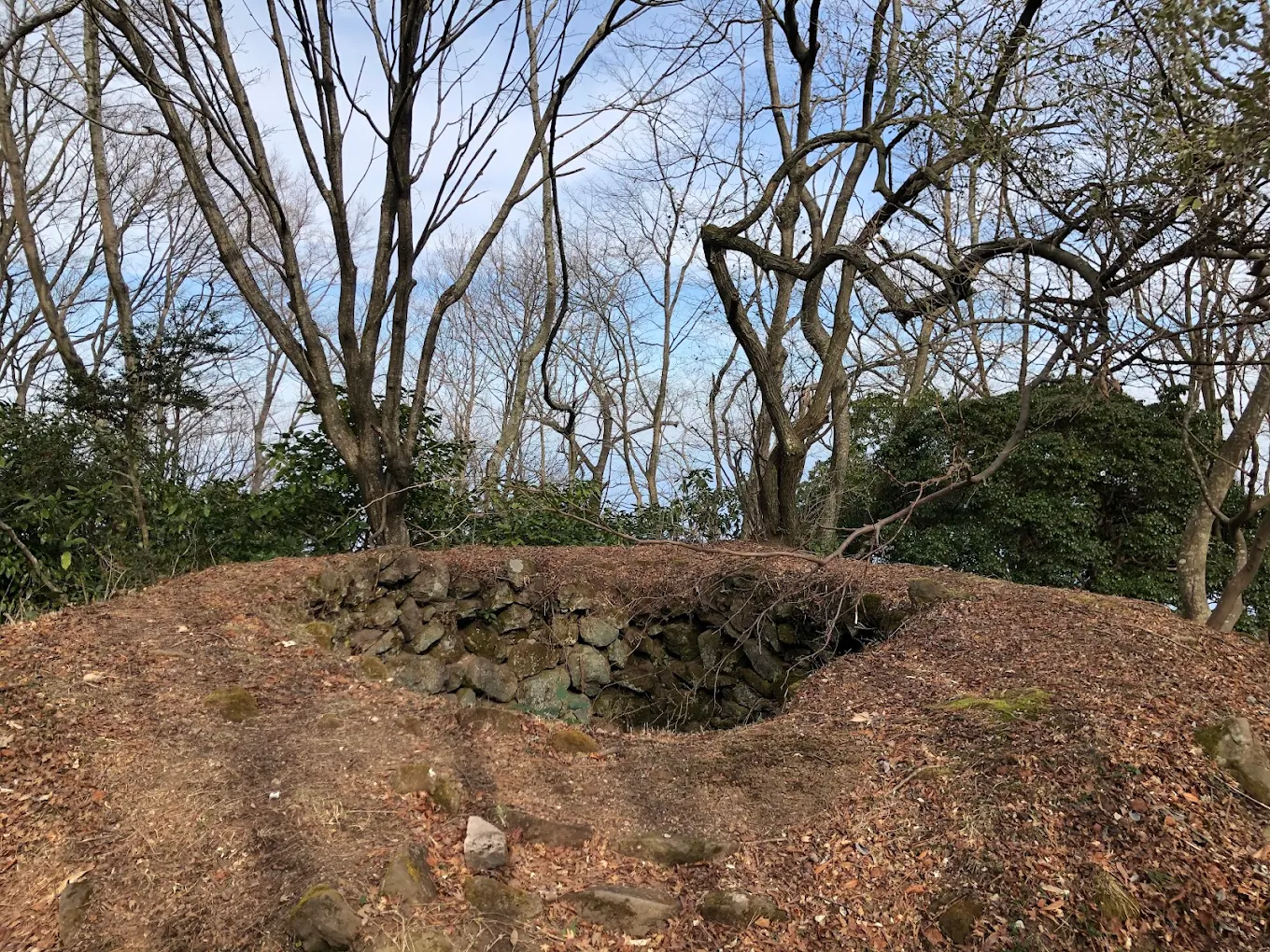
One of the greatest highlights of Nagayama Castle is its stone walls. The stone walls remaining on the east side, in particular, are valuable historical remains that demonstrate the transitional techniques from rough-hewn stonework to fitted stonework.
The stone walls, approximately 3 to 5 meters high, remain in various locations, giving a glimpse into the scale of the castle at the time. Even the stone walls that collapsed during the Kumamoto earthquake have been restored using the original stones as much as possible, making this an important example from the perspective of cultural property preservation.
Moats and Earthworks
The castle was surrounded by moats. Wide moats, especially on the west and south sides, enhanced its defensive capabilities. Currently, part of the moats has been filled in and converted into a free parking lot for tourists, but their shape allows us to infer the scale of the castle in its heyday.
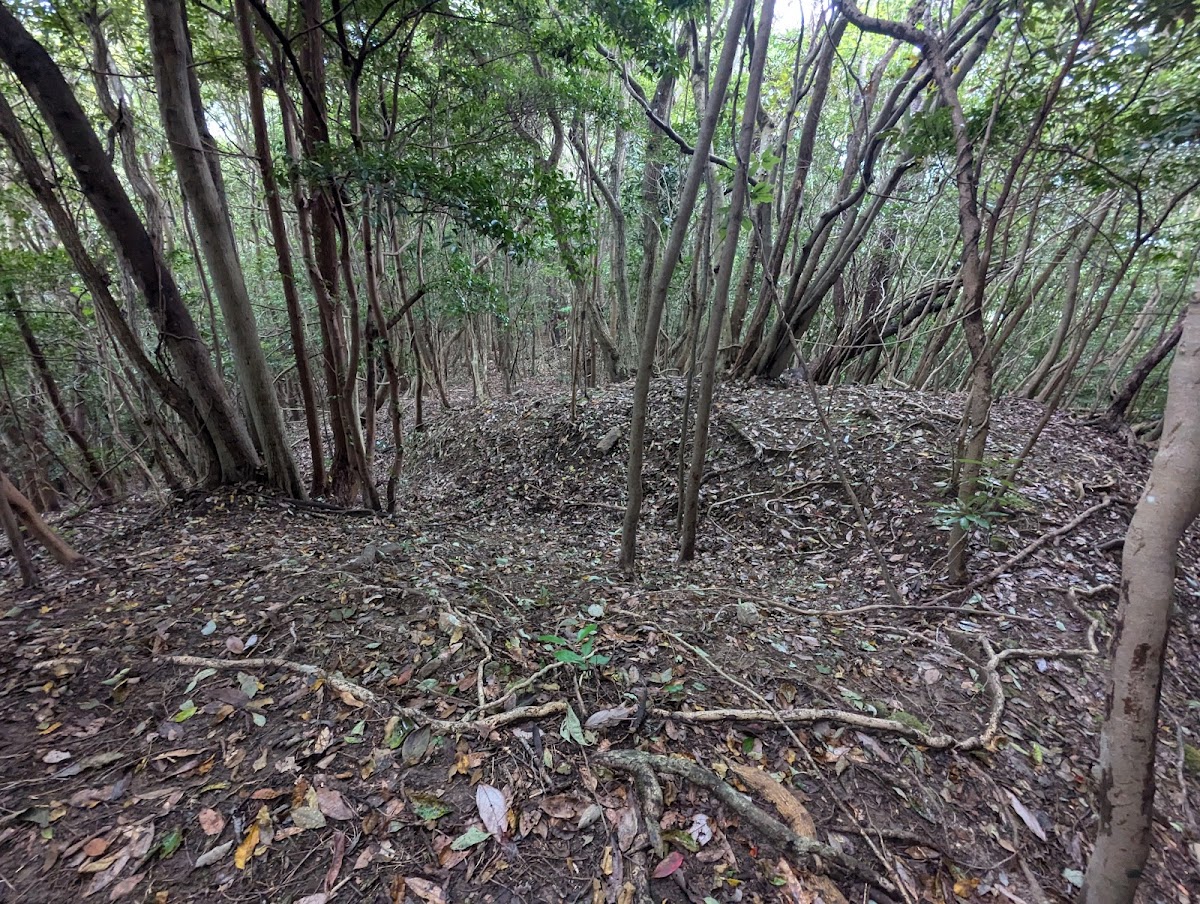
Earthworks were also placed in various locations, but few remain, with only faint traces visible.
Structure of Hita Jinya
Located at the foot of Nagayama Castle, the Hita Jinya served as a magistrate’s office. The Jinya housed offices, officials’ residences, and storehouses, and was surrounded by a moat and earthen ramparts.
Some of the Hita Jinya’s stone walls and moat still remain today, with the stone walls being particularly well-preserved. While the Jinya site is now occupied by public facilities and residential areas, remnants can still be seen in various places.
Highlights of Nagayama Castle
View from Tsukikuma Park
From the Nagayama Castle ruins, now developed as Tsukikuma Park, you can enjoy a panoramic view of Hita city. The view from the main keep is particularly magnificent, offering views of the Mikuma River, the Kagetsu River, and even distant mountains.
In spring, it’s a popular spot for cherry blossom viewing, attracting many visitors. The autumn foliage is also beautiful, allowing visitors to enjoy the scenery throughout the seasons.
Restored Stone Walls
The stone walls, meticulously restored during the reconstruction after the Kumamoto earthquake, are a must-see. An explanatory sign detailing the restoration work using traditional stone-laying techniques is also installed, allowing visitors to learn about cultural property preservation efforts.
The eastern stone wall is particularly well-preserved, allowing for close observation of the stone-laying techniques of the time. It’s even possible to discern differences in the construction period from the shape of the stones and the way they are laid.
Remains of the Hita Jinya Site
The Hita Jinya site, within walking distance of Nagayama Castle, is also not to be missed. Parts of the stone walls and moat remain in good condition, giving a real sense of its scale as a base for governing the shogunate territory.
An explanatory sign is installed at the Jinya site, providing detailed information about its function as a county magistrate’s office in the western provinces and its history.
Mameda-machi Castle Town
Mameda-machi is a castle town that developed alongside Nagayama Castle and the Hita Jinya. The Edo period townscape is well-preserved and has been designated a National Important Traditional Buildings Preservation District.
The rows of white-walled storehouses and merchant houses with lattice doors create an atmosphere that feels like stepping back in time. A stroll through the area, combined with a visit to the castle ruins, will allow you to gain a deeper understanding of Hita’s history.
Access and Visiting Information
Location
877-0016 Maruyama-cho, Hita City, Oita Prefecture (Tsukikuma Park)
Transportation Access
Access by Train
- Approximately 15 minutes on foot from JR Kyudai Main Line “Hita Station”
- Approximately 5 minutes by taxi from the station
Access by Car
- Approximately 10 minutes from Oita Expressway “Hita IC”
- Approximately 20 minutes from Kyushu Expressway “Haki IC”
Parking
Tsukikuma Park has free parking. The parking lot utilizes the former moat site and has space for approximately 30 cars. During peak seasons such as cherry blossom season, please consider using nearby paid parking lots.
Visitor Information
- Opening Hours: Open 24 hours (Tsukikuma Park)
- Admission Fee: Free
- Estimated Visiting Time: Approximately 30-60 minutes (2-3 hours if including Hita Jinya Ruins and Mameda-machi)
- Restrooms: Public restrooms available within the park
- Accessibility: Some walking paths are well-maintained, but there are steep slopes around the stone walls.
Precautions for Visitors
- As there are areas with uneven footing around the stone walls, we recommend wearing comfortable shoes.
- Remember to bring insect repellent in summer and warm clothing in winter.
- Be careful as the stone steps can become slippery in rainy weather.
- Please refrain from climbing on the stone walls (for cultural property protection).
Nearby Tourist Attractions
Hita City Mameda-machi Important Traditional Buildings Preservation District
An Edo-period townscape located approximately 10 minutes on foot from Nagayama Castle. Many facilities, including soy sauce breweries, sake breweries, and merchant houses, are preserved and open to visitors.
Kangien Garden Ruins
The site of a private school founded by Hirose Tansō, a Confucian scholar in the late Edo period. Designated a national historical site, it is known as one of the largest private schools in Japan. Approximately 5 minutes by car from Nagayama Castle.
Hita Gion Festival Float Museum
A facility exhibiting the floats used in the Hita Gion Festival, one of Japan’s three major Gion Festivals. You can view the magnificent floats year-round.
Mikuma River Houseboat Cruises
Houseboats are a quintessential Hita sight. You can cruise the Mikuma River and view the Nagayama Castle ruins from the water.
Books and Materials Related to Nagayama Castle
For those who want to learn more about Nagayama Castle and the history of Hita, the following materials are recommended.
- *Hita City History* (Hita City Board of Education) – A fundamental source covering the general history of Hita
- *Castles of Hita in Bungo Province* (Oita Prefecture Board of Education) – A research book on castles in Bungo Province, including Nagayama Castle
- *Hita and the Western Provinces Magistrate* (Local History Research Council) – A detailed account of Hita during the shogunate’s rule period
- *Comprehensive Survey of Japanese Castles, Volume 17, Oita and Kumamoto* – Includes an entry on Nagayama Castle
More specialized materials can be viewed at the Hita City Tansō Library and the Cultural Properties Protection Division of the Hita City Board of Education.
The Charm of Nagayama Castle and the Significance of Visiting It
Compared to famous castles with large keeps and magnificent stone walls, Nagayama Castle may seem small and unassuming. However, this castle possesses a unique charm not found in other castles.
Firstly, the transition from Ogawa Mitsuuji to Ishikawa Tadasuke, and then to a base for shogunate rule clearly demonstrates the changes in the Edo shogunate’s governing system. The transformation from a feudal domain castle to a fortified residence is an important example for understanding the shogunate’s strategy for controlling western Japan.
Next, there is the integrated preservation of the castle town. The ruins of Nagayama Castle, the Hita fortified residence, and the townscape of Mameda-machi remain in close proximity, making it a valuable place to experience the history of not only the castle but the entire castle town.
Furthermore, the modern story of recovery from the Kumamoto earthquake is also an important aspect of this castle. The process by which the community tackled the challenge of how to protect and restore damaged cultural properties offers many lessons to be learned as a practical example of cultural property preservation.
Visiting Nagayama Castle will be more than just sightseeing a historical site; it will be an opportunity to learn about Japan’s early modern history, local culture, and the current state of cultural property preservation. When you visit Oita Prefecture, be sure to visit Nagayama Castle in Hita City.
Summary
Nagayama Castle (Hita City, Oita Prefecture) is a hilltop castle built in the early Edo period. It has a history of transformation, starting as Maruyama Castle by Ogawa Mitsuuji, then renamed Nagayama Castle by Ishikawa Tadasuke, and finally becoming the Hita Jinya (fortified residence) which served as a base for shogunate rule.
Currently, it is maintained as Tsukikuma Park, where visitors can see the remains of the stone walls and moats, enjoy panoramic views of Hita city, and appreciate the changing seasons. Having recovered from the Kumamoto earthquake, it is carefully preserved as a local historical heritage site.
Visiting Nagayama Castle along with surrounding historical sites such as the castle town of Mameda-machi and the Hita Jinya ruins will allow you to gain a deeper understanding of Hita during the Edo period. Its convenient location, within walking distance of Hita Station, is another attractive feature.
When exploring the history and castles of Oita Prefecture, be sure to visit Nagayama Castle and experience its history and charm.