Higashikuge Castle (Shimabara City, Nagasaki Prefecture) Complete Guide | History, Remains, and Access Information
Located in Shimabara City, Nagasaki Prefecture, Higashikuge Castle is a valuable historical site that conveys the history of regional rule in Hizen Province during the Sengoku period. Built as the residence of Kuga (Koga) Echigo-no-kami, a vassal of the Arima clan, it played an important role in the history of the Shimabara Peninsula. This article comprehensively introduces information useful for those planning a visit, including the detailed history of Higashikuge Castle, existing remains, access methods, and surrounding tourist information.
Overview of Higashikuge Castle
Higashikuge Castle is a medieval hilltop castle located in Higashikuge-cho, Shimabara City, Nagasaki Prefecture. As a castle that played a part in the Arima clan’s rule of the Shimabara Peninsula, it is an important historical site that tells the story of the region.
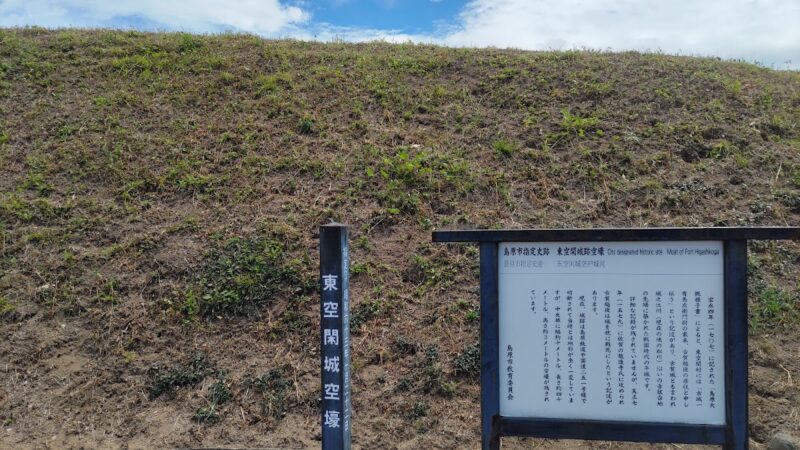
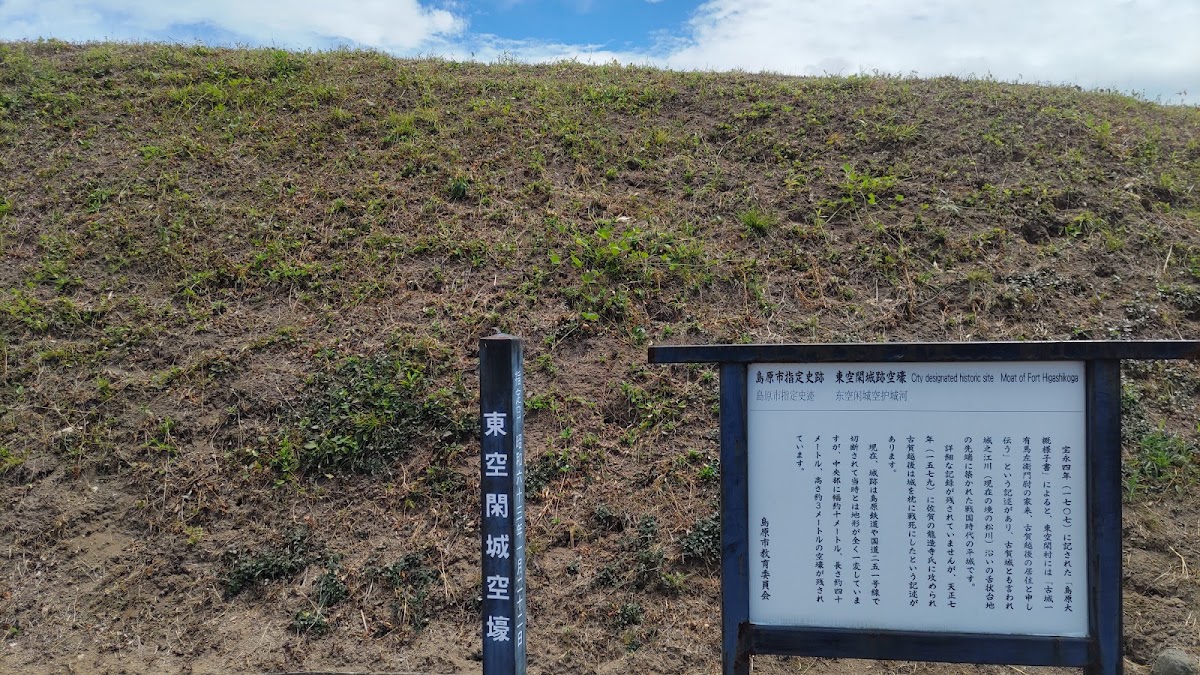
Currently, the castle site retains a dry moat, which is preserved as a Shimabara City designated historical site. An information board and marker post are installed in front of the Sakainomatsu Community Center. Although relatively small in scale, the castle ruins are a valuable historical site for understanding the appearance of a local powerful family’s castle during the Sengoku period.
Basic Castle Information
- Location: Higashikugamachi, Shimabara City, Nagasaki Prefecture
- Castle Classification: Hilltop Castle
- Builder: Kuga (Koga) Echigo-no-kami
- Construction Period: Sengoku period (details unknown)
- Year of Abandonment: 1579 (Tensho 7)
- Designated Cultural Property: Shimabara City Designated Historic Site (Dry Moat)
- Remains: Dry moat, part of earthworks
History of Higashikuga Castle
Relationship between the Arima and Kuga Clans
Higashikuga Castle was the residence of Kuga Echigo-no-kami, a vassal of the Arima clan, who ruled Takaki District in Hizen Province. The Kuga clan is also written as the Koga clan, and is believed to have been entrusted with governing the eastern part of the Shimabara Peninsula as a senior retainer of the Arima clan.
The Arima clan was a powerful daimyo family that ruled the Shimabara Peninsula from the Nanboku-cho period to the Sengoku period. At its peak, it possessed a vast territory spanning Takaki, Sonogi, and Fujitsu districts. The Kuga clan played a crucial role within the Arima clan’s system of rule, responsible for the defense and administration of the Higashi-Kuga region.
The Ryuzoji Invasion and the Fall of the Castle
The most important event in the history of Higashi-Kuga Castle was the attack by the Ryuzoji clan in 1579 (Tensho 7). At this time, Ryuzoji Takanobu, who was gaining hegemony in Hizen Province, was seeking to expand his power into the Shimabara Peninsula and was increasing pressure on the Arima clan and their retainers.
When the large Ryuzoji army attacked Higashi-Kuga Castle, the castle lord, Kuga Echigo-no-kami, resisted fiercely but was ultimately killed. It is believed that Higashi-Kuga Castle fell after this battle and was subsequently abandoned.
The death of Kuga Echigo-no-kami in battle was one of the events symbolizing the decline of the Arima clan’s power and had a significant impact on the subsequent shift in the balance of power on the Shimabara Peninsula. The Ryuzoji clan strengthened their influence on the Shimabara Peninsula with this victory, but were defeated by the Arima-Shimazu allied forces at the Battle of Okita-Nawate in 1584 (Tensho 12), resulting in the death of Ryuzoji Takanobu himself.
History after the Castle’s Abandonment
After Higashi-Kuga Castle was abandoned, this area became a direct territory of the Arima clan, and later, along with the construction of Shimabara Castle, the castle town was developed. During the Edo period, it developed as Higashi-Kuga Village, and with the implementation of the town and village system in 1889 (Meiji 22), it became part of Omihigashi Village along with Ono Village and Sannosawa Village.
To this day, parts of the castle ruins have been carefully preserved by local residents and have been designated a historical site by Shimabara City, ensuring its transmission to future generations.
Structure and Remains of Higashikuga Castle
Castle Structure
Higashikuga Castle was built as a small-scale flatland castle. While detailed layout maps do not exist, on-site surveys and historical documents suggest a structure centered around the main enclosure, fortified with dry moats and earthworks.
It is a typical structure for a local powerful family’s residence during the Sengoku period, lacking large stone walls or a keep, and possessing a strong character as a practical defensive structure. It demonstrates ingenuity in utilizing the surrounding terrain to achieve effective defense with limited personnel and resources.
Existing Remains
Dry Moat
The most important remains of Higashikuga Castle are the dry moat, designated as a historical site by Shimabara City. This dry moat is located in front of the Sakainomatsu Community Center and can still be clearly seen today.
The dry moat is approximately 5 meters wide and 2 meters deep, indicating its function as a defensive structure for the castle. The fact that it has retained its shape for over 400 years is a testament to the preservation efforts of local residents.
Traces of Earthworks
Slight traces of earthworks remain around the dry moat. These remains provide clues to estimating the size and layout of the castle. However, due to years of development and agricultural conversion, it is difficult to grasp the overall layout of the castle grounds.
Information Board and Marker
In front of the Sakainomatsu Community Center, there is an information board and marker indicating the Higashikukan Castle ruins. The information board contains explanations of the castle’s history and remains, playing an important role in helping visitors understand the historical value of the castle ruins.
The marker is inscribed with “Higashikukan Castle Ruins,” serving as a landmark indicating that this location was once a castle. These facilities were installed by the Shimabara City Board of Education as part of an effort to pass on the region’s historical heritage to future generations.
Highlights of Higashikuga Castle
Value as a Historical Site
Higashikuga Castle is an important historical site for understanding the regional power structure of the Shimabara Peninsula during the Sengoku period. It provides valuable clues to how the Arima clan’s retainers governed their territory and how their conflict with the Ryuzoji clan unfolded.
While not a large-scale castle, it possesses a typical structure for a local powerful family’s residence and has high educational value as a site for learning about the castle construction techniques and defensive philosophies of the time.
Observation of the Dry Moat
The biggest highlight when visiting Higashikuga Castle is the well-preserved dry moat. The opportunity to observe a dry moat that actually functioned as a defensive structure of a medieval castle up close is rare and a must-see for castle enthusiasts.
From the cross-sectional shape and size of the dry moat, one can infer the castle construction techniques and the scale of labor involved at the time. Furthermore, by observing its relationship with the surrounding topography, it is possible to imagine the overall defensive plan of the castle.
Historical Landscape
The area around the Higashikuga Castle ruins still retains the atmosphere of the past as a rural area. In this environment where the rich nature of the Shimabara Peninsula and the historical landscape harmonize, you can reflect on the Sengoku period (Warring States period).
In particular, the area around the Sakainomatsu Community Center functions as the center of the local community, and you can see how historical heritage coexists with modern life.
Access to Higashikuga Castle
Using Public Transportation
Using the Shimabara Railway
The Shimabara Railway is the most convenient way to access Higashikuga Castle. The nearest station is Omihigashi Station, and the castle ruins are about a 15-minute walk from the station.
Access Route:
- Take the Shimabara Railway from Shimabara Station or Isahaya Station.
- Get off at Omisato Station.
- Walk from the station towards National Route 251.
- Head towards Sakainomatsu Community Center.
Omisato Station is a tourist spot known as “Japan’s station closest to the sea,” and we recommend visiting it in conjunction with a visit to Higashikuga Castle. You can enjoy a panoramic view of the Ariake Sea from the station platform, and on a clear day, you can even see Kumamoto Prefecture on the opposite shore.
Using the Bus
You can also use local buses from within Shimabara city. Buses run from Shimabara city center towards Higashikuga, and you can access it on foot from the nearest bus stop. However, since the number of buses is limited, we recommend checking the timetable in advance.
Using a Private Car
Access by private car is the most convenient. Head south from Shimabara city center on National Route 251, and you will arrive in about 15 minutes.
Travel time from major locations:
- From Shimabara Station: Approximately 15 minutes
- From Isahaya IC: Approximately 60 minutes
- From Nagasaki Airport: Approximately 90 minutes
- From Kumamoto Port (ferry): Approximately 45 minutes
There is limited parking space around the Sakainomatsu Community Center, so please be considerate of local residents when parking. If possible, we recommend using nearby public parking lots and accessing the site on foot.
Searching with car navigation/map apps
When searching with car navigation or map apps, searching for “Sakainomatsu Community Center” or “Higashikugamachi, Shimabara City” will make it easier to find your destination. Please note that “Higashikugajo Castle Ruins” may not be registered.
Notes for Visitors
Visitor Etiquette
Higashikugajo Castle Ruins are located within the living area of local residents. Please note the following points when visiting:
- Unauthorized entry onto private property is strictly prohibited.
- Do not damage the ruins or take away soil or stones.
- Please take all your trash with you.
- Do not make loud noises.
- Be considerate of community center users.
- Be careful not to disturb those working in the fields.
Suitable time and season for visiting
The Higashikukanjo Castle Ruins are an outdoor historical site and are open for viewing throughout the year. However, you should consider the following points when choosing your visit:
Recommended Time of Year:
- Spring (March-May): Warm and pleasant weather, with beautiful surrounding scenery.
- Autumn (October-November): Stable weather, ideal for walking.
Time to Avoid:
- Rainy Season (June-July): Frequent rain, making walking difficult.
- Mid-Summer (August): Limited shade, high risk of heatstroke.
- Typhoon Season (August-September): High likelihood of bad weather.
Visiting Hours: Daytime hours (around 9:00 AM to 5:00 PM) are safest. Choose a time with sufficient light to read the signs.
Clothing and Items to Bring
- Comfortable walking shoes (sneakers, etc.)
- Seasonal clothing
- Hat (for sun protection)
- Drinking water
- Camera (for recording)
- Insect repellent (summer)
- Rain gear (for unpredictable weather)
Nearby Tourist Attractions
When visiting Higashikuga Castle, we recommend also visiting other tourist attractions in Shimabara City.
Shimabara Castle
Shimabara Castle, a representative tourist attraction of Shimabara City, is about a 20-minute drive from Higashikuga Castle. Built by Matsukura Shigemasa over seven years starting in 1618, this magnificent castle features a reconstructed keep that is now open to the public as a museum.
Shimabara Castle houses the Christian History Museum, the Tourism Restoration Memorial Hall, and the Seibo Memorial Hall, allowing visitors to deeply learn about Shimabara’s history and culture. After visiting Higashikuga Castle, a castle of a local powerful family from the Sengoku period, visiting Shimabara Castle, a modern castle from the Edo period, will allow you to compare the developmental stages of castles. ### Omisato Station
Omisato Station, the nearest station to Higashikukanjo Castle, is a popular tourist spot known as “Japan’s station closest to the sea.” From the platform, you can enjoy a panoramic view of the Ariake Sea, and the sunset view is particularly popular.
The station building is decorated with a “happy yellow handkerchief,” making it a popular spot for Instagram photos. It’s a place you should definitely visit when visiting Higashikukanjo Castle.
Shimabara Onsen
Shimabara city boasts numerous hot spring facilities where you can relax and unwind after sightseeing. Shimabara Onsen is a rare hot spring area blessed with both natural spring water and hot springs, and is characterized by its gentle water quality.
Many facilities offer day-trip bathing, making it ideal for relaxing after touring the castle ruins.
Samurai Residence District
The samurai residence district remaining in the Shimabara castle town is a valuable historical landscape that conveys the lifestyle of samurai during the Edo period. The streets, surrounded by stone walls and hedges, feature waterways fed by pure spring water, creating a charming and atmospheric setting. Three samurai residences are open to the public, allowing visitors to observe the lifestyle of the time.
Shimeiso Spring Water Garden
This Japanese garden utilizes Shimabara’s abundant spring water, with approximately 1,000 tons of spring water filling the garden’s ponds daily. The sight of Nishikigoi (koi carp) swimming in the crystal-clear water is truly breathtaking.
The Town Where Koi Swim
Within Shimabara City, there is an area known as the “Town Where Koi Swim,” where Nishikigoi are released into waterways. The sight of koi gracefully swimming in the pure spring water is a popular tourist attraction unique to Shimabara.
History and Culture of Shimabara City
Historical Background of the Shimabara Peninsula
The Shimabara Peninsula has long developed as part of Hizen Province. In the Middle Ages, the Arima clan ruled the peninsula and became known as a Christian daimyo (feudal lord). Higashikukan Castle functioned as a fortress that played a part in the Arima clan’s rule.
From the late Sengoku period to the early Edo period, the Shimabara Peninsula experienced a turbulent era. The invasion of the Ryuzoji clan, the alliance with the Shimazu clan, and Toyotomi Hideyoshi’s conquest of Kyushu—rulers changed rapidly.
The Shimabara Rebellion and its Historical Significance
In 1637 (Kanei 14) during the Edo period, the Shimabara Rebellion broke out in the Shimabara Peninsula and Amakusa region. This was the largest uprising in Japanese history, a peasant revolt against the persecution of Christians and the harsh collection of land tax.
Although the rebellion was suppressed by the shogunate army, its impact was significant, contributing to the strengthening of the shogunate’s isolationist policy. This occurred approximately 60 years after the abandonment of Higashikuga Castle, making it an important event illustrating the complex history of the Shimabara Peninsula.
Modern Shimabara City
Modern Shimabara City has developed into a regional city with a population of approximately 40,000. Having recovered from the 1991 (Heisei 3) eruption of Mount Unzen-Fugen, Shimabara is now a popular tourist city welcoming many visitors.
Tourism promotion is being carried out by leveraging the historical and natural attractions, such as Shimabara Castle, samurai residences, and natural springs. The ruins of Higashikuga Castle are preserved as one of these historical sites.
Higashikuga Castle and the Shimabara Peninsula’s Castle Network
The Arima Clan’s Castle System
Higashikuga Castle was part of the castle network constructed by the Arima clan to control the Shimabara Peninsula. Centered around Hinoe Castle, the Arima clan’s base, branch castles were located throughout the peninsula, with vassals governing their respective territories.
Major castles include:
- Hinoe Castle: The main castle of the Arima clan (Minamishimabara City)
- Hara Castle: A branch castle of the Arima clan, later the site of the Shimabara Rebellion (Minamishimabara City)
- Higashikuga Castle: A base in the eastern region (Shimabara City)
- Numerous other small castles: Scattered throughout the peninsula
These castles were interconnected and functioned in both defense against external enemies and governance of the territory. Higashikuga Castle also played a role in the defense and governance of the eastern part of the Shimabara Peninsula within this network.
Conflict with the Ryuzoji Clan
In the latter half of the 16th century, the Ryuzoji clan rapidly expanded its power in Hizen Province. Ryuzoji Takanobu, based in Saga, controlled almost the entire Hizen Province and further extended his influence into Chikugo, Higo, and Chikuzen.
The Arima clan was initially subordinate to the Ryuzoji clan, but tensions escalated as the Ryuzoji clan’s pressure intensified. The attack on Higashikuga Castle in 1579 was one example of this tension escalating into a military conflict.
The death of Kuga Echigo-no-kami was a major blow to the Arima clan, but the situation reversed when the Arima-Shimazu allied forces killed Ryuzoji Takanobu in the subsequent Battle of Okita-Nawate (1584). This battle marked a crucial turning point in the history of the Sengoku period in Kyushu.
Current Status and Challenges of Higashikuga Castle Research
Limitations of Historical Sources
Historical sources concerning Higashikuga Castle are limited, leaving many questions unanswered regarding the castle’s detailed structure and history. The main existing historical materials are:
- Oral traditions passed down in the region
- A few written records
- Remaining structures at the site
- Comparative studies with castles in surrounding areas
By comprehensively analyzing these materials, the true nature of Higashikuga Castle is gradually becoming clearer, but there is still much room for further research.
Future Preservation and Utilization
There are several challenges regarding the preservation and utilization of the Higashikuga Castle ruins:
- Preservation of Remains: Appropriately preserving existing remains such as dry moats and passing them on to future generations
- Promotion of Research: Clarifying the actual state of the castle through archaeological excavations and documentary research
- Strengthening Information Dissemination: Enhancing its value as a tourist resource and making it known to more people
- Collaboration with the Community: Protecting and utilizing the historical site in cooperation with local residents
The Shimabara City Board of Education is working on these challenges while promoting the preservation and utilization of the Higashikuga Castle ruins.
Significance of Visiting Higashikuga Castle
As a Place for Historical Learning
Higashikuga Castle is a valuable educational site where you can actually visit the castle of a local powerful family during the Sengoku period. Experiencing history learned from textbooks through actual ruins provides a deeper understanding.
In particular:
- Castle structure during the Sengoku period
- Life and role of local powerful families
- Conflict between the Arima and Ryuzoji clans
- Aspects of the transition period from the medieval to the early modern period
You can learn about these topics on-site.
Understanding Local History
Visiting Higashikuga Castle is the first step in understanding the history of the Higashikuga area of Shimabara City. You will realize that this peaceful rural area was once the stage of war, and that the local people have carefully preserved and passed down that history.
Understanding local history deepens your understanding of the land and makes your visit more meaningful.
Value for Castle Enthusiasts
For castle enthusiasts, Higashikuga Castle is worth visiting for the following reasons:
- Small but clearly preserved remains
- A typical example of a castle belonging to a local powerful family during the Sengoku period
- A clue to understanding the castle network of the Shimabara Peninsula
- Relatively few visitors, allowing for thorough observation
- Numerous other castle ruins and historical sites are located nearby
Visiting these smaller, local castles, in addition to famous large castles, allows one to understand the diversity and depth of Japanese castle culture.
Summary: The Charm of Higashikuga Castle
Higashikuga Castle in Shimabara City, Nagasaki Prefecture, is not large in scale, but it is an important historical site that conveys the history of the Shimabara Peninsula during the Sengoku period. Built as the residence of Kuga Echigo-no-kami, a vassal of the Arima clan, it served as a base for regional defense and governance, and became a stage in history during conflicts with the Ryuzoji clan.
The remaining dry moat is a valuable relic that conveys castle construction techniques from over 400 years ago, and is protected as a historical site by Shimabara City. The signpost and marker in front of the Sakainomatsu Community Center invite visitors into a world of history.
Higashikuga Castle is accessible on foot from Ōmisato Station on the Shimabara Railway, and the surrounding area boasts numerous attractive tourist spots, including Shimabara Castle, samurai residences, and natural springs. As part of your Shimabara sightseeing, why not visit the ruins of Higashikuga Castle and reflect on the history of the Sengoku period?
Visiting historical heritage sites preserved by the local people is a meaningful experience that connects the past and present and passes on history to the future. Higashikuga Castle is a special place where you can feel the weight of history and the pride of the region.
-680x450.png)