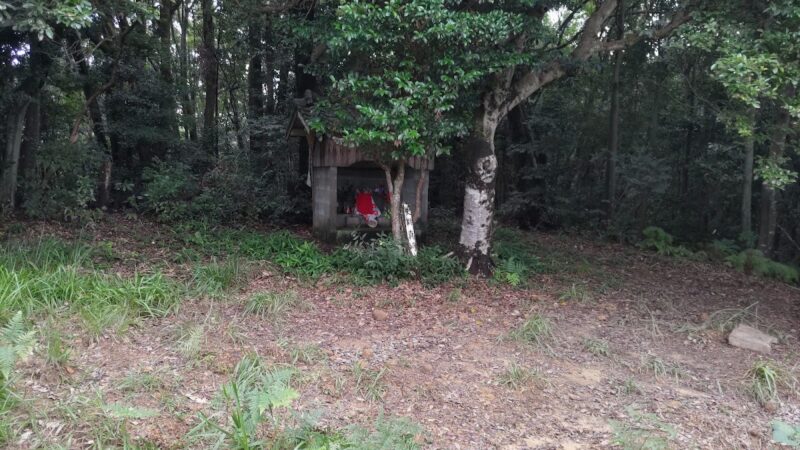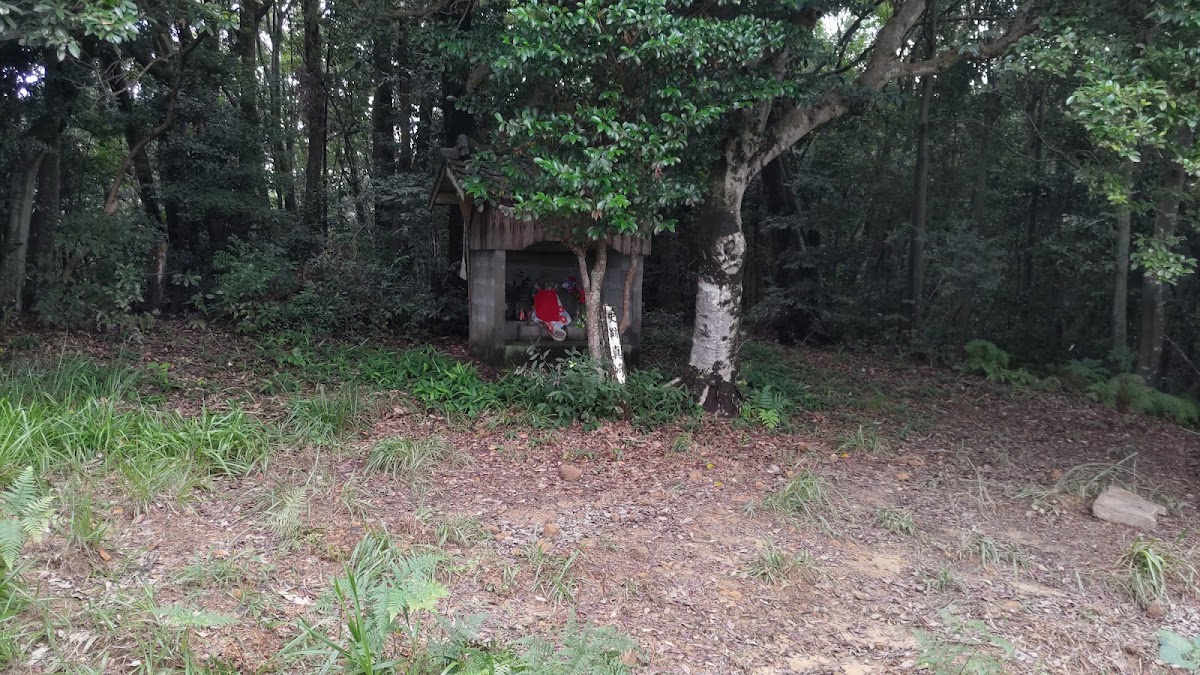
Masaki Castle (Isahaya City) Complete Guide | History, Remains, and Access Information for a Medieval Mountain Castle in Nagasaki Prefecture
Masaki Castle, located in Isahaya City, Nagasaki Prefecture, is an important medieval mountain castle that served as the stage for conflicts in the Hizen region from the Sengoku period to the Azuchi-Momoyama period. This article provides a detailed explanation of Masaki Castle’s historical background, castle structure, existing remains, points of interest, and access methods.
Overview and Basic Information of Masaki Castle
Masaki Castle is a medieval mountain castle located in Masaki-cho, Isahaya City, Nagasaki Prefecture, built on a hill approximately 100 meters above sea level facing the Ariake Sea. This castle was a strategically important point in Hizen Province, situated on the front lines of the power struggle between the Ryuzoji and Arima clans.
Basic Data
- Location: Masaki-cho, Isahaya City, Nagasaki Prefecture
- Construction Period: Sengoku period (details unknown)
- Builder: Several theories exist (believed to be related to the Arima clan)
- Castle Type: Mountain castle
- Elevation: Approximately 100 meters
- Remains: Enclosures, earthworks, moats, etc.
- Designated Cultural Property: Not designated
History of Masaki Castle
Situation in Hizen Province during the Sengoku Period
During the Sengoku period, when Masaki Castle existed, Hizen Province was a turbulent era where regional powers such as the Ryuzoji, Arima, Omura, and Matsuura clans vied for supremacy. In particular, in the latter half of the 16th century, when Ryuzoji Takanobu expanded his power, the border area between the Arima and Ryuzoji territories in southern Hizen was in a state of tension.
Construction and Role of Masaki Castle
Masaki Castle was located within the sphere of influence of the Arima clan and is believed to have functioned as a defensive base against the Ryuzoji clan, who were invading from the north. Its location facing the Ariake Sea was also important for monitoring maritime traffic and as a base for naval forces.
The Masaki area was located on a transportation route from Isahaya to the Shimabara Peninsula, making it a strategically valuable location from both land and sea routes. Therefore, it is presumed that the castle functioned not only as a military base but also as a center for regional control.
Conflict with the Ryuzoji Clan
In the latter half of the 16th century, as the power of Ryuzoji Takanobu swept through Hizen Province, the Arima clan was gradually pressured. It is possible that the area around Masaki Castle also came under the influence of the Ryuzoji clan. When Ryuzoji Takanobu was defeated and killed in the Battle of Okita-Nawate in 1584 by the combined forces of the Arima and Shimazu clans, the balance of power in Hizen Province changed dramatically.
The Toyotomi Regime and the Abandonment of the Castle
After Toyotomi Hideyoshi’s conquest of Kyushu in 1587, the control of Hizen Province was established under the Ryuzoji clan (later the Nabeshima clan) of Saga and the Arima clan of Shimabara. The Isahaya region came under the rule of the Isahaya clan, vassals of the Ryuzoji clan, and it is believed that Masaki Castle lost its strategic importance and was abandoned.
The Castle Structure of Masaki Castle
Characteristics of the Layout
Masaki Castle has the structure of a typical medieval mountain castle, with the main enclosure located on the mountaintop and multiple enclosures arranged around it in a linear layout. It is characterized by a defensive structure that skillfully utilizes the terrain.
Major Remains
Main Enclosure (Honmaru)
The main enclosure, located on the mountaintop, was the site of the castle’s central facilities. A flat surface can still be seen today, and traces of earthworks remain around it. From the main enclosure, one can enjoy a panoramic view of the Ariake Sea and the Isahaya Plain, indicating its high level of surveillance capabilities.
Enclosures
Multiple enclosures are arranged around the main enclosure. These form a tiered defensive structure, designed to make enemy intrusion difficult. Each enclosure is positioned along the terrain, creating a defensive line that utilizes the natural slope.
Moats
Several moats blocking the ridgeline have been identified. These facilities limited enemy intrusion routes and facilitated defense. The depth and width of the moats reveal the meticulous attention paid to the castle’s defenses.
Earthworks
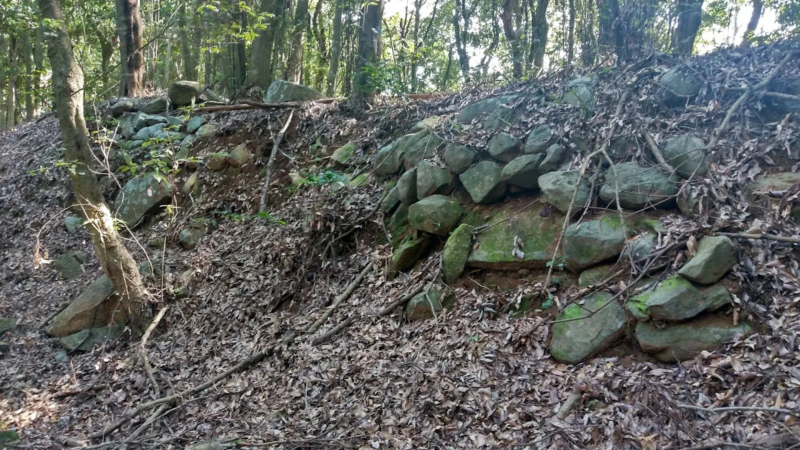
Earthworks were built around the enclosures, and some are still clearly visible today. The earthworks served not only as defensive walls but also to clearly define the boundaries of the enclosures.
Access Routes
While multiple access routes to the castle are thought to have existed, the main route is presumed to have followed the ridgeline from the south. Even today, mountain paths remain, allowing visitors to trace the remnants of the castle’s original access route.
Highlights of Masaki Castle
Preservation of the Remains
The remains of Masaki Castle have been relatively unaffected by development, making them valuable resources for understanding the structure of medieval mountain castles. The layout of the baileys and the shape of the moats are particularly well-preserved, allowing visitors to appreciate the castle-building techniques of the time.
Views
The views from the main bailey are magnificent, offering panoramic views of the Ariake Sea, the Isahaya Plain, and Mount Unzen. During the Sengoku period, the castle lords likely strategized while gazing at this scenery. On clear days, one can even see as far as the Shimabara Peninsula, highlighting the castle’s strategic importance.
Natural Environment
The area surrounding the castle ruins is blessed with abundant nature, allowing visitors to enjoy the vegetation throughout the seasons. The fresh greenery in spring and the vibrant autumn foliage make it a perfect spot for both historical and nature walks.
Related Historical Sites in the Surrounding Area
Isahaya Castle Ruins
Located approximately 5 kilometers northeast of Masaki Castle, Isahaya Castle served as the residence of the Isahaya clan and survived until the Edo period. Currently, it is maintained as Isahaya Park, with some of the stone walls and moats remaining. Visiting both Masaki Castle and Isahaya Castle will provide a deeper understanding of the castle history in this region.
Historical Sites Related to the Arima Clan
Numerous historical sites related to the Arima clan exist on the Shimabara Peninsula. Visiting the Arima clan’s strongholds, such as Hara Castle Ruins (a component of the World Heritage Site “Hidden Christian Sites in the Nagasaki Region”) and Hinoe Castle Ruins, will provide a clearer understanding of the historical background of Masaki Castle.
How to Access Masaki Castle
Access by Public Transportation
By Train and Bus
- Take the Shimabara-bound Shimatetsu Bus from JR Isahaya Station
- Get off at the “Masaki” bus stop and walk approximately 20 minutes to the castle entrance
- Since bus services are limited, it is recommended to check the timetable in advance.
Access by Car
From Nagasaki
- Approximately 15 minutes from the Isahaya IC on the Nagasaki Expressway via National Route 57
- Proceed along National Route 57 towards Shimabara, then turn onto the prefectural road in Masaki-cho.
From Fukuoka
- Take the same route via the Isahaya IC on the Nagasaki Expressway.
Parking Information
- There is no dedicated parking lot for the castle ruins.
- Use the parking spaces at nearby public facilities or Masaki Park and access the castle on foot from there.
- Please absolutely avoid street parking as it will inconvenience local residents.
Precautions for Visiting the Castle
- As it is a mountain castle, appropriate clothing and footwear are necessary for climbing (trekking shoes recommended).
- Bring insect repellent and drinking water during the summer months.
- Be extremely careful as the ground can become slippery after rain.
- Avoid climbing alone; it is recommended to visit with multiple people whenever possible.
- Check your cell phone signal strength beforehand and ensure you have a means of contact in case of emergency.
Points to Note When Visiting Masaki Castle
Estimated Time Required
Allow approximately 20-30 minutes from the entrance to the main enclosure, 30-40 minutes for exploring the castle ruins, and 20 minutes for descending. A total of 1.5 to 2 hours is required. If you plan to take photographs or conduct detailed observations, it is recommended to allow even more time.
Best Time to Visit
Spring (March-May)
- Mild weather, ideal for visiting the castle
- Beautiful fresh greenery and excellent views
Autumn (October-November)
- Beautiful autumn foliage
- Temperature suitable for visiting the castle
- Clear air and excellent views
Summer (June-September)
- Beware of heat and insects
- Early morning or evening visits are recommended
Winter (December-February)
- Leaves fall, making it easier to observe the ruins
- Cold weather precautions are necessary
- Shorter daylight hours, so visit early
Photo Spots
- View from the Main Enclosure: A spectacular view of the Ariake Sea and the Isahaya Plain
- Moat: A representative example of a medieval mountain castle’s defensive structure
- Earthwork: Well-preserved earthworks surrounding the enclosures
- Road to the Castle: Mountain Paths Retaining Traces of the Past
Research and Preservation Activities of Masaki Castle
Academic Research
While Masaki Castle has been investigated by local historians and castle researchers, large-scale archaeological excavations have not been conducted. Due to the limited availability of historical documents, many aspects of the castle’s detailed history remain unclear.
Further detailed layout surveys and archaeological excavations are expected to shed more light on the actual state of castles in Hizen Province during the Sengoku period and the nature of the conflict between the Arima and Ryuzoji clans.
Current Status and Challenges of Preservation
Since the Masaki Castle ruins are not designated as a cultural property, there is no official preservation management. However, a certain degree of preservation is maintained thanks to the interest of local residents and history enthusiasts.
The following points are among the challenges for the future:
- Detailed Investigation of the Remains: Surveying to clarify the academic value
- Cultural Property Designation: Protection through designation as a city-designated historical site, etc.
- Development Plan: Development that balances visitor safety with the protection of the remains
- Information Dissemination: Improving awareness through the installation of information boards and provision of information
- Collaboration with the Community: Building a cooperative system with local residents and the tourism association
Manners When Visiting Masaki Castle
Basic Manners
- Consideration for Private Property: Private property may be included around the castle ruins. Absolutely do not enter areas marked as “No Entry.”
- Protection of Remains: Please be careful not to damage remains such as earthworks and moats. Walking on the remains or digging in the soil is strictly prohibited.
- Take Your Trash Home: Please be sure to take all trash you generate during your visit. Please cooperate in protecting the natural environment and historical site. 4. No Open Flames: To prevent forest fires, absolutely avoid using open flames.
- Consideration for Noise: Please be considerate of the surrounding residents and refrain from disruptive behavior such as shouting.
Safety Management
- Carry rain gear in case of sudden weather changes.
- Avoid acting alone and inform someone of your plans.
- Be aware of wild animals (wild boars, venomous snakes, etc.).
- Take sufficient care to avoid slipping and falling, and avoid reckless actions.
Masaki Castle and Hizen Province in the Sengoku Period
Sengoku Daimyo of Hizen Province
Hizen Province, where Masaki Castle existed during the Sengoku period, was in a complex situation with multiple powers vying for control. The main powers were as follows:
Ryuzoji Clan: Based in Saga, they brought most of Hizen Province under their control in the late 16th century under the leadership of Takanobu. The Arima clan was a powerful force, considered one of the three strongest in Kyushu, but declined after their defeat at the Battle of Okita-Nawate.
Arima clan: Known as a Christian daimyo based on the Shimabara Peninsula. They suffered under pressure from the Ryuzoji clan, but maintained their power after their victory at the Battle of Okita-Nawate.
Omura clan: Based in Omura, known as Japan’s first Christian daimyo. Their relationship with the Ryuzoji clan was complex, sometimes subservient, sometimes opposed.
Strategic Location of Masaki Castle
Masaki Castle was located midway between Saga, the base of the Ryuzoji clan, and the Shimabara Peninsula, the base of the Arima clan. This geographical location was crucial as a buffer zone between the two forces.
Its location facing the Ariake Sea made it a key point for maritime traffic. During the Sengoku period, maritime traffic played a vital role in the transport of goods and military operations, and it is believed that Masaki Castle functioned to monitor and control this traffic.
The Charm and Future Prospects of Masaki Castle
A Place to Immerse Yourself in Historical Romance
Masaki Castle doesn’t boast the large stone walls and keeps of famous castles. However, the remains of this simple mountain castle, built of earth and wood, evoke the tension of the Sengoku period and the spirit of the people who defended this land.
Standing in the main enclosure and gazing out at the Ariake Sea, one can almost picture the Sengoku warlords monitoring enemy movements and formulating their strategies from this spot. While not flashy, it is a valuable historical site for understanding the history of Japanese castles.
Potential as a Regional Resource
Masaki Castle is a valuable historical resource of Isahaya City, and further utilization is expected in the future. With proper research and maintenance, it has the potential to become an attractive destination for history enthusiasts and castle fans.
It can also be used as a place for local history education, providing children with opportunities to learn about local history. Furthermore, the development of tourist routes combining it with surrounding historical sites as part of historical tourism is also conceivable.
Balancing Preservation and Utilization
In order to widely promote the value of Masaki Castle in the future, a balance between preservation and utilization is crucial. It is necessary to appropriately protect the remains while creating an environment where visitors can safely view the site.
It is hoped that local residents, government officials, researchers, and history enthusiasts will cooperate to pass on Masaki Castle to future generations.
Summary
Masaki Castle in Isahaya City, Nagasaki Prefecture, is an important mountain castle site from the Sengoku period in Hizen Province. Located on the front lines of the conflict between the Ryuzoji and Arima clans, it functioned as a strategic stronghold.
Even today, the remains such as baileys, earthworks, and moats are well-preserved, making it a valuable historical site for understanding the structure of medieval mountain castles. The view from the main enclosure is magnificent, offering a panoramic view of the Ariake Sea and the Isahaya Plain.
While access is somewhat difficult, it is a spot that history buffs and castle enthusiasts should definitely visit. You will have a valuable experience of feeling the spirit of the Sengoku period and reflecting on the history of Hizen Province. When visiting, please ensure you are properly equipped and well-prepared, and enjoy this precious historical site while prioritizing safety. Remember to respect the preservation of the ruins and the local community, and be mindful of proper etiquette during your visit.
Masaki Castle is a hidden gem, not yet widely known. We hope this article will introduce you to the charm of Masaki Castle and inspire you to visit.
-680x450.png)