Yuisekiyama Castle (Tsushima City, Nagasaki Prefecture) Complete Guide: History, Highlights, and Access Information
Yuisekiyama Castle is a medieval mountain castle located in Kawachi, Kami-Tsushima-cho, Tsushima City, Nagasaki Prefecture. As an important castle site that tells the story of Tsushima’s complex history, it attracts attention from castle enthusiasts and history buffs. This article provides detailed information on Yuisekiyama Castle, from its historical background to its highlights and access methods.
Basic Information on Yuisekiyama Castle
Yuisekiyama Castle is a mountain castle built on a mountaintop approximately 190 meters above sea level in Kawachi, Kami-Tsushima-cho, Tsushima City. With a relative elevation difference of approximately 190 meters, it features a defensive structure that takes advantage of the steep terrain. Located in the northern part of Tsushima, a border island, it is believed to have played an important role in trade with and defense of the Korean Peninsula.
Castle Scale and Structure
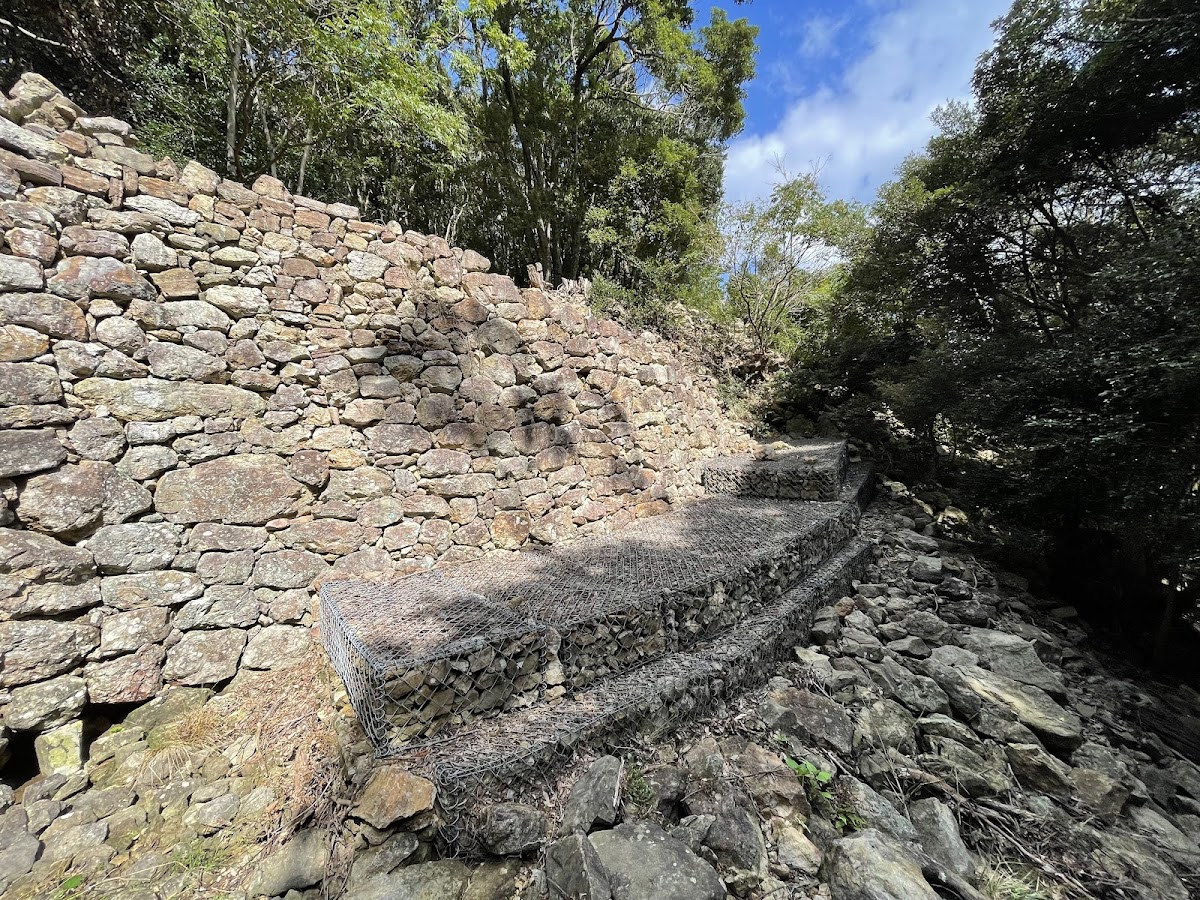
Kesshiyama Castle possesses the typical characteristics of a medieval mountain castle, and the remains of stone walls and baileys can still be seen today. Multiple baileys are arranged around the mountaintop, showcasing a layout that skillfully utilizes the natural terrain. The stone walls were built using the nozurazumi technique, employing stone materials unique to Tsushima.
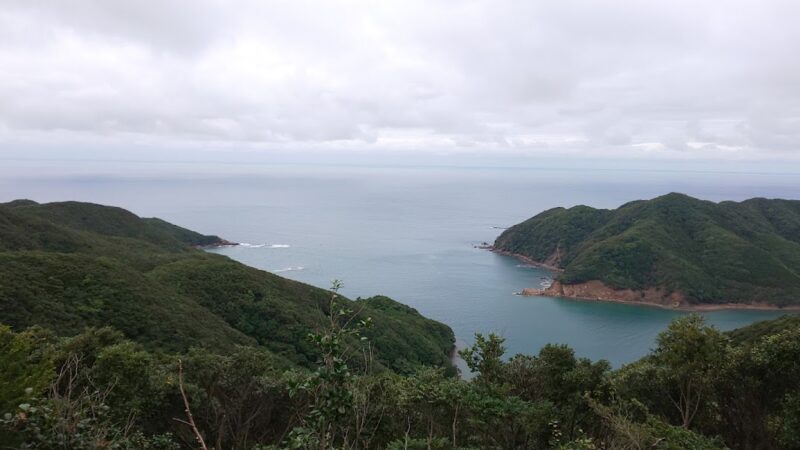
The castle grounds are relatively compact, but its highly defensible design, utilizing steep slopes, makes it easy to defend even with a small force. From the main bailey, one can see the Tsushima Strait and the surrounding terrain, suggesting that surveillance was also an important function.
Historical Background of Kesshiyama Castle
Medieval History and Castles of Tsushima
Tsushima has played an important role since ancient times as a strategic point connecting Japan and the Korean Peninsula. In the medieval period, the So clan ruled Tsushima, and it prospered as a gateway for trade and diplomacy with Korea. During this period, numerous mountain castles were built on Tsushima, and Kesshiyama Castle functioned as one of them.
The castles of Tsushima, including Kaneda Castle, Kaneshi Castle, Shimizu-yama Castle, and Gekigata-yama Castle, were each built in different eras and for different purposes. It is presumed that Ketsuseki-yama Castle held a particularly important position as a defensive base in northern Tsushima, especially for maritime surveillance and northern security.
Construction Period and Lord
While historical records are limited regarding the exact construction period of Ketsuseki-yama Castle, it is believed to have functioned during the late medieval period, particularly from the Muromachi to the Sengoku period. It is highly likely that a member or vassal of the So clan, who ruled Tsushima, was the lord of the castle, and it was probably used as a governing base for northern Tsushima.
A particularly noteworthy period in Tsushima’s history is the Bunroku-Keicho War (1592-1598). During Toyotomi Hideyoshi’s invasion of Korea, Tsushima became an important transit point, and many castles were strengthened as military bases. Ketsuseki-yama Castle may have also played some role during this period.
Abandoned Castle and the Present
During the Edo period, the political and economic center of the Tsushima domain shifted to Kaneshi Castle in Izuhara, and many mountain castles lost their military role and were abandoned. It is presumed that Kesshiyama Castle was also no longer in use by the early Edo period.
Currently, the Kesshiyama Castle ruins are preserved as a local historical heritage site, attracting castle enthusiasts and history researchers. Tsushima City is also conducting research and protection activities as a cultural property.
Highlights of Kesshiyama Castle
Stone Wall Remains
The greatest highlight of Kesshiyama Castle is the existing stone wall remains. Built using the nozurazumi technique, the stone walls retain their original form even after several hundred years, allowing for close observation of medieval castle construction techniques. The stone materials chosen were suited to Tsushima’s geology, demonstrating the unique characteristics of castle architecture in the region.
The height of the stone walls varies depending on the location, but the best-preserved sections maintain a height of approximately 2-3 meters. Although some parts have collapsed, the overall layout allows us to imagine the castle’s original layout.
Layout of Enclosures (Kuruwa)
Several enclosures are arranged in a stepped pattern, centered around the main enclosure at the mountaintop. Each enclosure is relatively flat and leveled, suggesting that buildings and watchtowers once stood there. From the main enclosure, one can see the Tsushima Strait, and on clear days, the mountains of the Korean Peninsula can be seen in the distance.
Traces of passages connecting the enclosures and the remains of entrances (koguchi) can also be found, providing clues to understanding the castle’s movement patterns. The complex layout, prioritizing defense, shows ingenuity in many ways to make enemy intrusion difficult.
Views and Natural Environment
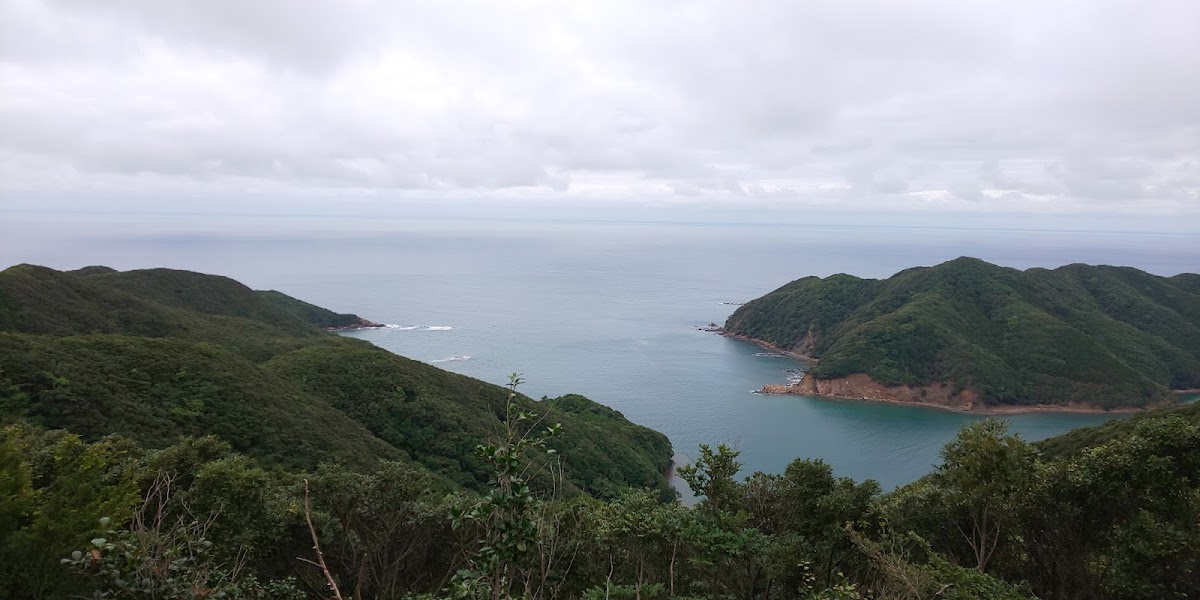
The views from Kessekiyama Castle are breathtaking. From the 190-meter-high mountaintop, the coastline of northern Tsushima, the intricate ria coast, and the magnificent view of the Tsushima Strait unfold. The former lords of the castle likely monitored sea movements while gazing at this view.
The area surrounding the castle ruins is surrounded by rich nature, allowing visitors to observe flora and fauna unique to Tsushima. Tsushima is known for its continental biota, and is home to rare species not found on the mainland. When visiting the castle, you can enjoy not only history but also nature observation.
Access and Visiting Information
Access to Tsushima
Tsushima can be accessed by plane or ferry.
By Plane:
- Approximately 30 minutes from Nagasaki Airport to Tsushima Yamaneko Airport
- Approximately 35 minutes from Fukuoka Airport to Tsushima Yamaneko Airport
By Ferry:
- Approximately 4-5 hours from Hakata Port to Tsushima (Izuhara Port or Hitakatsu Port)
- International ferries also operate from Busan Port, South Korea to Tsushima (Hitakatsu Port) (passport required)
Access to Kesshiyama Castle
Kesshiyama Castle is located in Kawachi, Kami-Tsushima-cho, Tsushima City. It is approximately 30-40 minutes by car from Tsushima Yamaneko Airport or Hitakatsu Port. Public transportation is limited, so we recommend renting a car.
Access by Car:
- Approximately 35km from Tsushima Yamaneko Airport via National Route 382
- Approximately 15km from Hitakatsu Port
We recommend asking locals or obtaining information in advance from the Tsushima City Tourism and Products Association regarding the trailhead to the castle ruins.
Precautions When Climbing the Castle
Kesshiyama Castle is a full-fledged mountain castle, so the following preparations and precautions are necessary for climbing:
- Clothing and Equipment: Wear appropriate hiking boots, long-sleeved shirt and long pants, and a hat. Insect repellent is also essential in summer.
- Physical Fitness: This is a climb with an elevation difference of approximately 190m. Moderate physical fitness is required, and allow 2-3 hours for the round trip.
- Weather: Avoid climbing the castle in rainy or bad weather. The mountain trails become slippery and dangerous.
- Information Gathering: Hiking trail conditions vary depending on the season and weather. Please check the latest information at the Tsushima City Hall or tourist information center beforehand.
- Avoiding Solo Activities: We recommend climbing in groups whenever possible. Please also check your mobile phone signal strength.
- Protection of Historical Remains: Please cooperate in protecting cultural properties by refraining from touching or climbing on historical remains such as stone walls.
Comparison with Other Castles in Tsushima
Tsushima has numerous castle ruins besides Kesshiyama Castle. Comparing these castles will allow for a deeper understanding of Tsushima’s castle history.
Kanata Castle
Kanata Castle is an ancient mountain castle (Korean-style mountain castle) located in southern Tsushima and is designated as a National Special Historic Site. Built in the late 7th century after the Battle of Baekgang, it is a defensive structure much older than Kesshiyama Castle. The stone walls and castle gate remains are well-preserved, making it a valuable historical site for understanding ancient castle construction techniques.
Shimizuyama Castle
Shimizuyama Castle is located in Izuhara-cho, Tsushima City, and was built by order of Toyotomi Hideyoshi during the Bunroku-Keicho War. It is a large-scale mountain castle constructed in a short period as a base for the invasion of Korea, and its stone walls and gates are well-preserved. While different in era and scale from Kesshiyama Castle, it is an important historical site demonstrating Tsushima’s strategic importance.
Kaneishi Castle
Kaneishi Castle was a flatland castle located in the center of Izuhara-cho, Tsushima City, and served as the residence of the So clan of the Tsushima Domain throughout the Edo period. Currently, the turret gate and other structures have been restored, and the Tsushima Historical and Folk Museum is also located there. Unlike mountain castles such as Kesshiyama Castle, it is a castle that emphasized its function as a government office.
Uchikatayama Castle
Uchikatayama Castle is one of Tsushima’s medieval mountain castles, and like Kessekiyama Castle, it functioned as a regional defense base. These mountain castles are thought to have formed a defense network covering the entire island of Tsushima.
Kessekiyama Castle and the History and Culture of Tsushima
The Role of Tsushima, a Border Island
Tsushima, located between the Japanese archipelago and the Korean Peninsula, has a unique history from ancient times to the present day. The castle complex, including Kessekiyama Castle, tells the story of the history of defense and exchange in this border region.
Tsushima was not merely a military base; it was also economically important as a transit point for trade between Japan and Korea. From the Muromachi period to the Edo period, the So clan exclusively controlled diplomacy and trade with Korea, establishing a unique position as the “Tsushima Domain.” Kessekiyama Castle also functioned within this unique context of Tsushima’s position.
Cultural Heritage and Tourism in Tsushima
Besides Kesshiyama Castle, Tsushima boasts numerous historical and cultural attractions:
Shrines and Temples:
- Watatsumi Shrine: A mystical shrine with a torii gate standing in the sea
- Kaijin Shrine: A representative ancient shrine of Tsushima
- Nishiyama-ji Temple: Houses Buddhist statues and other artifacts brought from Korea
Nature and Scenery:
- Korean Observatory: On clear days, you can see the cityscape of Busan, South Korea
- Asaji Bay: A beautiful landscape of a complex, indented ria coastline
- Tsushima Wildlife Conservation Center: Conservation activities for the Tsushima leopard cat, a natural monument
Historical Facilities:
- Tsushima Museum: Comprehensively exhibits the history and culture of Tsushima
- Tsushima Historical and Folk Museum: Exhibits archaeological and folk materials
When visiting Kesshiyama Castle, visiting these facilities and historical sites in conjunction will allow you to gain a deeper understanding of Tsushima’s history and culture.
Model Itinerary for Visiting Kesshiyama Castle
Here is a model itinerary for efficiently visiting Kesshiyama Castle during your stay in Tsushima.
1-Night, 2-Day Course (Focus on Northern Tsushima)
Day 1:
- Morning: Arrive at Tsushima Yamaneko Airport, rent a car
- Afternoon: Visit Kesshiyama Castle (2-3 hours)
- Evening: Explore the area around Hitakatsu Port
- Accommodation: Kami-Tsushima Town or Hitakatsu area
Day 2:
- Morning: Visit the Korean Observatory and the Hill with a View of Foreign Lands Observatory
- Afternoon: Travel towards Izuhara, visit Kaneshi Castle and Tsushima Museum
- Evening: Depart from Tsushima Yamaneko Airport
2-Night, 3-Day Course (All of Tsushima)
Day 1:
- Arrive in Izuhara, visit Kaneshi Castle and Tsushima Museum
- Visit Shimizuyama Castle
- Explore Izuhara Town, stay overnight
Day 2:
- Travel north and visit Kesshiyama Castle
- Visit the Korean Observatory and the Hill with a View of Foreign Lands
- Stay overnight in Kami-Tsushima Town
Day 3:
- Watatsumi Shrine, Asaji Bay sightseeing
- Tsushima Wildlife Conservation Center
- Return trip
Practical Information for Tsushima Tourism
Accommodation
Tsushima has various accommodations, including guesthouses, hotels, and inns, mainly in Izuhara. There are also accommodations in Kami-Tsushima town and the Hitakatsu area, near Kessekiyama Castle, but the number is limited, so advance reservations are recommended.
Food & Gourmet
Tsushima is rich in seafood, and the following gourmet dishes are particularly famous:
- Tsushima local fish (grunt, rockfish, etc.)
- Tsushima soba (Tsushima’s unique soba noodles)
- Tsushima tonchan (local chicken dish)
- Conger eel dishes
Best Season
The best season for visiting Kessekiyama Castle is spring (April-May) and autumn (October-November). Summer is hot and insect-heavy, and winter may be cold and snowy. However, Tsushima has a relatively mild climate, so even winter is not as harsh as on the mainland. ### Obtaining Tourist Information
- Tsushima Tourism and Products Association: Provides general tourism information
- Tsushima City Hall Tourism and Commerce Division: Provides information on cultural properties such as castle ruins
- Tsushima Museum: Provides information on Tsushima’s history and culture
By contacting them in advance, you can check the latest information on castle access and road conditions.
Summary: The Charm and Significance of Visiting Kesshiyama Castle
Kesshiyama Castle is a valuable mountain castle ruin that tells the story of Tsushima’s medieval history. The remains, such as the stone walls and baileys, are well-preserved, allowing you to directly experience the castle-building techniques and defensive philosophies of the time. The view from the 190-meter-high summit is magnificent, allowing you to truly appreciate the geographical importance of Tsushima, a border island.
The entire island of Tsushima is like a history museum embodying the history of exchange between Japan and the Korean Peninsula. Visiting Kesshiyama Castle offers more than just castle sightseeing; you can gain multifaceted learning about international relations, cultural exchange, and local history.
Climbing to the castle requires a certain level of physical fitness and preparation, but it is a historical site well worth the effort. When visiting Tsushima, be sure to add Kessekiyama Castle to your list of places to visit. You will be able to feel the tranquil atmosphere of a medieval mountain castle and the weight of history unique to a border island.
Besides Kessekiyama Castle, Tsushima has many other castle ruins and historical sights. If time permits, we recommend visiting Kaneda Castle, Shimizuyama Castle, and Kaneshi Castle as well to gain a comprehensive understanding of Tsushima’s castle history. Each castle was built in a different era and for a different purpose, allowing you to learn about Tsushima’s complex history from multiple perspectives.
A journey to the border island of Tsushima, engaging in a dialogue with Kessekiyama Castle, a witness to history, will be a meaningful experience that quietly speaks to us living in the modern age about the history of international relations and the importance of peace.
-680x450.png)