Complete Guide to Mitsugi Castle (Omura City) | A Thorough Explanation of Sengoku Period Historical Sites in Nagasaki Prefecture
Mitsugi Castle, located in Omura City, Nagasaki Prefecture, is a mountain castle that played an important role as the residence of the Omura clan from the Sengoku period to the early Edo period. This castle site, which also has deep ties to Omura Sumitada, known as a Christian daimyo, remains popular with history enthusiasts and castle fans. This article provides a detailed explanation of Mitsugi Castle’s historical background, highlights, and access methods.
What is Mitsugi Castle?
Mitsugi Castle is a mountain castle located in Mitsugi-cho, Omura City, Nagasaki Prefecture, dating from the medieval to early modern period. Built on a hill approximately 100 meters above sea level, it served as the base of the Omura clan and the political and military center of the region for about 400 years.
Currently, it remains as a castle site, and the remains of earthworks and baileys can be seen. Protected as an important cultural property of Omura City, it is a valuable historical site that conveys the history of the region to the present day.
History of Sanjo Castle
Background and Period of Construction
There are various theories regarding the construction period of Sanjo Castle, but it is believed to have been built by the Omura clan around the 15th century, during the mid-Muromachi period. The Omura clan was a prestigious family descended from the Fujiwara clan and ruled Sonogi District in Hizen Province (present-day Omura City, Nagasaki Prefecture).
It is presumed that it was initially a simple mountain castle, but its defensive functions were gradually strengthened during the turbulent Sengoku period. The Omura clan used Sanjo Castle as a base to maintain their power in preparation for conflicts with powerful daimyo in Kyushu such as the Ryuzoji and Shimazu clans.
Omura Sumitada and the Christian Era
Indispensable to understanding the history of Sanjo Castle is the existence of the 18th head of the family, Omura Sumitada (1533-1587). Sumitada was baptized in 1563 (Eiroku 6), becoming Japan’s first Christian daimyo, and actively promoted Christian missionary work within his territory.
In 1580 (Tensho 8), Sumitada strengthened his ties with Christianity, including donating Nagasaki Port to the Society of Jesus. It’s possible that Sanjo Castle was also influenced by Christian culture during this period, as Christian-related artifacts have been discovered within the castle and surrounding areas.
During Sumitada’s time, Sanjo Castle is thought to have been not merely a military base, but a unique space where Western and Japanese cultures intersected.
Battles during the Sengoku Period
During the Sengoku period, Sanjo Castle was repeatedly embroiled in battles. The conflict with Ryuzoji Takanobu, the ruler of Hizen Province, was particularly fierce. At one point, the Omura clan was forced to submit to the pressure of the Ryuzoji clan.
When Ryūzōji Takanobu was defeated and killed by the Shimazu clan in the Battle of Okita-Nawate in 1584 (Tenshō 12), the Ōmura clan regained its independence, and the importance of Sanjō Castle increased even further. It is believed that during this period, the castle’s defensive structures were strengthened, and it developed into a more formidable mountain castle.
Edo Period and Abandonment
In the Edo period, the Ōmura clan continued to exist as the lords of the Ōmura Domain with a 27,000 koku (unit of rice production) yield. However, in 1599 (Keichō 4), Ōmura Yoshiaki moved his residence from Sanjō Castle to Kushima Castle (Ōmura Castle). This move preceded the Edo shogunate’s “One Castle Per Province” decree, as Kushima Castle, being closer to the plains, was deemed more suitable for governance.
Sanjō Castle was maintained as a subsidiary castle for a certain period after the move to Kushima Castle, but it was officially abandoned in 1615 (Genna 1) due to the “One Castle Per Province” decree. From then on, Sanjo Castle withdrew from the stage of history and gradually returned to nature with the passage of time.
Structure and Characteristics of Sanjo Castle
Layout and Enclosure Arrangement
Sanjo Castle has the structure of a typical medieval mountain castle. It has a linear layout with multiple enclosures arranged in a stepped fashion around the main enclosure (honmaru).
The main enclosure is located at the highest point of the castle, offering a panoramic view of the surrounding area. The second and third enclosures are positioned around the main enclosure, each forming a defensive line. The enclosures are separated by steep slopes called “kirigishi,” a design intended to make enemy intrusion difficult.
Earthworks and Moats
Earthworks and moats are important defensive features of Sanjo Castle. Earthworks are earthen walls built around the enclosures, protecting the castle from enemy attacks. Traces of earthworks can still be seen in some enclosures today.
A moat is a dry moat dug to divide a ridge, effectively blocking the enemy’s path. At Sanjo Castle, a moat was constructed behind the main enclosure (on the mountain side), indicating preparation for attacks along the ridge.
Presence or Absence of Stone Walls
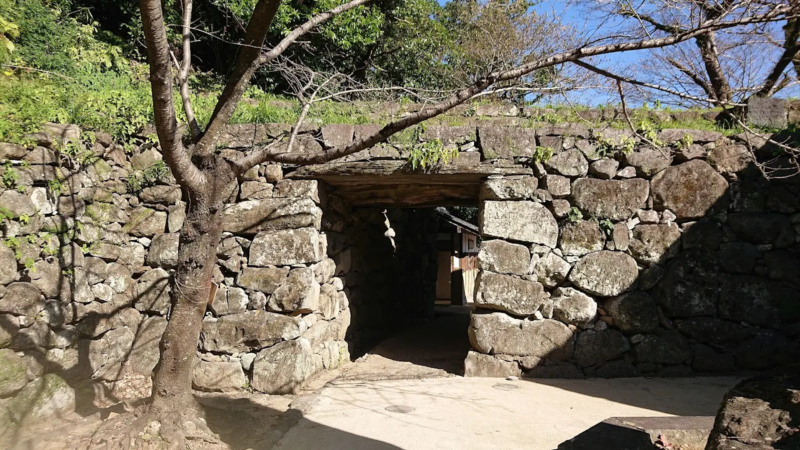
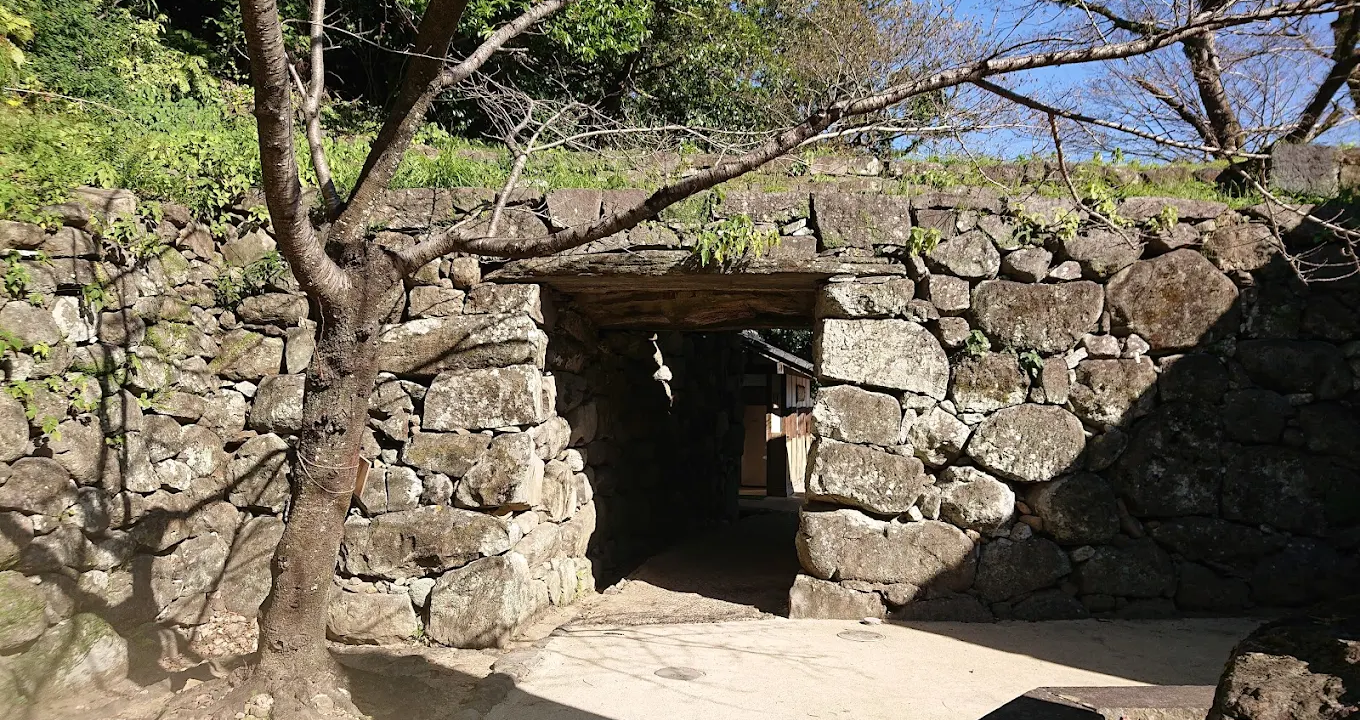
Sanjo Castle is primarily an earthen castle, and no full-fledged stone walls were built. This is thought to be due to its early construction period and the limited economic resources of the Omura clan. However, it is possible that some entrances and important locations used rough-hewn stonework, and scattered stone materials have been confirmed during on-site surveys.
While earthen castles without stone walls may appear unremarkable at first glance, their defensive design, which skillfully utilizes the terrain, is highly regarded and serves as important historical material in the study of medieval castles.
Highlights of Sanjo Castle
Main Enclosure (Honmaru) Site
When visiting Sanjo Castle, first head towards the main enclosure site. The area is now a flat open space, allowing visitors to imagine the former residence and watchtowers of the castle lord. From the main enclosure, you can enjoy a panoramic view of Omura Bay and the city of Omura, truly appreciating the castle’s geographical importance.
On a clear day, you can even see Mount Unzen in the distance, making the beautiful scenery another of Sanjo Castle’s charms.
Remains of the Enclosures
The enclosures surrounding the main enclosure are also not to be missed. Each enclosure is clearly separated by elevation differences, allowing you to observe the typical structure of a medieval mountain castle. The cliff between the second and third enclosures is particularly well-preserved, reflecting the high level of defensive awareness at the time.
Walking through the enclosures, imagining how soldiers were positioned and what kind of defensive battles were waged is another enjoyable aspect.
Earthworks and Moats
The aforementioned earthworks and moats are also points of interest for castle enthusiasts. The moat behind the main enclosure, in particular, is large in scale and clearly preserved. Seeing this moat in person will allow you to truly appreciate the advanced castle-building techniques of the medieval period.
While some parts of the earthworks are weathered, careful observation reveals that they still form the outline of the castle’s enclosure.
Surrounding Scenery
The Sanjo Castle ruins are located in a rich natural environment, offering beautiful scenery throughout the seasons. Cherry blossoms in spring, fresh greenery in early summer, and vibrant autumn leaves adorn the castle ruins, allowing you to enjoy both historical exploration and nature appreciation simultaneously.
The view overlooking Omura Bay is particularly magnificent and highly recommended as a photography spot.
Access Methods
Using Public Transportation
Using the JR Omura Line
- Get off at JR Omura Station
- Take an Omura City Bus or Nagasaki Prefectural Bus from the station
- Get off at the “Sanjo” bus stop (approximately 15 minutes)
- The castle ruins entrance is approximately a 20-minute walk from the bus stop.
If accessing from Nagasaki Airport, take a bus from the airport to Omura Station (approximately 15 minutes), then transfer to the JR line or bus.
Using a Private Car
From the Nagasaki Expressway
- Exit at Omura IC
- Approximately 10 minutes via National Route 34
- Proceed towards Sanjo-cho and follow the signs.
Parking Information
- There is a small parking space near the castle ruins (approximately 5 cars)
- It may be crowded during the tourist season, so consider using public transportation.
Castle Ascent Route
The path to the castle ruins is well-maintained, but since it is a mountain trail, comfortable walking shoes are recommended. It takes about 15-20 minutes to walk from the entrance to the main keep.
The route is relatively gentle, but there are some steep sections, so those who are not confident in their physical fitness should climb slowly and take breaks as needed. Be careful as the ground can be slippery during or after rain.
Notes and Manners for Visitors
Clothing and Equipment
- Footwear: Athletic shoes or trekking shoes are best. Avoid sandals and heels.
- Clothing: Wear comfortable clothing that allows for easy movement. Insect repellent is recommended during the summer months.
- Items to bring: Drinking water, towel, hat (in summer), rain gear (in case of unstable weather)
Safety Precautions
- Do not get too close to the edges of the baileys or cliffs, as there is a risk of collapse.
- Avoid visiting alone; if possible, go with others.
- Check your cell phone signal strength beforehand.
- Manage your time to complete your descent before sunset.
Manners and Rules
- To protect the historical site, do not damage the remains or take away stones or soil.
- Always take your trash with you.
- No open flames.
- Do not enter private property or restricted areas.
- Photography is permitted, but please be considerate of other visitors.
Nearby Tourist Attractions
Kushima Castle (Omura Castle) Ruins
The ruins of Kushima Castle, where the residence was moved from Sanjo Castle, are also worth visiting. It is located about a 10-minute walk from JR Omura Station and is currently developed as Omura Park. In spring, the “Omura Cherry Blossom Festival” is held, where approximately 2,000 cherry trees, including the Omura cherry tree (a nationally designated natural monument), bloom in full glory.
Omura City Historical Museum
If you want to learn about the history of Omura City, the Omura City Historical Museum is highly recommended. It exhibits materials related to the Omura clan and artifacts from the Christian era, and visiting before or after visiting Sanjo Castle will deepen your understanding.
Location: Higashihonmachi, Omura City, Nagasaki Prefecture
Opening Hours: 9:00~17:00 (Last entry at 16:30)
Closed: Mondays (or the following day if Monday is a public holiday), New Year holidays
Nagasaki Airport
Omura City, where Sanjo Castle is located, is home to Nagasaki Airport, the gateway to Nagasaki Prefecture by air. The airport is located on the Hakozaki Peninsula in Omura Bay and is known as a maritime airport. The airport has shops and restaurants selling Nagasaki Prefecture’s local products, making it a good place to stop at the end of your sightseeing.
Omura Bay
Omura Bay, also known as the “Sea of the Koto,” is a calm inland sea. The bay’s shoreline features beaches and marine leisure facilities, attracting many tourists during the summer. While the view of Omura Bay from Sanjo Castle is wonderful, descending to the shoreline and enjoying it up close is also highly recommended.
Cultural Property Designation Status of Sanjo Castle
The Sanjo Castle ruins are protected as a historical site of Omura City. Currently, it is not a nationally or prefecturally designated historical site, but the Omura City Board of Education manages and protects it as an important historical heritage site of the region.
In recent years, with the advancement of research into medieval castles, the historical value of Sanjo Castle is being re-evaluated. In the future, there is a possibility of receiving higher cultural property designation, and with that, improvements to preservation, maintenance, and information facilities are expected.
Significance of Visiting Sanjo Castle
Sanjo Castle may not be as well-known as famous tourist destinations or large-scale castles, but that is precisely why it is worth visiting.
As a Place for Historical Learning
Mikijo Castle offers a multifaceted opportunity for historical learning, showcasing the realities of local powerful families during the Sengoku period, the footsteps of Christian daimyo, and the structure of medieval mountain castles. Experiencing history through actual terrain and ruins, rather than relying solely on textbooks, is a valuable experience.
A Quiet Historical Stroll
Because it is rarely crowded with tourists, you can quietly contemplate history. Standing in the main enclosure and reflecting on the thoughts of Omura Sumitada, who once ruled here, and the successive lords, is a luxurious moment away from the hustle and bustle.
Learning about Local History
Visiting Mikijo Castle leads to a deeper understanding of the local history of Omura City and Nagasaki Prefecture. Looking beyond central history to local history provides a more comprehensive understanding of Japanese history.
Current Status and Challenges of Mikijo Castle Research
Status of Archaeological Excavations
To date, only limited, full-scale archaeological excavations have been conducted at the Mikijo Castle site. Therefore, many aspects of the castle’s detailed structure and history remain unknown.
Future academic archaeological excavations are expected to reveal the castle’s construction period, clarify the building layout, and shed light on daily life based on unearthed artifacts. In particular, the discovery of artifacts from the Christian period would provide a clearer picture of Sanjo Castle during the time of Omura Sumitada.
Balancing Preservation and Utilization
Balancing the preservation of historical sites with their use for tourism is a challenge faced by many castle ruins. Sanjo Castle is no exception. It is necessary to protect the remains while creating an environment where visitors can safely view the site.
Issues include installing information boards, improving access routes, and expanding parking facilities, but care must also be taken to ensure that excessive development does not damage the remains.
Collaboration with the Local Community
To enhance the value of Sanjo Castle and make it known to more people, collaboration with local residents is essential. This could include training local volunteer guides, conducting cleaning activities, and linking with local events.
Omura City is focusing on promoting tourism by leveraging its historical resources, and Sanjo Castle is positioned as one of its important elements.
Summary
Sanjo Castle is an essential historical site indispensable to understanding the history of Omura City, Nagasaki Prefecture. As the residence of the Omura clan, who survived the turmoil of the Sengoku period, and as a place associated with Omura Sumitada, Japan’s first Christian daimyo, this castle served as a stage for multifaceted history.
Although Sanjo Castle now remains as a quiet mountain castle ruin, the remains of the baileys, earthworks, and moats still convey the atmosphere of the past. The beautiful view overlooking Omura Bay, the nature that changes with the seasons, and above all, the space where you can feel the weight of history, offer visitors a special experience.
When visiting Omura City, be sure to extend your trip to the Sanjo Castle ruins. A quiet and profound historical experience awaits you, different from that of famous tourist spots. Wear comfortable shoes, allow plenty of time, and embark on a journey to feel the spirit of the Sengoku period.
Sanjo Castle is a precious bridge connecting the past and the present. By visiting these castle ruins, you can experience living history that you can’t learn from textbooks, and reflect on the local culture and the lives of its people. Enjoy your own historical discovery journey at Sanjo Castle, a hidden historical spot in Nagasaki Prefecture.
-680x450.png)