Complete Guide to Katsumoto Castle | A Thorough Explanation of the National Historic Site in Iki City [Access, Highlights, History]
Located in Sakamoto-fure, Katsumoto-cho, Iki City, Nagasaki Prefecture, Katsumoto Castle is a historically significant castle site built during the Azuchi-Momoyama period by order of Toyotomi Hideyoshi. Completed in an astonishingly short four months, it functioned as an important supply base for the Korean campaigns. Currently designated a national historic site, it attracts many history enthusiasts and tourists as a representative tourist spot of Iki.
Overview and Basic Information of Katsumoto Castle
Katsumoto Castle is a flatland castle built on the summit of Shiroyama Mountain, 79 meters above sea level, in the northern part of Iki Island. It is also known by other names such as Kazamoto Castle, Takematsu Castle, and Amasekane Castle, each name reflecting the local history and geographical features.
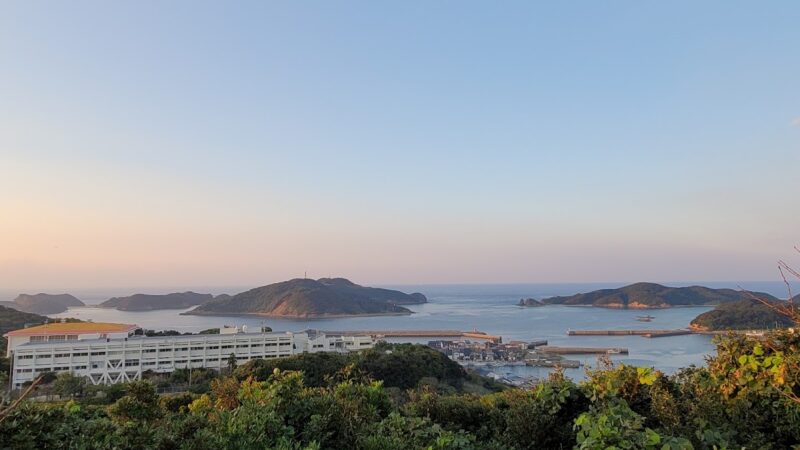
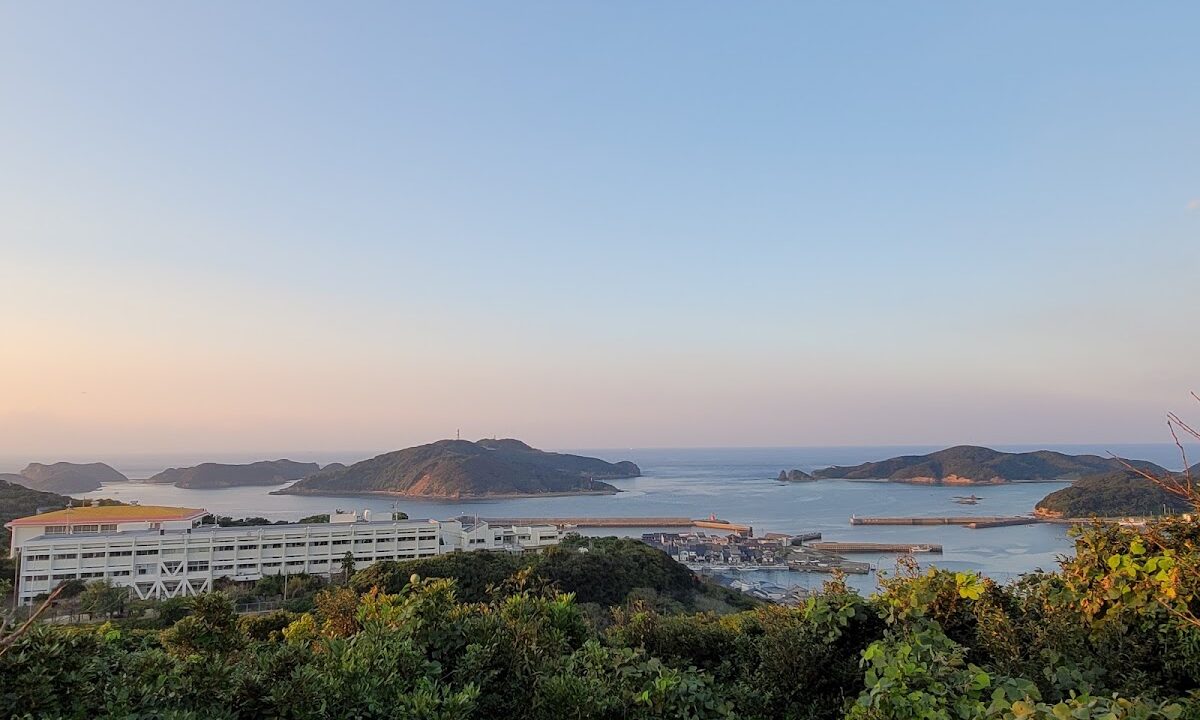
From the castle ruins, a spectacular view unfolds, overlooking Katsumoto Port, the Genkai Sea, and even Tsushima Island, conveying the importance of the castle as a strategically important military point at the time. Currently, it is maintained as Shiroyama Park and is a popular recreational spot for local residents.
Basic Data
- Location: Sakamoto-fure, Katsumoto-cho, Iki City, Nagasaki Prefecture
- Year of Construction: Tensho 19 (1591)
- Builder: Toyotomi Hideyoshi (order), Matsuura Shigenobu (implementation)
- Castle Structure: Hilltop Castle
- Designated Cultural Property: National Historic Site (designated in 1959)
- Elevation: 79 meters
History of Katsumoto Castle
Background of Construction and Toyotomi Hideyoshi’s Korean Invasion
The construction of Katsumoto Castle is closely related to Toyotomi Hideyoshi’s invasion of Korea (the Bunroku-Keicho War). In 1591, Hideyoshi, anticipating military action on the Korean Peninsula, ordered the construction of a castle on Iki Island to serve as a transit point from northern Kyushu to the Korean Peninsula.
Iki Island, geographically located midway between Tsushima and mainland Kyushu, possessed ideal conditions for a supply base. Katsumoto Port was chosen because it had long been known as a good harbor, suitable for ship mooring and the accumulation of supplies.
Remarkable Construction in Just Four Months
The actual construction of Katsumoto Castle was directed by Matsuura Shigenobu, the lord of the Hirado Domain who governed Iki. Under Hideyoshi’s orders, Matsuura Shigenobu mobilized warlords from the Shimabara, Omura, and Goto domains, dedicating all their resources to the castle’s construction.
Construction began in March of Tensho 19 (1591) and was nearly completed by July of the same year. This astonishing speed of completion—just four months—demonstrates the high level of technology and mobilization capabilities of the time. This rapid construction reflected the urgency of Hideyoshi’s plan for the invasion of Korea.
Role in the Korean Invasion
During the Korean invasion, which began in Bunroku 1 (1592), Katsumoto Castle functioned as a crucial supply base. Soldiers and supplies gathered from various parts of Kyushu were collected here and sent to the Korean Peninsula via Tsushima.
It is believed that numerous soldiers were stationed within the castle, and weapons, food, and military supplies were stored there. Furthermore, many warships were anchored in Katsumoto Port, giving the entire island of Iki a military base appearance.
Abandonment and Aftermath
When Toyotomi Hideyoshi died in Keicho 3 (1598), the Korean invasion was cancelled. Afterward, Katsumoto Castle ceased to serve its purpose and is believed to have been abandoned around 1600 (Keicho 5). Although it was a short-lived castle, lasting less than 10 years, its historical significance was immense.
During the Edo period, Iki Island came under the control of the Hirado Domain, and the Katsumoto Castle ruins gradually faded into obscurity. However, in the Showa era, its historical value was re-evaluated, and in 1959 (Showa 34), it was designated a national historic site.
Structure and Layout of Katsumoto Castle
Overall View of the Castle
Katsumoto Castle is a flatland castle with multiple baileys (kuruwa) arranged around the summit of Shiroyama Mountain, which is 79 meters above sea level. The baileys extend east, west, north, and south from the main keep at the summit, creating a defensive layout that skillfully utilizes the steep terrain.
The castle grounds extend approximately 200 meters east-west and 300 meters north-south, making it a medium-sized castle for its time. Despite the constraints of building the castle in a short period, its design incorporates all the necessary and sufficient functions for a military base.
Layout of the Enclosures
Katsumoto Castle has multiple enclosures, each believed to have served a specific function.
Honmaru: Located on the mountaintop, this enclosure forms the core of the castle. Even today, a flat terrain remains, and traces of former buildings can be seen.
Ninokuruwa: Located to the east of the Honmaru, it served to defend the Honmaru.
Sannomaru: Further outward, it expanded the castle grounds.
These enclosures were demarcated by stone walls and earthworks, and their stepped arrangement enhanced their defensive capabilities.
Features of the Stone Walls
One of the greatest highlights of Katsumoto Castle is its existing stone walls. As a valuable historical site that conveys the stone wall techniques of the Azuchi-Momoyama period, it attracts the attention of many researchers and castle enthusiasts.
The stone walls were constructed using a technique called “nozurazumi,” characterized by their simple appearance, achieved by stacking natural stones almost as they were. This technique was common for stone wall construction at the time and was suitable for castle construction in a short period of time.
The stone walls around the main keep, in particular, are well-preserved, with sections of stone walls approximately 3 to 5 meters high remaining in many places. The fact that these walls remain intact after more than 400 years speaks volumes about the high skill of the stonemasons of that time.
Entrances and Passages
Several entrances to the castle, known as “koguchi,” have also been identified. Because these entrances were weak points in defense, they were reinforced with stone walls and designed to prevent intruders.
The passages connecting the baileys were also intentionally designed with curves to make enemy intrusion difficult, demonstrating military considerations throughout the castle despite its short construction period.
Remains and Highlights of Katsumoto Castle
Existing Stone Walls
The greatest attraction of visiting Katsumoto Castle ruins is the opportunity to see the well-preserved stone walls up close. Stone walls remain in various locations within the castle grounds, including around the main keep, the second bailey, and the third bailey, each displaying a different character.
The stone wall on the east side of the main keep is particularly tall and impressive. The vegetation growing from the gaps in the stone walls evokes a sense of history and is a popular photo spot.
The stone materials used for the walls are primarily basalt quarried locally in Iki, characterized by its dark color. These stones are thought to have been quarried from the area around the castle hill, reflecting the geological characteristics of the region.
Topography of the Enclosures
The flat areas of each enclosure remain clearly visible, allowing visitors to appreciate the scale of the castle in its heyday. The main keep is approximately 30 meters square, and it is estimated that buildings such as the keep and turrets stood here.
By observing the elevation differences and layout between the baileys, one can discern the defensive philosophies and design ingenuity of the castle at the time, making it a fascinating site for castle enthusiasts.
Moats and Earthworks
Besides the stone walls, traces of defensive structures such as moats and earthworks remain. Moats are ditches dug across ridges, serving to prevent enemy intrusion.
Earthworks are earthen walls constructed by piling up soil, and combined with stone walls, they enhanced defensive capabilities. While some of these remains are covered in vegetation, careful observation allows one to imagine their original appearance.
Development as Shiroyama Park
Currently, part of the Katsumoto Castle ruins has been developed as Shiroyama Park, with walking paths and observation decks. Information boards and explanatory signs are installed within the park, allowing visitors to learn about the castle’s history and structure.
In spring, cherry blossoms bloom, making it a popular local spot for cherry blossom viewing. It welcomes visitors of all ages, offering a place to enjoy both historical exploration and nature walks. ### Attractions as a Scenic Spot
The view from the summit of Shiroyama Mountain is one of the greatest attractions of the Katsumoto Castle ruins. Below, the townscape of Katsumoto Port unfolds, and the blue sea of the Genkai Sea stretches to the horizon. On clear days, it’s even possible to see the silhouette of Tsushima Island in the distance.
This view truly demonstrates the strategic importance of the castle’s location at the time. It’s immediately clear why this location was chosen as a transit point to the Korean Peninsula and a base for monitoring the surrounding seas.
At dusk, the sunset over the Genkai Sea is beautiful, creating a romantic atmosphere. It’s also an excellent photo spot for photography enthusiasts.
Access Methods
Access to Iki Island
To visit Katsumoto Castle, you first need to travel to Iki Island. There are mainly two ways to access Iki Island.
High-Speed Boat (Jetfoil)
- Hakata Port to Gonoura Port: Approximately 1 hour 5 minutes
- Hakata Port to Ashibe Port: Approximately 1 hour 10 minutes
- Operating Company: Kyushu Yusen
- Fare: Approximately 5,000 yen one way (varies depending on the season)
- 3-4 departures per day
Ferry
- Hakata Port to Gonoura Port: Approximately 2 hours 10 minutes
- Hakata Port to Ashibe Port: Approximately 2 hours 20 minutes
- Operating Company: Kyushu Yusen
- Fare: Approximately 2,500 yen one way (for 2nd class)
- Vehicle transport available
- 2-3 departures per day
For tourists, if you want to save time, the high-speed boat is recommended. If you want to bring a vehicle or enjoy a leisurely boat trip, the ferry is recommended.
Access within Iki Island
After arriving on Iki Island, you can access Katsumoto Castle Ruins using the following methods.
Rental Car
- Approximately 20-30 minutes by car from Gonoura Port or Ashibe Port
- Approximately 5 minutes by car from Katsumoto Port
- Parking: Several spaces available near the entrance to Shiroyama Park
- Ideal for efficiently touring the island
Local Bus
- Operated by Iki Kotsu local buses
- Take a bus bound for Katsumoto from Gonoura and get off at “Katsumoto” stop, then walk for approximately 15 minutes
- As the number of buses is limited, it is necessary to check the timetable in advance.
Taxi
- Taxis are available from Gonoura Port or Ashibe Port
- Fare: Approximately 3,000-4,000 yen
Walking
- Approximately 15-20 minutes on foot from Katsumoto Port
- Comfortable shoes are recommended as there is an uphill path to Shiroyama.
Getting Around the Castle Ruins
From the entrance to Shiroyama Park to the main keep, you will walk up a well-maintained promenade. The distance is approximately 300 meters, and the estimated time is 10-15 minutes. Since some parts of the road are unpaved, we recommend wearing comfortable walking shoes such as athletic shoes. Particular caution is needed during and after rain, as the roads can become slippery.
Tourist Spots Around Katsumoto Castle
Katsumoto Port and Morning Market
Katsumoto Port is the central fishing port in northern Iki Island, where fresh seafood is landed. Iki is especially famous for its squid, and many squid fishing boats are moored at Katsumoto Port.
The Katsumoto Morning Market is held on the first and third Sundays of each month, selling fresh local seafood, agricultural products, and processed goods. It’s a lively market where you can enjoy interacting with the locals.
Tatsunoshima Island
Tatsunoshima Island, an uninhabited island located about 10 minutes by boat from Katsumoto Port, is one of Iki’s most representative scenic spots. The scenery, a combination of crystal-clear waters, white sandy beaches, and unique rock formations, is breathtaking, and it is bustling with swimmers in the summer.
On the island-hopping sightseeing boat, you can observe the natural beauty of the sea cliffs and sea caves up close. The boats operate only from March to November.
Saru-iwa (Monkey Rock)
Located on the Kurosaki Peninsula in the northwestern part of Iki Island, Saru-iwa is a basalt rock formation approximately 45 meters high. As its name suggests, when viewed from the side, it resembles a monkey gazing at the sea, making it a representative tourist attraction of Iki.
From the observation deck, a panoramic view of the Genkai Sea unfolds, and you can enjoy beautiful sunsets at dusk. It’s easily accessible, about a 10-minute drive from the Katsumoto Castle ruins.
Haranotsuji Ruins
Designated as a National Special Historic Site, the Haranotsuji Ruins are the remains of a large-scale moated settlement from the Yayoi period. It is believed to be the capital of “Iki-no-kuni” mentioned in the “Wei Zhi Woren Zhuan” (Records of the Three Kingdoms, Account of the Wa People), and is an extremely important site for understanding ancient Japanese history.
The Iki City Ichikoku Museum, which displays restored buildings and excavated artifacts, is also located on the premises, allowing visitors to learn about the ancient history of Iki. Visiting it in conjunction with the Katsumoto Castle ruins provides a comprehensive overview of Iki’s history from ancient times to the early modern period.
Otodake Shrine and Onnadake Shrine
Iki has over 200 shrines and is known as the “Island of the Gods.” Among them, Otodake Shrine is an ancient shrine situated near the summit of Mt. Otodake (168 meters above sea level), the highest peak on Iki. The shrine grounds are filled with countless stone monkeys, creating a unique atmosphere.
Onnadake Shrine is a counterpart to Otodake Shrine and is also enveloped in a mystical atmosphere. Both shrines are located about 15-20 minutes by car from the Katsumoto Castle ruins.
Points to Note and Recommended Time of Visit
Precautions for Visiting
Clothing and Equipment
- Wear comfortable walking shoes (heels and sandals are unsuitable)
- Bring a hat, sunscreen, and drinking water during the summer
- Insect repellent is recommended
- Carry rain gear (weather can change quickly)
Safety Precautions
- Do not climb on the stone walls (risk of collapse)
- Watch your step (many steps and stones)
- Be especially careful during and after rain as it can be slippery
- Avoid visiting alone; it is recommended to visit in groups
Manners
- Be mindful that this is a nationally designated historical site and do not damage the remains
- Always take your trash with you
- Visit quietly and avoid shouting
- Photography is permitted, but please be considerate of other visitors
Recommended Time of Visit
Early Morning (6:00-8:00)
The stone walls illuminated by the morning sun are beautiful, and the air is clear and pleasant. With fewer tourists, you can quietly reflect on history.
Morning (9:00 AM – 11:00 AM)
The sunlight isn’t too strong, making it ideal for photography. Aim for a relatively quiet time before group tours arrive.
Evening (4:00 PM – 6:00 PM)
The sunset over the Genkai Sea is a spectacular sight, offering a romantic atmosphere. However, it gets dark after sunset, so plan to descend early.
Estimated Time Required
- From the parking lot to the main keep: Approximately 30 minutes round trip
- Exploring the castle ruins: 30-60 minutes
- Including time for photography and enjoying the scenery: Approximately 1-1.5 hours
Those who want to carefully observe the remains or are knowledgeable about castles should allow about 2 hours.
Historical Significance and Modern Value of Katsumoto Castle
Importance in the Study of the Korean Invasions
Katsumoto Castle is an extremely important historical site for studying the logistical system during Toyotomi Hideyoshi’s invasions of Korea (the Bunroku-Keicho War). The Japanese army at the time established supply routes from Kyushu to Tsushima and the Korean Peninsula, and Katsumoto Castle was a crucial transit point.
Excavations of the castle ruins have yielded a large number of weapons, ceramics, and daily necessities, providing valuable clues to understanding military activities and the living conditions of soldiers at the time. These excavated artifacts are also important materials for considering the history of relations between Japan and the Korean Peninsula.
Technological and Historical Value of Short-Term Construction
The construction of the castle in a short period of only four months is a valuable example demonstrating the high level of civil engineering technology and mobilization system at the time. The construction techniques of the stone walls, the layout of the baileys, and the design of the defensive facilities serve as living teaching materials that convey the castle construction techniques of the Azuchi-Momoyama period.
In particular, the rough-hewn stone walls represent the standard form of stonework techniques from this period and are an important subject of study for castle researchers.
Regional Historical Identity
Katsumoto Castle Ruins symbolize the historical identity of Iki City, especially the Katsumoto district. Local preservation efforts are underway, with residents actively participating in activities such as cleaning and the installation of information boards.
Katsumoto Castle is also featured in local history lessons at elementary and junior high schools, providing a place for children to learn about local history. Thus, the castle ruins function not merely as a tourist resource, but also as a base for regional historical education and cultural preservation.
Utilization as a Tourism Resource
In recent years, with the growing interest in historical tourism, Katsumoto Castle Ruins have attracted attention as an important content for Iki tourism. It is particularly highly regarded by castle enthusiasts and history lovers, and although it was not selected as one of the “100 Famous Castles of Japan,” it was discussed as a candidate for the “Continued 100 Famous Castles of Japan.”
There’s a possibility that Toyotomi Hideyoshi’s invasion of Korea will be featured in the 2026 NHK Taiga drama, which would likely further increase attention to Katsumoto Castle.
The Charms of Iki City and the Katsumoto District
Overview of Iki City
Iki City is an island municipality in Nagasaki Prefecture, centered around Iki Island. With a population of approximately 25,000 (as of 2024), it is known as a beautiful island floating in the Genkai Sea.
Its excellent accessibility from Fukuoka City, just about an hour away by high-speed ferry, makes it a popular “island resort” for the Fukuoka metropolitan area. It’s an island with a rich history and culture, having flourished as a gateway for exchange with the continent since ancient times.
Characteristics of the Katsumoto District
The Katsumoto district is a port town located in the northern part of Iki Island, and has prospered from fishing since ancient times. Iki Island is particularly known for its squid fishing, and on summer nights, the fishing lights of countless squid fishing boats illuminate the area around Katsumoto Port, creating a magical scene.
The townscape of Katsumoto retains the atmosphere of a traditional port town, with its charming scenery of narrow alleys and old houses. There are also many restaurants and izakayas (Japanese pubs) serving fresh seafood, making it a great place to enjoy gourmet food.
Iki’s Food Culture
Iki Island is known as a treasure trove of seafood, and the following ingredients are particularly famous:
Iki Beef: A high-grade Japanese beef with beautiful marbling, characterized by its tenderness and rich flavor. It can be enjoyed at yakiniku (Japanese barbecue) restaurants and other eateries on the island.
Sea Urchin: Sea urchins raised in the waters around Iki Island are very sweet and have a rich flavor. The peak season is from spring to summer.
Squid: Fresh squid landed at Katsumoto Port is served as sashimi or live-prepared squid, with its translucent flesh and firm, chewy texture being exquisite.
Barley Shochu: Iki Island is considered the birthplace of barley shochu, and there are seven distilleries on the island. Each produces unique brands, making it an irresistible destination for shochu lovers.
Summary: The Significance of Visiting Katsumoto Castle
Katsumoto Castle is a valuable historical site that conveys the important turning point in Japanese history: Toyotomi Hideyoshi’s invasion of Korea. Built in a short period of just four months, the stone walls and baileys that remain after more than 400 years demonstrate the technological prowess of the time and the weight of history.
The view from the castle ruins is spectacular; the blue sea of the Genkai Sea, the townscape of Katsumoto Port, and the silhouette of Tsushima Island in the distance captivate the hearts of visitors. It is a representative tourist spot on Iki Island where you can enjoy both historical exploration and natural beauty.
When planning a trip to Iki Island, be sure to add Katsumoto Castle ruins to your list of places to visit. You can spend a fulfilling time enjoying the breath of history, the beautiful scenery, and the food culture of Iki Island. Katsumoto Castle, which possesses both the value of a nationally designated historical site and the value of a place of relaxation loved by the local people, is a special place that offers different charms to each visitor.
-680x450.png)