Kaesa Castle (Nakano City, Nagano Prefecture) Complete Guide | History, Highlights, and Access Explained in Detail
Located in Toyotsu, Nakano City, Nagano Prefecture, Kaesa Castle is a mountain castle built by the Takeda clan during the Sengoku period (Warring States period). It played a crucial role during the Battle of Kawanakajima. Currently, it is maintained as Kaesa Castle Ruins Park, a valuable spot where visitors can see Sengoku period remains such as earthworks and moats up close.
This article comprehensively explains everything you need to know before visiting Kaesa Castle, from its history and highlights to access methods and surrounding tourist information.
What is Kaesa Castle?
Kaesa Castle is a Sengoku period mountain castle built on a mountaintop approximately 460 meters above sea level on the west bank of the Chikuma River in Toyotsu, Nakano City, Nagano Prefecture. Built during the time of Takeda Shingen, it functioned as a frontline base to prevent Uesugi Kenshin’s southward advance.
Although relatively small in scale, the castle is characterized by its highly defensible location, utilizing the Chikuma River as a natural moat. Across the river was Kabeta Castle, and the two castles worked together to form a defensive line along the Chikuma River.
Currently, the site is maintained as Kaesa Castle Ruins Park and is a popular historical spot accessible in about 15-20 minutes on foot from Kaesa Station on the JR Iiyama Line, enjoyed by locals and castle enthusiasts alike.
History of Kaesa Castle
Background of Construction and the Takeda Clan’s Strategy
Kaesa Castle is believed to have been built around 1564 (Eiroku 7). This period was a time of fierce conflict between Takeda Shingen and Uesugi Kenshin, centered around the Battle of Kawanakajima.
As the Takeda clan expanded into Shinano Province (present-day Nagano Prefecture), they built several branch castles to solidify their control over northern Shinano. Kaesa Castle was one of them, occupying an important defensive position on the west bank of the Chikuma River.
The castle’s construction utilized the Takeda clan’s castle-building techniques, and its layout is characterized by its skillful use of the mountainous terrain. The design combined natural terrain with artificial civil engineering to allow for efficient defense with limited forces.
Castle Commander: Obata Kazusanosuke Nobusada
Obata Kazusanosuke Nobusada is said to have been the castle commander of Kaesa Castle. The Obata clan was a family of important retainers of the Takeda clan, and Nobusada was entrusted with the defense of Kaesa Castle.
Obata Nobusada played a crucial role in maintaining the defensive line along the Chikuma River while monitoring the movements of the Uesugi clan. It is believed that he carried out the task of preventing the Uesugi army’s southward advance in coordination with Kabeta Castle on the opposite bank.
Among the Takeda clan’s retainers, the Obata family was said to be skilled in castle-building techniques and castle management, and it is possible that this skill is reflected in the layout of Kaesa Castle.
The Battle of Kawanakajima and the Role of Kaesa Castle
The Battle of Kawanakajima is most famous for the Fourth Battle in 1561, but in reality, it was a long-term conflict that continued intermittently for 12 years. Kaesa Castle was built in 1564, three years after the Fourth Battle.
Kaesa Castle was positioned to monitor the invasion route from Echigo Province (present-day Niigata Prefecture), the Uesugi clan’s base, to Shinano Province. The Chikuma River functioned as a natural defense line, and Kaesa Castle was a crucial base protecting its western bank.
Together with Kabeta Castle on the opposite bank, it was positioned to provide mutual support from the east and west across the Chikuma River, and is thought to have played a role in preventing enemy crossings and transmitting information.
Kaesa Castle After the Fall of the Takeda Clan
When the Takeda clan fell in 1582, Shinano Province came under the control of Oda Nobunaga. However, after Nobunaga’s death in the Honnō-ji Incident, northern Shinano once again fell under the influence of the Uesugi clan.
Later, after the era of Toyotomi Hideyoshi, it became part of the Matsushiro Domain during the Edo period. It is believed that Kasa Castle ceased to exist and was abandoned with the end of the Sengoku period.
Since the Edo period, the castle ruins have been protected by local people and preserved as an important historical heritage site to this day.
Structure and Layout of Kasa Castle
Overall Composition
Kasa Castle is a typical mountain castle with its main enclosure (honmaru) located on the mountaintop at an altitude of approximately 460 meters. Multiple enclosures (kuruwa) are arranged along the ridge from the mountaintop, separated by moats.
The castle area is relatively compact, measuring approximately 200 meters east-west and 150 meters north-south. However, it features a highly defensible design that takes advantage of the steep terrain, and various ingenious features are visible throughout, allowing for effective defense even with a small number of defenders.
Utilizing the Chikuma River as a natural moat and with the western mountains as a backdrop, its location made it an extremely difficult fortress to attack.
Features of the Main Enclosure (Honmaru)
The main enclosure, located on the mountaintop, is the central part of Kaesa Castle. Currently a flat area, it is presumed to have once housed the lord’s residence and command post.
Remnants of earthworks remain around the main enclosure, indicating the presence of defensive structures. Furthermore, the main enclosure offers a panoramic view of the Chikuma River and the opposite bank, suggesting its function as a surveillance post.
Currently, markers and information boards are installed at the site of the main enclosure, conveying the castle’s history to visitors.
Arrangement of the Enclosures
Several enclosures are arranged in a stepped pattern around the main enclosure. These enclosures are thought to have been used as garrisons for soldiers and storage areas for supplies.
Each enclosure is demarcated by moats and steep slopes, creating a structure that allows for gradual defense against enemy incursions. This concept of multi-layered defense is one of the characteristics of the Takeda-style castle construction.
By utilizing the difference in elevation between the baileys, attacks from the upper to the lower levels become possible, creating a battle environment advantageous to the defenders.
Moats and Earthworks
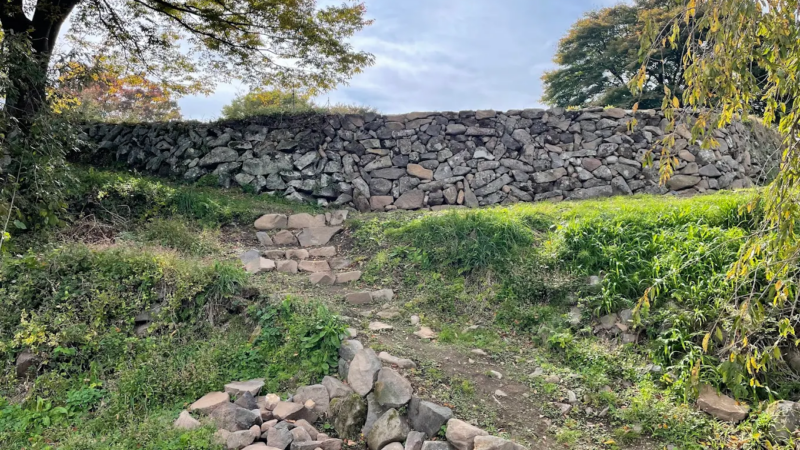
One of the highlights of Kaesa Castle is its well-preserved moats. Moats are dry moats dug to cut across ridges, serving as important defensive structures to prevent enemy advances.
Several moats can be identified within the castle grounds, and the moat located behind the main bailey (west side) is particularly large and clearly preserved. Its depth reaches several meters, demonstrating the advanced civil engineering technology of the time.
Earthworks were built surrounding the baileys, functioning as defensive walls to protect against enemy arrows and firearms. Some of the earthworks can still be seen today.
Techniques of Cut Slopes
Cut slopes are defensive structures created by artificially excavating steep slopes around the baileys. At Kaesa Castle, the natural slopes were further excavated to create steep inclines that were difficult to climb.
This technique significantly improved the castle’s defensive capabilities, allowing even a small number of defenders to effectively protect it.
Even today, a stroll through the park reveals numerous areas where steep slopes continue along the edges of the baileys.
Highlights of Kaesa Castle
View from the Main Bailey
The greatest attraction of Kaesa Castle Ruins Park is the spectacular view from the main bailey. From the 460-meter-high summit, you can see the Chikuma River, the city of Nakano, and even the distant mountains of the Northern Shinano Five Peaks.
Especially on clear days, the view extends to the opposite bank towards the Kabeta Castle ruins and even to Echigo, where Uesugi Kenshin’s base was located, allowing you to appreciate the importance of the castle’s surveillance function during the Sengoku period.
The park is attractive for its beautiful scenery throughout the seasons, with cherry blossoms in spring and vibrant autumn leaves. It’s also a popular spot for photography.
Points to See at the Ruins
Within the Kaesa Castle Ruins Park, there are well-maintained walking paths, allowing visitors to stroll around and explore the main ruins.
Main Points to See:
- Main Enclosure Site: A marker post and information board indicate that this was the central part of the castle.
- Moat: Clearly visible in multiple locations, the large moat on the west side is a must-see.
- Earthwork: You can observe the raised earthworks remaining around the enclosures.
- Cliff: Steep artificial slopes surround the enclosures.
- Enclosure Site: Multiple flat areas arranged in a stepped pattern can be seen.
Information boards and marker posts are placed at key locations, making it easy for first-time visitors to understand the location and significance of the ruins.
Historical Markers and Information Boards
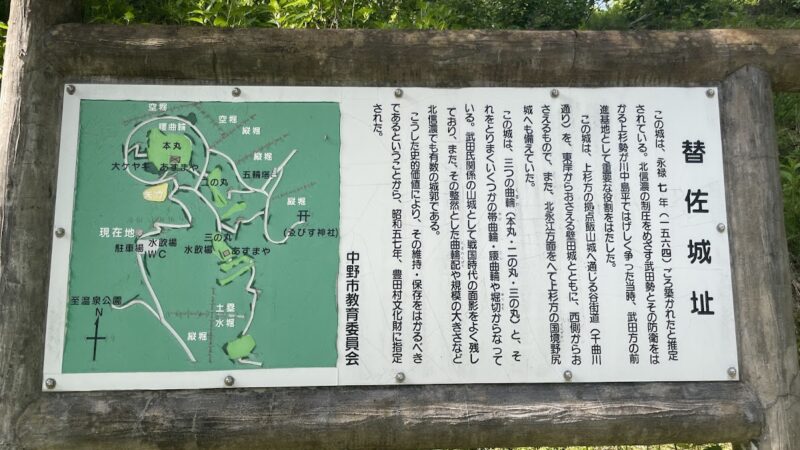
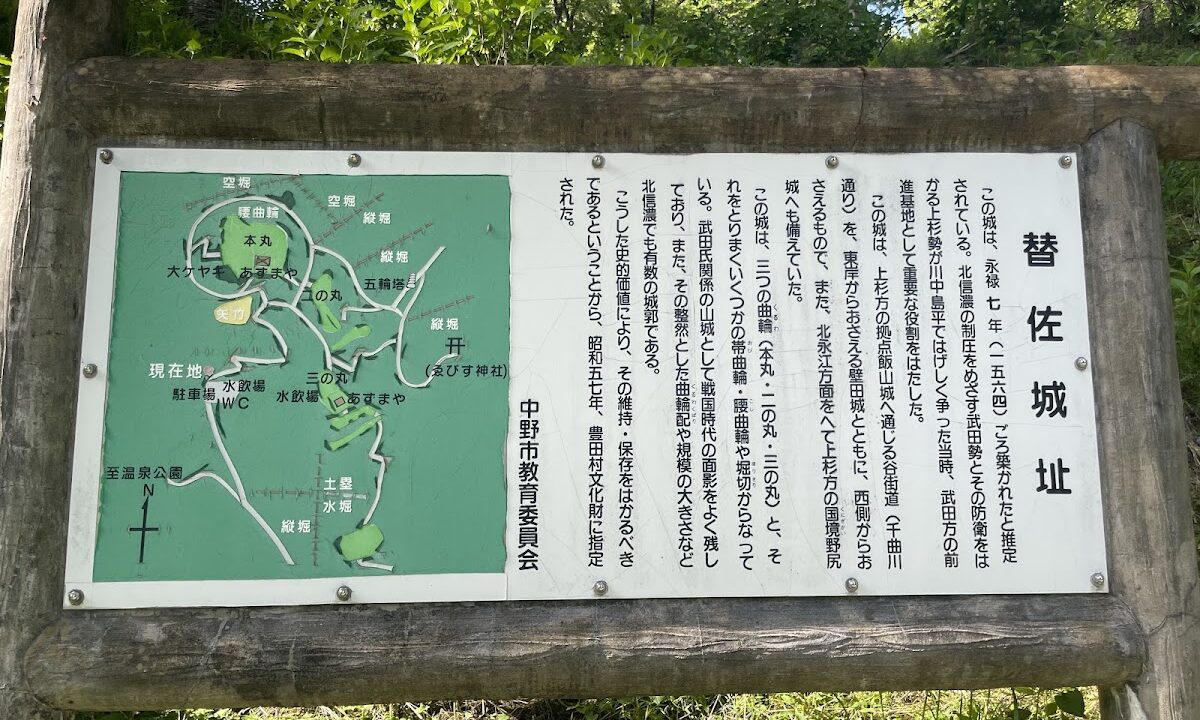
Several information boards explaining the history and structure of Kaesa Castle are installed within the park. These boards include maps of the castle’s layout, historical background, and information about the castle commander, Obata Nobusada, helping to deepen understanding of the castle.
A stone monument and marker inscribed with “Kaesa Castle Ruins” stand at the site of the main enclosure, making it a popular spot for commemorative photos.
The information boards, maintained by local history enthusiasts and the board of education, explain specialized content in an easy-to-understand manner, making them enjoyable for both castle beginners and advanced enthusiasts.
Seasonal Attractions
Kaesa Castle Ruins Park is a spot where you can enjoy the beauty of nature in each of the four seasons.
Spring (March-May): Cherry blossoms are in full bloom, making it a popular spot for cherry blossom viewing. The refreshing feeling of strolling through the fresh greenery is exceptional.
Summer (June-August): The shade of the trees is cool, making it ideal for a stroll to escape the summer heat. However, insect repellent is essential.
Autumn (September-November): The autumn foliage is beautiful, and the scenery created by the castle ruins and nature is very photogenic. The weather is mild, making it the perfect season for a stroll.
Winter (December-February): The castle ruins in a snowy landscape are magical, but be careful as the ground can be slippery.
How to access Kaesa Castle
Access by public transport
If using the JR Iiyama Line:
The nearest station to Kaesa Castle is Kaesa Station on the JR Iiyama Line. It’s about a 15-20 minute walk from the station to the castle ruins.
- From Nagano Station, take the JR Iiyama Line for approximately 30-40 minutes and get off at Kaesa Station.
- From Kaesa Station, walk to Kaesa Castle Ruins Park (approximately 1.2 km, 15-20 minutes on foot).
Kaesa Station is an unmanned station, but there are maps and information boards in front of the station where you can check the route to the castle ruins. The route from the station to the castle ruins goes through a residential area and down to the foot of the mountain; you won’t get lost if you follow the signs.
If using the Nagano Electric Railway:
You can also get off at Shinshu-Nakano Station on the Nagano Electric Railway Nagano Line and take a taxi or bus. From Shinshu-Nakano Station to Kaesa Castle Ruins Park is approximately 5 km, about a 10-minute drive.
Access by Car
If using the expressway:
- Approximately 10 minutes (approx. 6 km) from the Shinshu-Nakano IC on the Joshinetsu Expressway
- Approximately 15 minutes (approx. 10 km) from the Toyoda-Iiyama IC on the Joshinetsu Expressway
After exiting at the Shinshu-Nakano IC, head north on National Route 292 and follow the signs towards Kaesa.
Parking Information:
Kaesa Castle Ruins Park has a free parking lot at the foot of the mountain. However, parking is limited to approximately 10 cars, so it may be crowded on holidays and during cherry blossom season.
From the parking lot to the main keep ruins, it’s about a 10-15 minute walk along the trail. The path is well-maintained, but since it’s a mountain trail, comfortable walking shoes are recommended.
Notes on Access
- The walking trails within the park are well-maintained, but because it’s a mountain castle, the terrain is uneven. Please wear comfortable shoes and clothing suitable for walking.
- In the summer, there are many insects, so we recommend bringing insect repellent.
- In winter, there is a possibility of snow and ice, so please check the weather before visiting.
- There are no toilets or vending machines in the park, so we recommend preparing in advance.
- While there are signs, using a map app or GPS function is recommended for your peace of mind.
Tourist Spots Around Kaesa Castle
Kabeta Castle Ruins
Kabeta Castle, located on the east bank of the Chikuma River, opposite Kaesa Castle, was also a castle built by the Takeda clan. Together with Kaesa Castle, it formed a defensive line along the Chikuma River.
Kabeta Castle is now maintained as a castle ruins park, where you can see remains such as earthworks and moats. Visiting both Kaesa Castle and Kabeta Castle will give you a deeper understanding of the Takeda clan’s defensive strategy.
Takanashi Clan Residence Ruins (Nakano Jinya Ruins)
Located in the city of Nakano, the Takanashi Clan Residence Ruins are the site of the residence of the Takanashi clan, who ruled this area before the Sengoku period. The Takanashi clan pledged allegiance to Uesugi Kenshin after the Battle of Kawanakajima and later moved to Aizu.
Currently, the site is maintained as the Nakano Jinya Ruins, with some earthworks and moats remaining. It is an important spot for understanding the history of Nakano City.
Nakano City Museum
This museum introduces the history and culture of Nakano City, and includes exhibits on castles within the city, including Kaesa Castle. It also has a wealth of materials related to the Battle of Kawanakajima, the Takeda clan, and the Uesugi clan, making it a good place to visit before or after visiting castle ruins to deepen your understanding.
Ippongi Park
This is a representative park of Nakano City, famous for its rose garden. Roses bloom profusely in spring and autumn, attracting many tourists. It’s a great place to enjoy a leisurely stroll in conjunction with a visit to Kaesa Castle.
Yudanaka Onsenkyo
This hot spring resort is located in the southern part of Nakano City, at the foot of Shiga Kogen. It’s a historic hot spring area, perfect for relaxing after exploring the castle ruins. There are also plenty of day-trip bathing facilities.
Obuse Town
Located next to Nakano City, Obuse is a tourist destination famous for its chestnuts and Hokusai. Its historical townscape is well-preserved, with art museums, cafes, and chestnut confectionery shops. It’s about a 20-minute drive from Kaesa Castle.
Practical Guide to Visiting Kaesa Castle
Estimated Time Required
Please use the following time allocation as a guide for exploring Kaesa Castle Ruins Park:
- From the parking lot to the main keep: 10-15 minutes on foot
- Exploring the area around the main keep: 20-30 minutes
- Exploring the ruins and taking photos: 30-40 minutes
- Descending: 10 minutes on foot
A standard visit takes approximately 1.5 to 2 hours in total. Those who want to carefully observe the ruins or enjoy taking photographs should allow 2.5 to 3 hours for a leisurely stroll.
Checklist of Items to Bring
To ensure a comfortable visit to Kaesa Castle, we recommend preparing the following items:
- Comfortable Walking Shoes: Sneakers or trekking shoes are ideal.
- Drinks: There are no vending machines in the park, so please bring your own.
- Hat and Sunscreen: Essential during the summer months due to strong sunlight.
- Insect Repellent: Insects are abundant from spring to autumn.
- Camera: For photographing scenic views and historical remains.
- Map or Guidebook: Using it in conjunction with local information boards will deepen your understanding.
- Rainwear: Mountain weather is unpredictable, so please carry even a simple rain suit.
Best Season to Visit
Kaesa Castle Ruins Park can be visited year-round, but the best time to visit is:
Mid-April to Early May: This is the cherry blossom season, allowing you to enjoy both cherry blossom viewing and exploring the castle ruins. The weather is mild and pleasant for walking.
Mid-October to Early November: The autumn foliage is beautiful, and the scenery created by the castle ruins and nature is exceptional. On clear autumn days, you can see as far as the distant mountains.
Times to Avoid: Mid-summer (July-August) is extremely hot and insect-heavy, so early morning or evening visits are recommended. Mid-winter (January-February) may see snow or ice.
Photography Tips
Recommended photography spots at Kaesa Castle Ruins Park:
- View from the Main Enclosure: A spectacular viewpoint offering panoramic views of the Chikuma River and Nakano city.
- Moat: A powerful sight to behold with its deep, dry moat.
- Marker Post and Information Board: A classic spot for commemorative photos.
- Cherry Blossoms, Autumn Leaves, and Castle Ruins: A beautiful collaboration of seasonal scenery and historical remains.
- Walking Path: The mountain path bathed in dappled sunlight has a wonderful atmosphere.
Photography Tips: The soft morning light beautifully captures the shadows of the ruins. A wide-angle lens makes it easier to capture the entire ruin.
Historical Significance of Kaesa Castle
Position in the Battle of Kawanakajima
Kaesa Castle was an important strategic base in the northern Shinano region, the site of the famous Battle of Kawanakajima in Japanese history.
The Battle of Kawanakajima, a clash between two great Sengoku-era daimyo, Takeda Shingen and Uesugi Kenshin, was not merely a single battle, but a long-term conflict spanning 12 years. Within this context, subsidiary castles like Kaesa Castle played a crucial role in maintaining the boundaries of their respective territories.
Kaesa Castle’s greatest historical significance lies in its utilization of the natural barrier of the Chikuma River, and its coordination with Kabeta Castle on the opposite bank, forming a defensive line that prevented the Uesugi army’s southward advance.
Examples of Takeda-style Castle Construction
The layout of Kaesa Castle reflects the unique castle-building techniques of the Takeda clan.
A characteristic of Takeda-style castle construction is its maximum utilization of natural terrain, achieving maximum defensive effectiveness with minimal civil engineering work. At Kaesa Castle, the mountain ridges and slopes were utilized as they were, while trenches and steep cliffs were strategically placed to create an efficient defensive system.
Furthermore, the arrangement of baileys in a stepped fashion, achieving multiple layers of defense, is another characteristic of the Takeda style. This structure allows for continued resistance in the next enclosure even if the enemy breaches one.
Importance in Local History
Kaisa Castle is an indispensable historical site for understanding the Sengoku period history of Nakano City and the northern Shinano region.
This area was historically ruled by the Takanashi clan, but the balance of power shifted with the invasion of the Takeda clan. The Takanashi clan fled to Echigo, seeking refuge with Uesugi Kenshin, and this area subsequently became the front line between the Takeda and Uesugi clans.
The existence of Kaisa Castle speaks to the crucial strategic position this region held during the Sengoku period. It is still carefully preserved by local people and is used for local history education and as a tourist resource.
Summary: The Value of Visiting Kaisa Castle
Kaisa Castle in Nakano City, Nagano Prefecture, is a valuable historical site where you can experience the history of the Sengoku period firsthand. During the Battle of Kawanakajima, where Takeda Shingen and Uesugi Kenshin confronted each other, this small mountain castle played a significant role.
Currently, the site is maintained as Kasa Castle Ruins Park, and the remains such as earthworks and moats are well preserved. The view from the main keep is magnificent, offering a panoramic view of the Chikuma River and the mountains of northern Shinano. It’s easily accessible on foot from Kasa Station on the JR Iiyama Line, making it a convenient place to visit.
This spot is recommended for a wide range of people, including castle enthusiasts, history buffs, nature lovers, and photography enthusiasts.
Combine your visit with other nearby tourist attractions such as Nakano City and Obuse Town for a fulfilling trip through northern Shinano. Why not experience the spirit of the Sengoku period and reflect on the romance of history at Kasa Castle?