A Thorough Explanation of the History and Structure of Rifu Castle (Miyagi Prefecture) | The Complete Picture of Muraoka Castle, the Residence of Rusu Masakage
What is Rifu Castle?
Rifu Castle (Rifu-jo) is a Japanese castle located in Rifu-cho, Miyagi-gun, Miyagi Prefecture. It is a mountain castle utilizing a natural mountain approximately 90 meters above sea level, part of the Matsushima Hills. It is also known as “Muraoka Castle,” “Gagyū Castle,” “Iwatesawa Castle,” and “Iwadeyama Fortress.”
From the Sengoku period to the early Edo period, it functioned as an important military base in this region. It is particularly known as the residence of Rusu Masakage, the uncle of Date Masamune. Currently, it is maintained as Tateyama Park and is a popular spot for cherry blossoms in spring.
Basic Information on Rifu Castle
Location: Rifu, Miyagi-gun, Miyagi Prefecture
Other Names: Muraoka Castle, Gagyū Castle, Iwatesawa Castle, Iwadeyama Fortress
Former Province: Mutsu Province
Classification/Structure: Mountain Castle
Construction Period: Late Muromachi period (details unknown)
Main Lords: Muraoka clan, Rusu Masakage
Elevation: Approximately 90 meters
Current Status: Developed as Tateyama Park, remains preserved
History of Rifu Castle
The Muraoka Clan Era
Rifu Castle was originally called “Muraoka Castle.” It is believed to have been built by the Muraoka clan, who ruled this region from the late Muromachi period to the Sengoku period. The Muraoka clan established their power in this area as local lords of Mutsu Province.
The Muraoka clan had used this castle as their base for generations, governing the surrounding villages. The castle cleverly utilized the natural terrain of the Matsushima Hills, possessing a highly defensive structure, making it a small but robust fortress.
Conquest and Renovation by the Rusu Clan
During the Tensho era (1573-1592), significant changes occurred in this region with the expansion of the Date clan’s power. Rusu Masakage, an uncle of Date Masamune, launched an attack on Muraoka Castle at the behest of the Date family.
Rusu Masakage was originally the head of the Rusu clan, but was adopted into the Date clan. While the Rusu clan’s base was Iwakiri Castle, Masakage recognized the strategic value of Muraoka Castle after its conquest.
After destroying the Muraoka clan, Rusu Masakage carried out extensive repairs and renovations to the castle. During this period, the castle’s defensive capabilities were strengthened, transforming it into a much more formidable fortress. After the renovations, Masakage moved his residence from Iwakiri Castle to Rifu Castle, establishing a base for governing the region. It is believed that the castle’s name was also changed from “Muraoka Castle” to “Rifu Castle” at this time.
Toyotomi Hideyoshi’s Odawara Campaign and Rifu Castle
In 1590 (Tensho 18), Toyotomi Hideyoshi launched the Odawara Campaign. At this time, Date Masamune pledged allegiance to Hideyoshi and participated in the siege of Odawara. Rusu Masakage, as a senior retainer of the Date family, also joined Hideyoshi’s forces.
During this Odawara Campaign, some local forces attempted to rebel, taking advantage of Rusu Masakage’s absence. However, thanks to Rifu Castle’s robust structure and the appropriate response of the castle’s caretaker, the castle was successfully defended.
Rifu Castle After the Edo Period
During the Edo period, the Rusu clan continued to serve as important retainers of the Date clan, but their main residence was returned to Iwakiri Castle. Rifu Castle took on the role of a subsidiary castle, and its military importance gradually declined.
From the Kan’ei era (1624-1644) onward, partly due to the “One Castle Per Province” decree, Rifu Castle gradually followed the path to abandonment. By the mid-Edo period, it was completely abandoned and lost its function as a castle.
Structure
Layout and Arrangement
Rifu Castle is a typical mountain castle utilizing a natural mountain approximately 90 meters above sea level. Located on a corner of the Matsushima Hills, its layout skillfully utilizes the surrounding terrain.
The castle has a linear structure with the main keep at the center, surrounded by the second and third baileys. The main keep is located at the highest point, offering an excellent vantage point overlooking the surrounding area. This arrangement allowed for early detection of approaching enemies and effective defense. ### Defensive Structures
The most distinctive feature of Rifu Castle lies in its superior defensive structure. Multiple dry moats surrounded the castle, playing a crucial role in preventing enemy intrusion.
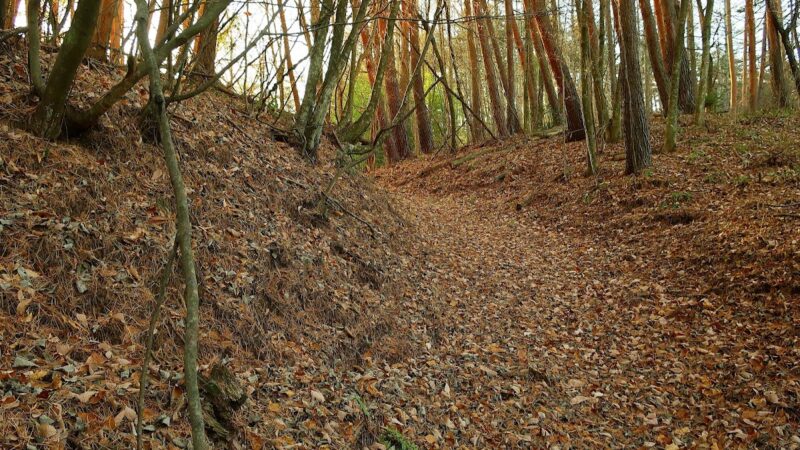
Dry Moats: The dry moats, positioned to separate each enclosure of the castle, are important remains that can still be clearly seen today. The dry moats around the main enclosure, in particular, were deep and, combined with the steep terrain, formed a strong defensive line.
Cliffs: Sharp cliffs were constructed around each enclosure, a design intended to make climbing difficult. These cliffs, created by carving into the natural terrain, enhanced the castle’s function as an artificial fortress.
Earthworks: Traces of earthworks remain around the enclosures. These earthworks functioned as the front line of defense and also as lookout posts.
Enclosure Structures
Main Enclosure: The main enclosure, the core of the castle, is located at the highest elevation. The area is now leveled and resembles a plaza. It is believed that the lord’s residence and other important facilities were located here.
Ninokuruwa: The Ninokuruwa, surrounding the Honmaru (main enclosure), was a crucial defensive point. It is presumed to have housed the residences of retainers and barracks.
Sannomaru: The outermost Sannomaru formed the castle’s outer perimeter. It is believed to have contained storage facilities for supplies and living quarters for lower-ranking samurai.
Utilization of Topography
Rifu Castle’s fortifications make maximum use of the natural mountain terrain. The steep slopes were used directly as defensive lines, creating an extremely disadvantageous battle for attackers.
The enclosures are arranged along the mountain ridges, and dry moats are constructed in the valleys, demonstrating a clever layout that takes advantage of the terrain. This structure allowed for effective defense even with a small number of defenders.
Koguchi (Entrance)
The koguchi, the entrance to the castle, was a weak point in defense and therefore constructed with particularly strong fortifications. At Rifu Castle, winding passages and square-shaped spaces were incorporated to slow enemy advances and give the defenders an advantage.
Current Situation
Development as Tateyama Park
Currently, the Rifu Castle ruins have been developed as “Tateyama Park,” a place of relaxation for local residents. Walking paths are maintained within the park, allowing visitors to reach the main keep site in about 5-10 minutes on foot.
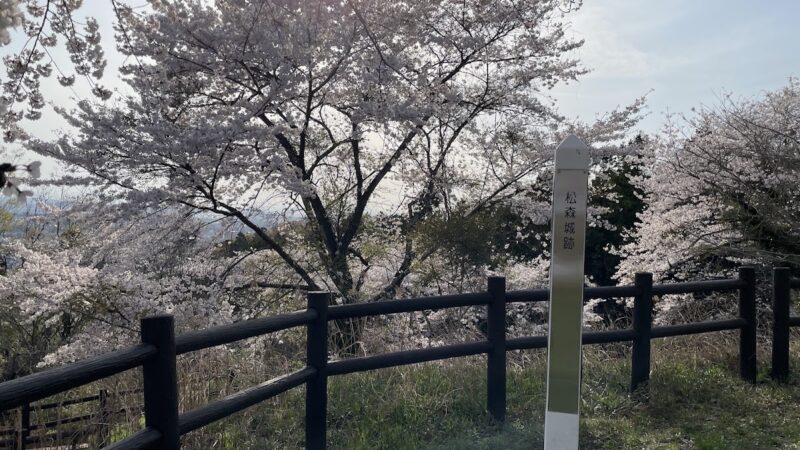
The main keep site has been developed into a flat plaza and is one of Miyagi Prefecture’s leading cherry blossom viewing spots, with cherry blossoms blooming profusely in spring. Many visitors come to enjoy the changing seasons while feeling the history of the castle ruins.
Preservation Status of Remains
The remains of Rifu Castle from the time of its construction are well-preserved.
Dry Moats: Multiple dry moats are clearly visible, mainly around the main enclosure. The depth of these moats provides important clues to understanding the castle’s defensive structure.
Enclosures: The layout of the enclosures, such as the main enclosure, second enclosure, and third enclosure, can be discerned from the topography. The flat areas of each enclosure remain clearly visible, allowing for estimation of the castle’s original size.
Cliffs: The cliffs separating each enclosure, though weathered, retain their original form. The steep slopes attest to the castle’s strong defensive capabilities.
Information Boards and Stone Monuments
In the park, information boards explaining the history of Rifu Castle are installed. The castle’s history, structure, and changes in lords are explained in detail, helping visitors understand its history.
In addition, stone monuments marking the castle site have been erected, commemorating the historical importance of this location.
View
From the main castle grounds, you can enjoy a panoramic view of Rifu town and the surrounding area. On a clear day, you can even see as far as Matsushima Bay and the Pacific Ocean, allowing you to relive the view seen by the castle’s former lords.
This excellent view clearly demonstrates the castle’s value as a military observation post.
Access
Access by Public Transportation
Train: The nearest stations are JR Tohoku Main Line’s “Rifu Station” or “Shin-Rifu Station.”
- Approximately 20 minutes on foot from Rifu Station
- Approximately 25 minutes on foot from Shin-Rifu Station
It’s also easily accessible from central Sendai, about 17 minutes by train from Sendai Station.
Bus: The Rifu Town Community Bus operates and provides access close to the castle ruins. However, since the number of services is limited, it is recommended to check the timetable in advance.
Access by Car
Expressway:
- Approximately 5 minutes from the Sanriku Expressway “Rifu-chu IC”
- Approximately 10 minutes from the Sanriku Expressway “Rifu-Shiogama IC”
From central Sendai, it takes about 30 minutes via National Route 45.
Parking: Tateyama Park has a free parking lot. It may be full during peak seasons such as cherry blossom season, so it is recommended to visit with plenty of time to spare.
Nearby Tourist Attractions
When visiting Rifu Castle Ruins, combining it with visits to nearby tourist attractions will make your trip more fulfilling.
Miyagi Prefectural General Sports Park (Grandy 21): A large-scale sports facility including Miyagi Stadium, where various sporting events are held.
Prefectural Forest: A vast forest park of approximately 481 hectares where you can enjoy nature walks and hiking.
Kasenuma Park: A park centered around a beautiful marsh, where you can enjoy nature throughout the seasons.
Tagajo Castle Ruins: An important historical site where the ancient Mutsu Provincial Government was located, and is considered one of Japan’s three major historical sites.
Points to Note When Visiting Rifu Castle
Best Season for Visiting
Spring (Early to Mid-April): The cherry blossom season is the most popular time to visit. Approximately 200 cherry trees bloom around the main keep site, attracting many visitors.
Autumn (Late October to Early November): The autumn foliage is beautiful, and you can enjoy a stroll through the castle ruins in a tranquil atmosphere.
Early Summer (May to June): The fresh greenery is beautiful, and the weather is mild, making it ideal for a walk.
Clothing and Items to Bring
Since the castle ruins are located on a mountain, we recommend wearing comfortable walking shoes. While the walking paths are well-maintained, there are some steep slopes and stairs.
Insect repellent is necessary in summer, and warm clothing is required in winter. Bringing drinking water is also recommended.
Estimated Time Required
The round trip from the parking lot to the main keep ruins takes approximately 30 minutes to 1 hour. If you plan to carefully observe the remains and enjoy taking photographs, it’s advisable to allow 1.5 to 2 hours.
Historical Significance of Rifu Castle
Rifu Castle holds historical importance as a typical example of a castle in the Tohoku region during the Sengoku period.
Center for Regional Control
Rifu Castle was located inland near Matsushima Bay, controlling a crucial transportation hub connecting the Sendai Plain and the Sanriku coast. This location was extremely important as a center for regional control.
Expansion of the Date Clan’s Power
The capture and renovation of Rifu Castle by Rusu Masakage was a significant event in the Date clan’s process of establishing control over the Sendai Plain. This conquest solidified the Date clan’s position as the ruler of southern Tohoku.
Study of Mountain Castle Structure
The remains of Rifu Castle are valuable resources for studying the structure of mountain castles during the Sengoku period. This is an important historical site that conveys the castle-building techniques of the time, including the dry moats, steep slopes, and layout of the baileys.
History and Culture of Rifu Town
Rifu Town is located in the central-eastern part of Miyagi Prefecture, bordering Sendai City, Tagajo City, and Shiogama City. It has flourished as a transportation hub since ancient times and boasts a long history dating back to the Tagajo period.
In modern times, it is home to the Miyagi Prefectural General Sports Park and the JR East Shinkansen General Rolling Stock Center, developing as a town of sports and industry. Its convenient location, just a 17-minute train ride from Sendai Station, makes it a notable commuter town for the Sendai metropolitan area.
Summary
Rifu Castle is a valuable mountain castle ruin from the Sengoku period remaining in Rifu Town, Miyagi Prefecture. The castle’s lord changed hands from the Muraoka clan to Rusu Masakage, and it played an important role in the expansion of the Date clan’s power.
The castle’s structure, skillfully utilizing the natural terrain at an altitude of approximately 90 meters, remains remarkably well-preserved as dry moats and steep slopes, making it a valuable historical site for understanding the castle-building techniques of the time.
Currently, it is maintained as Tateyama Park, a popular spot for cherry blossom viewing in spring and for historical walks. Easily accessible from Sendai City, it’s a historical site that can be visited without hesitation.
Visiting the castle ruins allows you to reflect on the history of the Tohoku region during the Sengoku period and feel the footsteps of those who came before you. Rifu Castle is an important cultural heritage site indispensable to understanding the history of Miyagi Prefecture, and it is hoped that it will continue to be preserved and utilized in the future.