Kamidate Castle (Miyagi Prefecture) Complete Guide: History and Highlights of the Mountain Castle Associated with Hasekura Tsunenaga
Located in Kawasaki-cho, Shibata-gun, Miyagi Prefecture, Kamidate Castle is a mountain castle where Hasekura Tsunenaga, a retainer of the Date family who traveled the world as part of the Keicho Embassy to Europe, spent his childhood and youth. Built in 1545 during the Sengoku period, the castle still retains well-preserved remains such as dry moats and earthworks, making it a valuable historical site of medieval castles in Miyagi Prefecture.
History of Kamidate Castle
Construction and the Hasekura Clan
Kamidate Castle is believed to have been built in 1545 by Hasekura Tsunemasa, the adoptive grandfather of Hasekura Tsunenaga. The Hasekura clan served as retainers of the Date family and established Kamidate Castle as their base of operations in this region.
Hasekura Tsunemasa served as a senior retainer of the Date clan, and by constructing a strong mountain castle in this area, he made it the center of defense and governance of the territory. The strategic importance of the location is evident from the fact that the main keep was situated on a mountaintop approximately 260 meters above sea level, with a relative elevation difference of about 70 meters.
Hasekura Tsunenaga and Kamitate Castle
Hasekura Tsunenaga was born in Yonezawa in 1571 (Genki 2), the son of Yamaguchi Tsunenari, a retainer of the Date clan. At the age of seven, he was adopted by his uncle, Hasekura Tokimasa, and grew up in Kamitate Castle, built by his adoptive grandfather, Hasekura Tsunemasa.
It is believed that Tsunenaga spent his youth in this castle, studying martial arts and academics. For Tsunenaga, who later achieved the great feat of serving as the chief envoy of the Keichō Embassy to Europe, meeting the Pope in Rome, and obtaining a Roman noble title, Kamitate Castle was an important place in the formation of his character.
From the Sengoku Period to the Edo Period
Kamitate Castle functioned as the residence of the Hasekura clan throughout the Sengoku period. However, with the advent of the Edo period and the issuance of the “One Castle Per Province” decree, it is believed to have been abandoned, like many other mountain castles.
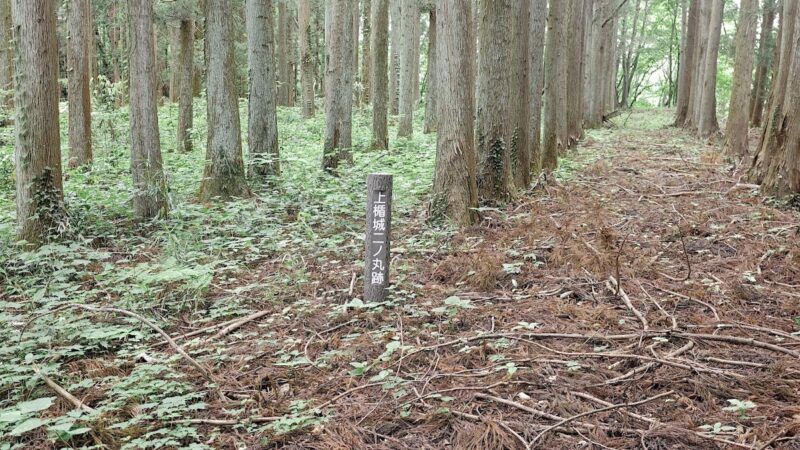
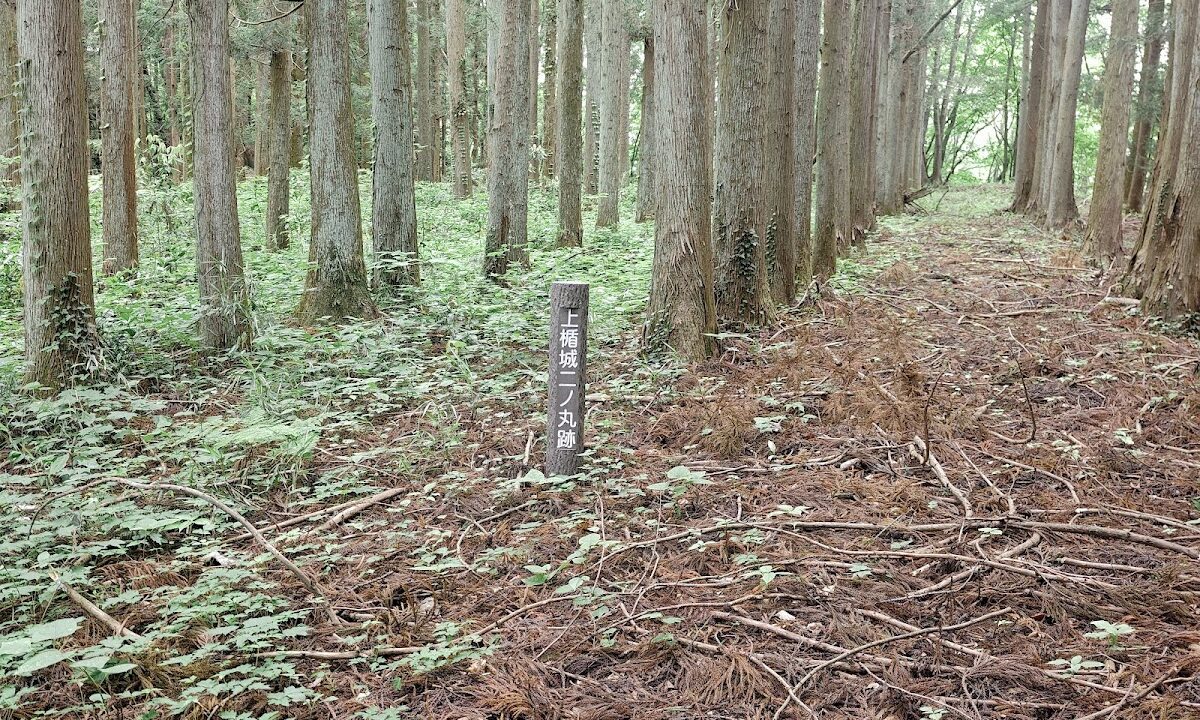
While no structures such as keeps or turrets remain at the current Kamitate Castle site, the basic structure of the castle’s layout, including earthworks and dry moats, is well-preserved, making it a valuable legacy that conveys the appearance of a Sengoku period mountain castle.
Structure and Layout of Kamitate Castle
Characteristics of a Renkaku-style Mountain Castle
Kamitate Castle was built as a renkaku-style mountain castle. A renkaku-style castle is a typical mountain castle structure where the main baileys (kuruwa) are arranged in a line, with defensive facilities positioned along the mountain ridge.
The main bailey is located at the summit of the mountain at an altitude of 260 meters, and the second and third baileys continue along the ridge from there. This layout allows for a gradual defensive system at each enclosure when an enemy attacks.
Dry Moats and Earthworks
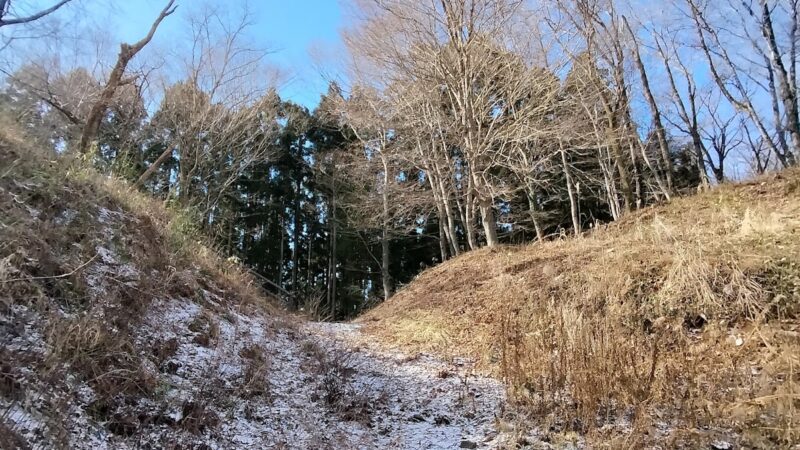
The greatest highlight of Kamitate Castle is its well-preserved dry moats and earthworks. Dry moats are moats that do not hold water and are a common defensive structure in mountain castles. Multiple dry moats can be seen at Kamitate Castle, and the dry moats around the main enclosure are particularly deep and wide, conveying the large-scale construction of the time.
Earthworks are defensive walls built by piling up earth, preventing enemy intrusion and enhancing defensive capabilities by allowing fences or walls to be built on top. The clearly visible earthworks today allow us to appreciate the castle-building techniques of the Sengoku period.
Layout of Enclosures
Kamitate Castle has multiple enclosures. The main enclosure is located at the highest point and is presumed to have housed the lord’s residence and command post. From the main enclosure, one can overlook the surrounding terrain, making it an ideal location for monitoring enemy movements.
The second and third baileys functioned as defensive lines protecting the main keep, and it is believed that soldiers were stationed at each. The baileys are separated by steep slopes called “kirigishi,” a design intended to hinder the advance of attackers.
Highlights of Kamitate Castle
Preservation of the Remains
Kamitate Castle is currently open to visitors as a well-maintained site. It is relatively easily accessible for a mountain castle, and the remains are well-preserved.
In particular, the dry moats retain their depth clearly, allowing visitors to experience the defensive system of the time. The earthworks also remain intact, making it easy to imagine the appearance of a mountain castle from the Sengoku period.
Views and Location
From the main keep site, one can overlook the surrounding terrain, helping to understand why this location was chosen for the castle. The panoramic view of the Hasekura region speaks to its function as a military surveillance base.
While some areas are now overgrown with trees, it’s believed that trees were cut down in the past to improve visibility, allowing for a wider area of surveillance.
Relationship with Enpuku-ji Temple
At the foot of Kamitate Castle lies Enpuku-ji Temple, the family temple of Hasekura Tsunenaga. This temple houses the tombs of Tsunenaga and his family, and visiting it along with Kamitate Castle allows for a deeper understanding of the Hasekura clan’s history.
Enpuku-ji Temple preserves documents and artifacts related to Hasekura Tsunenaga, allowing visitors to learn about the history of the Keicho Embassy to Europe. A recommended sightseeing route combines the castle ruins and the temple.
Visitor Guide: Access and Sightseeing Information
Access Methods
Location: Tateyama, Hasekura, Kawasaki-cho, Shibata-gun, Miyagi Prefecture (Shukuba)
Access by Car:
- Approximately 20 minutes from Murata IC on the Tohoku Expressway
- Approximately 15 minutes from Miyagi Kawasaki IC on the Yamagata Expressway
Public Transportation:
- Take a Miyagi Kotsu bus from JR Sendai Station towards Kawasaki-cho
- It is possible to access the site on foot from the nearest bus stop, but access by car is more convenient due to the limited number of buses.
Visiting Time and Difficulty
The average visiting time is approximately 45 minutes. Although it is a mountain castle, it is relatively easy to climb, and even beginners can visit without difficulty. However, please note the following:
- The hiking trail is well-maintained, but please wear comfortable walking shoes.
- The ground can be slippery during and after rain.
- Insect repellent is recommended during the summer.
- In winter, there is a possibility of snow, so please check beforehand.
Obtaining the Castle Stamp
The castle stamp for Kamitate Castle is sold at “Ere! Hasekura Kingdom” located at 9 Hasekura Shiozawa, Kawasaki-cho, Shibata-gun, Miyagi Prefecture. The standard version of the castle stamp is available and is popular as a collection item among castle enthusiasts.
Ere! Hasekura Kingdom also features exhibits related to Hasekura Tsunenaga and sells local specialty products, so we recommend visiting it in conjunction with your visit to Kamitate Castle.
Nearby Tourist Attractions
Hasekura Tsunenaga Memorial Park:
This park houses a museum related to the Keicho Embassy to Europe, where you can learn in detail about Tsunenaga’s achievements.
Kawasaki Town Hot Springs:
Historical hot spring resorts such as Aone Onsen and Goga Onsen are nearby, making them ideal for a break after visiting castles.
Michinoku Mori no Kohan Park:
A national park where you can enjoy seasonal flowers, recommended for families.
Historical Significance of Kamitate Castle and Hasekura Tsunenaga
Connection to the Keicho Embassy to Europe
In 1613 (Keicho 18), Hasekura Tsunenaga, at the command of Date Masamune, traveled to Europe as the chief envoy of the Keicho Embassy to Europe. He crossed the Pacific Ocean, visited Mexico, Spain, and Italy, and fulfilled a rare international mission in Japanese history, including an audience with Pope Paul V.
It is believed that Tsunenaga’s education and samurai qualities, nurtured at Kamitate Castle, played a crucial role in this great achievement. Kamitate Castle, where he spent his childhood and youth, can be considered the starting point for the samurai who soared to prominence on the world stage. ### Importance in Local History
Kamitate Castle is not merely a local mountain castle; it holds special significance as a place associated with historical figures who connected Japan and the world. While Miyagi Prefecture has many castle ruins, including Sendai Castle, Kamitate Castle possesses unique value as the place where a warlord with an international perspective was nurtured.
Currently, Kawasaki Town is working to preserve Hasekura Tsunenaga and Kamitate Castle as a source of local pride, and to utilize them as a tourist resource.
Current Status of Kamitate Castle Preservation and Development
Preservation Status of Remains
The Kamitate Castle ruins are currently in good condition. Major remains such as dry moats and earthworks remain clearly visible, providing valuable information for understanding the structure of mountain castles during the Sengoku period.
Thanks to the efforts of local history enthusiasts and the local government, regular mowing and maintenance are carried out, maintaining an environment where visitors can safely observe the remains. However, large-scale restoration work has not been undertaken; the basic policy is to preserve the castle in its original state. ### Future Challenges and Prospects
The following are some of the future challenges for Kamitate Castle:
- Continued Preservation of the Remains: Efforts to protect the remains from natural disasters and deterioration over time
- Improved Access: Development of hiking trails to accommodate more visitors
- Strengthened Information Dissemination: Wider dissemination of information about the connection between Hasekura Tsunenaga’s international activities and Kamitate Castle
- Educational Utilization: Utilization as local history teaching material in local school education
Kawasaki Town is focusing on promoting historical tourism centered on Hasekura Tsunenaga and Kamitate Castle, and further development and utilization are expected in the future.
Evaluation from Castle Enthusiasts
Kamitate Castle is highly regarded by castle enthusiasts. It received a score of 3.38 points (out of 5) from castle lovers nationwide, praising the excellent state of preservation of the remains and the richness of its historical background.
Visitors have shared comments such as:
- “I was surprised by the scale of the dry moat. It gives a good understanding of the defensive system of the Sengoku period.”
- “It was deeply moving to visit a place associated with the great figure Hasekura Tsunenaga.”
- “It’s well-maintained and easy to walk around, making it a mountain castle that even beginners can enjoy.”
- “Visiting it together with Enpuku-ji Temple allowed me to understand the history more deeply.”
It’s also a popular spot for photography enthusiasts to photograph the earthworks and dry moats, and many photos of Kamitate Castle have been posted to photo galleries.
Summary: The Value of Visiting Kamitate Castle
Kamitate Castle (Kawasaki Town, Miyagi Prefecture) is a historical site worth visiting for the following reasons:
- Historical Significance: The residence of Hasekura Tsunenaga, a member of the Keicho Embassy to Europe, during his youth.
- Preservation of Remains: A Sengoku period mountain castle with well-preserved dry moats and earthworks.
- Easy Access: Relatively easy to climb, enjoyable even for beginners.
- Abundant Surrounding Facilities: Numerous related facilities such as Enpuku-ji Temple and Hasekura Tsunenaga Memorial Park.
- Obtaining Castle Stamps: Castle stamps can be obtained at Ire! Hasekura Kingdom.
While Miyagi Prefecture has many castle ruins, including Sendai Castle, Kamitate Castle is a unique historical site that retains the appearance of a medieval to Sengoku period mountain castle and has connections to a world-renowned historical figure.
For anyone interested in Japanese castles, the history of Hasekura Tsunenaga, or the history of Miyagi Prefecture, Kamitate Castle is a must-see. Be sure to visit and experience the atmosphere of a Sengoku period mountain castle and the footsteps of samurai who ventured out into the world.