Misawa Castle (Shiraishi City, Miyagi Prefecture) Complete Guide | History, Remains, and Access Information
What is Misawa Castle Ruins?
Misawa Castle Ruins are the remains of a medieval mountain castle located in Misawa Ochiai, Otakazawa, Shiraishi City, Miyagi Prefecture. Built on a mountain ridge approximately 130 meters above sea level and 70-80 meters above ground level, west of Daishoji Temple, it is known as a castle that played an important role from the Nanboku-cho period to the Sengoku period.
Even today, the defensive structure with its two-tiered moats, baileys, and earthworks remain in good condition, making it a valuable historical site for understanding the structure of medieval mountain castles. As a historical heritage site within Shiraishi City, it attracts attention from castle enthusiasts and history lovers.
Basic Information
Location: Misawa Ochiai, Otakazawa, Shiroishi City, Miyagi Prefecture
Castle Classification: Mountain Castle
Elevation: Approximately 130 meters
Relative Height: Approximately 70-80 meters
Main Remains: Enclosures, earthworks, moats, trenches, gates
Construction Period: Details unknown (estimated to be before the Nanboku-cho period)
Main Lords: Misawa clan, Misawa Shinano-no-kami Yorimoto
Current Status: Forest (remains in good condition)
Parking: “Misawa Castle Ruins Parking” available in front of Daishoji Temple
History of Misawa Castle
Misawa Castle in the Nanboku-cho Period
The exact construction date of Misawa Castle is uncertain, but the oldest documented records date back to the Nanboku-cho period. During this period, Kitabatake Akiokinobu, a powerful general of the Southern Court, is said to have holed up in Misawa Castle for a time and engaged in fierce battles with the forces of the Northern Court.
During the turbulent period of the Northern and Southern Courts, southern Mutsu Province was a crucial strategic region where the forces of the Southern and Northern Courts were evenly matched. Misawa Castle, as a key point controlling the area around Shiroishi, is thought to have functioned as one of the Southern Court’s strongholds. It is presumed that Kitabatake Akiokinobu chose this castle because of its robust defensive structure and strategic location.
The Misawa Clan in the Sengoku Period
With the arrival of the Sengoku period (Warring States period), Misawa Castle became the residence of the local Misawa clan. In particular, during the Keicho era (1596-1615), Misawa Shinano-no-kami Yorimoto is recorded as the lord of this castle.
The Misawa clan, as local lords controlling the area around Shiroishi, were deeply involved in the politics and military affairs of the region. Misawa Castle’s location overlooked the road connecting Shiroishi Castle town and the Ou Mountains, making it an ideal location for monitoring and defending a strategic transportation hub.
Relationship with the Date Clan
In the late Sengoku period, as the Date clan, who became the rulers of Oshu, expanded their power, the area around Shiroishi also came under their control. It is believed that the Misawa clan was also incorporated into the Date clan’s fold, but detailed historical records are limited.
During the time of Date Masamune, a system of rule centered around Shiroishi Castle was established, and it is presumed that surrounding mountain castles like Misawa Castle gradually lost their military importance. In the Edo period, influenced by the “One Castle Per Province” decree and other factors, Misawa Castle was abandoned and subsequently disappeared from the historical stage.
Layout and Structure of Misawa Castle
Overall Composition
Misawa Castle is a mountain castle that skillfully utilizes the topography of the mountain ridge rising west of Daishoji. The entire castle complex consists of three main sections (enclosures) and a fourth enclosure serving as the entrance, resulting in a compact yet highly defensible structure.
Its most distinctive feature is the defensive system of two-tiered moats. These moats, positioned from the east to the south of the castle, effectively prevented enemy incursions. While relatively small for a mountain castle, it demonstrates a design philosophy that maximized the use of the limited terrain.
Structure of the Main Enclosure (Honmaru)
The main enclosure is located at the highest point of the castle and is believed to have housed the lord’s residence and command post. Even today, a clear flat area remains, allowing us to confirm the scale of the enclosure at that time. Traces of earthworks can be seen around the main enclosure, indicating its strong defensive features.
From the main enclosure, one can enjoy a panoramic view of the Shiraishi Basin, demonstrating its ideal location for monitoring the surrounding roads. On clear days, the Zao mountain range can be seen in the distance, highlighting the importance of excellent visibility in the castle’s location selection.
Two-Tiered Moat Defense System
The most striking feature of Misawa Castle is its two-tiered moat system. A moat is a trench dug horizontally along a mountain slope, effectively hindering enemy movement and making attacks difficult.
At Misawa Castle, this moat system was implemented in two tiers, creating a stronger defensive line. Enemies who breached the lower moat would then face the upper moat, creating a double defensive line that made sieging the castle extremely difficult.
The scale of the moats is still clearly discernible today, and their depth and width demonstrate the advanced civil engineering techniques of the time. The eastern moat, in particular, is well-preserved and is a valuable historical site for studying the defensive structures of medieval mountain castles.
Entrance Gate and Ascent Route
The entrance gate (koguchi) to the castle is one of the most important defensive structures. Misawa Castle’s entrance gate was designed to prevent direct entry, delaying enemy advances.
The approach to the castle was a winding path utilizing the mountain slope, constantly exposing attackers to fire from the castle’s defenders, creating a disadvantageous situation. Traces of the approach can still be followed today, allowing visitors to appreciate the ingenuity of the castle’s defenses at the time.
Moats and Cut Slopes
Moats, which cut off the ridgelines, were also important defensive structures at Misawa Castle. In mountain castles, ridge-based incursions are the easiest routes, so it was necessary to divide the ridges with moats to prevent enemy advances.
The moats at Misawa Castle were positioned along the main ridgelines, also serving to clearly demarcate the castle grounds. Furthermore, cut slopes (artificial steep slopes) were constructed around the enclosures, which also played an important role in enhancing defensive capabilities.
Current State and Highlights of the Remains
Preservation Status
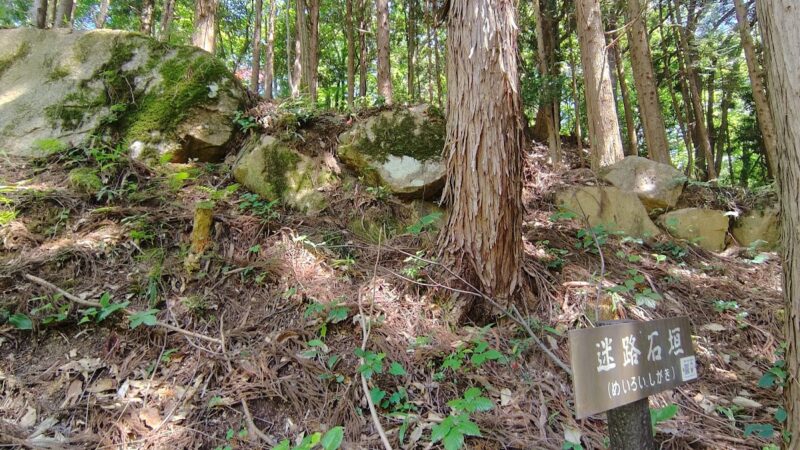
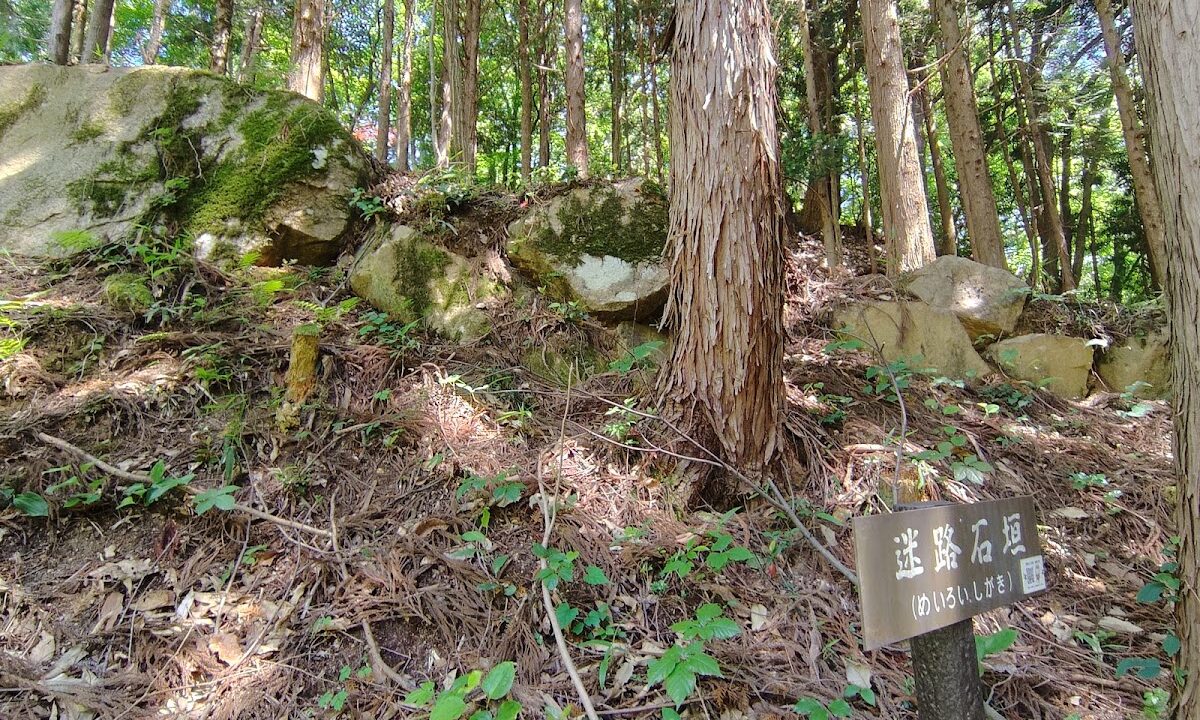
The Misawa Castle site currently remains as a forest, but because it escaped later development, the remains are in excellent condition. The main remains, such as the two-tiered moat, baileys, earthworks, and trenches, are clearly preserved, making it an ideal site for understanding the structure of a medieval mountain castle.
The preservation of the moat, in particular, is outstanding, with its depth, width, and the height of the earthworks remaining at a level where they can be measured. Such excellent preservation makes it a valuable learning site for castle researchers and history enthusiasts.
Information Boards and Explanatory Facilities
A sign for “Misawa Castle Ruins Parking Lot” is installed near the parking lot in front of Daishoji Temple, making access to the castle ruins easy to understand. Information boards are also installed at key points along the approach to the castle, creating an environment where even first-time visitors can easily understand the location and characteristics of the remains.
However, due to its nature as a mountain castle, the level of maintenance is not as extensive as that of flatland castles or early modern castles, so appropriate preparation and caution are necessary when visiting.
Photography Points
For castle photography, a viewpoint from the middle of the slope, which allows you to capture the entire view of the two-tiered moat, is recommended. The two-tiered structure of the moat is clearly visible, allowing for photographs that visually demonstrate the defensive features of Misawa Castle.
The view from the main enclosure is also highly photographic, showcasing the strategic location of the castle against the backdrop of the Shiraishi Basin and surrounding mountains. Depending on the season, the fresh greenery or autumn foliage is beautiful, making it a photo spot where you can enjoy both historical value and natural beauty.
Access and Visiting Information
Access by Car
From the Tohoku Expressway:
- Approximately 15 minutes from Shiroishi IC
- Take National Route 4 towards Otakazawa
- Set your navigation system to Daishoji Temple
Parking: There is a “Misawa Castle Ruins Parking Lot” in front of Daishoji Temple (free).
Access by Public Transportation
JR Tohoku Main Line:
- Get off at Shiroishi Station
- Approximately 20 minutes by taxi
- Bus services are limited, so advance confirmation is necessary.
Precautions When Visiting the Castle
Clothing: As it is a mountain castle, comfortable clothing and non-slip shoes (trekking shoes recommended) are necessary.
Estimated Time: It takes approximately 15-20 minutes to walk from the parking lot to the main enclosure. Allow 1-1.5 hours including sightseeing time.
Season: Spring to autumn is suitable for visiting, but insect repellent is necessary in summer. In winter, climbing may be difficult due to snow. Safety Precautions: Due to the mountainous terrain, solo travel should be avoided, and it is preferable to visit in a group. Please check your cell phone signal strength beforehand.
Related Historical Sites in the Surrounding Area
Shiraishi Castle
Located approximately 20 minutes by car from Misawa Castle, Shiraishi Castle is a modern castle known as the residence of the Katakura clan, important retainers of the Date clan. While Misawa Castle is a medieval mountain castle, Shiraishi Castle is a modern flatland castle, making it an interesting subject for comparing the development of castle architecture.
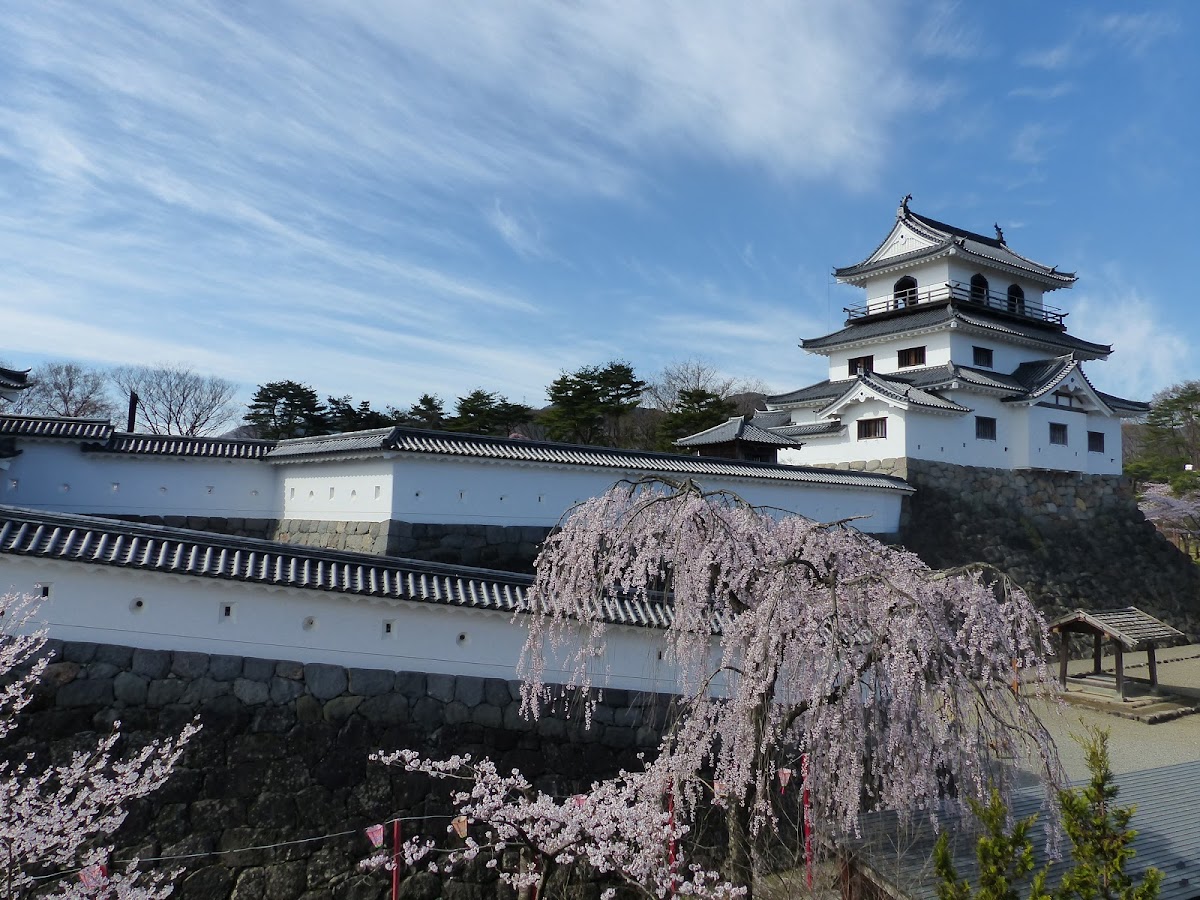
Shiraishi Castle currently has a restored keep, and the interior is open to the public as a museum. Visiting both Misawa Castle and Shiraishi Castle provides a comprehensive understanding of the castle history of the Shiraishi region.
Daishoji Temple
Located at the entrance to the Misawa Castle ruins, Daishoji Temple has deep ties to the castle. It is possible that it was the family temple of the castle lord and those associated with the castle, and clues to the castle’s history can sometimes be found in the historical materials and legends remaining at the temple.
Other Surrounding Mountain Castles
Several medieval castle ruins are scattered around Shiroishi City, including Iizume Castle, Jizoin Castle, and Baba Castle. These are remains of castles that were used as encampments during the expansion of the Date clan’s power or functioned as residences of local lords. If you have time, visiting these castle ruins will allow you to gain a deeper understanding of the medieval history of the Shiroishi region.
Historical Significance of Misawa Castle
Value in Medieval Mountain Castle Research
Misawa Castle occupies an important position in castle research as a typical example of a medieval mountain castle in the Tohoku region. Its distinctive defensive structure, a two-tiered moat, is a good example of medieval castle-building techniques that aimed to achieve maximum defensive power within limited terrain conditions.
Due to the good state of preservation of the remains, it is highly valuable as a subject for archaeological excavation and surveying, and holds the potential to yield new insights through future research.
Position in Regional History
In the history of the Shiroishi region, Misawa Castle is a site that symbolizes the transitional period from the medieval to the early modern period. Throughout the historical flow from the turmoil of the Northern and Southern Courts period to the Sengoku period and the unification by the Date clan, Misawa Castle played a vital role in the region’s politics and military, making it an indispensable element for understanding local history.
As physical evidence of the existence and activities of the local lord, the Misawa clan, the Misawa Castle ruins are also an important element in forming the region’s historical identity.
Points to Note and Summary
Efficient Visiting Route
To efficiently visit Misawa Castle, the following route is recommended:
- Park in the parking lot in front of Daishoji Temple
- Head towards the 4th bailey from the entrance to the castle path
- Proceed while observing the lower moat
- Check the upper moat and earthworks
- Climb to the main bailey and enjoy the view
- Observe defensive structures such as moats and cliffs
- Descend via a different route to experience the overall layout
Recommended Points for Castle Enthusiasts
For castle enthusiasts, the greatest appeal of Misawa Castle lies in its status as an “untouched medieval mountain castle.” Because the site has not undergone excessive restoration, the remains can be observed in a state close to its original appearance.
In particular, the structure of the two-tiered moat offers a valuable opportunity to experience firsthand the three-dimensional defensive system that is difficult to understand from photographs and drawings alone. It is a must-see castle site for anyone who wants to understand the defensive philosophy of medieval mountain castles.
Value as a Historical Learning Site
Misawa Castle is an excellent teaching material for school education and lifelong learning. The history of the Nanboku-cho and Sengoku periods can be learned experientially through the actual terrain and remains, rather than merely as knowledge.
As a regional historical heritage site and a valuable resource for understanding the history of Japanese castles, Misawa Castle ruins are an important cultural property that should continue to be preserved and utilized.
Summary
Misawa Castle ruins in Shiroishi City, Miyagi Prefecture, is a medieval mountain castle that played an important role from the Nanboku-cho period to the Sengoku period. Built on a mountain ridge 130 meters above sea level and 70-80 meters above sea level, this castle, with its distinctive two-tiered moat defensive structure, is a valuable historical site that conveys the castle-building techniques and strategic thinking of the Middle Ages.
Misawa Castle held an important position in the flow of medieval history in Tohoku, from the siege of Kitabatake Akihiko to its history as the residence of the Misawa clan and the expansion of the Date clan’s power. Its remains are well-preserved, continuing to provide a learning opportunity for castle researchers and history enthusiasts.
Easily accessible from the parking lot in front of Daishoji Temple, and with proper preparation, even beginners can visit this castle site, making it a must-see historical spot when visiting the Shiroishi area. The time spent feeling the spirit of the Middle Ages and reflecting on the wisdom and ingenuity of our ancestors will surely be an unforgettable experience.