--765x720.png)
Fudōdō Castle (Misato Town, Miyagi Prefecture) Complete Guide: History, Remains, Access, and Changes in the Surrounding Area
Located in Misato Town, Tōda District, Miyagi Prefecture, Fudōdō Castle is an important medieval castle that conveys the history of the Naruse River basin. Also known as “Tsurugashira Castle,” “Nishikan,” and “Tsurukan,” this castle is now developed as Tsurugashira Park, and valuable remains are preserved. This article provides a comprehensive explanation of Fudōdō Castle, from its historical background to its specific remains and the changes in the administrative boundaries of the Fudōdō area where the castle is located.
Overview and Basic Information of Fudōdō Castle
Fudōdō Castle is a medieval flatland castle located at 30 Nishikan, Misato Town, Tōda District, Miyagi Prefecture. Built on a river terrace on the left bank of the Naruse River, this castle functioned as a defensive structure that skillfully utilized the natural terrain.
Location and Geographical Characteristics
Fudodo Castle was built on a plateau formed by the Naruse River, a strategically important location overlooking the surrounding plains. Present-day Misato Town is located almost in the center of Miyagi Prefecture, approximately 40 kilometers northeast of Sendai City, and west of Kogota Station on the Tohoku Main Line.
The castle’s location was a crucial point for both river and land transportation, making it an important base from ancient to medieval times. The Naruse River functioned as a vital artery for transporting goods, increasing the economic and military value of the region.
Alternative Names and Origins of Names
Fudodo Castle has several alternative names. The name “Tsurugashira Castle” is said to derive from the castle’s shape and location resembling a crane’s head. “Nishikan” is derived from the place name, and “Tsurukan” has been used as an alternative spelling of Tsurugashira Castle.
These names are found scattered throughout local oral traditions and ancient documents, and are understood to be different spellings referring to the same castle. While “Fudodo Castle” is now the officially established name, it is still often affectionately known as “Tsurugashira Castle” by locals.
Historical Background of Fudodo Castle
Construction Period and Lord
While there are limited definitive historical sources regarding the exact construction date of Fudodo Castle, it is highly likely to date back to the Sengoku period (Warring States period). This region was part of the sphere of influence of the Oshu Fujiwara clan during the medieval period, and subsequently came under the control of local lords, including the Date clan.
There are various theories regarding the castle lord, but it is presumed that a powerful local samurai resided there. The Toda district was under the control of the Sendai Domain, and it is possible that the castle functioned as part of the domain’s administrative structure during the Edo period.
Transition from the Sengoku Period to the Edo Period
During the Sengoku period, this region was incorporated under the control of the Date clan as their power expanded. During the Tensho era (1573-1592), it is believed that Fudōdō Castle played a political and military role in the process of Date Masamune’s unification of Ōshū (present-day Tohoku region).
In the Edo period, under the stable rule of the Sendai Domain, the castle’s military function gradually declined. However, it is presumed that its significance continued as a regional administrative center and a symbol of local governance.
Abandonment and Aftermath
With the abolition of the feudal domains and establishment of prefectures after the Meiji Restoration, Fudōdō Castle completely lost its function. The castle facilities were gradually dismantled and converted into farmland and residential areas. However, some of the main remains were preserved and, through the development of the current Tsuruga Park, are being passed down to future generations as a historical heritage.
Remains and Highlights of Fudōdō Castle
Current State of Tsuruga Park
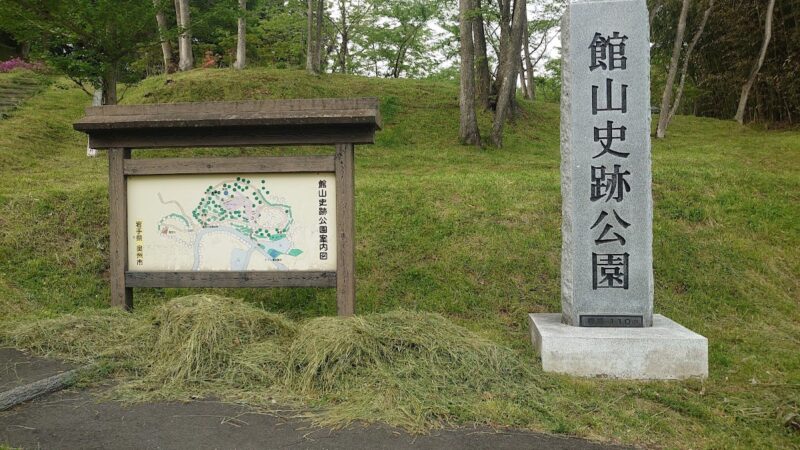
Currently, the main enclosure of Fudōdō Castle has been developed as “Tsuruga Park,” serving as a place of relaxation for local residents. The park contains well-preserved castle ruins, making it a valuable historical site for understanding the structure of medieval castles.
Access to the park is relatively easy, and information boards are installed, making it accessible not only to history enthusiasts but also to general tourists.
Remains of the Moat
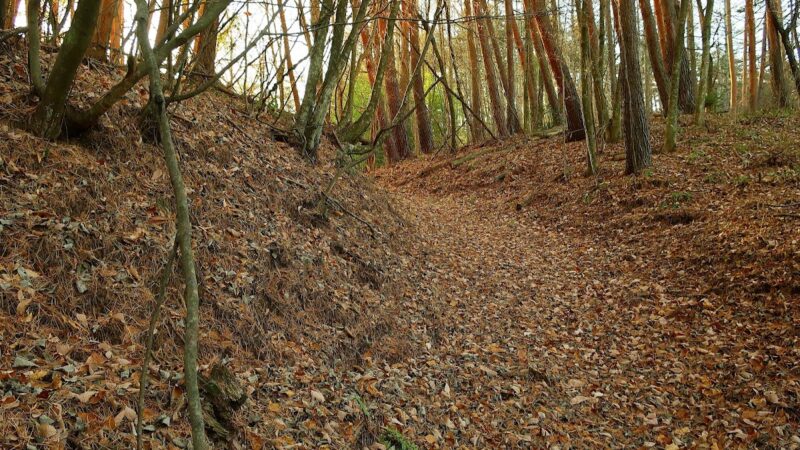
One of the most prominent remains of Fudōdō Castle is the moat remaining beside the road on the southeast side. This moat played an important role as a defensive structure for the castle. The clearly visible traces of the moat today are valuable evidence that tells the story of the castle’s structure at the time.
The scale and shape of the moat indicate that this castle was not merely a residence, but a military facility with considerable defensive capabilities. The depth and width of the moat also reflect the level of civil engineering technology at the time.
Well Remains
The remains of a well remain to the left of the stairs. Wells in castles were extremely important facilities for securing a water source during sieges. The well at Fudōdō Castle is preserved as a valuable remains that shows the reality of life within the castle.
The structure and depth of wells provide clues to the groundwater level and excavation techniques of the time. Furthermore, the location of wells offers important information for inferring the central area of the castle and the layout of important facilities.
Tsurugayama Kofun and Shinmei Shrine
North of Fudōdō Castle lies the Tsurugayama Kofun (ancient burial mound), on which the Shinmei Shrine is enshrined. The existence of this burial mound indicates that this region was an important strategic point from ancient times.
It is not uncommon for medieval castles to be built near burial mounds. This was because utilizing the existing elevated ground of the burial mound reduced the labor required for construction and provided defensive advantages. The existence of the Shinmei Shrine also indicates a connection between the castle and local religious beliefs.
Arrangement of Enclosures (Kuruwa)
The arrangement of enclosures, centered around the main enclosure, can be inferred to some extent from the current topography. The steps and flat areas utilizing the edge of the plateau are thought to be remnants of former enclosures.
While a more detailed survey could reveal a more accurate castle structure, even in its current state, a stroll through the area allows one to experience the basic structure of a medieval castle.
Changes in the Administrative Boundaries of the Fudōdō Area
Fudōdō Village in the Edo Period
During the Edo period, this area existed as “Fudōdō Village.” At the end of the Edo period, it belonged to Tōda District in Mutsu Province, and the entire area was part of the Sendai Domain. Fudōdō Village is clearly mentioned in the “Old Land and Old Territory Survey Records,” allowing us to learn about the village’s size and assessed yield at the time.
Besides Fudōdō Village, Tōda District had 58 other villages, including Tajiri Village, Nakame Village, Hachiman Village, Numa Village, Minami-Kōgota Village, and Kita-Kōgota Village. Fudōdō Village, along with these other villages, constituted the lowest level of the Sendai Domain’s local administrative structure.
Implementation of the Town and Village System in the Meiji Era
On April 1, 1889 (Meiji 22), with the implementation of the Town and Village System, the former Fudōdō Village independently implemented its own village system. This indicates that Fudōdō Village possessed a considerable size and independence.
With the implementation of the Town and Village System, a modern local self-government system was introduced, and Fudōdō Village was positioned as a formal administrative unit. The fact that Fudōdō Village was able to independently implement its own village system during this period, when many small villages merged, speaks to the importance of the region.
Implementation of Town System in 1950 (Showa 25)
On April 1, 1950 (Showa 25), Fudōdō Village implemented town system and became “Fudōdō-machi.” This reflected the post-war regional development and population increase.
The implementation of town system was symbolic of the region’s urbanization and economic development. Along with the development around Kogota Station, the Fudōdō area also grew into a key commercial and transportation hub.
The 1954 Merger and the Establishment of Kogota Town
On April 1, 1954 (Showa 29), Fudōdō Town merged with Kitaura Village and Nakazoe Village to form the new town of Kogota. While the administrative unit of Fudōdō Town ceased to exist, the place name “Fudōdō” continued to be used.
This merger was part of a nationwide trend of municipal mergers known as the “Great Showa Mergers.” Many towns and villages were integrated with the aim of improving administrative efficiency and promoting broader regional development.
The Birth of Misato Town in 2006 (Heisei 18)
On January 1, 2006 (Heisei 18), Kogota Town and Nangō Town merged to form the current Misato Town. As a result, the Fudōdō area became part of Misato Town, and remains so to this day.
The establishment of Misato Town significantly reorganized the administrative boundaries of Tōda District. The Fudōdō area is located in the heart of Misato Town and is recognized as one of the districts symbolizing the town’s history and culture.
Historical Overview of Tōda District
Establishment and Scope of Tōda District
Tōda District is located in the northern part of Miyagi Prefecture and was established under the ancient Ritsuryo system. The name “Tōda” is said to mean a rural area far from the capital.
The district’s boundaries changed over time, but it generally included parts of present-day Misato Town, Wakuya Town, and Ōsaki City. Centered on a fertile plain between the Naruse River and the Egai River, it was known as a region where rice cultivation flourished from ancient times.
Tōda District in the Edo Period
During the Edo period, the entire Tōda District was part of the Sendai Domain. There were 58 villages within the district, each incorporated into the domain’s local administrative structure. Major villages included Tajiri Village, Kogota Village, and Wakuya Village, which later became towns and centered their respective regions.
Tōda District in the Edo Period
Toda District was located on the transportation route connecting Sendai and Ishinomaki, playing an important role as a transit point for the transport of goods. Furthermore, its abundant agricultural productivity made it a crucial region supporting the finances of the Sendai Domain.
Changes Since the Meiji Era
After the Meiji Restoration, Toda District was incorporated into Miyagi Prefecture (originally Sendai Prefecture) due to the abolition of the feudal domains and the establishment of prefectures. With the implementation of the town and village system in 1889, many small villages were consolidated, forming modern towns and villages.
Following the large-scale mergers of the Showa and Heisei eras, the number of towns and villages in Toda District decreased significantly. Currently, only two towns remain in Toda District: Wakuya Town and Misato Town. The former 58 villages have undergone repeated mergers and reorganizations to reach their current form.
Historical Heritage Around Fudōdō Castle
Surrounding Castle Ruins
Several other medieval castle ruins are scattered around Fudōdō Castle. These indicate that the Toda District area was an important military base during the Sengoku period (Warring States period).
Nearby castles include Kogota Castle and Wakutani Castle, and it is believed that these castles cooperated with each other to form a regional defense network. Examining the relative locations of these castles reveals the military strategies and territorial control practices of the time.
Burial Mounds and Ancient Ruins
Numerous burial mounds, including the Tsurugayama Burial Mound, are distributed throughout Misato Town. These mounds were constructed during the Kofun period (3rd to 7th centuries), indicating that this region was a base for powerful figures from ancient times.
The distribution of these burial mounds allows us to infer the layout of ancient settlements and power structures. The fact that Fudōdō Castle was built near these burial mounds suggests a continuity of the area as a sacred or strategically important location from ancient times.
Temples, Shrines, and Beliefs
The place name Fudōdō is thought to originate from a hall dedicated to Fudō Myōō (Acala). Buddhist faith has been deeply rooted in the region since ancient times, and several temples existed.
Shinto shrines, including the Shinmei Shrine, were also central to the region’s faith. These temples and shrines were not merely religious institutions; they played a crucial role as a focal point for the local community and as centers of culture and education.
Current Misato Town and Fudōdō Area
Overview of Misato Town
Misato Town is located in Tōda District, almost in the center of Miyagi Prefecture, with a population of approximately 24,000 (as of 2024). It has developed around Kogota Station on the Tōhoku Main Line and is known as a transportation hub.
The town covers an area of approximately 75 square kilometers, with a topography that mixes plains and hills. Agriculture is the main industry, with rice cultivation being particularly thriving. Commercial and logistics industries have also developed, taking advantage of the convenient transportation.
Current Situation of the Fudōdō Area
The Fudōdō area is located in the center of Misato Town and is a mixed area of residential and agricultural land. The remnants of the former Fudōdō Village and Fudōdō Town remain in the place name, and the Ōaza (large administrative division) name “Fudōdō” is still used.
The area is rich in history, with numerous cultural assets such as historical temples, shrines, and burial mounds scattered throughout, in addition to the ruins of Fudōdō Castle. Local residents are actively involved in preserving historical sites, continuing their efforts to pass on the history of their hometown to future generations.
Access
Fudōdō Castle is approximately a 10-minute drive from Kogota Station on the JR Tohoku Main Line. It’s also about a 30-minute walk from the station. Public transportation, such as the town bus, is available.
By private car, it’s approximately a 20-minute drive from the Ōhira Interchange on the Tohoku Expressway, or about a 30-minute drive from the Matsushima Kita Interchange on the Sanriku Expressway. There is parking available at Tsurugashira Park, making it convenient for visitors.
Historical Value and Future Preservation of Fudōdō Castle
Academic Value
Fudōdō Castle is a valuable historical site among the medieval castles remaining in Miyagi Prefecture, with relatively well-preserved remains such as moats. If archaeological excavations are conducted in earnest, new insights into the castle’s structure, age, and lord may be gained.
Furthermore, it is an important historical site for considering its relationship to burial mounds and the historical changes of the region, and is highly regarded for its academic value.
Utilization as a Regional Resource
Fudodo Castle Ruins are a valuable historical resource of Misato Town. It holds diverse possibilities, including utilization as a tourist resource and as teaching material for local history education.
In recent years, with the growing interest in historical tourism, it is hoped that appropriate maintenance and information dissemination will allow more people to learn about the value of Fudodo Castle.
Challenges of Preservation and Transmission
Preserving historical sites requires continuous maintenance. There are many challenges to address, such as weathering of remains, vegetation management, and the installation of information boards.
It is necessary for local residents, the government, and researchers to cooperate in correctly evaluating the value of Fudodo Castle and appropriately preserving and utilizing it. Passing on the history of our hometown to future generations is a responsibility of those of us living today.
Points to Note When Visiting Fudōdō Castle
Best Season for Visiting
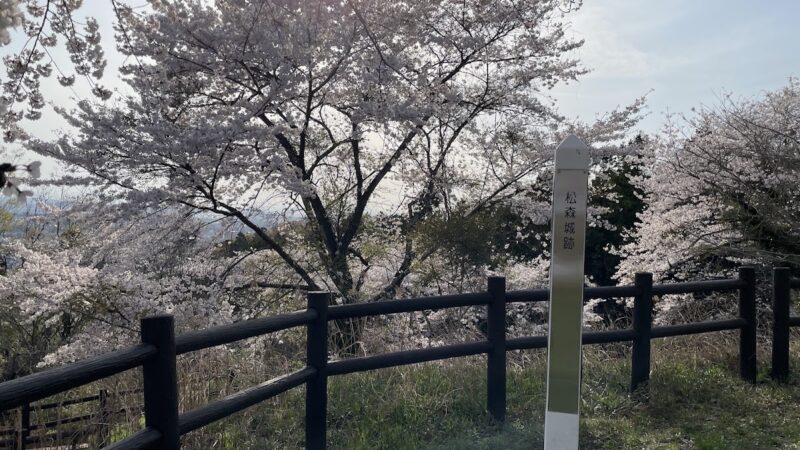
Fudōdō Castle ruins are open year-round, but the scenery is particularly beautiful during the cherry blossom season in spring and the autumn foliage season. Because it is maintained as Tsurugashira Park, you can enjoy the historical site while experiencing the changing seasons.
In summer, the vegetation is lush, so spring and autumn are more suitable for observing the details of the remains. While there may be snow in winter, the fallen leaves allow for a clearer observation of the terrain’s undulations.
Precautions During Visits
When visiting the historical site, please be careful not to damage the remains. Avoid entering or excavating the remains such as moats and earthworks. Also, please take all your trash with you and cooperate in preserving the environment of the historical site.
Photography is permitted, but please be considerate and do not trespass on private property. Since this is also a living space for local residents, please be mindful of quiet during your visit.
Nearby Tourist Attractions
In addition to visiting Fudōdō Castle, we recommend exploring other historical sites and tourist facilities in Misato Town. Around Kogota Station, you’ll find shopping streets and restaurants where you can enjoy the local food culture.
Nearby in Wakuya Town is the Wakuya Castle Ruins (Shiroyama Park), a nationally designated historical site, where the remains of a castle from the medieval to early modern period are well-preserved. Furthermore, the Tajiri area has hot spring facilities where you can relax after exploring the historical sites.
Summary: The Local History Told by Fudōdō Castle
Fudōdō Castle is a valuable historical site that tells the history of Tōda District, Miyagi Prefecture, from the medieval period to the present day. This castle, also known as Tsurugashira Castle, Nishikan, and Tsurukan, was built on a plateau on the left bank of the Naruse River, and remains such as moats and wells still exist today.
The administrative changes of the Fudōdō area—from Fudōdō Village during the Edo period, to village status in 1889, town status in 1950, merger with Kogota Town in 1954, and finally becoming part of Misato Town in 2006—reflect the very history of local self-government in Japan.
Currently, Fudōdō Castle, whose main enclosure has been developed into Tsurugashira Park and serves as a place of relaxation for local residents, is a fine example of how historical value and modern use can be harmonized. Along with the Tsurugashirayama Kofun (ancient burial mound) and Shinmei Shrine, its value as a place where one can experience the region’s history from ancient times through the Middle Ages, early modern period, modern era, and contemporary period will only increase in the future.
When visiting Misato Town, be sure to visit the Fudōdō Castle ruins and reflect on the rich history etched into this land as you explore the remains. The tranquil surface of the moat, the Shinmei Shrine standing atop the burial mound, and the view of the Naruse River stretching out below will surely speak to us across centuries of time.
--765x450.png)