Complete Guide to Iji Castle Ruins (Kurihara City, Miyagi Prefecture) | Nara Period Fortification Site and the Iji-no-Kimi-no-Sato Maro Rebellion
Iji Castle (also known as Korehari Castle) is a Nara period fortification site located in Tsukidate-jo Ikuno, Kurihara City, Miyagi Prefecture. Established in 767 AD by the Ritsuryo government, it functioned as an important base for the administration of ancient Mutsu Province. Designated a national historic site in 2003, this castle site is attracting attention as a valuable historical heritage site that tells the story of the Yamato court’s policies towards the Emishi people in the ancient Tohoku region.
Overview of Iji Castle
The Iji Castle ruins are located on a river terrace between the Hazama River (Ichihasama River) and Nihasama River, at the foot of the Tsukidate Hills, which branch eastward from the Ou Mountains. This location was militarily and strategically advantageous, suggesting that it was a point of importance to the Ritsuryo government in its administration of the Tohoku region.
Basic Information
- Location: Tsukidate-jono, Kurihara City, Miyagi Prefecture
- Year of Construction: 767 AD (Jingo-Keiun 1)
- Year of Abandonment: Estimated to be around the beginning of the 9th century
- Castle Structure: Ancient castle fortification (government office/outer enclosure type)
- Size: Approximately 900m north-south, approximately 700m east-west
- Historic Site Designation: National Historic Site (Designated August 27, 2003, additional designation July 14, 2005)
Iji Castle is located approximately 50km north of the provincial capital Tagajo (Tagajo City, Miyagi Prefecture) and midway between it and Izawa Castle (Oshu City, Iwate Prefecture), where the Chinju-fu (military headquarters) was later established. Therefore, from the late 8th to the early 9th century, it played an extremely important role as a frontline base in the northern administration of the Ritsuryo government.
Historical Background of Iji Castle
Northern Frontier Defense of Ancient Mutsu Province
During the late Nara period, the Ritsuryo government actively pursued a policy of fortifications to bring the Emishi people of the Tohoku region under its control. Iji Castle was established in 767 as part of this policy. According to the *Shoku Nihongi*, this castle was built within Iji County in Mutsu Province and also functioned as a base for accepting immigrants from Bando (Kanto region).
Located at the northernmost limit of the Ritsuryo government’s territory at the time, Iji Castle played a politically and militarily important role as a frontline base for pacifying the Emishi. It is believed that soldiers and officials were stationed at the castle, responsible for governing and defending the surrounding area.
The Iji no Kimi no Azamaro Rebellion
The most important event in the history of Iji Castle is the “Iji no Kimi no Azamaro Rebellion,” which occurred in 780. This rebellion is known as one of the largest Emishi rebellions in the history of ancient Tohoku.
Iji no Kimi Tomaro was originally a powerful Emishi figure who was subservient to the imperial court, and as the Azechi (inspector) of Iji Castle, he was on the side of the court. However, in March of the 11th year of the Hōki era (879), Tomaro suddenly revolted and attacked Iji Castle. He killed Azechi Ki no Hirozumi and others, and burned down the castle.
The background to this rebellion is believed to be the harsh rule and discriminatory treatment of the Emishi by the Ritsuryo government. Tomaro’s rebellion spread to Taga Castle, which also temporarily fell, dealing a major blow to the Ritsuryo government’s administration of Tohoku.
Iji Castle after the Rebellion
Regarding how Iji Castle was rebuilt and used after Iji no Kimi Tomaro’s rebellion, historical records are limited and unclear. Excavation results suggest that the castle may have been used in some form for a certain period after the rebellion. However, after the construction of Izawa Castle in 802 AD, the importance of Iji Castle declined as the northern base shifted to Izawa Castle, and it is believed to have been abandoned around the beginning of the 9th century.
Structure and Remains of Iji Castle
Basic Structure of the Castle
Iji Castle has a typical ancient castle structure with a government office and outer enclosure. The government office was located in the center of the castle, surrounded by an outer enclosure. This structure is also common in other ancient castles such as Taga Castle and Izawa Castle.
Government Office (Inner Enclosure)
Located in the center of the castle, the government office was the central facility for conducting politics and ceremonies. Excavation has confirmed multiple post-and-beam building remains, revealing the layout of the main hall and side halls. It is presumed that the government office was partitioned by earthen walls and timber fences.
The administrative center is estimated to have measured approximately 120m east-west and 150m north-south, with buildings for ceremonies and administrative duties systematically arranged within its walls. The presence of postholes and post marks in the buildings reveals the advanced architectural techniques of the time.
Outer Enclosure
The outer enclosure surrounding the administrative center consisted of earthen ramparts and a large moat. The outer enclosure extended approximately 900m north-south and 700m east-west, indicating a considerably large area designated as part of the castle grounds.
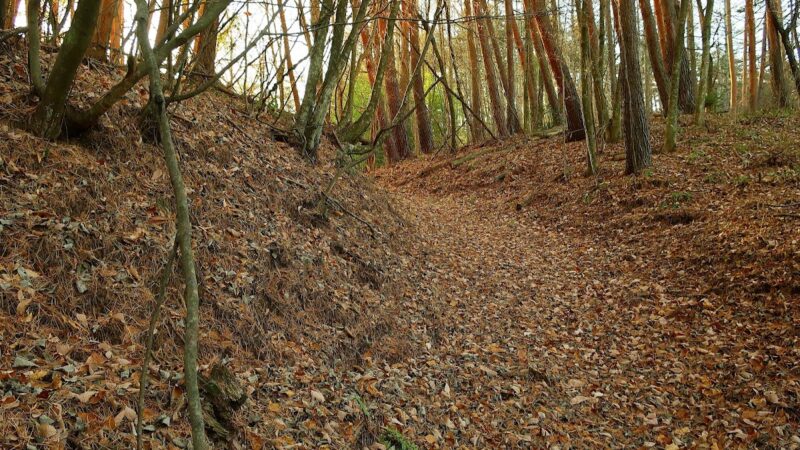
Parts of the earthen ramparts still remain today, particularly the raised section on the northern side of the outer enclosure. The large moat, approximately 3-5m wide and 2m deep, served as a defensive structure.
A gate was located within the outer enclosure, and the remains of the southern gate have been confirmed through archaeological excavations. The gate is estimated to have been an eight-legged gate, and it was an important facility for controlling entry and exit to the castle.
Archaeological Remains Revealed by Excavations
Multiple archaeological excavations have been conducted at the Iji Castle site, and numerous remains have been identified.
Pit Dwelling Sites
Numerous pit dwelling sites have been discovered outside the outer bailey and along its edges. These are believed to have been barracks for soldiers stationed at the castle, and dozens of pit dwellings have been identified. Pottery such as Sue ware and Haji ware, as well as iron artifacts, have been unearthed from the dwelling sites, providing valuable information about the lifestyle of the time.
Post-Fired Building Sites
Numerous post-fired building sites have been confirmed inside the government office and government district. Based on the size and layout of the buildings, their uses, such as main halls, side halls, and warehouses, are estimated. Research is underway to reconstruct the structure and size of the buildings based on the digging of the post holes and traces of the post materials.
Pit and Ditch-like Remains
Pit and ditch-like remains have been confirmed in various locations within the castle grounds. These are thought to have been used as pits for disposing of waste or as ditches to demarcate areas.
Leveling Layer
In the government and administrative districts, a leveling layer has been identified, indicating that the ground was leveled before construction. Artifacts that provide clues to determining the construction period have been unearthed from this layer.
Excavated Artifacts
A diverse range of artifacts from the Nara and Heian periods have been unearthed from the Iji Castle ruins.
Pottery
A large quantity of Sue ware and Haji ware has been unearthed. The Sue ware, in particular, is often intricately crafted using a potter’s wheel, and traces of spatula cutting can be seen on the bottom. These pottery pieces are thought to have been used in daily life and ceremonies within the castle.
Inkstone (Round-faced Inkstone)
Round-faced inkstones have been unearthed around the government office, providing important evidence that documentary administration was conducted within the castle. This indicates that, as a regional base of the Ritsuryo government, governance was carried out through documents.
Iron Artifacts
Iron artifacts such as arrowheads, knives, and nails have been unearthed. These were used as weapons and tools.
Other Artifacts
Roof tiles, charred materials, and animal bones have also been unearthed, providing clues to the architectural techniques and dietary habits of the time.
Highlights of Iji Castle Ruins
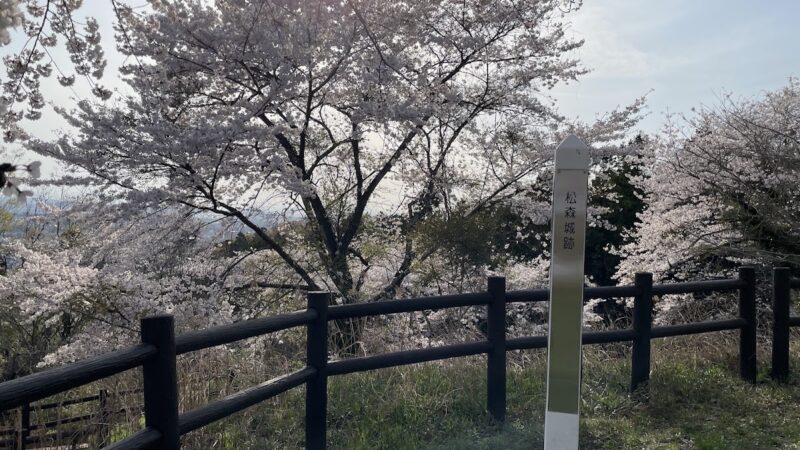
The current Iji Castle ruins are maintained as a historical park, allowing visitors to experience the atmosphere of the ancient castle.
Government Office Ruins
Located in the center of the castle, the government office ruins are the most important highlight of Iji Castle. Based on archaeological excavations, the locations of the buildings are marked, allowing visitors to understand the scale and layout of the government office at the time. Standing at the government office ruins, one can imagine that politics and ceremonies were held here more than 1200 years ago.
Earthworks and Moat
The earthworks that formed the outer fortifications still remain, mainly on the north side. The rise of the earthworks, several meters high, gives a real sense of the scale of the defensive facilities at the time. Furthermore, the remains of a large ditch dug along the earthworks can also be confirmed, making it a valuable historical site for understanding the structure of ancient castle fortifications.
Information Boards and Guide Boards
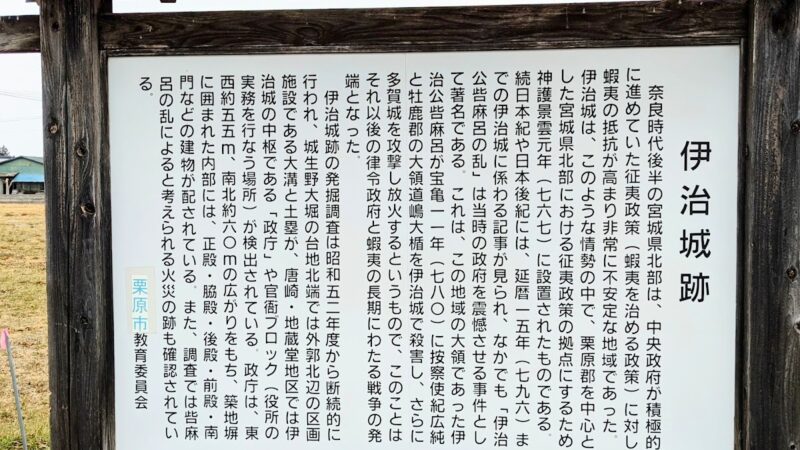
Within the historical site, there are guide boards explaining the history and structure of Iji Castle. By reading these boards, you can learn more about the castle’s historical background and the results of the archaeological excavations.
Surrounding Landscape
From the Iji Castle ruins, you can see the river terrace topography formed by the Hazama River and Nisako River. You can understand how this natural terrain was utilized for the castle’s defense. On a clear day, you can also see the Ou Mountains in the distance, allowing you to experience the scenery that ancient people must have seen.
Relationship between Kurihara City and Iji Castle
Origin of the Place Name
The current place name of Kurihara City originates from the ancient “Kurihara County.” Kurihara County refers to a wide area including Iji County, and it was called Iji County at the time Iji Castle was established. Later, due to the consolidation of counties, it became Kurihara County, and this place name has been passed down to the present day.
The existence of Iji Castle occupies an extremely important position in the history of Kurihara City. Iji Castle was the catalyst for this region’s emergence on the historical stage as a base for the administration of ancient Tohoku.
Related Historical Sites
Besides the Iji Castle ruins, several other ancient historical sites remain within Kurihara City.
Kurihara Temple Ruins
Near Iji Castle, the ruins of the ancient temple Kurihara Temple have been confirmed. Kurihara Temple is thought to have been associated with Iji Castle, demonstrating the ancient regional control system where the castle and temple were integrated.
Tsukidate Hachiman Shrine
The Hachiman Shrine in the Tsukidate area is also known as a shrine with a long history dating back to ancient times. While a direct connection to Iji Castle is not clear, it played an important role as a center of faith in this region.
Harada Ruins
Several archaeological sites, including the Harada Ruins, have been confirmed around Iji Castle, indicating that this region was developed over a wide area in ancient times. ## Access and Tourist Information
Access Methods
Access by Car
- Approximately 5 minutes from the Tohoku Expressway “Tsukidate IC”
- Accessible via National Route 4 and a prefectural road
- Parking available (free)
Access by Public Transportation
- Approximately 15 minutes by taxi from JR Tohoku Shinkansen “Kurikoma Kogen Station”
- Approximately 10 minutes by taxi from JR Tohoku Main Line “Nitta Station”
- Bus services are limited, so please check in advance.
Visiting Information
- Visiting Hours: Free (as it is an outdoor historical site)
- Admission Fee: Free
- Estimated Visiting Time: Approximately 30 minutes to 1 hour
- Facilities: Parking, information boards, explanatory signs
Points to Note When Visiting
Iji Castle Ruins is an outdoor historical park, so it is affected by the weather. Visiting on a sunny day is recommended. Wearing comfortable walking shoes is recommended. Also, don’t forget insect repellent in the summer and warm clothing in the winter.
Detailed information boards are installed within the historical site, but learning about the history and structure of Iji Castle beforehand will allow for a deeper understanding.
Nearby Tourist Attractions
Kurihara City Historical Museum
The Kurihara City Historical Museum displays materials and excavated artifacts related to Iji Castle. Visiting before or after visiting the Iji Castle ruins will provide a deeper understanding.
Kurihara Rural Railway Park
This park preserves the vehicles and facilities of the former Kurihara Rural Railway, which is now defunct. A must-see spot for railway enthusiasts.
Izunuma and Uchinuma
Izunuma and Uchinuma, a Ramsar Convention-registered wetland, are famous as a stopover point for migratory birds. The arrival of Greater White-fronted Geese in winter is particularly spectacular.
Current Status and Challenges of Iji Castle Research
Research Progress
Regarding the Iji Castle site, full-scale excavation began in the 1970s, and a great deal of research has been accumulated to date. The overall picture of the castle, including the structure of the administrative center, the extent of the outer fortifications, and the distribution of pit dwellings, is gradually becoming clearer.
In recent years, detailed analysis of excavated artifacts and comparative studies with other ancient castles and fortifications have been conducted. In particular, the relationship with Taga Castle and Izawa Castle, and the elucidation of the true nature of the Iji-no-Kimi-Satomaru Rebellion, are the focus of research.
Future Challenges
Many unresolved issues remain in the study of Iji Castle.
- Determining the precise construction and abandonment dates of the castle
- Detailed history and impact of the Iji-no-Kimi-Satomaru Rebellion
- Castle usage after the rebellion
- Relationship with surrounding settlements
- Connection with Kurihara Temple
Continued excavation and research are necessary to address these challenges.
Preservation and Utilization
The Iji Castle Ruins, designated as a National Historic Site, require appropriate preservation and utilization. Kurihara City has formulated a preservation and management plan for the historical site, and is proceeding with its development while balancing the protection of the remains with public access and utilization.
In the future, efforts are expected to convey the value of Iji Castle to a wider audience through the creation of reconstructed CG using digital technology and experiential exhibitions using VR/AR.
Summary
The Iji Castle Ruins occupy an important position in ancient Japanese history as a base for the Ritsuryo government in the administration of ancient Tohoku, and as the stage for the historical event of the Iji-no-Kimi-Satomaru Rebellion. This site, remaining in Kurihara City, Miyagi Prefecture, is a valuable cultural heritage that conveys history from over 1200 years ago to the present day, and is indispensable for understanding the history of the ancient Tohoku region.
With its location on a river terrace, defensive facilities such as earthworks and large ditches, and a planned layout centered on the government office, the Iji Castle Ruins retain many of the characteristics of ancient castles and fortifications, allowing visitors to feel the spirit of antiquity. When you visit Kurihara City, be sure to stop by this historical site and reflect on the history of ancient Tohoku. Standing in the quiet historical park and imagining the drama of history that unfolded here 1200 years ago, you’ll feel closer to the ancient history of Japan.