Complete Guide to Fukuchi Castle (Iga City, Mie Prefecture) | History, Structure, and Highlights Explained in Detail
What is Fukuchi Castle?
Fukuchi Castle is a medieval castle located in Tsuge-cho, Iga City, Mie Prefecture. Also known as “Fukuchi Castle,” it was the residence of the Fukuchi clan, a prominent local power in the Iga region, and a crucial base in Iga during the Sengoku period (Warring States period).
Currently, it is maintained as “Basho Park” and designated as a prefectural historical site. It has a distinctive structure divided into a hilltop and a base, and the remains of stone walls, earthworks, and dry moats are well-preserved.
Location and Characteristics of Fukuchi Castle
Fukuchi Castle was built on a hill in the Tsuge area, in the northeastern part of Iga. This location was a key transportation hub connecting the Tokaido road and Iga, occupying a strategically important position both militarily and economically.
The castle exhibits a typical medieval castle structure, consisting of two parts: a “Tsumejiro” (fortified residence) on the hilltop and a “Residence” at the foot of the hill. In peacetime, the lords lived in the Residence at the foot of the hill, and in wartime, they would take refuge in the Tsumejiro on the mountaintop.
History of Fukuchi Castle
Origins and Development of the Fukuchi Clan
The Fukuchi clan were local lords claiming descent from Taira no Kiyomori, and held power in the Tsuge region from the Nanboku-cho period (Northern and Southern Courts period). They were one of the “Tsuge Sanpo” (three powerful local families) in Iga Province, and ruled the Tsuge region along with the Hioki and Kitamura clans.
The exact construction date of Fukuchi Castle is uncertain, but it is said to have been built by Fukuchi Iyo-no-kami during the Nanboku-cho period. The Fukuchi clan is said to have traced its ancestry to Taira no Munekiyo and ruled this land for generations.
The Tensho Iga Rebellion and Fukuchi Munetaka
The most important event in the history of Fukuchi Castle is the “Second Tensho Iga Rebellion,” which occurred in 1581 (Tensho 9).
The castle lord at the time, Fukuchi Munetaka (Fukuchi Iyo-no-kami), unlike other local lords of Iga, chose to side with Oda Nobunaga. Munetaka played a crucial role in the Oda army’s invasion of Iga, serving as a guide at the Tsuge entrance.
According to the “Isuionko,” the Fukuchi clan was the foremost “Fukujin” (lucky person) in the province, having “rebelled” against Iga Province and sided with Oda Nobunaga. This decision allowed the Fukuchi clan to preserve their territory even after the Iga Rebellion.
Fukuchi Castle under the Oda Regime
After the Second Tensho Iga Rebellion, Oda Nobunaga’s retainer, Fuwa Hikozo, was stationed at Fukuchi Castle. This indicates that the Fukuchi clan maintained a certain status under the Oda regime.
However, after the death of Oda Nobunaga and through the era of Toyotomi Hideyoshi, the power of the Fukuchi clan is believed to have gradually declined. During the Edo period, it lost its function as a castle and was abandoned.
Structure
The structure of Fukuchi Castle is noteworthy as a valuable historical site that strongly retains the characteristics of medieval castles.
Castle Layout Consisting of Two Enclosures
Fukuchi Castle is broadly composed of two areas: the “Tsume-jo” (main castle) at the top of the hill and the “Residence” at the foot of the hill.
Tsume-jo (Mountaintop) is located on the top of a hill approximately 250 meters above sea level and functioned as the final defensive base during wartime. Its layout takes advantage of the steep terrain, and various features are visible to make enemy intrusion difficult.
Residence (Foot of the Hill) is the base used for daily life during peacetime. Defensive facilities, including the main gate, are concentrated here, and impressive structures demonstrating the authority of the castle lord were located here.
Stone Walls and Earthworks of the Main Gate Site
The most impressive remains of Fukuchi Castle are the stone walls and earthworks remaining at the site of the main gate.
The main gate was constructed using stone walls, and the existence of gate doors has been confirmed from the remains of the foundation stones. These stone walls are relatively rare for medieval castles in the Iga region, demonstrating the high economic power and technical skill of the Fukuchi clan.
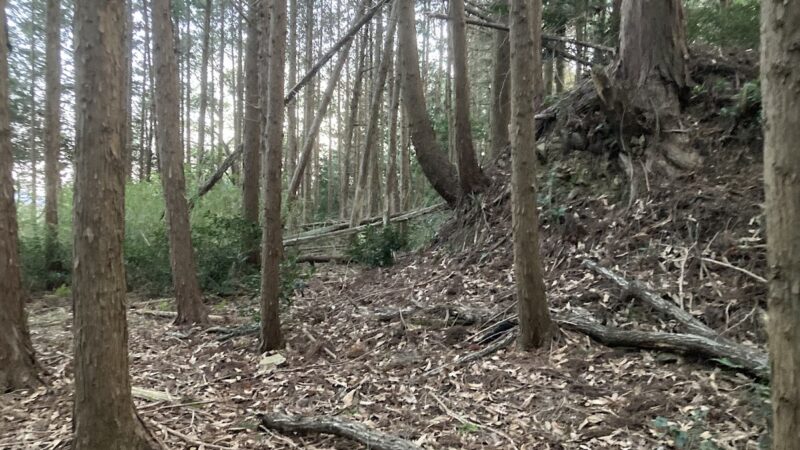
On both sides of the main gate are massive earthworks ranging from 3.5 to 4.8 meters in height. These earthworks are presumed to have been the foundations of watchtowers, and were important defensive structures protecting the main gate. Even today, their height and scale are impressive, leaving a strong impression on visitors.
Main Enclosure and Entrance
The main enclosure (shukaku) is the central part of the castle, where the lord’s residence and important facilities were located. The main enclosure of Fukuchi Castle is located on the top of a hill and is surrounded by earthworks and a dry moat.
The main enclosure’s entrance (koguchi) still retains stone walls, demonstrating ingenuity in enhancing its defensive capabilities. The entrance was the most crucial defensive point for preventing enemy intrusion, and it was reinforced by the stone walls.
Network of Dry Moats and Earthworks
Fukuchi Castle features multiple dry moats and earthworks arranged both horizontally and vertically. These restricted enemy movement and allowed each enclosure within the castle to function as an independent defensive unit.
Some dry moats are several meters deep, and combined with the earthworks, they achieved a high level of defense. Even today, it’s possible to walk along the bottom of some moats, allowing visitors to experience the defensive system of the time.
Well Remains and Living Structures
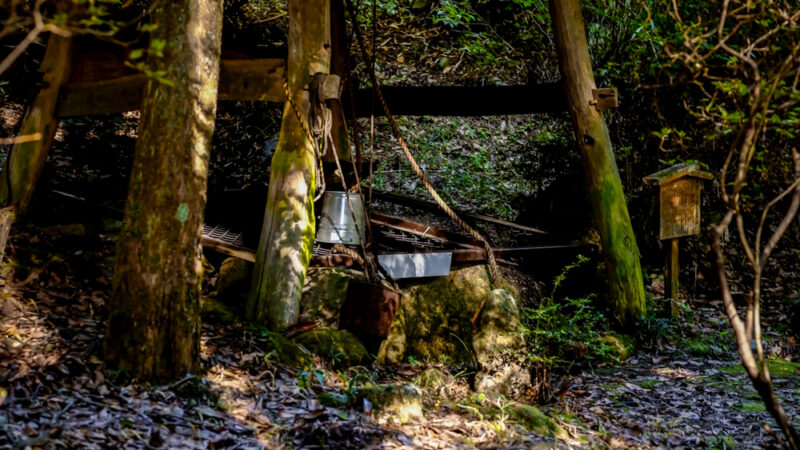
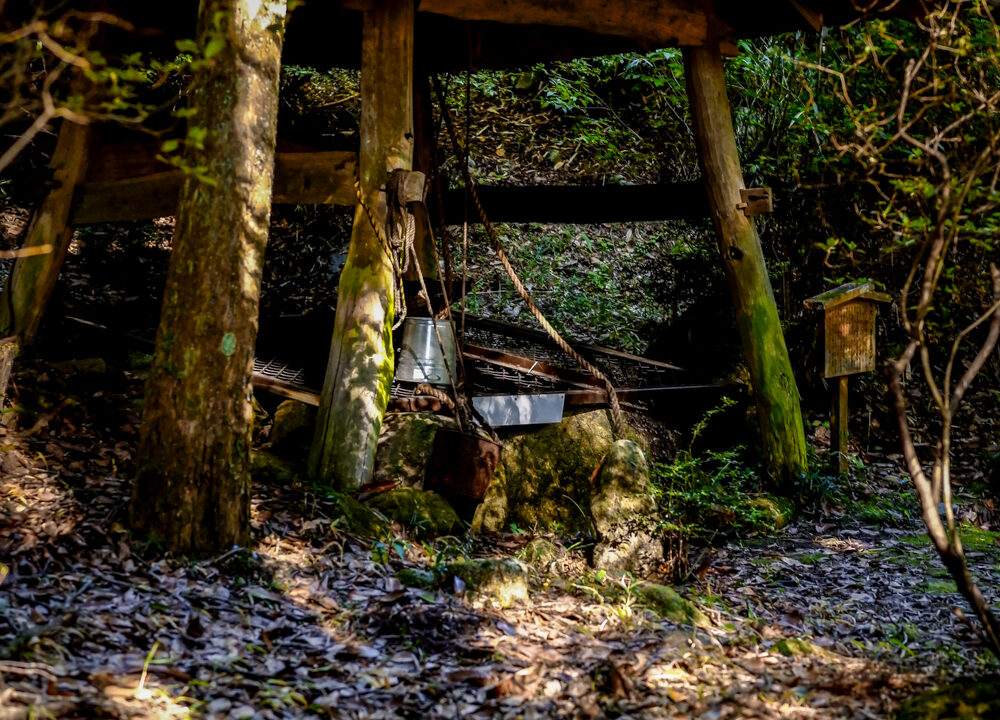
Well remains have also been found within the castle grounds, indicating that water supply was considered during sieges. Furthermore, building remains such as foundation stones and post holes have been discovered in the residential area, providing clues to the daily lives of the castle lord and his retainers.
About the Lord of the Castle, the Fukuchi Clan
Genealogy of the Fukuchi Clan
The Fukuchi clan claimed descent from Taira no Kiyomori, tracing their ancestry back to Taira no Munekiyo. They settled in the Tsuge region during the Nanboku-cho period and grew into a powerful local lord.
The Fukuchi clan was one of the three major powers in the Tsuge region, known as the “Tsuge Sanpo,” and, along with the Hioki and Kitamura clans, controlled the northeastern part of Iga. These local lords, while cooperating with each other, sometimes clashed, forming a complex power dynamic.
Successive Lords of the Castle
Fukuchi Iyo-no-kami (Nanboku-cho period) is said to have built Fukuchi Castle. During the turbulent Nanboku-cho period, he solidified his power base in the Iga region.
Fukuchi Munetaka (Sengoku period) is known as the castle lord who sided with Oda Nobunaga during the Tensho Iga Rebellion. His decisions greatly influenced the fate of the Fukuchi clan. Munetaka served as a guide during the Oda army’s invasion of Tsuge Pass, contributing to the conquest of Iga.
This choice allowed the Fukuchi clan to retain their territory after the Iga Rebellion, but at the same time, they were viewed as traitors by other local lords in Iga.
The Fukuchi Clan and its Retainers
The Fukuchi clan possessed several branch castles in the Tsuge region, establishing a system of family control over the area. Their retainers included local gentry and samurai of farming origin, a semi-agricultural, semi-military group that engaged in agriculture in peacetime and armed themselves in wartime.
Excavated Artifacts and Archaeological Findings
Various artifacts have been unearthed from Fukuchi Castle during previous excavations.
Ceramics
Numerous fragments of ceramics from the 15th and 16th centuries have been unearthed from the residential area. This includes bowls and plates from the Seto and Mino wares, as well as Chinese celadon and white porcelain, demonstrating the economic power and extensive trading network of the Fukuchi clan.
The discovery of high-quality Chinese ceramics, in particular, suggests that the Fukuchi clan was not merely a local powerful family, but possessed the economic power to participate in wide-area trade.
Weapons and Armor
Iron arrowheads and parts of sword fittings have been discovered at the castle ruins. These are practical weapons from the Sengoku period, indicating that Fukuchi Castle actually functioned as a military base.
Building Materials
Foundation stones and roof tile fragments have also been unearthed, providing clues to reconstructing the building’s structure. Especially around the main gate, the foundation stones that supported the gate’s pillars remain in good condition, allowing us to understand the gate’s size and structure.
Highlights of Fukuchi Castle
Massive Earthworks
When visiting Fukuchi Castle, first pay attention to the massive earthworks towering on either side of the main gate ruins. This earthen rampart, ranging in height from 3.5 to 4.8 meters, is a valuable historical structure that conveys the grandeur of a medieval castle to the present day.
You can climb to the top of the rampart, and the view from there allows you to experience the perspective of the castle’s soldiers. The scale of the rampart gives a real sense of the immense effort and resources the Fukuchi clan invested in this castle.
Stone Wall Remains
Rarely found in medieval castles of the Iga region, stone walls remain at the site of the main gate and the main enclosure’s entrance. These stone walls were built using the nozurazumi technique, a simple yet powerful impression created by stacking natural stones as they are.
The existence of these stone walls indicates that the Fukuchi clan were not merely local lords, but possessed advanced castle-building techniques.
Dry Moats and Layout
As you tour the castle grounds, you will notice multiple dry moats running crisscross. These moats are deep and steep, designed to effectively prevent enemy intrusion.
Dry Moats and Layout
Walking along the dry moat, imagining the battles fought there, you can truly feel the harshness of medieval warfare. The height of the earthen ramparts, viewed from the bottom of the moat, is breathtaking.
View from the Main Enclosure
From the main enclosure at the top of the hill, you can enjoy a panoramic view of the town of Tsuge and the surrounding mountains. This view makes you realize that Fukuchi Castle was strategically located overlooking a vital transportation hub.
On a clear day, you can see the vast expanse of the Iga Basin, helping you understand why this area was so important.
Development as Basho Park
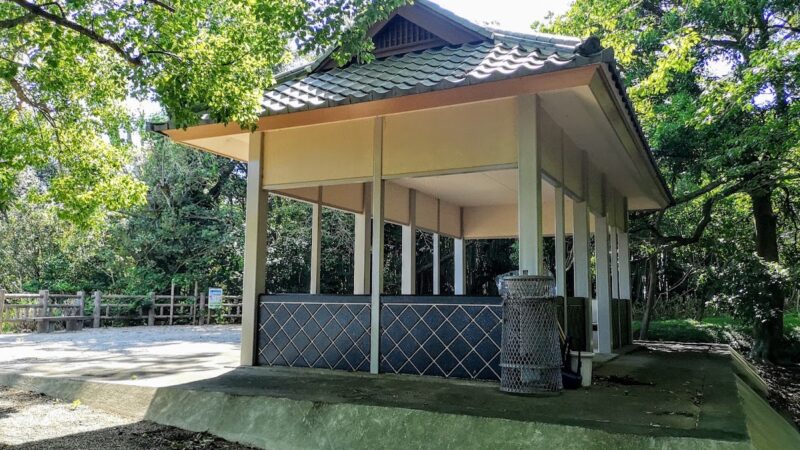
The Fukuchi Castle ruins have now been developed as “Basho Park,” a place of relaxation for citizens. Named after Iga, the birthplace of the haiku master Matsuo Basho, this park allows visitors to enjoy both exploring the castle ruins and observing nature.
Information boards are installed within the park, allowing you to learn about the castle’s history and structure. With well-maintained walking paths, you can safely explore the castle ruins.
In spring, cherry blossoms bloom, and in autumn, the autumn leaves are beautiful, making it a popular spot to enjoy the scenery of each season. It’s a valuable cultural asset of Iga City, where you can enjoy both historical and nature walks simultaneously.
Access and Visiting Information
Location
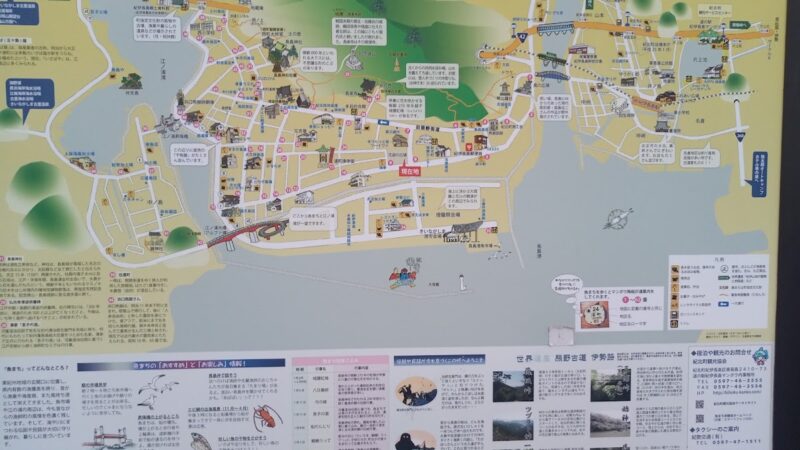
519-1402 Tsuge-cho, Iga City, Mie Prefecture (within Basho Park)
Transportation Access
By Train
- Approximately 15 minutes on foot from JR Kansai Main Line “Tsuge Station”
- Proceed northeast from the station and follow the signs to arrive.
By Car
- Approximately 10 minutes from Meihan National Highway “Mibuno IC”
- Approximately 15 minutes from Shin-Meishin Expressway “Konan IC”
- Parking available (use Basho Park parking lot)
Visiting Information
- Free to visit (open as a park)
- Admission Fee: Free
- Visiting Hours: Daytime is recommended (due to lack of lighting at night)
- Estimated Time Required: Approximately 30 minutes to 1 hour
Visiting Precautions
- As it is a mountain castle, comfortable walking shoes are recommended.
- Insect repellent spray is useful during the summer.
- Be careful as the ground can become slippery after rain.
- Please be careful not to damage the earthworks or stone walls to protect the historical remains.
Nearby Attractions
Other Castles in Iga City
If you visit Fukuchi Castle, we recommend visiting other castles in Iga City.
Iga Ueno Castle is a modern castle built by Todo Takatora and is known for its exceptionally high stone walls. It showcases modern castle construction techniques, contrasting sharply with medieval castles like Fukuchi Castle.
Maruyama Castle was the residence of the Niki clan, a local lord of Iga, and is a medieval castle from the same period as Fukuchi Castle. Visiting them side-by-side will give you a better understanding of the characteristics of Iga castles.
Historical Spots in the Tsuge Area
Tsuge flourished as a transportation hub connecting the Tokaido road and Iga. The area retains the atmosphere of old highways, and is dotted with historical temples and shrines. A stroll through the site of the former Tsuge-juku post town allows you to feel its history as a post town.
Iga Ninja-Related Facilities
Iga City is also famous as a ninja village. At the Iga-ryu Ninja Museum, you can learn about the history and techniques of ninjas. The era of the Fukuchi clan overlapped with the era in which ninjas were active, allowing for a multifaceted understanding of Iga at that time.
Historical Significance of Fukuchi Castle
Fukuchi Castle is not merely the site of a local powerful family’s castle, but a historical site of significant importance in Japanese history.
Role in the Tensho Iga Rebellion
The Second Tensho Iga Rebellion was a battle in which Oda Nobunaga attempted to conquer Iga Province, and it was a turning point that led to the loss of Iga’s independence. Fukuchi Munetaka’s siding with the Oda clan in this battle greatly influenced the fate of Iga.
Fukuchi Castle served as a base for the Oda army’s invasion of Tsuge Pass and played a crucial role in the conquest of Iga Province. This historical fact is a valuable example illustrating the choices faced by local powerful families caught between larger forces.
Value in Medieval Castle Research
Fukuchi Castle is important in castle research as a well-preserved site of medieval castle structure. Typical features of medieval castles can be observed, such as the clear distinction between the fortified residence and the main castle, the combined use of stone walls and earthworks, and the complex network of dry moats.
In particular, castles in the Iga region underwent a unique development, and Fukuchi Castle is studied as a representative example.
Importance in Regional History
Fukuchi Castle is an indispensable site for understanding the medieval history of the Iga region. As the base of the Fukuchi clan, which occupied one corner of Tsuge, it was the political, economic, and military center of the region.
Given the good state of preservation of the castle ruins, future excavations may reveal even more historical facts.
Summary
Fukuchi Castle is a valuable medieval castle ruin located in Tsuge, Iga City, Mie Prefecture. As the residence of the Fukuchi clan, one of Iga’s leading powerful families, it played an important role from the Nanboku-cho period to the Sengoku period.
In particular, during the Tensho Iga Rebellion, the fact that the castle lord, Fukuchi Munetaka, sided with Oda Nobunaga and served as a guide for the Oda army marked a significant turning point in Iga’s history.
Currently, the castle ruins have been developed into Basho Park, where visitors can see the remains such as massive earthworks, stone walls, and dry moats. As a valuable place to experience the structure of a medieval castle, it is a recommended spot not only for castle enthusiasts but also for anyone interested in history.
When visiting Iga City, be sure to visit Fukuchi Castle and experience the history of Iga during the Sengoku period and the era in which local powerful families lived. The well-preserved remains convey to the present day the lives of the people of that time and the image of the Fukuchi clan who survived a turbulent era.