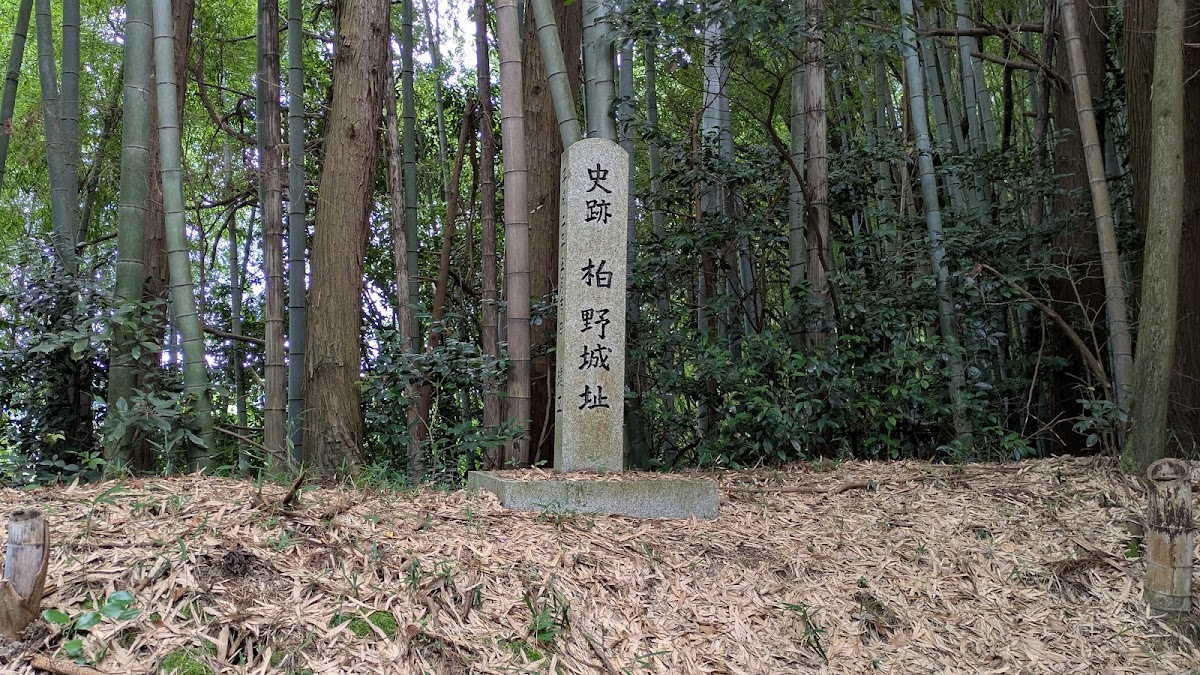
Kashiwano Castle (Iga City, Mie Prefecture): History and Highlights | A Thorough Explanation of Iga’s Mountain Castles
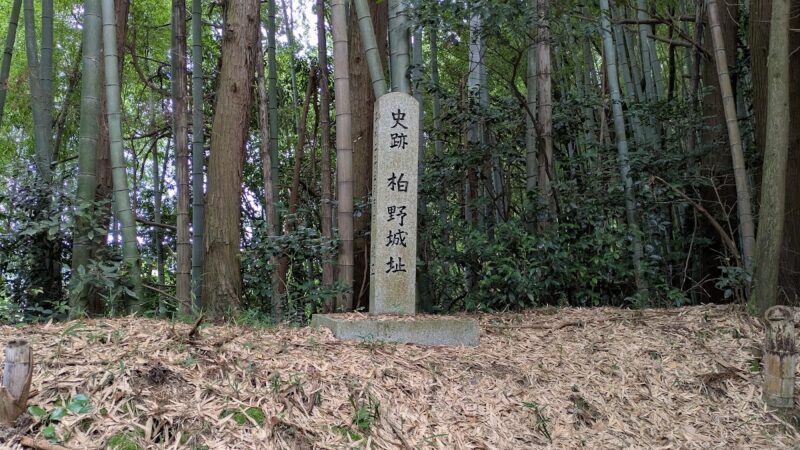
Kashiwano Castle, located in Iga City, Mie Prefecture, is a valuable mountain castle ruin that conveys the Sengoku period (Warring States period) of Iga Province. This article provides a detailed explanation of this little-known Iga castle, including its historical background, builder, remaining structures, and access methods.
Basic Information on Kashiwano Castle
Kashiwano Castle is a medieval mountain castle located in Kashiwano, Iga City, Mie Prefecture, built on a hill approximately 300 meters above sea level overlooking the Iga Basin. Currently, the castle ruins, including earthworks and baileys, remain and are popular with local history enthusiasts and castle fans.
Location and Geographical Characteristics
Location: Kashiwano, Iga City, Mie Prefecture
Castle Type: Mountain Castle
Elevation: Approximately 300 meters
Construction Period: Sengoku period (estimated 16th century)
Kashiwano Castle was built in the southwestern part of the Iga Basin, a terrain well-suited for monitoring surrounding transportation routes. Iga Province was a strategic point connecting Kyoto and Ise, and during the Sengoku period, it was the stage for the “Tensho Iga Rebellion” led by Oda Nobunaga.
History of Kashiwano Castle
Background of Construction and the Sengoku Period in Iga Province
During the Sengoku period, Iga Province was known as a region of “Sōkoku Ikki” (local uprisings) where centralized daimyo rule did not extend. A characteristic of this period was the governance of the province by local samurai and kokujin (local gentry) through councils, and the construction of numerous small castles and residences.
Kashiwano Castle is thought to be one of these castles built by local samurai of Iga Province. While there is little reliable historical evidence regarding the specific builder of the castle, local traditions suggest that the Kashiwano clan or a branch of their family may have been the castle’s lords.
The Tensho Iga Rebellion and Kashiwano Castle
In 1579 (Tensho 7) and 1581 (Tensho 9), Oda Nobunaga invaded Iga Province twice. This is known as the “Tensho Iga Rebellion.”
In the First Tensho Iga Rebellion, the Oda army, led by Oda Nobuo (Nobunaga’s second son), was defeated by fierce resistance from the Iga local lords. However, in the Second Tensho Iga Rebellion, Nobunaga himself led a large army and conquered Iga Province, resulting in the fall of many castles.
While the role Kashiwano Castle played in this conflict is unclear, it is highly likely that, like many other castles in Iga Province, it was abandoned around this time.
From the Edo Period Onward
After the Tensho Iga Rebellion, Iga Province came under the control of the Oda clan, then the Toyotomi clan, and finally the Tokugawa clan. During the Edo period, Todo Takatora ruled Iga and Ise, establishing Ueno Castle (Iga Ueno Castle) as his base.
During this period, small mountain castles like Kashiwano Castle lost their military value and were left abandoned. Since then, the castle site has become a forest, and remains so to this day.
Remains and Highlights of Kashiwano Castle
Existing Remains
The Kashiwano Castle site retains typical remains of a medieval mountain castle, as follows:
Enclosures (Kuruwa)
Multiple flat areas (enclosures) can be identified in the central part of the castle. The largest enclosure, considered to be the main enclosure, measures approximately 30 meters east-west and 20 meters north-south. Terraced terrain, thought to be the second and third enclosures, can be seen in the surrounding area.
Earthworks
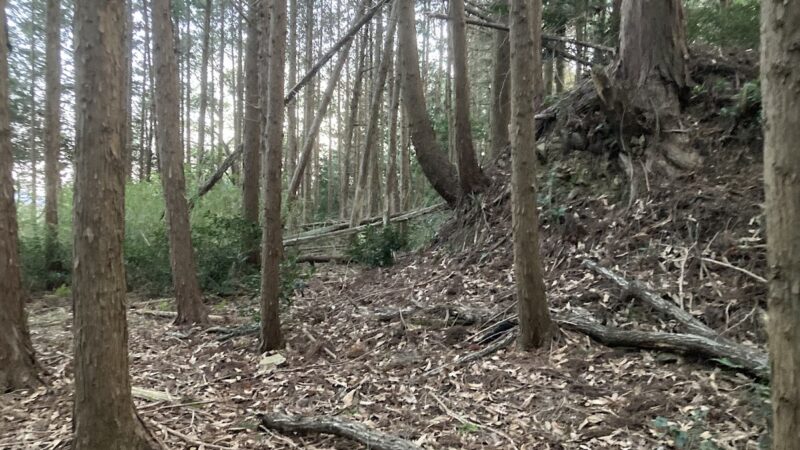
Partial traces of earthworks remain around the main enclosure. They are about 1-2 meters high and, although weathered, still convey a sense of the former defensive structure.
Moat
Behind the castle (continuing along the ridge), a terrain resembling a moat can be seen. This is an artificial cut in the ridge to prevent enemy intrusion, a defensive structure unique to mountain castles.
Vertical Moat
Traces of vertical moats can also be seen on the slope. These are trenches dug vertically along the slope, serving to hinder the lateral movement of enemies.
View from the Castle Ruins
From the Kashiwano Castle ruins, you can enjoy a panoramic view of the Iga Basin. On a clear day, you can see the surrounding mountains and settlements, giving a real sense of the castle’s strategic location for monitoring the surrounding area.
How to Access Kashiwano Castle
Access by Public Transportation
Nearest Station: Iga Railway “Ueno-shi Station” or JR Kansai Main Line “Iga-Ueno Station”
The castle is approximately 15-20 minutes by car from the station. Access by public transportation alone is difficult, so we recommend using a taxi or rental car.
Access by Car
Meihan Expressway: Approximately 15 minutes from “Ueno-Higashi IC” or “Nakase IC”
There is no dedicated parking lot near the castle ruins, but it is possible to park in a safe place on the roadside (please be considerate of local residents).
Ascent Route
There is no clearly defined hiking trail to the castle ruins, but you can ascend using a mountain path used by locals. Please note the following points:
- Estimated Time: Approximately 15-20 minutes on foot from the foot of the mountain to the main enclosure.
- Difficulty: Intermediate (some steep slopes)
- Equipment: Hiking boots, long-sleeved shirt and long pants, gloves recommended
- Season: Spring to autumn is the best time (snow may be present in winter)
Tourist Spots Around Kashiwano Castle
Iga Ueno Castle
A representative castle of Iga City, famous for its high stone walls built by Todo Takatora. Located about 20 minutes by car from Kashiwano Castle, it is the center of Iga tourism.
Location: 106 Ueno Marunouchi, Iga City, Mie Prefecture
Opening Hours: 9:00 AM – 5:00 PM (Last entry at 4:45 PM)
Admission Fee: Adults 600 yen, Children 300 yen
Iga-ryu Ninja Museum
A museum where you can learn about the history and techniques of Iga ninjas. The trick house demonstrations and ninja shows are popular.
Location: 117 Ueno Marunouchi, Iga City, Mie Prefecture
Opening Hours: 10:00 AM – 4:00 PM (Last entry)
Admission Fee: Adults 800 yen, Children 500 yen
Former Sugihirodo
This is the site of the Todo clan’s domain school and is designated as a national historical site. It conveys the appearance of an Edo period educational facility.
Location: 78-1 Ueno Marunouchi, Iga City, Mie Prefecture
Opening Hours: 9:00 AM – 4:30 PM
Admission Fee: Adults 200 yen, Children 100 yen
Recommendation for a Tour of Iga’s Mountain Castles
Besides Kashiwano Castle, numerous medieval mountain castle ruins remain around Iga City.
Major Mountain Castles of Iga
- Maruyama Castle: One of the strongholds of the Iga local lords
- Kiriyama Castle: The residence of the Tsuge clan
- Hōōji Castle: A castle that was the site of fierce battles during the Tenshō Iga Rebellion
- Hijiyama Castle: The castle of the Hattori clan, a powerful local lord of Iga Province
Visiting these castles will allow you to gain a deeper understanding of the Sengoku period in Iga Province.
Precautions for Visiting Mountain Castles
- Prior Research: Check the climbing route and local conditions in advance.
- Appropriate Equipment: Wear clothing and shoes suitable for mountain climbing.
- Avoid Solo Activities: Travel in groups whenever possible.
- Consideration for Landowners: Obtain permission if the land is privately owned.
- Nature Conservation: Do not damage the remains, and take your trash with you.
Historical Value of Kashiwano Castle
Castle Culture of the Local Lords of Iga Province
Kashiwano Castle holds historical significance as one of the castles built under the unique “Sōkoku Ikki” system of Iga Province. While it lacks the large stone walls and keeps of a daimyo’s castle, it preserves the practical mountain castle style built by local samurai to protect their territory.
Clues to Understanding Regional Communities in the Sengoku Period
During the Sengoku period, Iga Province formed a regional society relatively independent of central power. The construction of numerous small castles like Kashiwano Castle reflects the unique political and social structure of this region.
The local samurai decided on important matters through a council system and united to resist external enemies. This system continued until the invasion of Oda Nobunaga, and they achieved success in repelling the Oda army during the First Tensho Iga Rebellion.
Current Status and Challenges of Research
Regarding Kashiwano Castle, a full-scale academic investigation has not yet been conducted, and many aspects remain unknown, such as the construction date, the castle lord, and the castle’s structure. It is hoped that new facts will be revealed through future archaeological investigations and the excavation of ancient documents.
Points to Note When Visiting Kashiwano Castle
Best Season
Spring (March-May): Beautiful fresh greenery and mild weather
Autumn (October-November): Enjoyable autumn foliage and fewer insects
Summer (June-September): Overgrown vegetation may make it difficult to see the ruins
Winter (December-February): Possibility of snowfall; warm clothing is essential
Useful Items to Bring
- Hiking boots or non-slip shoes
- Gloves (for bushwhacking)
- Long-sleeved shirt and long pants (to prevent insect bites and injuries)
- Drinking water
- Map and compass (or smartphone with GPS)
- Camera (for recording the ruins)
- Measuring tape (if interested in measuring the ruins)
Estimated Time Required
- Castle visit only: Approximately 1 hour round trip
- Thorough visit: Approximately 1.5-2 hours
- Visiting surrounding castle ruins as well: Half a day to a full day
Summary
Kashiwano Castle in Iga City, Mie Prefecture, is a valuable mountain castle ruin that conveys the Sengoku period (Warring States period) of Iga Province. While it hasn’t been developed into a large-scale tourist attraction, this is precisely why it retains its original appearance so well.
For castle enthusiasts and history buffs, Kashiwano Castle is a valuable historical site for learning about the unique social structure of Iga Province and the regional history of the Sengoku period. Visiting it in conjunction with other famous tourist spots such as Iga Ueno Castle will allow you to gain a deeper understanding of Iga’s history.
When visiting, please take sufficient safety precautions and be mindful of protecting the ruins, while experiencing the spirit of the Iga people during the Sengoku period. The view of the Iga Basin from the Kashiwano Castle ruins will surely evoke a sense of historical romance, mirroring the landscape seen by the castle lords of that time.