Kayō Castle (Yokkaichi City, Mie Prefecture) Complete Guide | Thorough Explanation of History, Remains, and Access
What is Kayō Castle?
Kayō Castle (Kayō-jō) was a Sengoku period mountain castle located in Shiroyama, Kayō-chō, Yokkaichi City, Mie Prefecture. Built during the Bunji era (1186-1189) by the Kasukabe clan, known as one of the 48 families of Hokusei, it played an important role as a strategic point in northern Ise Province.
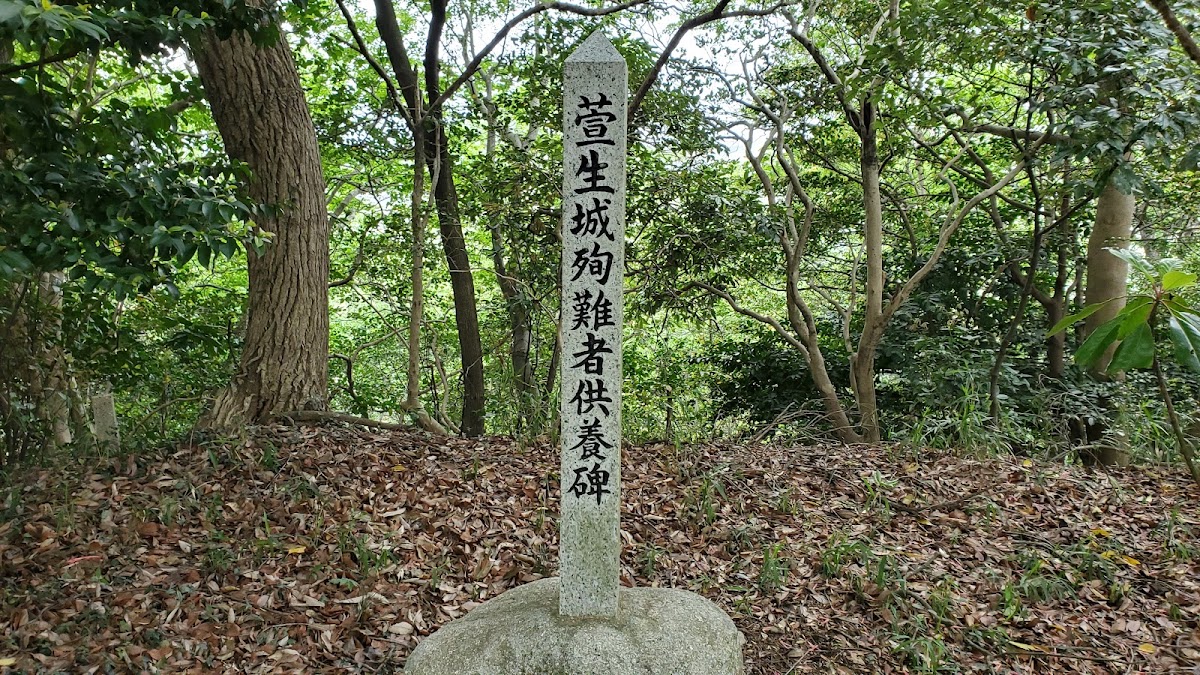
It was a flatland castle built on a hill approximately 55 meters above sea level. Currently, the site is occupied by the Akatsuki Gakuen school corporation, but valuable remains, including the “Hair-Growing Well,” still exist. During Oda Nobunaga’s invasion of Hokusei, it was the site of fierce battles and holds an important position in the history of medieval castles in Mie Prefecture.
History of Kayō Castle
Construction and the Rule of the Kasukabe Clan
The construction of Kayō Castle dates back to the Bunji era (1186-1189). The builder is believed to be Kasukabe Munekata of the Kasukabe clan, one of the 48 powerful families of Hokusei. The Kasukabe clan controlled the northern part of Ise Province, particularly the area of present-day Yokkaichi City, and maintained their power with Kayō Castle as their base.
The 48 powerful families of Hokusei are a collective term for local lords who ruled northern Ise Province (Hokusei) during the Sengoku period. These powerful families maintained their own territories while cooperating with each other, and maintained a certain degree of independence from the central daimyo power. The Kasukabe clan played a part in this, governing the region centered around Kayō Castle.
Oda Nobunaga’s Invasion of Northern Ise and the Battle for Kayō Castle
The most important turning point in the history of Kayō Castle was Oda Nobunaga’s invasion of Northern Ise, which began in 1568 (Eiroku 11). During this period, Oda Nobunaga had pacified Mino Province and was aiming to march on Kyoto with Ashikaga Yoshiaki. In the process, the conquest of northern Ise Province became necessary, and he began military operations against the 48 families of Northern Ise.
Takigawa Kazumasu played a central role in the Oda army’s invasion of Northern Ise. Takigawa Kazumasu was a powerful general under Nobunaga and would later be entrusted with the rule of Ise Province. Because Kayō Castle was strategically located, it offered fierce resistance to the Oda army’s attacks.
In the initial attack in 1568 (Eiroku 11), Kayō Castle did not fall. The castle’s geographical advantage and the Kasukabe clan’s defensive system proved successful. However, Oda Nobunaga’s expansion of power continued unabated, and pressure on the Hokusei region intensified year by year.
The Fall of Kayō Castle
There are several theories regarding the final fall of Kayō Castle. The most widely accepted theory is that it was captured and abandoned by the Oda army in 1573 (Tenshō 1). On the other hand, some theories suggest it fell sometime in the early 1570s, and the exact date remains uncertain due to limitations in historical records.
After its fall, Kayō Castle was abandoned, and the power of the Kasukabe clan declined. In the process of Oda Nobunaga’s unification of Ise Province, many of the 48 families of Hokusei were destroyed or forced into subjugation, drastically changing the regional power structure of the Sengoku period.
Structure and Layout of Kayō Castle
Location and Topographical Features
Kayau Castle is a flatland castle built on a hill approximately 55 meters above sea level. The elevation difference is approximately 7 meters, but a defensive system that skillfully utilized the surrounding terrain was in place. Located overlooking the Ise Plain, it functioned as a strategic base controlling a vital transportation hub.
As a mountain castle, Kayō Castle combined artificial defensive structures with the maximum utilization of the natural terrain. The arrangement of steep slopes and flat enclosures (kuruma) demonstrates numerous ingenious features designed to make enemy intrusion difficult.
Characteristics of the Remains
The following are some of the remains of Kayō Castle that can be confirmed today:
Earthworks
Traces of earthworks, which played an important role as a defensive structure of the castle, remain. Earthworks are earthen walls created by piling up soil, preventing enemy intrusion and enhancing defensive capabilities by allowing for the construction of fences and other structures on top.
Enclosures (Kuruwa)
Traces of multiple enclosures have been confirmed. Enclosures are flat, leveled areas used for building structures or as spaces for soldiers to be stationed. It is believed that Kaya Castle had multiple enclosures arranged in stages around the main enclosure.
Moat
Partial remains of the moat surrounding the castle still exist. Moats were important structures that made it difficult for enemies to approach and enhanced the castle’s defenses.
Well
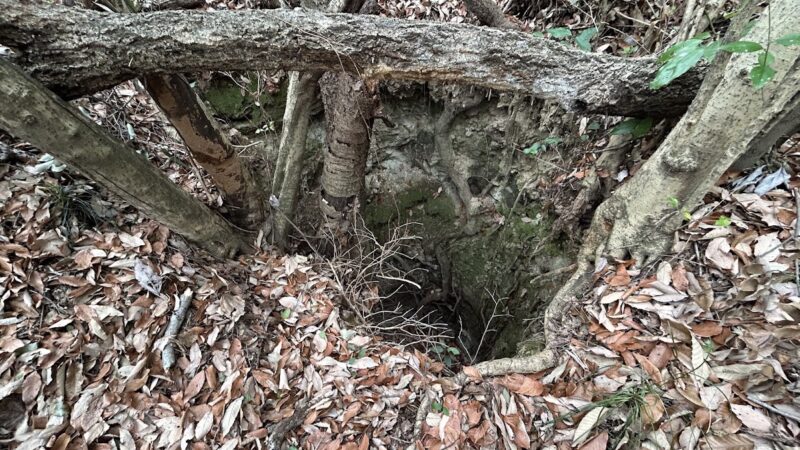
The most famous remains are the old well known as the “Hair-Growing Well.” This well, which will be discussed later, played an important role as a water source within the castle.
The Hair-Growing Well – A Legend of Kaya Castle
Origin and Legend of the Well
The most well-known remains of Kaya Castle are the “Hair-Growing Well.” A sad legend surrounds this well.
According to tradition, when Kaya Castle was attacked during Oda Nobunaga’s invasion of Hokusei, the lord’s daughter (or concubine) threw herself into this well, fearing she would fall into enemy hands. Afterward, it is said that the woman’s long hair began to float on the surface of the well’s water, and it came to be known as the “Hair-Growing Well.”
These legends are one of the many “tragic princess” stories found in castles of the Sengoku period. While historical verification is difficult, they have been preserved in local memory as folklore recounting the many tragedies that occurred during the fall of Kayō Castle.
Current Status of the Well
Currently, the Hair-Growing Well is preserved on the grounds of Akatsuki Gakuen. It retains the structure of an old well and is a valuable example of one of the few remaining structures of Kayō Castle. However, because it is located within school facilities, certain considerations are necessary when visiting.
Current Status of Kayō Castle Ruins
Akatsuki Gakuen and Preservation of the Castle Ruins
The Kayō Castle ruins are currently the site of the Akatsuki Gakuen school corporation’s headquarters, junior high school, and high school. Akatsuki Gakuen is one of Mie Prefecture’s leading private schools, encompassing everything from kindergarten to university.
Because the castle ruins were used as school facilities, large-scale development took place, and many of the remains were lost. However, some remains, including the Hair-Growing Well, have been preserved and are cherished as local historical heritage.
The school recognizes the historical value of the castle ruins, and explanatory signs have been installed on the grounds. However, it is important to understand that there are restrictions on general visits due to the school’s educational activities taking priority.
Regarding Visiting the Ruins
If you wish to visit the Kayou Castle Ruins, please note the following:
- Prior Contact: As it is located on the grounds of Akatsuki Gakuen, it is advisable to contact the school in advance and obtain permission if you wish to visit.
- Visiting Hours: It is recommended to visit during holidays or long breaks, avoiding school class times and events.
- Manners: Please respect that this is an educational facility and observe quietly.
- Photography: If you wish to take photographs, you must obtain permission from the school.
Access to Kayou Castle
Location
Address: Shiroyama, Kayou-cho, Yokkaichi City, Mie Prefecture
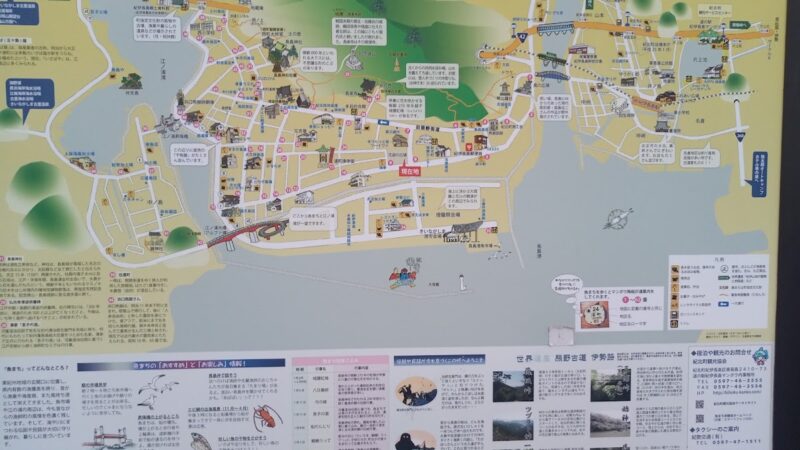
Kayau Castle Ruins (Akatsuki Gakuen) is located in Kayou-cho, in the northern part of Yokkaichi City. It is located approximately 5 kilometers north of the center of Yokkaichi City.
Access by Public Transportation
Nearest Station: Kintetsu Nagoya Line “Kintetsu Yokkaichi Station” or JR Kansai Main Line “Yokkaichi Station”
From the station, you can use the following methods:
- Bus: Take a Mie Kotsu bus bound for “Kayao” and get off at the nearest bus stop. It’s about a 10-minute walk from there.
- Taxi: It’s about a 15-minute taxi ride from Kintetsu Yokkaichi Station or JR Yokkaichi Station.
Access by Car
Expressway: Approximately 10 minutes from the Tomeihan Expressway “Yokkaichi IC”
General Roads: Accessible via prefectural roads from National Route 1 or National Route 23.
Parking: Akatsuki Gakuen has a parking lot, but it is not for general visitors, so prior confirmation is necessary. Please consider using nearby public parking lots.
Nearby Castle Ruins and Tourist Spots
Other Castle Ruins in Yokkaichi City
Besides Kayou Castle, there are several other medieval castle ruins in Yokkaichi City.
Hirao Castle
A hilltop castle located in Hirao-cho, Yokkaichi City, with remnants such as earthworks, baileys, and wells remaining. Like Kayou Castle, it is a castle ruin related to the 48 families of Hokusei.
Makita Castle
A castle ruin located in Makita-cho, Yokkaichi City, which was also a base for regional control during the Sengoku period.
By visiting these castle ruins, you can understand the castle network of the Hokusei region during the Sengoku period.
Tourist Spots in Yokkaichi City
Yokkaichi City Museum
A museum where you can learn about the history and culture of Yokkaichi City, with exhibits from the medieval to modern periods. Materials on the history of local castles, including Kayou Castle, are also on display.
Yokkaichi Industrial Complex Night View
A night view spot symbolizing Yokkaichi as a modern industrial city. Visiting this site in contrast to castle ruins from the Sengoku period allows you to feel the passage of time.
Suwa Park
A park located in the center of Yokkaichi City, also known as a famous cherry blossom viewing spot.
Historical Significance of Kayō Castle
The Forty-Eight Families of Hokusei and Regional Control
Kayau Castle, as the base of the Kasukabe clan, one of the Forty-Eight Families of Hokusei, is an important historical site for understanding the regional control structure of the Sengoku period. The Forty-Eight Families of Hokusei maintained a certain distance from the central daimyo power while maintaining a local autonomous order.
The existence of these local powerful families reflects the reality of local society during the Sengoku period and is of great importance in understanding the process of forming the unified government under Oda Nobunaga.
Oda Nobunaga’s Conquest of Ise and Kayō Castle
Oda Nobunaga’s invasion of Hokusei was an important part of his unification of Japan. By pacifying Ise Province, he was able to control a key point on the Tōkaidō road and secure a route to Kyoto. The siege of Kayō Castle is one episode in this major historical turning point, but it is valuable as a concrete example of the process of resistance and integration at the regional level. The activities of Oda retainers, including Takigawa Kazumasu, are also revealed through the capture of Kayō Castle.
Position in the Study of Medieval Castles in Mie Prefecture
Mie Prefecture has numerous medieval castle ruins, making it an important field for the study of regional history of the Sengoku period. Among them, Kayō Castle is one of the castle ruins where the construction period, lord, and fall period are relatively clear.
It possesses typical mountain castle structural elements such as earthworks, baileys, moats, and wells, making it useful for studying Sengoku period castle architecture. Furthermore, since some remains are still preserved, further research may yield additional insights.
Points to Note When Visiting Kayō Castle
Best Season for Visiting
Since Kayō Castle ruins are located on school grounds, the best season for visiting is during school holidays. Summer vacation (August), winter vacation (late December to early January), and spring vacation (late March to early April) are relatively easy times to visit.
However, we strongly recommend checking with the school in advance.
Useful items to bring
- Camera: To record the remains such as the Kami-no-no-Ido well and the remaining earthworks.
- Map: For visiting surrounding castle ruins and tourist spots.
- Historical materials: Books and materials to understand the history of Kayō Castle.
- Drinks: Especially essential in summer to prevent heatstroke.
Precautions when visiting
- Respect for school facilities: Always be mindful that this is an educational facility and do not disturb the activities of students or faculty.
- Ensure safety: The terrain of the castle ruins is uneven, so wear comfortable shoes and watch your step.
- Protect the remains: Be careful not to touch or damage the remains such as earthworks and wells. 4. Please Take Your Trash Home: For environmental protection, please be sure to take your trash home with you.
Current Status and Challenges of Kayō Castle Research
Limitations of Historical Sources
Historical sources concerning Kayō Castle are limited, leaving many uncertainties regarding the castle’s detailed structure and historical background. In particular, further excavation and research of historical sources are needed to determine the exact date of construction, the lineage of the Kasukabe clan, and the circumstances of its fall.
Need for Archaeological Investigation
Currently, most of the Kayō Castle site is used as a school facility, making large-scale excavation difficult. However, if partial investigations are conducted in the future, it may be possible to paint a more detailed historical picture based on the castle’s structure and the artifacts used.
Contribution to Local History Research
Research on Kayō Castle has the potential to contribute to the local history of Yokkaichi City, the medieval history of Mie Prefecture, and even the overall history of castles during the Sengoku period. Continued investigation and research by local historians and researchers is expected.
Summary
Kayao Castle is a mountain castle ruin from the Sengoku period located in Kayao-cho, Yokkaichi City, Mie Prefecture. Built by the Kasukabe clan during the Bunji era, it became a regional base as one of the 48 powerful families of Hokusei. It was the site of fierce battles during Oda Nobunaga’s invasion of Hokusei in 1568, and is believed to have finally fallen around 1573.
Although currently the site of Akatsuki Gakuen, remnants such as the “Hair-Growing Well” remain, making it a valuable historical site for learning about the history of castles in the Sengoku period. While consideration for the school is necessary for visits, with prior preparation, a visit allows you to experience the history of the Hokusei region during the Sengoku period.
Kayao Castle, conquered as part of Oda Nobunaga’s unification of Japan, is a small local castle ruin, yet it is an important historical site that tells the story of a major turning point in Japanese history. When visiting Mie Prefecture, be sure to visit this historic castle ruin.