Isaka Castle (Yokkaichi City, Mie Prefecture) Complete Guide | History, Remains, and Access Information
What is Isaka Castle?
Isaka Castle was a medieval hilltop castle located in Isaka-cho, Yokkaichi City, Mie Prefecture. Although largely destroyed by the construction of the Shin-Meishin Expressway, archaeological excavations conducted during the construction uncovered numerous valuable remains that provide insight into the castle structure of the Sengoku period in the northern Ise region.
Built on a plateau approximately 80 meters above sea level, the castle occupied a strategic location overlooking the Ise Plain, with a relative elevation difference of approximately 40 meters. The castle grounds extended approximately 200 meters east-west and 150 meters north-south, and defensive structures such as earthworks, moats, and baileys have been confirmed.
History of Isaka Castle
Construction and the Isaka Clan
Isaka Castle is believed to have been built by Isaka Tarōzaemon-no-jō (also known as Kasukabe Tarōzaemon-no-jō), a member of the Kayō clan, who were the lords of Kayō Castle. The Isaka clan, a branch of the Kayō clan, was entrusted with governing this region.
The Kayō clan was a powerful local lord in northern Ise, holding influence in the area stretching from Asake District to Inabe District. Isaka Castle, as one of their branch castles, was an important base forming the defensive line of Kayō Castle. The exact construction date is unclear, but it is estimated to be sometime between the late 15th and early 16th centuries.
Oda Nobunaga’s Invasion of Northern Ise and the Fall of Isaka Castle
The most important event in the history of Isaka Castle is Oda Nobunaga’s invasion of northern Ise in 1568 (Eiroku 11). In this year, Oda Nobunaga, aiming to march on Kyoto, intensified his expansion into the Ise region.
Nobunaga’s forces, with Takigawa Kazumasu as the vanguard, invaded northern Ise and attacked Kaya Castle. It is said that Isaka Castle, along with Kaya Castle, was attacked by the Oda army and fell after fierce fighting. This battle significantly weakened the Kaya clan, and the Isaka clan is believed to have been temporarily wiped out.
Survival under the Oda Regime
Interestingly, the *Shinchō Kōki* (Chronicle of Lord Nobunaga) records that the Isaka clan continued to exist after the castle’s fall. When Oda Nobuo (Kitabatake Nobuo), Nobunaga’s second son, came to rule Ise Province, the Isaka clan reappeared in history as vassals of Oda Nobuo.
This suggests that not all of the Isaka clan was wiped out, and that some survived by submitting to the Oda regime. During the Sengoku period (Warring States period), it was not uncommon for defeated local lords to survive by serving the victors.
Abandonment of the Castle and its Aftermath
It is unclear to what extent Isaka Castle functioned under the rule of Oda Nobuo, but as Toyotomi Hideyoshi unified Japan, many small and medium-sized castles were consolidated. Isaka Castle is believed to have been abandoned sometime between the late 16th and early 17th centuries.
Afterward, the castle site was used as farmland, and many of the remains were lost over the long years. However, the local place name “Furuyashiki” (old residence) remains, and the legend of the castle’s existence has been passed down through tradition.
Castle Structure and Remains
Overview of the Excavation Survey
In the 2000s, when the construction plan for the Yokkaichi Junction of the Shin-Meishin Expressway became concrete, it was discovered that the Isaka Castle site was included in the planned construction area. Following this, a full-scale excavation survey was conducted from 2004 to 2006.
This survey was conducted by the Mie Prefectural Buried Cultural Properties Center and became one of the most detailed investigations of Sengoku period castle remains in the northern Ise region. The survey results were compiled into the “Isaka Castle Excavation Report,” providing valuable material for castle research.
Large-Scale Tower Gate Remains
The most noteworthy discovery in the excavation was the remains of a large tower gate. This tower gate was approximately 9 meters wide and estimated to be over 6 meters high, and is believed to have functioned as the castle’s main gate.
From the post holes of the tower gate, it was revealed that thick pillars exceeding 50 centimeters in diameter were used. Furthermore, earthen ramparts were connected to both sides of the gate, creating a structure that allowed for attacks on enemies passing through the gate from the flanks. A tower gate of this scale is remarkably impressive for a castle of a local lord, demonstrating the high economic and military power of the Kayō clan.
Arrangement of Enclosures (Kuruwa)
Isaka Castle consisted of multiple enclosures. The main enclosure was located at the highest point of the plateau and measured approximately 60 meters east-west and 50 meters north-south. Earthen ramparts surrounded the main enclosure, limiting the number of entrances.
The second and third enclosures were located to the east and southeast of the main enclosure, forming a stepped, interconnected layout. Each enclosure was demarcated by moats and earthen ramparts, designed to function as an independent defensive unit.
Structure of Earthen Ramp and Moat
Earthen ramparts and moats played a crucial role as defensive structures of the castle. Excavations confirmed that the base of the earthen rampart surrounding the main enclosure was approximately 5 meters wide and over 2 meters high. Clay was applied to the surface of the rampart to prevent erosion from rainwater.
Moats were constructed between the enclosures, the largest of which reached approximately 10 meters wide and 3 meters deep. The bottom of the moats was not flat but dug in a V-shape, making enemy intrusion difficult. Furthermore, an earthen embankment was constructed outside the moat, forming a double defensive line combining the moat and the embankment.
Wells and Living Remains
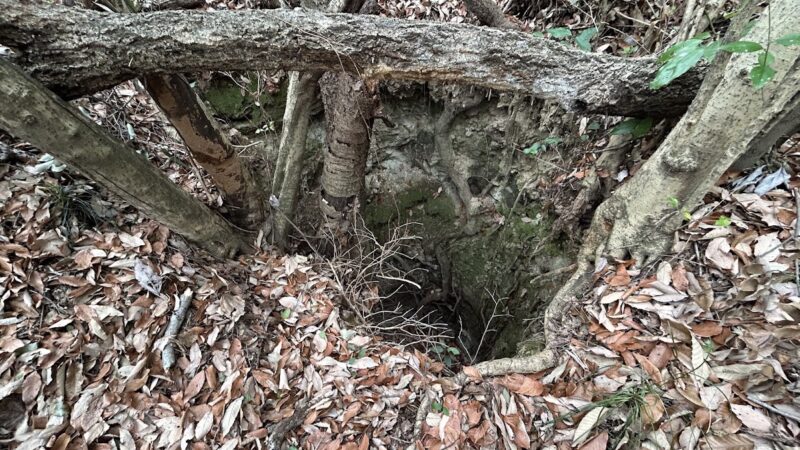
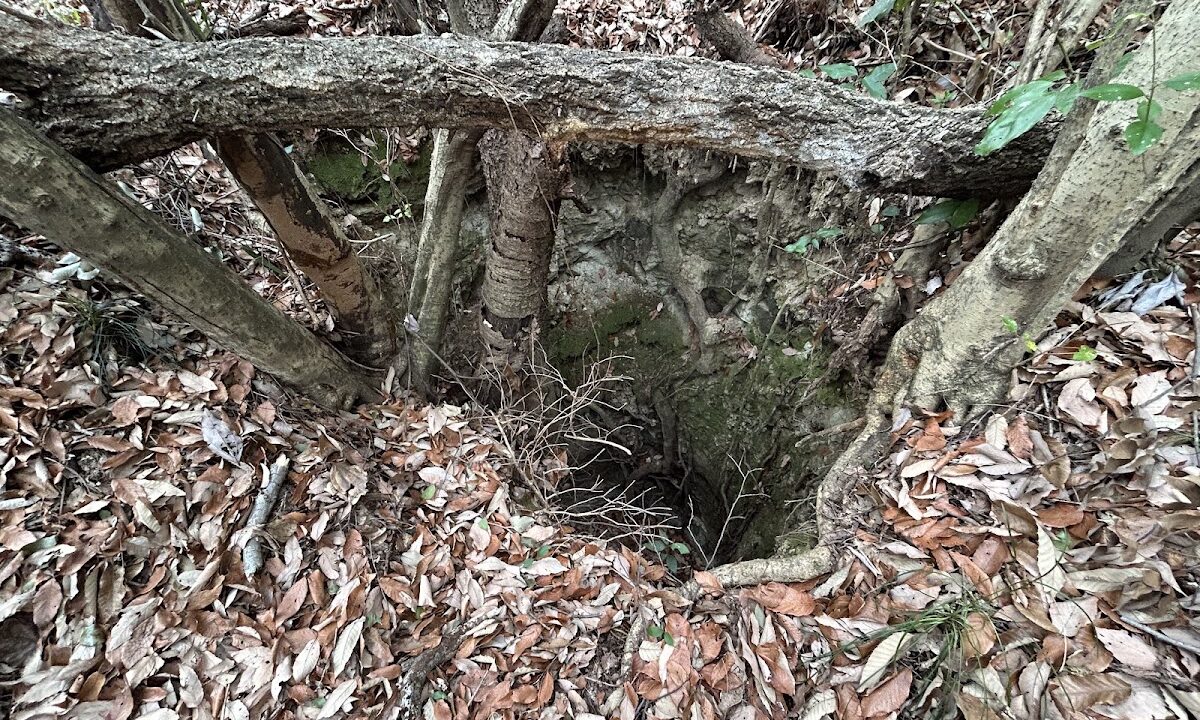
Several wells were discovered, indicating facilities that supported life within the castle. Within the main enclosure was a stone-lined well approximately 2 meters in diameter and 8 meters deep, which functioned as a water source during sieges.
In addition, groups of postholes, believed to be building remains, and hearth remains were detected. Excavated ceramics and pottery confirmed that the castle was in use from the late 15th to the late 16th century. In particular, the discovery of Chinese celadon and white porcelain, as well as pottery from Seto and Mino, indicates the high economic power of the castle lord.
Excavated Weapons and Armor
The excavation also unearthed numerous artifacts related to combat. Iron products such as arrowheads, knives, and iron nails were found, along with millstones and whetstones.
Of particular note is the large amount of burnt soil and carbonized material detected. This suggests the possibility that the castle was burned down during Oda Nobunaga’s invasion of northern Ise. Burnt soil has also been found in the moat, indicating fierce fighting.
Location and Strategic Importance of Isaka Castle
Geographical Location
Isaka Castle was located on a plateau between the Asake River and the Kaizo River in the northern part of Yokkaichi City, Mie Prefecture. This location offered a panoramic view of the Ise Plain and was a strategic point for monitoring major roads such as the Tokaido and Ise Kaido.
With the Suzuka Mountains to the west and Ise Bay to the east, the topography was ideal for controlling north-south transportation. It is believed that the Kayō clan built a branch castle in this location to take advantage of these geographical advantages.
Castle Network in Northern Ise
Isaka Castle did not exist in isolation, but was part of a castle network centered around Kayō Castle. The surrounding area was dotted with related castles such as Hoho-Nishi Castle, Uneme Castle, and Ichiba Castle, which worked together to defend the region.
These castles formed a defensive line against invasions from the north and occupied an important position when considering Oda Nobunaga’s invasion route. The fall of Isaka Castle is thought to have led to the collapse of this entire network.
Current Site of Isaka Castle
Impact of the Shin-Meishin Expressway Construction
Unfortunately, most of the Isaka Castle site was lost due to the construction of the Yokkaichi Junction of the Shin-Meishin Expressway. Currently, the site of the castle is occupied by an expressway interchange, making it difficult to imagine its former appearance.
However, the detailed records left by archaeological excavations were a great achievement for castle research. The excavation reports and artifacts are stored at the Mie Prefectural Buried Cultural Properties Center and other locations, making them accessible to researchers and history enthusiasts.
Preservation Status of Remains
There is a possibility that traces of earthworks and moats remain in small areas outside the expressway construction zone. However, these sites are located on private land, and public access is restricted. Furthermore, due to years of development and agricultural use, there are very few clearly visible remains.
In the local town of Isaka, there are no signs indicating the existence of the castle ruins, but the place name “Furuyashiki” (old residence) is still used, and it is remembered as part of the region’s history.
Access Information
Location
Address: Furuyashiki, Isaka-cho, Yokkaichi City, Mie Prefecture
Access by Public Transportation
- Nearest Station: Kintetsu Nagoya Line “Kintetsu Tomita Station” or JR Kansai Main Line “Tomita Station”
- Bus: Get off at “Isaka-cho Community Center” bus stop (Mie Kotsu Bus), approximately 5 minutes on foot
- Travel Time: Approximately 15 minutes by bus from the station
Access by Car
- Tomeihan Expressway: Approximately 10 minutes from “Yokkaichi East IC”
- Shin-Meishin Expressway: Very close to “Shin-Yokkaichi JCT” (castle ruins are under the expressway)
- Parking: No dedicated parking (almost no remains available for viewing)
Notes on Visiting
As mentioned above, most of the Isaka Castle ruins have been destroyed by expressway construction, and there are almost no remains available for viewing on site. Please note the following points when visiting the castle ruins:
- The area around the highway has heavy traffic and is dangerous, so please avoid unnecessary sightseeing.
- The remaining structures are located on private property.
- If you would like to learn about the results of archaeological excavations, we recommend referring to the materials from the Mie Prefectural Buried Cultural Properties Center.
Related Castles in the Surrounding Area
When visiting Isaka Castle, visiting the surrounding castles as well will give you a deeper understanding of the Sengoku period history of northern Ise.
Kaya Castle
Kaya Castle, the main castle of Isaka Castle, is located in the hilly area west of Yokkaichi City. Although many of the remains have been lost, some earthworks and moats remain. It is a castle that should be understood together with Isaka Castle as the base of operations for the Isaka clan.
Hoho Nishi Castle
Hoho Nishi Castle, located in Nishimura-cho, Yokkaichi City, is a flatland castle built on a hill with a relative height of approximately 20 meters. The remains of earthworks, baileys, moats, and wells are relatively well-preserved, making this a valuable historical site where you can actually experience the structure of a medieval castle.
Uneme Castle
Located in Uneme-cho, Yokkaichi City, Uneme Castle was the residence of the Asakura clan, a powerful local lord in northern Ise. This was also one of the castles that fell during Oda Nobunaga’s invasion of northern Ise, and it is a useful reference for understanding the castle structure of the same era as Isaka Castle.
Ichiba Castle
Ichiba Castle, located in Ichiba-cho, Yokkaichi City, is another castle associated with the Kaya clan. Although the area is now largely residential, traces of earthworks remain in some places.
Isaka Castle and Oda Nobunaga’s Invasion of Northern Ise
Military Actions in Eiroku 11
1568 (Eiroku 11) was a pivotal year for Oda Nobunaga. In this year, Nobunaga successfully entered Kyoto with Ashikaga Yoshiaki, but as a preliminary step, the pacification of the Ise region was necessary.
In northern Ise, local lords such as the Kambe, Nagano, and Kayō clans held sway, and subduing them was crucial to Nobunaga’s strategy. The Oda army, with Takigawa Kazumasu as its vanguard, captured various castles in northern Ise in a short period of time.
The Battle of Isaka Castle
While historical records are scarce regarding the details of the Battle of Isaka Castle, archaeological excavations have revealed burnt soil layers, suggesting a fierce battle. Isaka Castle, attacked along with Kayō Castle, was forced to fall due to the overwhelming difference in troop numbers.
The Isaka clan’s samurai who defended the castle likely resisted using earthworks and moats, but they were unable to withstand the organized attack of the Oda army. The weapons and burnt building remains unearthed from within the castle attest to the ferocity of the battle.
Post-War Rule of Northern Ise
After pacifying northern Ise, Oda Nobunaga granted the region to his second son, Nobuo. Nobuo was adopted into the Kitabatake clan and reigned as the ruler of Ise Province. It was during this period that the Isaka clan reappeared as vassals of Oda Nobuo.
Some of the defeated local lords sought survival by serving the new rulers. The Isaka clan is one such example, illustrating the harsh struggle for survival during the Sengoku period.
Significance of Isaka Castle Research
Contribution to Northern Ise Castle Research
The excavation of Isaka Castle yielded significant results in understanding Sengoku period castles in the northern Ise region. In particular, it is valuable as a concrete example showing the structure and defensive philosophies behind the construction of castles belonging to local lords.
The discovery of a large turret gate revealed the actual state of castle architecture that could not be known from historical documents alone. Furthermore, the excavated artifacts offer insights into the castle lord’s economic power, trade relations, and even aspects of their daily life.
Research on Oda Nobunaga’s Military Strategy
The fall of Isaka Castle was part of Oda Nobunaga’s larger military operation of invading northern Ise. Understanding the castle’s structure and defensive facilities provides clues to inferring the siege tactics employed by the Oda army and, conversely, how the defenders resisted.
The presence of burnt soil layers suggests the possibility that the Oda army used fire attacks. This was one of Nobunaga’s signature tactics, and it is highly likely that it was used in the capture of Isaka Castle.
Challenges in Castle Preservation
On the other hand, the loss of most of the Isaka Castle site illustrates the difficulty of castle preservation. Balancing development and cultural property protection is a crucial challenge facing modern society.
Fortunately, detailed records were left through archaeological excavations, but it is still regrettable that we cannot see the actual remains at the site. The case of Isaka Castle will serve as a valuable lesson for the future preservation of other castle ruins.
Resources for Learning About Isaka Castle
Excavation Report
The most detailed source of information is the “Isaka Castle Excavation Report.” This report includes the entire excavation process, excavated artifacts, and detailed drawings of the remains, making it a fundamental resource for professional research on Isaka Castle. It is available for viewing at the Mie Prefectural Buried Cultural Properties Center and major libraries.
Related Books
- “Walking the Best 50 Mountain Castles of Mie Prefecture”: A guidebook introducing major mountain castles in Mie Prefecture, which also provides detailed information on Isaka Castle.
- “Nobunaga Koki”: A primary source recording the achievements of Oda Nobunaga, which includes a description of the invasion of northern Ise.
- “Medieval Castles and Residences of Mie Prefecture”: A comprehensive castle directory published by the Mie Prefectural Board of Education, which includes basic information on Isaka Castle.
Online Resources
Information about Isaka Castle can also be obtained from castle research websites and historical databases. Websites such as “Kojodan” and “Jokaku Hourouki” (Castle Visitors’ Association and Castle Wanderings) are particularly helpful, as they publish visit reports and photographs.
Summary
Isaka Castle was a hilltop castle from the Sengoku period located in Yokkaichi City, Mie Prefecture, built by the Isaka clan, a branch of the Kayō clan. It fell during Oda Nobunaga’s invasion of northern Ise in 1568, but some members of the Isaka clan survived under the Oda regime.
Currently, most of the castle site has been lost due to the construction of the Shin-Meishin Expressway, but prior archaeological excavations uncovered valuable remains, including a large turret gate. These findings are important resources for understanding Sengoku period castles in the northern Ise region.
The history of Isaka Castle offers many insights into the rise and fall of local lords during the Sengoku period, Oda Nobunaga’s military strategies, and the realities of castle architecture. While on-site visits are difficult, its history and structure can be learned through excavation reports and related books.
For those interested in the Sengoku period history of northern Ise, or those interested in castle research, Isaka Castle is an important historical site that should not be missed. Visiting it along with other related castles in the surrounding area will allow you to gain a deeper understanding of the history of this region.