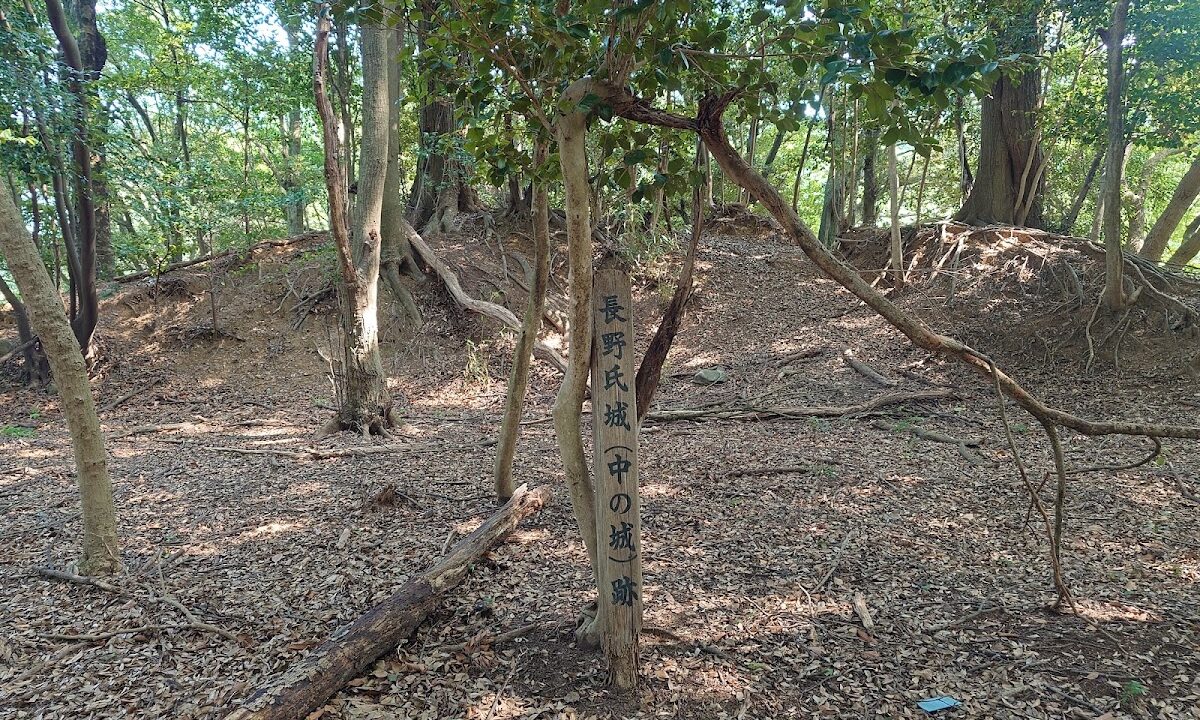
Nagano Clan Castle (Tsu City, Mie Prefecture) Complete Guide | History, Structure, and Highlights Explained in Detail
Nagano Clan Castle is a medieval mountain castle located in Katsurahata, Misato-cho, Tsu City, Mie Prefecture. It is a magnificent castle complex consisting of the main castle built on a mountaintop at an altitude of 520m, and the East Castle, Central Castle, and West Castle connected to a hill ridge at an altitude of 230m. It is known as the base of the Nagano clan, who wielded power in the central Ise region from the Nanboku-cho period to the Sengoku period.
This article comprehensively introduces information you should know before visiting Nagano Clan Castle, including its historical background, castle structure, highlights, and access methods.
What is Nagano Clan Castle? | Basic Information and Overview
Nagano Clan Castle, also known as “Nagano Castle” or “Nakane Castle,” is a medieval mountain castle located in the mountainous area of Misato-cho, Tsu City, Mie Prefecture. Built on a strategic location overlooking the Ise Highway, it is a natural stronghold, nestled between the Iga Highway and the Nagano River to the north, and the Katsurahata River valley to the south.
Basic Data:
- Location: Arai, Katsurabata, Misato-cho, Tsu City, Mie Prefecture
- Castle Type: Mountain Castle
- Elevation: Main enclosure 520m (main castle), 230m (East, Central, and West castles)
- Year of Construction: Believed to be 1274 (Bun’ei 11)
- Builder: Kudo Sukefuji
- Main Lords: Nagano Kudo clan
- Year of Abandonment: Eiroku era (around 1558-1570)
- Remains: Enclosures, earthworks, moats, outer baileys
Nagano Castle is a typical example of a “group-enclosure mountain castle,” where multiple castles at different elevations are interconnected. It is a valuable historical site that conveys the castle construction techniques of the Nanboku-cho period, attracting attention from castle researchers and history enthusiasts.
The History of the Nagano Clan and the Evolution of its Castle
The Origins of the Nagano Clan and its Expansion into Ise
There are various theories regarding the origins of the Nagano clan, but they are generally believed to be a branch of the Kudo clan, which descended from the Fujiwara Nanke (Southern House). During the Kamakura period, Kudo Sukefuji is said to have expanded into Ise Province and built a castle in Nagano in 1274.
The Kudo clan was originally a samurai family based in Sagami Province, but with the establishment of the Kamakura Shogunate, they acquired territories in various regions and expanded their power. In Ise Province, they solidified their power base in Nagano.
The Nagano Clan During the Nanboku-cho Period
During the Nanboku-cho period, the Nagano clan already had its base in the Nagano area of Misato Town. During this period, Ise Province was one of the front lines where the forces of the Southern and Northern Courts fiercely clashed, and the Nagano clan is thought to have been deeply involved in this turmoil.
The fact that the main castle was built at an altitude of 520m likely reflects the turmoil of the wars of this era. From the mountaintop, one could see Ise Bay, the mountains of southern Ise, and the plains, making it a strategically and militarily crucial location.
The Nagano Clan and Oda Nobunaga’s Invasion of Ise during the Sengoku Period
At the start of the Sengoku period, the Nagano clan was active as a powerful local lord in the central Ise region. However, during the Eiroku era (1558-1570), Oda Nobunaga’s invasion of Ise drastically changed the fate of the Nagano clan.
In the process of pacifying Ise, Nobunaga successively subjugated local lords throughout the region. The Nagano clan was also swept up in this wave and is believed to have ultimately fallen under Nobunaga’s influence. Some records even state that Nobunaga adopted members of the Nagano family to establish his rule.
It is believed that around this time, the Nagano castle ceased to function as a military base and was abandoned.
The Later Life of the Nagano Clan
Under the Oda regime, it is presumed that some members of the Nagano clan served Nobunaga and continued to govern the local area within Ise Province. However, due to the turmoil following the Honnoji Incident, historical records regarding the Nagano clan’s activities are scarce, and details remain unclear.
During the Edo period, the Nagano area became part of the Tsu Domain, and the Nagano clan castle ruins were lost to history. Currently, local place names and legends that convey the history of the Nagano clan remain.
Structure and Layout of the Nagano Clan Castle
The most distinctive feature of the Nagano clan castle is its “clustered castle” structure, where multiple castles at different elevations are organically interconnected. Here, let’s examine the structure of each castle in detail.
Structure of the Main Castle (Elevation 520m)
Located on a mountaintop at an elevation of 520m, the main castle is the core of the Nagano clan castle complex. Typical of mountain castles from the Nanboku-cho period, its layout makes maximum use of the natural terrain.
Main Enclosure:
The main enclosure, the heart of the castle, is built on the flat surface of the mountaintop. Although relatively small in scale, it is surrounded by a series of terraced enclosures, enhancing its defensive capabilities. From the main enclosure, a 360-degree view unfolds, offering panoramic vistas stretching from Ise Bay to the Iga region.
Terraced Enclosures:
Around the main enclosure, a series of terraced enclosures are arranged along the terrain. These are thought to have prevented approach to the main enclosure and also functioned as troop garrisons.
Moat:
Two moats are located on the western side of the castle grounds. These are important defensive structures that cut off the ridge, preventing enemy intrusion. The moats remain clearly visible today, offering a glimpse into the construction techniques of medieval mountain castles.
Cut Hill:
The area surrounding the main enclosure is a steep, sheer slope, with cut hills formed by modifying the natural terrain. This steep terrain significantly enhances the castle’s defensive capabilities.
East Castle, Central Castle, and West Castle (Elevation 230m)
North of Nagano Elementary School, on a hill ridge at an elevation of 230m, lie three castle complexes: East Castle, Central Castle, and West Castle. These functioned as subsidiary castles of the main castle, playing a role in monitoring and defending the Ise Highway.
East Castle:
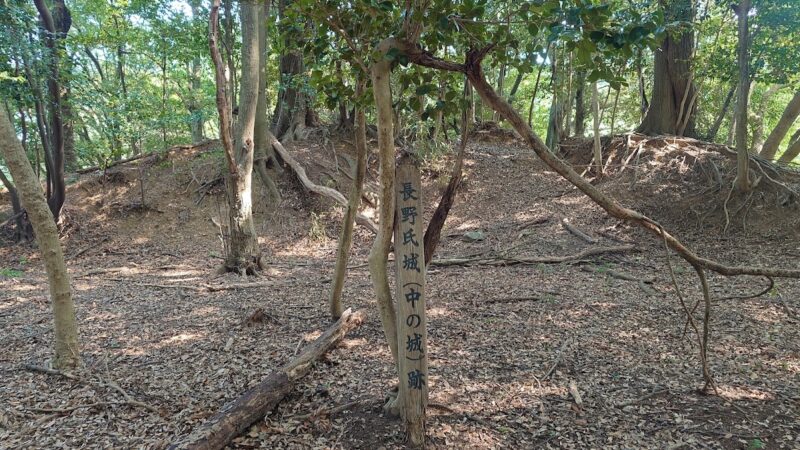
Located easternmost of the three castles, it was positioned to monitor the highway from the Iga area. The stepped plateau remains well-preserved, and the layout of the enclosures is clearly discernible. Moats and earthworks also remain, indicating that it possessed small but robust defensive facilities.
Central Castle:
Located midway between East and West Castles, this castle is presumed to have played a central role among the three. While the layout of the enclosures is simple, it cleverly utilizes the terrain.
West Castle:
Located furthest to the west, it monitored the highway from the Tsu area. Similar to the eastern castle, it features a distinctive stepped layout of baileys, and the earthworks and moats are well-preserved. A forest road leads to the western side of the castle grounds, making it relatively easy to access today.
Characteristics of the Nagano Clan Castle Layout
The overall layout of the Nagano Clan Castle exhibits the following characteristics:
- Multi-layered defense utilizing elevation differences: By combining the main castle at 520m with a group of subsidiary castles at 230m, a structure was created that allowed for gradual defense against enemy invasions.
- Road monitoring function: Each castle was positioned to overlook important transportation routes such as the Ise and Iga Roads.
- Utilization of natural terrain: The castle was constructed making maximum use of the terrain, such as the steep mountain slopes and natural moats formed by valley streams.
- Simple structure: Typical of mountain castles from the Nanboku-cho period, complex gates and flanking defenses are absent, and the castle is composed of basic enclosures, moats, and earthworks.
These characteristics represent typical mountain castle construction techniques from the 14th to 15th centuries, making it a valuable example for castle history research.
Highlights of Nagano Castle
Here are some must-see sights when visiting Nagano Castle.
Spectacular Views from the Summit
The view from the main enclosure of the castle, at an altitude of 520m, is one of the greatest highlights of Nagano Castle. On clear days, you can see Ise Bay, with the mountains and plains of southern central Ise stretching out below. This view will help you understand the strategic importance of this location and why the Nagano clan chose it as their base.
Especially during the clear autumn and winter months, you can sometimes see as far as the Suzuka Mountains and the Chita Peninsula across Ise Bay.
Well-Preserved Moats
The two moats on the west side of the castle are remarkably well-preserved defensive structures from a medieval mountain castle. Encountered immediately upon entering the castle grounds from the forest road, these moats are sufficiently deep and wide, making them valuable relics that allow for direct observation of the castle-building techniques of the time.
Observing the cross-section of the moat reveals that it was dug into the ridge at a nearly vertical angle, a testament to the immense effort required for such a large-scale civil engineering project by hand.
The Stepped Enclosures of the East, Central, and West Castles
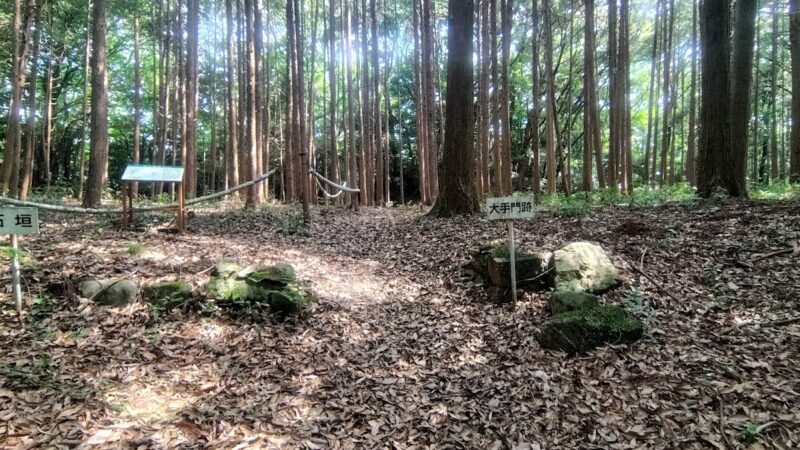
These three castles, situated on a hill 230m above sea level, are notable for their stepped enclosures. The stepped enclosures are particularly well-preserved in the East and West Castles, offering a typical example of medieval mountain castle layouts.
Earthworks and moats are constructed between each enclosure, indicating a meticulous defensive plan, albeit on a small scale. These castles are more accessible than the main castle, making them easier for beginners to understand the structure of mountain castles.
Cut Slopes and Belt Enclosures
The belt enclosures surrounding the main castle’s enclosure and the cut slopes outside of them are also noteworthy. These cut slopes, artificially created from natural steep slopes, are nearly vertical in some places, suggesting they would have been a significant obstacle for attackers.
The outer bailey is thought to have functioned not only as a defense for the main enclosure but also as a troop encampment and storage area for supplies, demonstrating ingenuity in effectively utilizing the limited mountaintop space.
Castle Landscape Integrated with the Natural Environment
The charm of Nagano Castle lies not only in its remains but also in its landscape integrated with the surrounding natural environment. The castle ruins, covered in a deep forest, show different expressions with each season.
In spring, the fresh greenery; in summer, the deep green; in autumn, the vibrant autumn leaves; and in winter, the clear visibility after the leaves have fallen—the ability to explore the castle while enjoying the changing seasons is a unique charm of mountain castles.
How to Access Nagano Castle
This section introduces how to access Nagano Castle. Access methods differ between the main castle at an altitude of 520m and the group of subsidiary castles at an altitude of 230m.
Access to Honjo Castle (Elevation 520m)
Access by Car:
- Approximately 30 minutes from the Hisai Interchange on the Ise Expressway
- Approximately 40 minutes from Tsu city center via National Route 163
- A forest road leads close to the castle grounds, but the road is narrow and requires caution regarding road conditions
- Parking space is limited, so park in a safe place on the shoulder of the road
Route to the Castle:
- Approximately 15-20 minute hike from the end of the forest road. Since some parts of the hiking trail are not well-maintained, the following equipment and preparations are recommended:
- Trekking shoes or hiking boots
- Long-sleeved shirt and long pants (in case of bushwhacking)
- Gloves
- Drinking water
- Map and compass (or GPS device)
- Insect repellent spray (spring to autumn)
Access to Higashi-no-Shiro, Naka-no-Shiro, and Nishi-no-Shiro
Location:
North of Nagano Elementary School, on a hill at an altitude of 230m
Access by Car:
- Approximately 25 minutes from the Hisai IC on the Ise Expressway
- Head towards Nagano Elementary School
- There is no designated parking area, so park in a location that does not obstruct nearby traffic.
Route to the Castle:
There is an entrance to the hill from the north side of Nagano Elementary School. Compared to the main castle, the altitude is lower and it can be accessed in a relatively short time. However, the hiking trail is only partially maintained, so basic equipment is necessary.
Important Notes for Visitors
- Season: From spring to autumn, vegetation can be dense, reducing visibility. While winter offers easier observation of the ruins after leaf fall, caution is needed regarding snow and icy roads.
- Weather: The ground can be slippery during and after rain. Choose a day with good weather for your visit.
- Avoiding Solo Visits: Visiting in groups is highly recommended. Check cell phone reception beforehand.
- Time Allocation: For the main castle only, allow approximately one hour round trip. Including the East, Central, and West castles, allow 2-3 hours.
- Wildlife: Wild animals such as wild boars and deer may inhabit the area. Carrying a bell or similar device to make your presence known is recommended.
Nearby Tourist Attractions and Related Historical Sites
Here are some nearby tourist attractions you might want to visit before or after your visit to Nagano Castle.
Tsu Castle
Located in the heart of Tsu City, Tsu Castle is a flatland castle built by Oda Nobukane, the younger brother of Oda Nobunaga. While it differs from Nagano Castle in both era and castle style, visiting both castles in Tsu City provides a comprehensive understanding of the castle history of Ise Province.
Currently, it is maintained as a park, with some of the stone walls and moats remaining. It is easily accessible, within walking distance of Tsu Station.
Kitabatake Clan Residence Ruins (Kiriyama Castle)
Located in Misugi-cho, Tsu City, the Kitabatake Clan Residence Ruins are the site of the residence of the Kitabatake clan, who wielded considerable power as the governors of Ise Province from the Nanboku-cho period to the Sengoku period. Visiting the base of the Kitabatake clan, who were active during the same period as the Nagano clan, provides a deeper understanding of the political situation in medieval Ise Province.
Behind it lies Kiriyama Castle, a fortified outpost, making it a must-see spot for castle enthusiasts.
Misato Onsen
Misato Town, where Nagano Castle is located, is home to Misato Onsen (hot spring). Perfect for relaxing after a tiring mountain castle tour. You can also enjoy dishes made with local ingredients.
Sakakibara Onsen
Located in the mountainous area of Tsu City, Sakakibara Onsen is a famous hot spring known since ancient times as “Nanaguri no Yu.” It’s about a 30-minute drive from Nagano Castle, and there are plenty of day-trip bathing facilities.
Things to Know Before Visiting Nagano Castle
Castle Evaluation
Nagano Castle has received a high average rating of ★★★★☆ 4.20 on castle-related websites such as Kojodan (ratings from some sites). Visitors have praised the following points:
- Observation of a typical mountain castle structure from the Nanboku-cho period
- Well-preserved moats and enclosure layout
- Spectacular views from the mountaintop
- The enjoyment of visiting multiple castles
On the other hand, the difficulty of access and the relatively small scale of the remains are sometimes pointed out. However, these are characteristics of medieval mountain castles and are actually important elements for understanding the construction techniques and strategies of the time.
Estimated Visiting Time
The general visiting time is as follows:
- Main Castle Only: Approximately 45 minutes to 1 hour
- East Castle, Central Castle, and West Castle: Approximately 1 to 1.5 hours
- Visiting the Entire Castle: Approximately 2.5 to 3 hours
However, taking photographs or conducting detailed observations will require more time. Please plan accordingly.
Recommended Visiting Season
Most Recommended Time: November to March (Late Autumn to Winter)
- Leaves have fallen, making it easier to observe the ruins
- Fewer insects
- Clear air and good views
Spring (April to May):
- Beautiful fresh greenery
- Mild climate
- However, visibility begins to deteriorate due to vegetation growth
Summer (June to August):
- Overgrown vegetation makes observing the ruins difficult
- Many insects
- Risk of heatstroke
- Suitable for advanced visitors
Autumn (September to October):
- Beautiful autumn foliage
- Pleasant climate
- Some vegetation may still remain
Reference Materials and Information Sources
For more detailed information about Nagano Castle, the following resources are helpful:
- “Medieval Castles and Residences in Mie Prefecture” (Mie Prefectural Board of Education)
- “Comprehensive Survey of Japanese Castles,” Volume 10, Mie, Nara, and Wakayama
- Nagano Castle page on Kojodan (kojodan.jp)
- Various castle-related books
More detailed information may be available at local libraries and local history museums.
Preservation status and future of Nagano Castle
Nagano Castle is not currently designated as a national or prefectural cultural property, but it is recognized locally as a valuable historical heritage site.
The remains are relatively well-preserved, with major moats, baileys, and earthworks clearly visible. However, the maintenance of hiking trails and the installation of information boards are limited, and information provided to visitors is insufficient.
In recent years, with the boom in mountain castles and the growing interest in historical tourism, research and preservation activities by local governments and historical organizations are expected. It is important to pass it on to future generations while striking a balance between appropriate preservation and utilization.
Summary: The Charm of Nagano Castle
Nagano Castle is a masterpiece of medieval mountain castles, lying dormant in the mountainous area of Misato-cho, Tsu City, Mie Prefecture. The Nagano clan’s castle complex, consisting of a main castle at an altitude of 520m and a group of subsidiary castles at 230m, showcases castle-building techniques from the Nanboku-cho period to the Sengoku period.
Although the Nagano clan disappeared from the historical stage after Oda Nobunaga’s invasion of Ise, the castles they built still retain their original form more than 600 years later. There are plenty of sights to see, including the spectacular views from the mountaintop, the well-preserved moats, and the terraced arrangement of the castle baileys.
While access is somewhat difficult, the historical value and unique charm of this mountain castle more than compensate for the challenge. Why not visit Nagano Clan Castle and reflect on the medieval Ise Province?
With appropriate equipment and preparations, and prioritizing safety, experience this precious historical heritage. Nagano Clan Castle will teach visitors the true essence of medieval mountain castles.