Gokasho Castle (Minamiise-cho, Watarai-gun, Mie Prefecture): Complete Guide to History, Highlights, and Access
What is Gokasho Castle?
Gokasho Castle is a medieval mountain castle located in Gokashoura, Shiroyama, Minamiise-cho, Watarai-gun, Mie Prefecture. Also known as Aisu Castle or Gokasho Castle, it is known as the residence of the Aisu clan, who wielded power in southern Ise from the Nanboku-cho period to the Sengoku period.
Built on a cliffside hill overlooking the Gokasho River, which flows from north to west, this castle was a formidable mountain castle that skillfully utilized the natural terrain, with an elevation of approximately 41 meters and a relative height of approximately 40 meters. The castle ruins are currently a designated historical site of Mie Prefecture, and the remains of the baileys, earthworks, dry moats, and stone walls are well-preserved.
Gokasho Castle holds historical value not only as a military base, but also as the birthplace of Aisu Ikosai Hisatada, a significant figure in the history of Japanese swordsmanship. Ikosai is known as the founder of the Kage-ryu school of swordsmanship and is considered the original master swordsman who greatly influenced later schools of swordsmanship.
History of Gokasho Castle
Rise of the Aisu Clan and Construction of Gokasho Castle
The Aisu clan were local lords of Ise Province who played an active role on the Southern Court side during the Nanboku-cho period. They are believed to have already held power in this region during the Kōei era (1342-1345), controlling the Gokashoura area. While there are various theories regarding the Aisu clan’s origins, it is thought that they grew as local lords based in Watari District, Ise Province.
Although there are no clear records regarding the construction date of Gokasho Castle, it is presumed to have been built during the Aisu clan’s process of establishing their power during the Nanboku-cho period. During the mid-Muromachi period, the Aisu clan moved their residence from Ichinose Castle to Gokasho Castle, and it is believed that the castle’s fortifications were developed during this time.
Activities as a Southern Court Supporter
During the turbulent period of the Northern and Southern Courts, the Aisu clan consistently sided with the Southern Court, becoming an important base for Southern Court forces in southern Ise. They also had close ties with the Kitabatake clan, and are believed to have operated under the influence of the Kitabatake clan, who were the provincial governors of Ise.
Gokasho Castle was strategically located, protected by the natural fortifications of the Gokasho River, and controlled Gokashoura, a crucial point for maritime traffic. The Aisu clan utilized this geographical advantage to maintain their power and cultivate relationships with local powerful families in the surrounding area.
Aisu Ikosai Hisatada and the Development of Swordsmanship
The most famous figure in the Aisu clan was Aisu Ikosai Hisatada, known as the founder of the Kage-ryu school of swordsmanship. Ikosai was born at Gokasho Castle and devoted himself to swordsmanship training from a young age. It is said that after undergoing a thousand-day seclusion training at Kashima Shrine, he developed his own unique swordsmanship and founded the Kage-ryu school.
Isakosai’s swordsmanship influenced many later schools, and it is said that Kamiizumi Nobutsuna, the founder of Shinkage-ryu, was also influenced by Kage-ryu. Gokasho Castle can be considered one of the important sacred sites in the history of Japanese swordsmanship.
Attack by Oda Nobuo and the Downfall of the Aisu Clan
The history of Gokasho Castle reached a major turning point in 1576. Oda Nobuo (Kitabatake Nobuoki), the second son of Oda Nobunaga and adopted son of the Kitabatake clan, attacked Gokasho Castle in the process of unifying Ise Province.
This attack was part of the Kitabatake clan’s efforts to strengthen their control over southern Ise. Oda Nobuo was expanding his power from his base at Tamaru Castle, and the Aisu clan, which had maintained its independence, became a target. After a fierce battle, Gokasho Castle fell, and its lord, Aisu Shigeaki, is said to have fled to Hasako in Shima Province before committing suicide.
This marked the end of the Aisu clan’s power, which had lasted since the Nanboku-cho period, and Gokasho Castle was abandoned. The period of 1576 (Tensho 4) was a time when local powers were being eliminated as Oda Nobunaga advanced towards unifying Japan, and the downfall of the Aisu clan was part of this trend.
Gokasho Castle After Abandonment
After its abandonment, Gokasho Castle was never used again as a military base. The castle ruins were neglected for a long time, but in recent years, their historical value has been re-recognized, and they have been protected as a Mie Prefecture designated historical site.
Currently, the castle ruins are being developed, and the access path has been improved. In the local Minamiise town, the history of the Aisu clan and Gokasho Castle is a source of local pride, and efforts are being made to utilize it as a tourist resource.
Structure and Layout of Gokasho Castle
Overall Layout
Gokasho Castle is a typical medieval mountain castle built on a hill overlooking the Gokasho River. While its size—approximately 41 meters above sea level and 40 meters relative height—is standard for a local lord’s residence, its layout is highly sophisticated and defensively resistant.
The castle has a central main enclosure, surrounded by multiple terraced enclosures in a stepped arrangement. The cliffs of the Gokasho River protect the north and west sides, while artificial defensive structures are concentrated on the south and east sides. This arrangement is a rational design that makes maximum use of the natural terrain.
Main Enclosure and its Characteristics
The main enclosure, the heart of the castle, is located at the highest point of the castle site. The main enclosure measures approximately 30 meters east-west and 25 meters north-south, surrounded by an earthen rampart. This rampart is about 1-2 meters high, and traces of stone walls can be seen in some areas.
The main enclosure’s entrance is located on the south side and is a staggered entrance. This design was intended to prevent enemy intrusion, making a direct approach impossible. From the main enclosure, one can see the Gokashoura settlement and the sea, indicating its function as a lookout point.
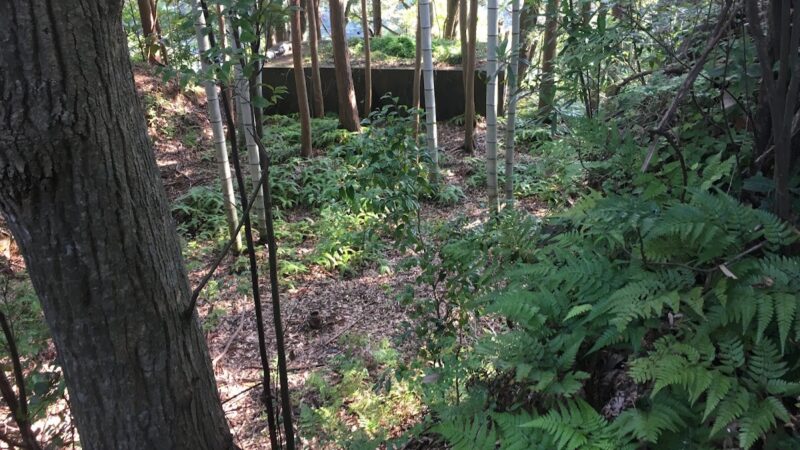
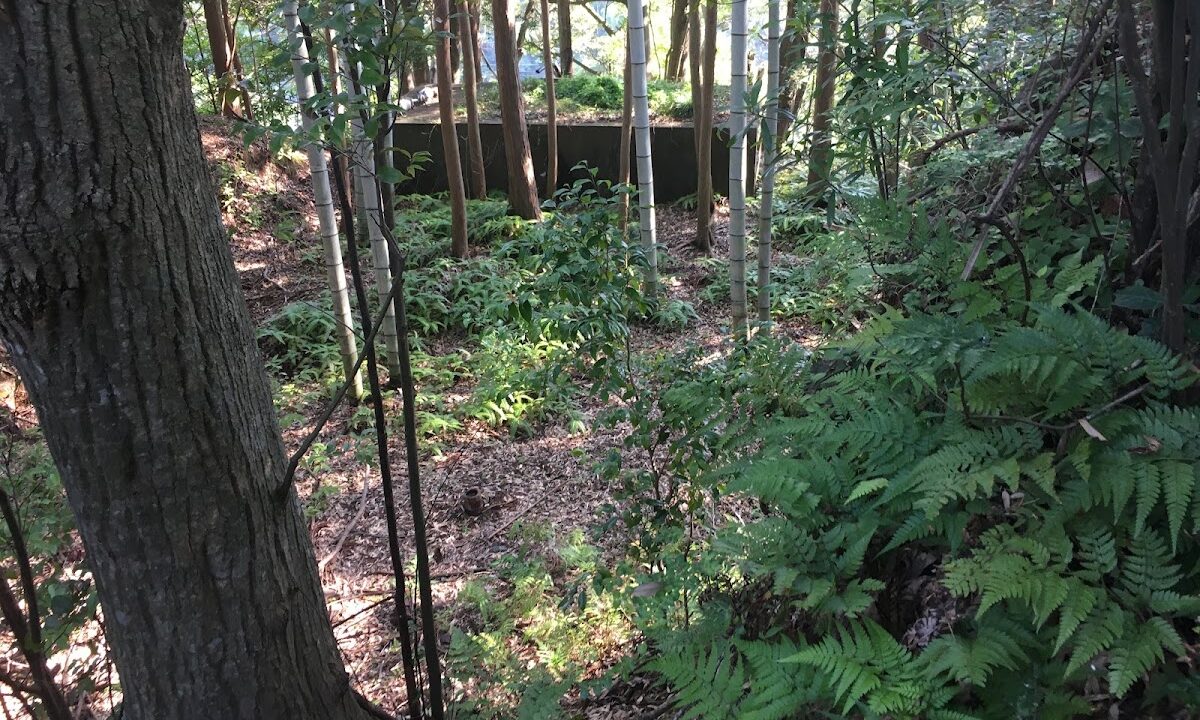
Currently, a stone monument marking the “Gokasho Castle Site” stands within the main enclosure, creating a quiet space surrounded by bamboo groves and trees. Archaeological excavations have confirmed the presence of building foundations and post holes, suggesting the existence of buildings such as the lord’s residence and warehouses.
Double Enclosures and Defensive Line
The main enclosure is surrounded by a double enclosure. The first enclosure surrounds the east and south sides of the main enclosure and is a belt-shaped enclosure approximately 10-15 meters wide. Earthen ramparts were built around this enclosure, serving as the primary defensive line to prevent approach to the main enclosure.
The second enclosure extends further out, particularly to the south. This area is thought to have been used as a soldiers’ garrison and a supply depot. The elevation difference between the baileys is approximately 3-5 meters, making it difficult for enemies to climb.
Defensive System with Moats and Earthworks
One of the distinctive features of Gokasho Castle is the moat (dry moat) located on the south side. This moat is approximately 5-8 meters wide and 3-4 meters deep, extending long in an east-west direction. An earthwork 2-3 meters high was built outside the moat (on the south side), forming a double defensive line.
This system of moats and earthworks was the main defensive structure against attacks from the south. The moat does not completely encircle the castle, but is concentrated in areas where defense was particularly necessary due to the terrain. This demonstrates efficient castle construction techniques.
Stone walls were used in some parts of the earthworks, and traces of stacked stones can be seen, especially around the entrance. These stone walls were constructed using the Nozurazumi technique and are valuable remains that demonstrate the development of stone wall technology during the Sengoku period.
Residence Site and Castle Town Structure
At the foot of the castle mountain, along the Gokasho River, lie the remains of the Aisu clan’s residence. This site, now a museum called “Aisu no Yakata,” is believed to have been the Aisu clan’s daily living space. A typical medieval castle strategy was employed, with the clan taking refuge in Gokasho Castle on the mountaintop during wartime and conducting official business at their residence at the foot of the mountain during peacetime.
Foundation stones, well remains, and traces of earthworks have been discovered at the residence site, indicating the presence of a considerably large mansion. The residence site and burial mounds are designated as a Mie Prefecture cultural property and are protected as an important historical site along with the castle ruins.
Highlights of Gokasho Castle
Well-Preserved Enclosures and Earthworks
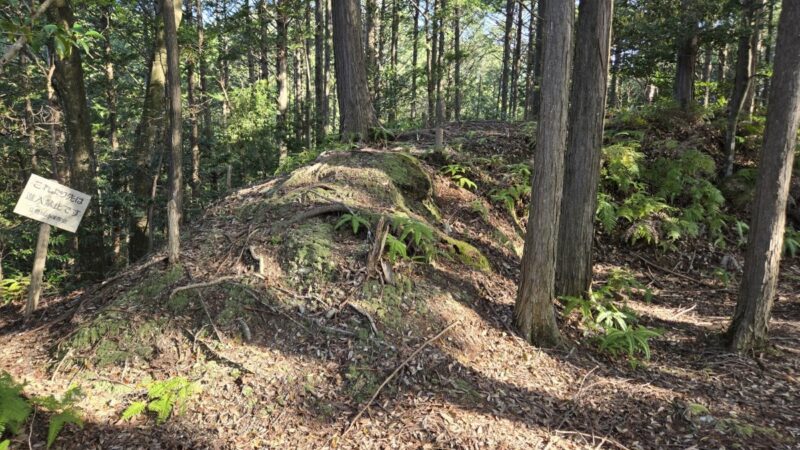
The greatest highlight of Gokasho Castle is the well-preserved remains of the enclosures and earthworks. The earthen ramparts surrounding the main enclosure are still clearly visible even after more than 450 years. The ramparts on the south side of the main enclosure, in particular, have retained their height, allowing visitors to truly appreciate the castle’s structure at the time.
The elevation differences of the enclosures are also clearly preserved, making it ideal for understanding the castle’s three-dimensional structure. Walking through each enclosure will allow you to experience firsthand the defensive ingenuity and the design of the movement paths.
Moat and Double Defensive Line
The moat on the south side is the core of Gokasho Castle’s defensive system. Standing at the bottom of the moat and looking up, you will be overwhelmed by the height of the earthen ramparts on both sides. Visiting the site will help you understand just how difficult it would have been to attack beyond this moat.
The earthen ramparts built outside the moat are also impressive. Climbing onto the ramparts allows you to experience the difference in perspective between the attacker and the defender.
Structure of the Entrance Gate
The entrance gate to the main enclosure has a staggered structure and is an important relic for learning about medieval castle defensive techniques. The structure, which prevents direct advances, slows down the enemy’s speed and allows for attacks from the flanks.
Remnants of stone walls remain around the entrance, indicating its importance as a defensive point.
Excellent Views and Location
The views from the main enclosure are another of Gokasho Castle’s charms. You can see the Gokashoura settlement, Gokasho Bay, and, on a clear day, even the Kumano Sea. This view gives a real sense of Gokasho Castle’s function as a monitoring base for maritime traffic.
The natural fortifications provided by the Gokasho River can also be appreciated by visiting the site. The cliffs facing the river are extremely difficult to attack, demonstrating the high level of castle-building technology that skillfully utilized the natural terrain.
Aisu no Yakata (Residence Site)
Located at the foot of the castle mountain, “Aisu no Yakata” is an exhibition facility built on the site of the Aisu clan’s residence. This exhibit showcases the history of the Aisu clan, the swordsmanship of Aisu Ikosai Hisatada, and the changes that occurred at Gokasho Castle. Visiting before or after your visit to the castle ruins will deepen your understanding of the history.
Around the residence site, earthworks and well remains are still present, allowing you to learn about the structure of a medieval samurai residence.
Learning about Castle Structure with a Layout Map
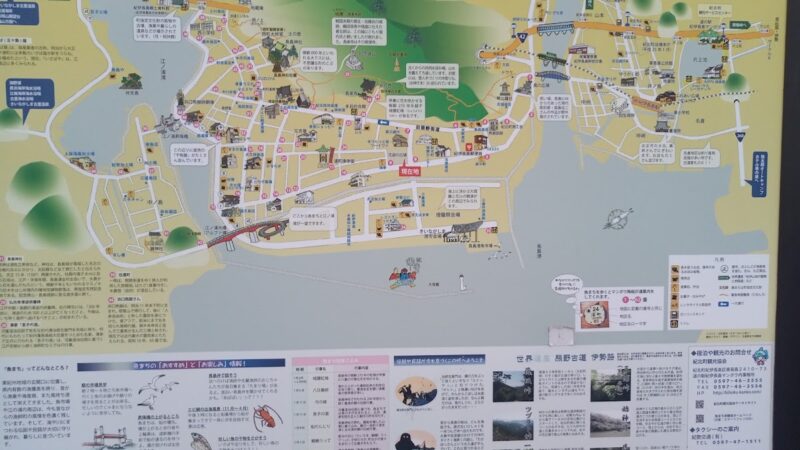
An information board displaying a layout map is installed at the site, which is helpful for understanding the overall structure of the castle. Walking around the castle ruins with the layout map in hand will allow you to grasp the relative positions of each structure and the overall picture of the defensive system.
Those interested in castles are advised to obtain a layout map and study it beforehand.
Access to Gokasho Castle
Access by Car
The most convenient way to access Gokasho Castle is by car.
From the Ise Expressway:
- Approximately 50 minutes from Tamaki IC via National Route 42, Prefectural Route 169, and National Route 260.
- Approximately 60 minutes from Ise-Nishi IC via National Route 23 and National Route 260.
Route from National Route 260:
From the intersection west of the bridge over the Gokasho River on National Route 260, head north. Continue north along Prefectural Route 12 until you see a sign for “Aisu no Yakata.” There is a parking lot at Aisu no Yakata, and a path to the castle ruins is maintained from there.
Parking is free and can accommodate approximately 10 regular-sized cars.
Access by Public Transportation
If using public transportation, please follow the route below.
Train/Bus:
- From JR/Kintetsu “Ise-shi Station,” take the Mie Kotsu bus bound for “Minami-Ise-cho” (approximately 80 minutes), get off at the “Gokasho” bus stop, and walk for approximately 15 minutes.
However, since bus services are limited, it is recommended to check the timetable in advance. For sightseeing, renting a car is convenient.
Ascent Route and Time Required
From Aisu-no-yakata to the castle ruins, it’s approximately a 10-15 minute walk along the well-maintained ascent route. The path is relatively gentle, but there are some steep sections, so comfortable walking shoes are recommended.
Allow 30 minutes to 1 hour to explore the castle ruins. Those who wish to carefully observe the remains are advised to allocate 1 hour or more.
Points to Note When Visiting
- As the castle ruins are located in a forest, insect repellent is recommended in summer, and long sleeves and long pants are recommended even in winter.
- Be careful as the ground can be slippery during and after rain.
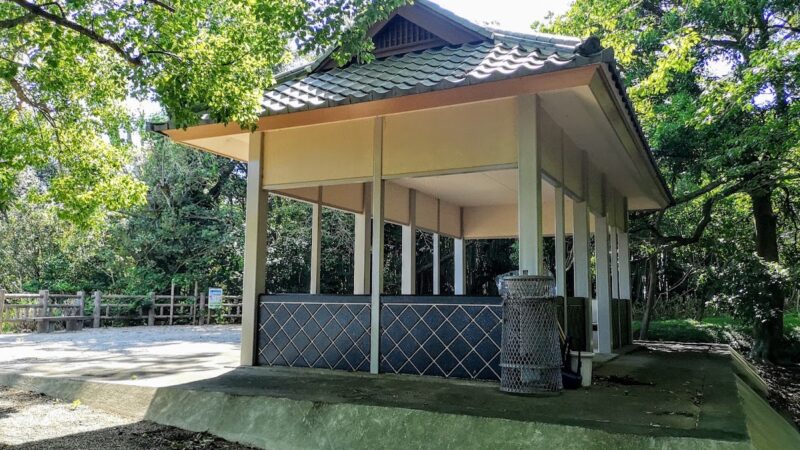
- Restrooms are available at Aisu no Yakata, so please use them before climbing to the castle.
- It is recommended to bring your own drinks.
- There are information boards within the castle ruins, but bringing a map of the castle layout will deepen your understanding.
Nearby Tourist Attractions
Aisu no Yakata
This exhibition facility at the foot of Gokasho Castle allows you to learn about the history of the Aisu clan and the swordsmanship of Aisu Ikosai Hisatada. It is a must-visit spot when visiting Gokasho Castle.
Coastline of Minamiise Town
Minamiise Town is known for its beautiful ria coastline. The scenery, including Gokasho Bay, is magnificent, with its crystal-clear waters and complex coastline. It is also a popular driving route.
Tamaru Castle Ruins
The Tamaru Castle ruins, which served as a base for Oda Nobuo, are located about 40 minutes by car from Gokasho Castle. This is also a Mie Prefecture designated historical site, and the remaining stone walls and castle tower base make for an impressive sight. Visiting both Gokasho Castle and Tamaru Castle allows you to compare the castle structures of the attacking and defending sides.
Ise Grand Shrine
Ise Grand Shrine, one of Japan’s most representative shrines, is about an hour’s drive from Gokasho Castle. It’s a good idea to visit it as part of your South Ise sightseeing.
Ukura Park
This scenic spot in South Ise Town features “Heart Bay,” known as the heart-shaped inlet. The view from the observation deck is spectacular and it’s a popular photo spot.
Historical Significance of Gokasho Castle
Gokasho Castle has historical significance beyond simply being the ruins of a local powerful family’s castle.
Southern Court Base during the Nanboku-cho Period
Gokasho Castle, a crucial Southern Court base in southern Ise during the turbulent Nanboku-cho period, is indispensable for understanding the political and military history of this region. Its relationship with the Kitabatake clan and its cooperation with surrounding local lords provide clues to understanding the regional society of medieval Ise Province.
Importance in the History of Japanese Swordsmanship
Gokasho Castle, which produced Aisu Ikosai Hisatada, a key figure in the history of Japanese swordsmanship, also holds value as a sacred site in the history of martial arts. Considering the many swordsmanship schools that branched off from the Kage-ryu school, Gokasho Castle can be considered one of the origins of Japanese martial arts culture.
The Process of Regional Unification under the Oda Regime
The attack on Gokasho Castle in 1576 (Tensho 4) is an example illustrating the process by which the Oda regime completely seized control of Ise Province. As a historical document that concretely shows how local forces were eliminated, it occupies an important position in the study of Sengoku period history.
A Typical Example of a Medieval Castle
The layout of Gokasho Castle exhibits typical medieval mountain castle structures while also possessing regional characteristics. Its defensive system utilizing natural terrain, the arrangement of baileys, and the combination of earthworks and moats make it an excellent resource for medieval castle research.
Points to Consider When Visiting Gokasho Castle
Learn About the History Before Visiting
Before visiting Gokasho Castle, acquiring basic knowledge about the history of the Aisu clan and Ise Province during the Nanboku-cho period will deepen your understanding at the site. Visiting the exhibits at Aisu no Yakata before ascending to the castle is also a good approach.
Utilize a Layout Map
We strongly recommend bringing a layout map when visiting castle ruins. A detailed layout map, in addition to the on-site information boards, makes it easier to understand the relative positions of each structure and the overall picture of the defensive system.
Allow Plenty of Time
Although Gokasho Castle is a medium-sized castle ruin, a thorough visit will take more than an hour. To carefully observe the ruins, take photographs, and enjoy the scenery, it’s important to visit with plenty of time to spare.
Consider the Season
Since the castle ruins are located in a forest, the view will differ depending on the season you visit. The scenery is beautiful in the season of fresh greenery and autumn leaves, and in winter, the fallen leaves make the ruins easier to see. However, in summer, the vegetation can make the ruins difficult to see.
Photography Tips
At Gokasho Castle, we recommend taking photos at the following points:
- Earthworks of the main enclosure
- Southern moat and earthworks
- Structure of the gate
- View from the main enclosure
- Stone monument of Gokasho Castle ruins
- Terraces of the enclosures
Summary
Gokasho Castle, located in Minamiise-cho, Watarai-gun, Mie Prefecture, was the residence of the Aisu clan, who were active in southern Ise from the Nanboku-cho period to the Sengoku period. It is also an important historical site known as the birthplace of Aisu Ikosai Hisatada, who left his mark on the history of Japanese swordsmanship.
Built on a hill 41 meters above sea level, this castle was a formidable mountain fortress that skillfully utilized the natural defenses of the Gokasho River, employing a clever arrangement of baileys, earthworks, moats, and stone walls. Although it fell in 1576 to an attack by Oda Nobuo, leading to the downfall of the Aisu clan, its remains are still well-preserved.
Protected as a Mie Prefecture designated historical site, the Gokasho Castle ruins are extremely valuable for learning about the structure of medieval castles, understanding the regional history of the Nanboku-cho period, and tracing the origins of Japanese swordsmanship. Exploring the castle ruins amidst the beautiful nature of southern Ise, while reflecting on history from over 450 years ago, will be an unforgettable experience for history enthusiasts.
When visiting the Ise area, be sure to visit the Gokasho Castle ruins. It will be a valuable opportunity to experience the rise and fall of the Aisu clan and to learn about the origins of Japanese swordsmanship.