Nishisakabe Castle (Yokkaichi City, Mie Prefecture) Complete Guide | History, Remains, and Access Information
Nishisakabe Castle, located in Nishisakabe-cho, Yokkaichi City, Mie Prefecture, is a historical castle ruin believed to have been built in the early Kamakura period. Currently, it is maintained as “Mie Castle Mountain Green Park,” serving as a place of relaxation for local residents, while also being a valuable historical site where castle remains can be observed. This article provides a comprehensive explanation of Nishisakabe Castle, including its detailed history, existing remains, points of interest, and practical information for visitors.
Basic Information on Nishisakabe Castle
Location and Geographical Characteristics
Location: 512-0913 Nishisakabe-cho, Yokkaichi City, Mie Prefecture
Nishisakabe Castle is located approximately 4 km northwest of the center of Yokkaichi City, built on a hill approximately 30 meters above sea level. While the surrounding area is being developed as a residential area, the castle ruins themselves are preserved as a green park, forming a valuable historical space amidst urbanization.
Nishisakabe-cho is located in the northern part of Yokkaichi City, with neighboring areas including Higashisakabe-cho, Yamashiro-cho, and Oyachi-cho. Topographically, it lies at the end of a hill range extending from the Suzuka Mountains, providing suitable terrain for building a castle.
Castle Type and Scale
- Castle Classification: Hilltop Castle
- Construction Date: Traditionally believed to be 1204 (Genkyu 1)
- Main Remains: Earthworks, remains of baileys
- Current Status: Developed as Miejoyama Green Park
Nishisakabe Castle is a typical medieval hilltop castle, characterized by its layout that skillfully utilizes the natural terrain. It is classified as a small to medium-sized castle and is thought to have had a strong character as a residence for a local lord.
History of Nishisakabe Castle
Construction History and the “Three-Day Heike Rebellion”
The construction of Nishisakabe Castle is deeply connected to the “Three-Day Heike Rebellion” that occurred in 1204 (Genkyu 1). This rebellion is considered one of the last resistance movements by the remnants of the Heike clan, and was led by Wakana Goro.
According to tradition, Hagiwara Kotaro, acting on Wakana Goro’s orders, built Nishisakabe Castle. The Three-Day Heike Rebellion was suppressed in literally three days, but it is ironic that this short-lived resistance movement became the catalyst for the preservation of a castle in the region.
Castle Lords and Changes During the Muromachi Period
During the Muromachi period, Nishisakabe Castle is said to have become the residence of Akahori Totaro. The Akahori clan later moved to Nakano Castle (Nakano-cho, Yokkaichi City), but it is believed that they used Nishisakabe Castle as their residence before that.
During this period, Nishisakabe Castle functioned as a base for local lords in northern Ise Province. The area around Yokkaichi was a strategic point where the Kuwana, Asake, and Mie districts met, and it is thought that the castle, though small, possessed strategic value.
Developments after the Sengoku Period
With the arrival of the Sengoku period, records of Nishisakabe Castle cease. This region was a sphere of influence for numerous small lords known as the Hokusei Forty-Eight Families, and it is presumed that consolidation into larger castles and the abandonment of castles due to warfare progressed.
With Oda Nobunaga’s invasion of Ise, Toyotomi Hideyoshi’s unification of Japan, and the arrival of the Edo period, Nishisakabe Castle disappeared from the historical stage and was used for farmland and forests.
Remains and Highlights of Nishisakabe Castle
Development Status as Miejoyama Green Park
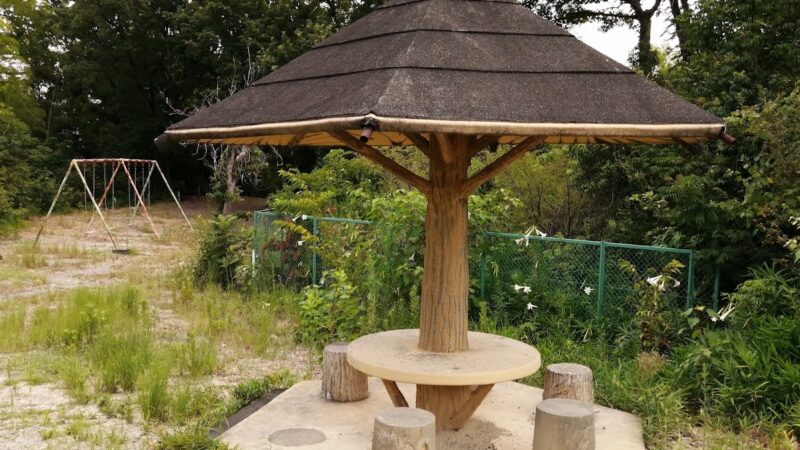
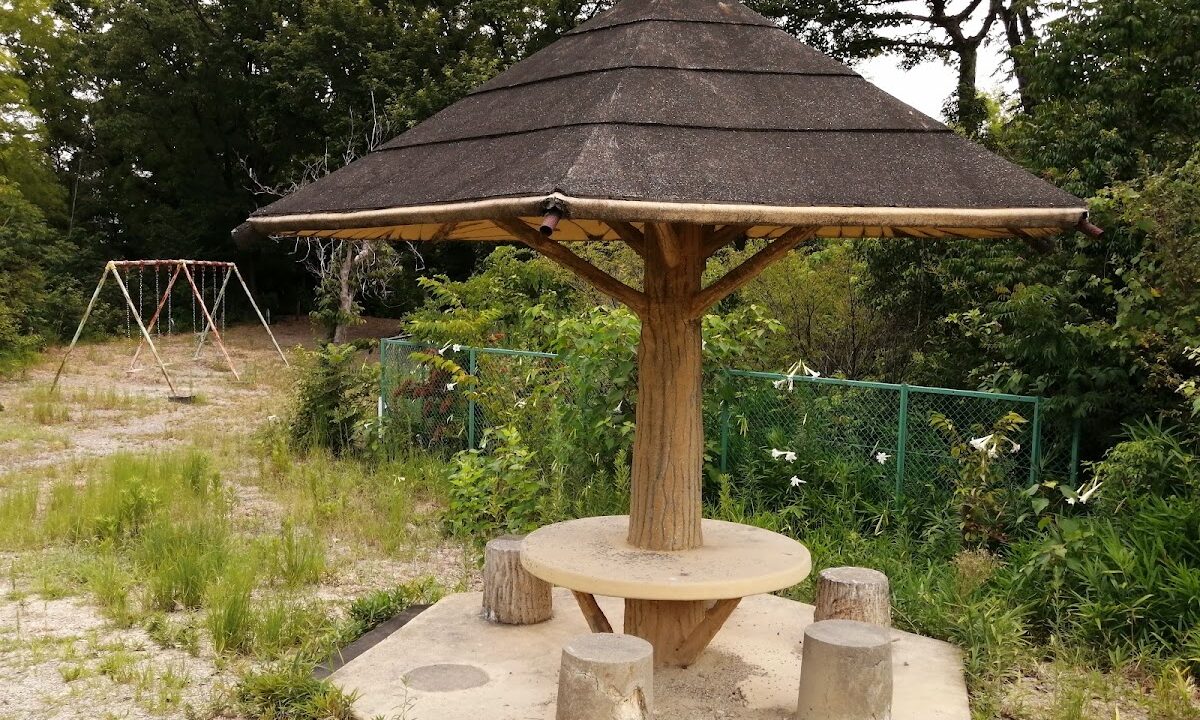
Currently, the Nishisakabe Castle site has been developed as “Miejoyama Green Park” and is open to local residents. The park features playgrounds and open spaces, serving as a play area for children and a walking trail.
While some remains have been altered due to the park’s development, the basic topography of the castle and its major structures have been preserved, making it a worthwhile historical site for history enthusiasts. It can be considered a good example of a balanced approach between park development and the preservation of remains.
Major Remains That Can Be Confirmed
Earthworks
The most clearly identifiable remains at Nishisakabe Castle are the earthworks. Partially remaining earthworks, approximately 1-2 meters high, surround the area presumed to be the main keep. These are defensive structures built by piling up earth, characteristic of medieval castles, and are valuable remains that convey the castle-building techniques of the time.
The state of preservation of the earthworks varies depending on the location, but in areas that were consciously preserved during park development, the original shape from the time of construction is largely retained. Observing the cross-section of the earthworks, traces of a technique called “hanchiku” (rammed earth construction), where soil was compacted in layers, can be seen in some places.
Kuruwa (Enclosure) Site
The topography reveals traces of multiple enclosures (flat areas) arranged in a stepped pattern around the main enclosure (honmaru). While currently used as a park plaza and pathway, the changes in elevation and terrain allow for inferences about the original layout.
In particular, the highest flat area, presumed to be the main enclosure, measures approximately 40m east-west and 30m north-south, a standard size for a small medieval castle.
Castle Site Monument
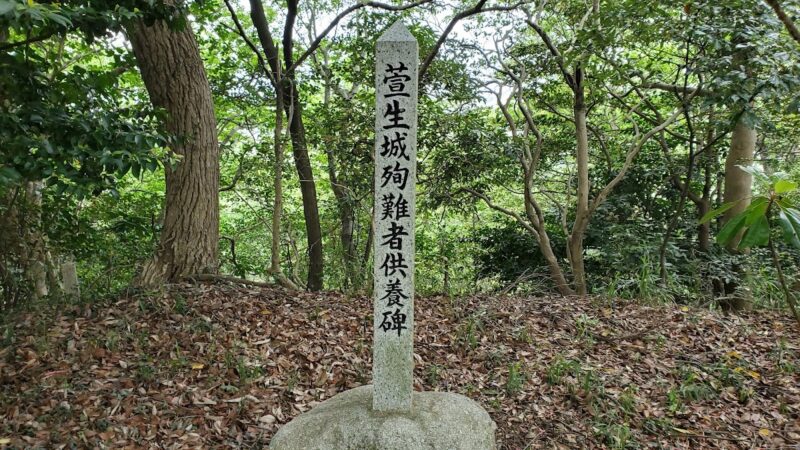
A castle site monument inscribed with “Nishisakabe Castle Site” stands at the site of the main enclosure. This monument is an important historical record of the region and serves as a landmark for visitors to recognize that it is a castle site.
The inscription contains basic information such as the construction date and the name of the castle lord, making it a valuable resource for learning about history on-site.
Surrounding Topography and Defensive Structures
Nishisakabe Castle was built on the tip of a hill, with relatively steep slopes on the east and south sides. This technique of utilizing the natural terrain as a substitute for outer moats and cliffs is a typical castle-building technique of the medieval period.
The north and west sides have relatively gentle slopes, but it is presumed that artificial defensive structures such as earthworks and trenches were located on these sides. While the exact layout is unclear due to changes in the terrain, the subtle undulations of the landscape allow us to imagine the defensive lines of the time.
How to Access Nishisakabe Castle
Access by Public Transportation
Nearest Station: Sangi Railway Sangi Line “Oyachi Station”
- Approximately 20 minutes on foot from Oyachi Station (approx. 1.5 km)
- Also possible to take a Mie Kotsu bus from Kintetsu Yokkaichi Station or JR Yokkaichi Station
- Get off at the “Nishisakabe” bus stop and walk for approximately 5 minutes
While access by public transportation is possible, the number of services is limited, so it is recommended to check the timetable in advance.
Access by Car
Route from Major Roads:
- Approximately 15 minutes from Tomeihan Expressway “Yokkaichi IC”
- Accessible via Prefectural Road from National Route 1
Parking: There is a dedicated parking lot at Mie Castle Mountain Green Park (free, approximately 10 cars)
Some roads within the residential area are narrow, so caution is required when driving. Searching for “Miejoyama Ryokuchi Park” or “Nishisakabe Castle” on your car navigation system or smartphone map app will display the exact location.
Notes for Visitors
- Free to Visit: The park is open to the public, and there are no restrictions on visiting time.
- Admission Fee: Free
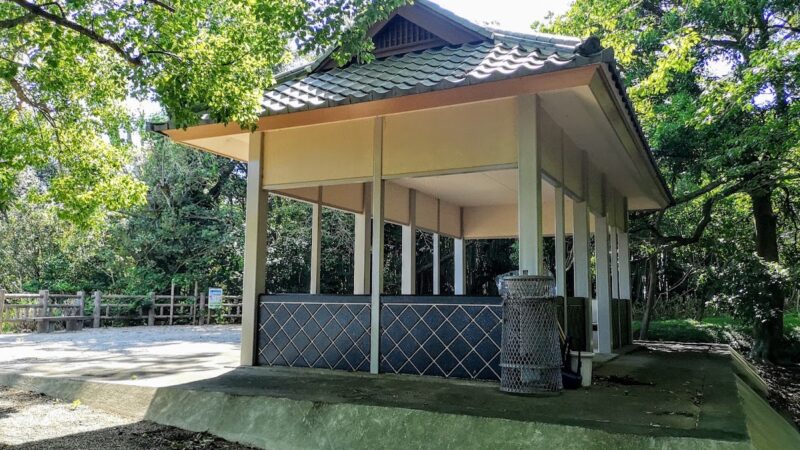
- Restrooms: Public restrooms are available within the park.
- Barrier-Free: There are some steps within the park; it is not completely barrier-free.
- Season: Particularly beautiful during the cherry blossom season in spring and the autumn foliage season.
History and Local Information of Nishisakabe Town
Origin and History of Nishisakabe Town
The name Nishisakabe Town originates from the ancient place name “Sakabe.” It is said that Sakabe is either a place name indicating a topographical feature (a place with slopes) or derived from an ancient clan name.
In the Middle Ages, it was divided into Nishisakabe and Higashisakabe, each forming independent settlements. During the Edo period, it became part of the Kuwana Domain and developed as an agricultural village. Following the implementation of the municipal system during the Meiji era, it was incorporated into Yokkaichi City, where it remains today.
Present-day Nishisakabe-cho
Present-day Nishisakabe-cho is the area with postal code 512-0913 and has developed as a residential area in the northern part of Yokkaichi City. With a population of approximately 2,000, it is a quiet residential area mainly consisting of detached houses.
The town has an elementary school, a community center, shops, and other facilities necessary for daily life. Miejoyama Green Park is a symbolic landmark of the area and is cherished by residents.
Nearby Tourist Attractions
Oyachi Kojo Elementary School: A historical building with Western-style architecture from the Meiji period.
Uneme Castle Ruins: Another medieval castle site located approximately 2km from Nishisakabe Castle.
Yokkaichi City Museum: A comprehensive museum where you can learn about the history of Yokkaichi (located in the city center).
Tarisaka Park: A large park known for its cherry blossoms (approximately 3km).
By combining these spots, you can enjoy a historical exploration course in northern Yokkaichi.
Research and Materials on Nishisakabe Castle
Documentary Materials
While historical materials concerning Nishisakabe Castle are limited, it is mentioned in the following sources:
- “Medieval Castles and Residences in Mie Prefecture” (Mie Prefectural Board of Education)
- “History of Yokkaichi City”
- “Comprehensive Survey of Japanese Castles,” Volume 10 (Shin Jinbutsu Oraisha)
- Survey report by a local history research society
These documents record the construction date, lord, and condition of the remains, making them valuable sources of information for understanding the history of Nishisakabe Castle.
Status of Archaeological Excavations
While no full-scale archaeological excavations have been conducted at Nishisakabe Castle, a simple confirmation survey was carried out during park development. As a result, fragments of medieval pottery and carbonized materials were unearthed, providing physical evidence supporting its use as a castle.
Further detailed archaeological investigations may reveal the construction date and detailed structure of the castle.
The Value of Visiting Nishisakabe Castle
Attractions for History Enthusiasts
Nishisakabe Castle is a historical site of high value for history enthusiasts and castle fans for the following reasons:
- Construction during the Kamakura Period: An ancient castle from the early Kamakura period, a valuable example for the study of medieval castles.
- Remaining Earthworks: Clear earthworks remain, allowing visitors to experience medieval castle construction techniques.
- Easy Access: Located close to urban areas, making it easily accessible.
- Quiet Environment: Not commercialized for tourism, allowing for thorough observation of the remains.
Value for Local Residents
For the local community, the Nishisakabe Castle ruins (Miejoyama Green Park) have multifaceted value as:
- A playground for children
- A course for walks and jogging
- An educational place to learn about local history
- A relaxing space to enjoy the seasonal nature
It can be said to be a good example of harmony between historical heritage and modern living spaces.
Preservation of Nishisakabe Castle and Future Challenges
Current Preservation Status
While the site has been protected from development due to its development as Miejoyama Green Park, some of the remains have been altered by the installation of park facilities. Currently:
- The main earthworks are preserved.
- The basic layout of the baileys remains in the terrain.
- Recognition as a historical site is maintained through the castle site monument.
This is the current situation.
Future Challenges and Prospects
Regarding the preservation and utilization of Nishisakabe Castle, the following challenges and prospects exist:
Challenges:
- Detailed surveying and documentation of the remains
- Balancing the renewal of aging park facilities with the protection of the remains
- Raising awareness of historical value and utilizing it for educational purposes
- Improving information boards and explanatory signs
Prospects:
- Restoration of the castle’s appearance using digital technology (AR/VR)
- Utilization as a base for local history learning
- Networking with other castle ruins in Yokkaichi City
- Incorporation into historical walking courses
It is hoped that local residents, the government, and researchers will cooperate to protect the value of the castle as a historical heritage site while promoting modern utilization.
Summary: Historical Significance of Nishisakabe Castle
Nishisakabe Castle, located in Nishisakabe-cho, Yokkaichi City, Mie Prefecture, is a medieval castle with origins in the “Three-Day Heike Rebellion” of the early Kamakura period. Although small in scale, Nishisakabe Castle remains a valuable historical site with a history of over 800 years, still standing within Miejoyama Green Park.
The well-preserved remains, such as earthworks, allow visitors to learn about the structure of a medieval castle. Furthermore, its status as a park cherished by local residents is a noteworthy feature. It can be said to be an ideal example of cultural property protection, balancing the preservation of historical heritage with modern use.
When visiting Yokkaichi, paying attention not only to its image as an industrial city but also to such historical aspects will allow for a deeper understanding of the region. Nishisakabe Castle is an ideal historical site to begin with.
We recommend a visit to Nishisakabe Castle to castle enthusiasts, history buffs, and anyone interested in local history. In the tranquil park, you can feel the weight of history that has continued since the Kamakura period.