A Complete Guide to the History and Highlights of Kyōjō (Kihō-chō, Minamimuro-gun, Mie Prefecture)
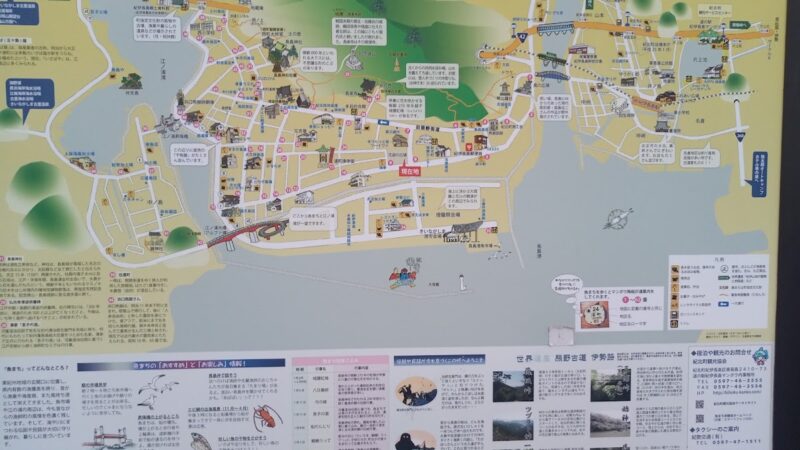
Located in Ōsato, Kihō-chō, Minamimuro-gun, Mie Prefecture, Kyōjō is known as the castle of the Horiuchi clan, who ruled the southern part of Kii Province from the Sengoku period to the Azuchi-Momoyama period. Currently, it is maintained as the site of Tōzenji Temple and is an important historical site that conveys the history of the region.
Overview of Minamimuro-gun and Kihō-chō
Geography and Characteristics of Minamimuro-gun
Minamimuro-gun is a county located in the southernmost part of Mie Prefecture. As of January 2026, the estimated population is 16,883, the area is 167.75 km², and the population density is 101 people/km². It has geographical features that it faces the Kumano Sea to the east, the Kitayama River to the west, and the Kumano River to the south. The coastal areas enjoy a mild climate with little snowfall even in winter, but the mountainous regions along the Kitayama River basin experience harsh winters. This geographical diversity contributes to the rich natural environment of Minamimuro District.
Location of Kiho Town
Kiho Town is located in Minamimuro District, at the southernmost tip of Mie Prefecture. It borders Shingu City in Wakayama Prefecture and forms the southernmost point of the Kii Peninsula, separated by the Kumano River. The town hall is located at 324 Udono, Kiho Town, with postal code 519-5701.
Kiho Town’s motto is “A town embraced by the blessings of the sea, mountains, and rivers, shining and creating together,” and it is promoting community development that utilizes its abundant natural resources. It also plays an important role as a gateway to the Kumano Kodo pilgrimage route and the Kumano Sanzan shrines.
History of Kyōjō Castle
The Horiuchi Clan and the Construction of Kyōjō Castle
Kyōjō Castle was built by the Horiuchi clan, who wielded considerable power in southern Kii Province during the Sengoku period (Warring States period). While the Horiuchi clan’s main base was Shingū Castle, Kyōjō Castle played a crucial role as a subsidiary castle.
In 1582 (Tenshō 10), Horiuchi Ujiyoshi strengthened his control over the region by incorporating the area south of the Nisaka Pass from Ago District in Shima Province into Muro District in Kii Province. This historical development influenced present-day Kihoku Town in Kitamuro District, Mie Prefecture, Owase City, and the Nishiki district of Taiki Town in Watari District.
Minamimuro District in the Sengoku Period
During the Sengoku period, Minamimuro District occupied a strategically important position as a border region between Kii Province and Shima Province. This region, also a base for the Kumano naval force, prospered as a key point for maritime traffic.
The Osato district, where Keijo Castle was built, was located near the mouth of the Kumano River and was a commercially important location as a junction of water and land routes. The castle served to monitor the surrounding area and solidify the control of the Horiuchi clan.
Changes After the Edo Period
In the Edo period, Keijo Castle lost its military role and gradually fell into disuse. Tozenji Temple was built on the castle site and developed into a center of local religious worship.
With the abolition of the feudal domains and establishment of prefectures in the Meiji era, this region was incorporated into Mie Prefecture via Watari Prefecture. Minamimuro District was officially established in the Meiji era and continues to exist as an administrative division of Mie Prefecture to this day.
Remains and Highlights of Keijo Castle
Existing Remains
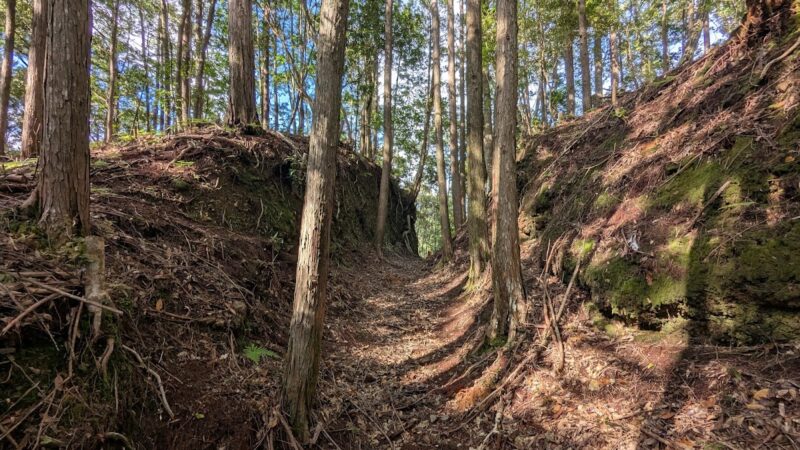
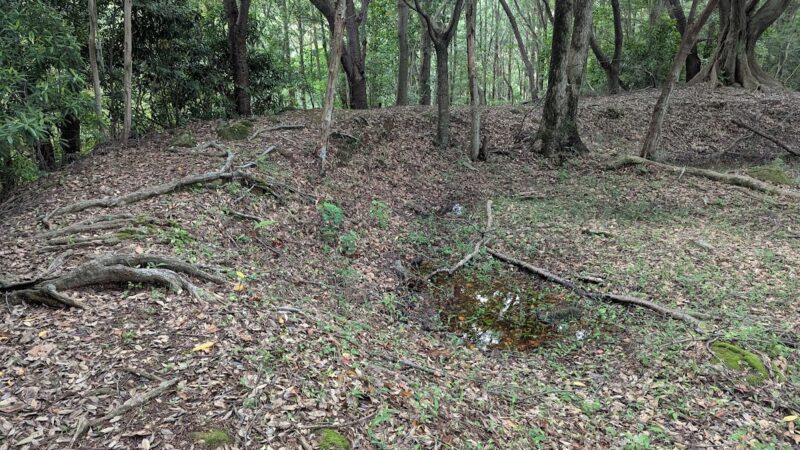
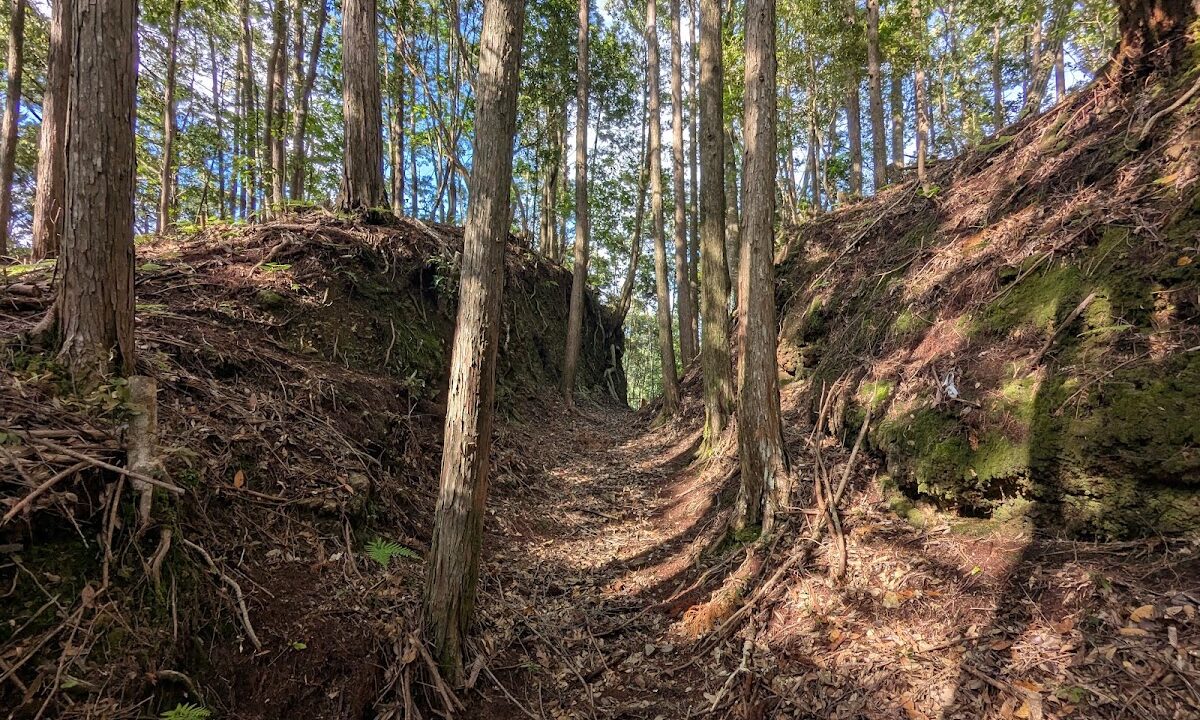
Some remains of Keijo Castle are currently preserved as the Tozenji Temple site. While clear stone walls and the remains of the castle tower are not present, the topography allows for inferences about the original layout.
The main points of interest include the remains of baileys and earthworks, which convey the characteristics of a mountain castle from the Sengoku period. It is recognized as a valuable historical site by local history enthusiasts and castle researchers.
Evaluation on Kojodan
On the castle information website “Kojodan,” Keijo Castle has an average rating of ★★★☆☆ (3.40). It is included in the 100 Castle Lords System and has received a certain level of recognition from castle fans nationwide.
Visitors have commented, “Although there are few remains, it is interesting when you learn about the historical background,” and “You can reflect on history in a quiet environment.”
Current Status of Tozenji Temple Ruins
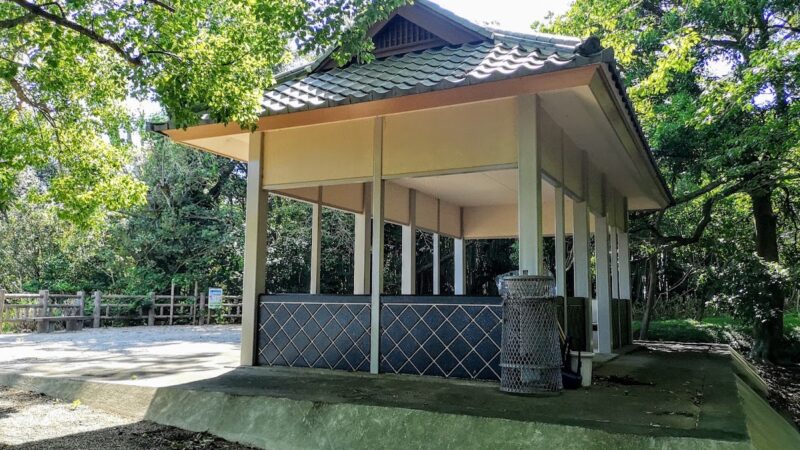
There is parking space for several cars at the Tozenji Temple ruins, making it accessible by car. The surrounding area is a quiet residential area and functions as a place of life for local residents.
Although it no longer functions as a temple, it is an important spot that conveys the history of the region, and information boards have been installed.
Access and Surrounding Information
Access by Public Transportation
The nearest station to Keijo (Kyoto) is Shingu Station on the JR Kisei Main Line. From Shingu Station, take a bus and get off at the “Osato” bus stop. The site of Tozenji Temple is a few minutes’ walk from the bus stop.
Shingu Station is located in Shingu City, Wakayama Prefecture, but it is close to the border with Mie Prefecture and serves as a gateway to Kiho Town. Express trains also stop here, making it relatively convenient for those traveling from afar.
Access by Car
If traveling by car, the most common route is via National Route 42. It is approximately a 10-minute drive from the Kiho Town Interchange on the Kisei Expressway.
There are a few parking spaces at the Tozenji Temple site, but space is limited, so caution is advised when visiting with multiple vehicles. Some surrounding roads are narrow, so careful driving is required.
Nearby Tourist Attractions
Around Seoul, there are the Kumano Sanzan shrines, a World Heritage Site, including Kumano Hayatama Taisha (Shingu City, Wakayama Prefecture) and Kumano Hongu Taisha (Tanabe City, Wakayama Prefecture). Also, within Kiho Town, there is the “Kiho Town Sea Turtle Park” roadside station, a popular facility for sea turtle conservation and research.
There are also plenty of spots to enjoy nature, such as boat trips down the Kumano River and the beautiful coastline of Shichiri Mihama. You can enjoy sightseeing in Southern Kii Peninsula in conjunction with a visit to Seoul.
History and Administration of Minami-Muro District
Establishment and Division of Muro District
Muro District existed as part of Kii Province from ancient times. Due to its vast area, Muro District was divided into Kita-Muro District and Minami-Muro District during the Meiji era’s administrative reforms.
This division resulted in Kitamuro District governing the area around present-day Kihoku Town and Owase City, while Minamimuro District governed the area including Kiho Town and Mihama Town. This administrative division has continued to this day.
Current Composition of Minamimuro District
As of 2026, Minamimuro District comprises two towns: Kiho Town and Mihama Town. While several other towns and villages once existed, the current structure was formed through municipal mergers between the Showa and Heisei eras.
Both towns face challenges such as population decline and aging, but are working on regional development by leveraging their rich natural environment and historical and cultural resources.
Position within Mie Prefecture
Minamimuro District is located at the southernmost tip of Mie Prefecture, approximately 100 km in a straight line from Tsu City, the prefectural capital. Geographically, it has strong ties to Wakayama Prefecture, and economically, it is integrated with the Kinan region centered around Shingu City.
Within Mie Prefecture, the area has formed a unique cultural sphere distinct from the Ise-Shima and Hokusei regions, and is known for its deep connection to World Heritage sites such as Kumano faith and the Kumano Kodo pilgrimage routes.
The Charm and Enjoyment of Visiting Keijo Castle
Value as a Historical Exploration Site
Keijo Castle, as the residence of a local powerful family during the Sengoku period, is a valuable historical site for understanding the regional governance of that time. Although large-scale stone walls and buildings no longer remain, the topography and layout allow us to discern the castle’s technology and strategies of the time.
For history enthusiasts, it is a valuable opportunity to trace the footsteps of the Horiuchi clan, a local powerful family. Visiting it together with Shingu Castle will allow for a deeper understanding of the Horiuchi clan’s system of rule.
A Stroll in a Quiet Environment
Because the Keijo Castle ruins are not commercialized for tourism, you can reflect on history in a quiet environment. Although the surrounding area is residential, you can enjoy a stroll in a peaceful atmosphere.
You can explore the historical site while experiencing the changing seasons, with cherry blossoms in spring and autumn leaves in fall. This is the perfect spot for those who want to quietly appreciate the region’s history.
Experiencing Local Culture
Through a visit to Keijo (Seoul), you can experience the history and culture of Kiho-cho, Minamimuro-gun. Interacting with locals and enjoying dishes made with local ingredients will provide a deeper travel experience.
Kiho-cho boasts a rich local food culture, including Kumano chicken and Mehari sushi. Enjoying local cuisine in conjunction with a visit to the castle ruins is highly recommended.
Natural Environment and Climate of Minamimuro-gun
Warm Coastal Area
The coastal area of Minamimuro-gun is influenced by the Kuroshio Current, resulting in a warm climate throughout the year. Even in winter, there is almost no snowfall, and the mild environment is a defining characteristic.
Taking advantage of this climate, citrus fruit cultivation is thriving. Mihama-cho, in particular, is known as a “town where mandarins are harvested all year round,” cultivating various varieties of mandarins.
Harsh Natural Environment in the Mountainous Region
On the other hand, in the mountainous region of the Kitayama River basin, temperatures drop significantly in winter, and snowfall is sometimes observed. This temperature difference contributes to the diversity of the region’s natural environment.
The mountainous region is blessed with abundant forest resources, and forestry is an important industry. Furthermore, river fish such as ayu and amago, nurtured by the clear streams, are plentiful.
Marine Resources of the Kumano Sea
The eastern side faces the Kumano Sea and is blessed with abundant marine resources. In addition to migratory fish such as bonito and tuna, high-end ingredients such as spiny lobster and abalone are also landed.
Shichiri-Mihama is known as Japan’s longest sandy-gravel beach and is famous as a nesting ground for loggerhead sea turtles. At the Kiho Town Sea Turtle Park, you can learn about sea turtle conservation activities.
The Future of Gyeongseong and the Region
Preservation and Utilization of Historical Heritage
Historical heritage sites in the region, including Gyeongseong, must be appropriately preserved and passed on to future generations. At the same time, their utilization as tourism resources is also anticipated.
Historical sites like Gyeongseong play an important role as educational venues for learning about local history. Collaboration with local schools and the holding of history lectures are being considered.
Expectations for Tourism Promotion
With the increase in tourists to the Kumano Kodo pilgrimage route and the Kumano Sanzan shrines, historical sites in the region, such as Gyeongseong, are also attracting attention. Creating an environment that encourages more people to visit is needed, through the installation of appropriate signage and the training of guides.
The development of a circular route linked to the World Heritage site of the Kumano Kodo is also anticipated as a future possibility.
Maintaining Local Communities
Amidst declining populations, historical resources in the region, such as Gyeongseong, play an important role in maintaining community bonds. Sharing history as a source of local pride can foster a sense of unity among residents.
Activities such as cleaning historical sites by local residents and passing on history are also important from the perspective of maintaining the community.
Summary
Keijo Castle, located in Kiho-cho, Minamimuro-gun, Mie Prefecture, is an important historical site that conveys the history of the region to the present day, as it was the residence of the Horiuchi clan, a local powerful family during the Sengoku period. Although large-scale remains do not exist, it is a valuable place for understanding the way the region was governed at that time.
Minamimuro-gun is located at the southernmost tip of Mie Prefecture and is blessed with a mild climate and abundant nature. As a gateway to the Kumano Sanzan shrines and a region with its own unique history and culture, it is a place that we hope many people will continue to visit.
Why not enjoy a trip to Keijo Castle, reflecting on the history of the Sengoku period and experiencing the rich nature and culture of Nanki? In a tranquil environment, you are sure to feel the depth of Japan’s local history.