Udono Castle (Minamimuro District, Mie Prefecture): History and Highlights | A Thorough Explanation of a Key Base of the Kishu Domain
What is Udono Castle?
Udono Castle was a Japanese castle from the medieval to early modern period, located in Udono, Kiho-cho, Minamimuro-gun, Mie Prefecture. Situated near the mouth of the Kumano River, on the border between Kii Province (present-day Wakayama Prefecture) and Ise Province (present-day Mie Prefecture), it played an important role as a transportation hub.
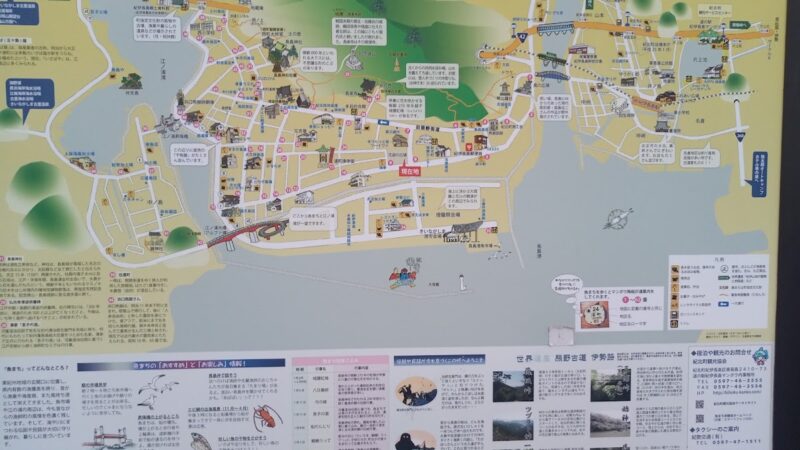
The current Udono Castle site is located on a hill approximately 500 meters northwest of Udono Station on the JR Kisei Main Line, boasting a strategically advantageous location overlooking the Kumano Sea. Some of the castle’s remains still exist, making it a valuable historical site that conveys the history of the region.
History of Udono Castle
Construction and the Udono Clan
There are various theories regarding the construction period of Udono Castle, but it is believed to have been built by the Udono clan around the 15th century, during the mid-Muromachi period. The Udono clan were local lords based in Muro District, Kii Province, and one of the powerful samurai groups in the Kumano region.
Regarding the origins of the Udono clan, there are several views, including the theory that they were a family of the Kumano Betto (chief priest of Kumano Shrine) and the theory that they developed from a local powerful family in Kishu. In any case, there is no doubt that they were a family well-versed in the geography of the Kumano region and wielded considerable influence in the area.
Udono Castle in the Sengoku Period
During the Sengoku period (Warring States period), Udono Castle became a battleground for conflicts between surrounding forces. Particularly in the 16th century, fierce battles were fought between the forces of Oda Nobunaga and Toyotomi Hideyoshi, who sought to bring Kishu under their control, and local forces who sought to protect the region’s independence.
It is believed that Udono Castle was caught in the crossfire during Toyotomi Hideyoshi’s conquest of Kishu in 1585 (Tensho 13). During this period, many castles in the Kumano region fell and came under the control of the Toyotomi regime.
Edo Period and Beyond
In the Edo period, Udono Castle came under the control of the Kishu Domain. As one of the three main branches of the Tokugawa family, the Kishu Domain governed Kii Province, and the area around Udono Castle was managed as an important border region of the domain.
However, during the peaceful Edo period, its military function as a mountain castle gradually diminished, and its role as a castle decreased. After the Meiji Restoration, it was officially abolished under the castle demolition order, bringing its history as a castle to an end.
Structure and Characteristics of Udono Castle
Layout and Arrangement
Udono Castle is a typical mountain castle, with a structure that skillfully utilizes the natural terrain. The castle was arranged around a central enclosure, with multiple smaller enclosures (kuruwa) and defensive structures built along the ridgeline.
The castle was of medium size, with the main enclosure estimated to be approximately 30 meters by 20 meters. Earthen ramparts and trenches surrounded the main enclosure, demonstrating careful planning to prevent enemy intrusion.
Geographical Advantages
The most distinctive feature of Udono Castle lies in its location. Its position near the mouth of the Kumano River offered the following strategic advantages:
Transportation Hub: Its location allowed for monitoring and managing the Kumano Kodo pilgrimage route and the Kumano River’s water transport, enabling control over the flow of people and goods.
Border Defense: Located on the border between Kii and Ise Provinces, it was a crucial point connecting the two.
Maritime Traffic: Facing the Kumano Sea, it offered a strategic location for monitoring intrusions from the sea.
Defensive Structures
Udono Castle featured defensive structures typical of mountain castles of that era.
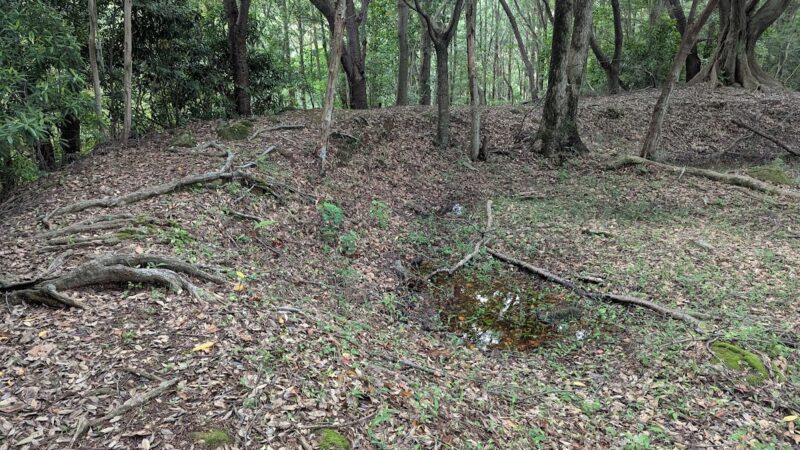
Moat: A moat dug to cut across the ridge, an important structure for preventing enemy intrusion. Parts of it can still be seen today.
Earthwork: A defensive wall made by piling up earth, positioned around the main enclosure and baileys.
Cut Slope: A defensive structure created by artificially cutting and steepening the slope, serving to make ascent difficult for the enemy.
Historical Background of Minamimuro District
Geography of Minamimuro District
Minamimuro District is located at the southernmost tip of Mie Prefecture, bordering Wakayama Prefecture. Facing the Kumano Sea, it is a region blessed with abundant nature and has flourished since ancient times as one of the centers of Kumano worship.
The current Minamimuro District comprises two towns: Kiho-cho and Mihama-cho. Udono Castle is located in Kiho-cho. This region has been an important route for pilgrimages to Kumano since ancient times, and many pilgrims traveled through it.
History of the Kumano Region
The Kumano region, including Minamimuro District, has been revered as “the land where the gods reside” since ancient times. The faith in the Kumano Sanzan (Kumano Hongu Taisha, Kumano Hayatama Taisha, and Kumano Nachi Taisha) reached its peak from the Heian period to the Kamakura period, with many people, from royalty and nobility to samurai and commoners, making pilgrimages.
In addition to this religious importance, the region’s geographical location at the southern tip of the Kii Peninsula made it a crucial point for maritime traffic. Udono Castle was built and developed within this historical and geographical context.
Current Status of Udono Castle Ruins
Preservation Status of Remains
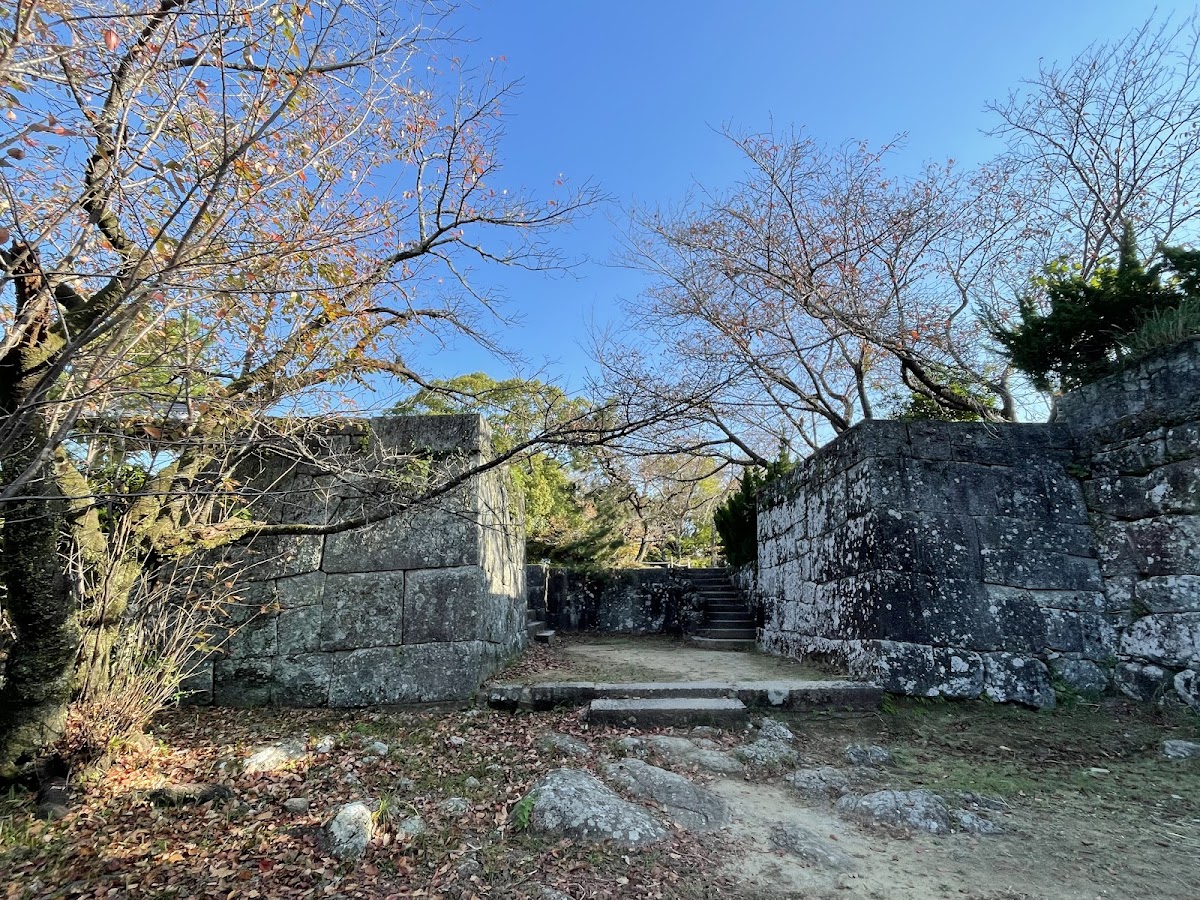
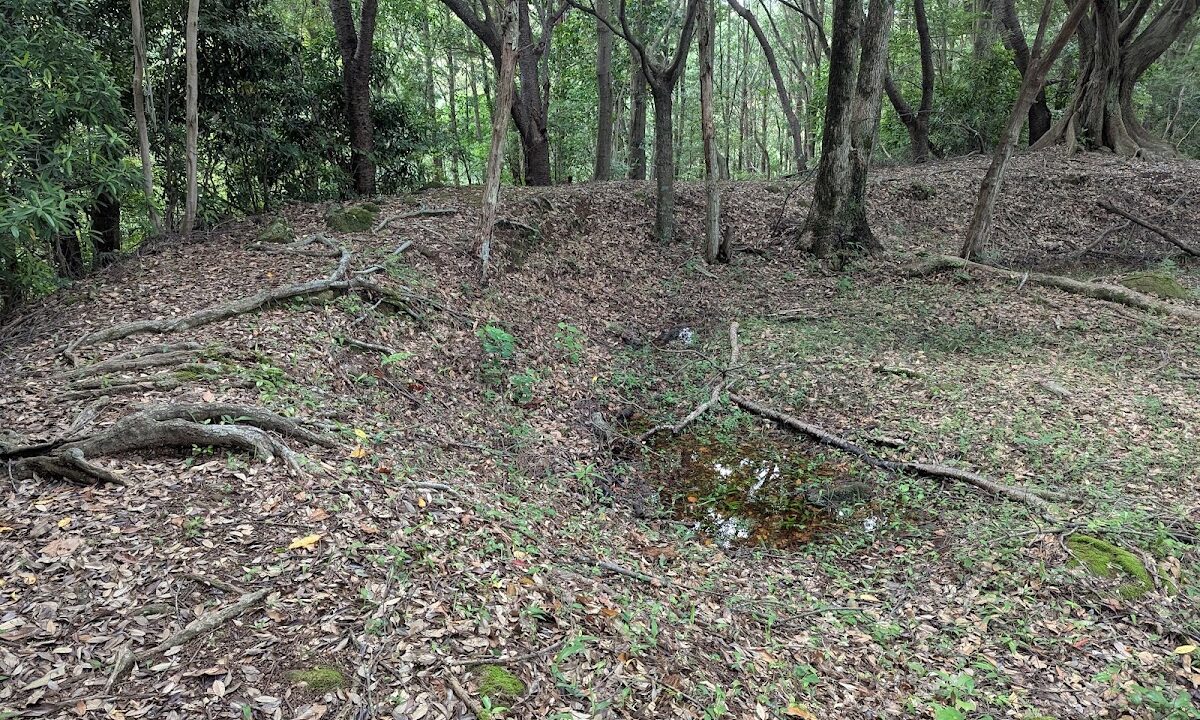
The current state of Udono Castle Ruins does not completely retain its original form due to development and natural erosion. However, remains that show the basic structure of the castle, such as the main enclosure, moats, and parts of the earthworks, can still be confirmed.
The moats, in particular, are relatively well-preserved and are valuable resources for understanding the defensive system of medieval mountain castles. Furthermore, the layout of the enclosures can be deciphered from the topography, making it an interesting historical site for castle researchers and history enthusiasts.
Access and Visiting
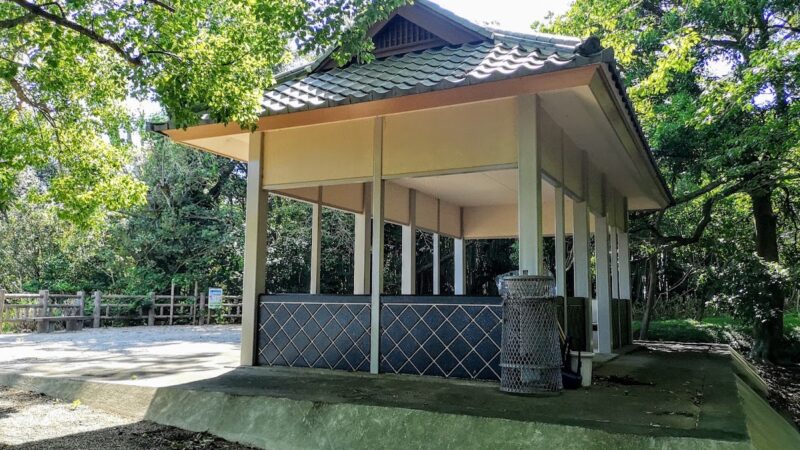
Udono Castle Ruins are approximately a 15-minute walk from Udono Station on the JR Kisei Main Line. However, the castle ruins are located in a mountainous area, and there are no well-maintained climbing paths, so sufficient preparation and caution are necessary when visiting.
Access Information:
- Nearest Station: JR Kisei Main Line, Udono Station
- Location: Udono, Kiho-cho, Minamimuro-gun, Mie Prefecture
- Parking: No dedicated parking (use nearby public parking lots)
Please note the following when visiting:
- Wear appropriate clothing and shoes as you will be walking on mountain paths.
- Insect repellent is recommended during the summer months.
- Be careful as the ground can be slippery during and after rain.
- Avoid visiting alone; visit with others if possible.
Nearby Historical Sites and Tourist Attractions
When visiting Udono Castle Ruins, we recommend also visiting nearby historical sites and tourist attractions.
Kumano Hayatama Taisha Shrine: One of the three Kumano shrines, located approximately 15 minutes by car from Udono Castle Ruins. It is one of the constituent assets of the World Heritage Site “Sacred Sites and Pilgrimage Routes in the Kii Mountain Range”.
Kumano River: One of Japan’s most pristine rivers, offering opportunities for river rafting and nature observation.
Kiho Town Sea Turtle Park: Located within walking distance of Udono Station, it is known as a sea turtle conservation and research facility.
Shichiri Mihama: A sandy and gravel coastline stretching approximately 22 kilometers along the Kumano Sea, offering beautiful scenery.
The Udono Clan and its History
Genealogy of the Udono Clan
The Udono clan was a samurai group based in the Kumano region, holding considerable power in this area from the medieval period to the Sengoku period. While detailed genealogical records are limited and many aspects remain unclear, fragmentary information can be obtained from multiple documents.
The name of the Udono clan is thought to originate from the place name “Udono,” suggesting that they expanded their power from this area. During the Sengoku period (Warring States period), the Udono clan appears to have maintained its own sphere of influence while maintaining relationships with powerful daimyo of Kishu, such as the Horiuchi and Kitabatake clans.
Trends during the Sengoku Period
During the Sengoku period, the Udono clan attempted to protect its territory by forming alliances with powerful surrounding daimyo, and sometimes clashing with them, in order to survive the turbulent times.
In particular, when Oda Nobunaga’s influence extended to the Kinai region (the area around Kyoto), the various forces in Kishu were forced to respond. It is believed that the Udono clan also faced a crucial decision for their survival during this period.
During Toyotomi Hideyoshi’s conquest of Kishu (1585), many local forces surrendered or were destroyed, and it is thought that the Udono clan disappeared from the historical stage around this time.
Comparison with other castles in Mie Prefecture
Castles in Ise Province
Many medieval castles existed in Mie Prefecture besides Udono Castle. In the heart of Ise Province are castles such as Kiriyama Castle, the base of the Sengoku-period daimyo Kitabatake clan, and Tamaru Castle, which served as a base for Oda Nobunaga’s invasion of Ise.
Compared to these castles, Udono Castle, while of medium size, possessed unique value due to its geographical importance as a strategic border point.
Relationship with Kii Province
Although located in Mie Prefecture, Udono Castle had strong cultural and historical ties to Kii Province. Across the Kumano River lay the territory of Kii Province, and Udono Castle is thought to have served as a bridgehead connecting the two provinces.
On the Kii Province side were castles such as Shingu Castle (later the administrative center of the Shingu Domain), and it is presumed that Udono Castle played a role in regional security in cooperation with these castles.
Cultural Value of Udono Castle
Historical Value
Udono Castle is an important historical site with the following historical value:
Witness to Local History: A valuable archaeological site that tells the story of the political and military history of the Kumano region from the medieval to early modern periods.
Border Castle: Located on the border between Kii and Ise Provinces, it is an important historical site that demonstrates the relationship between the two provinces.
Mountain Castle Research: It has academic value for studying the structure and defensive systems of medieval mountain castles.
Challenges for Preservation and Utilization
Currently, the Udono Castle ruins are not under special protection and stand quietly in nature. The following initiatives are expected in the future:
Academic Research: Reveal the overall picture of the castle through detailed excavation and surveying.
Preservation of Remains: Appropriately preserve remaining remains such as moats and earthworks.
Information Dissemination: Utilize it as a local historical resource by installing information boards and creating materials.
Tourism Resource Development: Consider utilizing it as a tourist resource, such as developing safe viewing paths.
Culture and Traditions of the Udono Region
Connection to Kumano Faith
The Udono region is located on an important route of Kumano faith, and has been frequented by many pilgrims since ancient times. Even during the time Udono Castle was built, the tradition of Kumano pilgrimage continued, and it is believed that the castle lords also had a deep connection to Kumano faith.
Parts of the Kumano Kodo pilgrimage route still remain today and are registered as a World Heritage Site. The Udono region, as part of the surrounding area of this World Heritage Site, also possesses historical value.
Local Festivals and Events
Traditional festivals and events are still passed down in the Minamimuro district. Some of these may have originated in the Middle Ages, conveying the culture of the era when Udono Castle existed.
Current Status and Challenges of Udono Castle Research
Limitations of Historical Materials
Historical materials concerning Udono Castle are limited, and many aspects of the castle’s detailed history and structure remain unclear. The main historical sources include the following:
- Local traditions and oral traditions
- Edo period geographical records
- Local history research from the modern era onward
- Results of archaeological surveys
By comprehensively analyzing these sources, the true nature of Udono Castle is gradually becoming clearer, but many issues remain to be resolved.
Future Research Directions
The following approaches are considered effective for advancing research on Udono Castle:
Interdisciplinary Research: A comprehensive approach from multiple fields such as history, archaeology, and geography.
Comparative Research: Clarifying the characteristics of Udono Castle through comparative research with similar castles in the surrounding area.
Unearthing Local History: Carefully investigating ancient documents and traditions remaining in the region.
Utilization of Cutting-Edge Technology: Conducting detailed topographical surveys using cutting-edge technologies such as laser surveying (LiDAR).
Summary
Udono Castle is a medieval mountain castle located in Kiho-cho, Minamimuro-gun, Mie Prefecture. It was built in a strategically important location on the border between Kii and Ise Provinces. Constructed by the Udono clan, it functioned as an important regional base during the Sengoku period. However, after Toyotomi Hideyoshi’s conquest of Kishu, it lost its military function during the Edo period and was abandoned after the Meiji Restoration.
Some remains still exist today, making it a valuable historical site for understanding the structure of medieval mountain castles. It is an indispensable part of the history of the Kumano region, and further research, preservation, and utilization are anticipated.
When visiting Minamimuro-gun, why not also visit the Udono Castle ruins, which tell the history of this region, along with the World Heritage sites of the Kumano Kodo pilgrimage route and Kumano Hayatama Taisha Shrine? The castle ruins, nestled in a quiet mountain forest, convey the spirit of the medieval samurai to this day.