Gokajo Castle (Kyotango City, Kyoto Prefecture): A Complete Guide to its History and Highlights – A Thorough Explanation of Tango’s Largest Mountain Castle
What is Gokajo Castle? – The Largest Mountain Castle in the Tango Region
Gokajo Castle was a mountain castle that once existed in Yasaka-cho, Kyotango City, Kyoto Prefecture. Boasting the largest castle area in the Tango region, it functioned as an important military base in Tango Province during the Sengoku period (Warring States period). Even today, remnants such as earthworks, steep slopes, double moats, and continuous vertical trenches remain in excellent condition, making it a valuable historical site for learning about the structure of medieval mountain castles.
The castle site is located on a mountaintop approximately 200 meters above sea level, with defensive structures cleverly utilizing the surrounding terrain. Visitors can experience firsthand the high level of castle construction technology of the time and the strategic thinking of the Sengoku warlords.
The History of Gokajo Castle – From the Ishikawa Clan to the Hosokawa Clan
Construction of the Castle and the Era of the Ishikawa Clan
Gokajo Castle is believed to have been built by Ishikawa Kojiro, the younger brother of Ishikawa Naoyoshi, a senior retainer of the Isshiki clan and lord of Kayajo Castle. The Isshiki clan was a powerful daimyo family that ruled Tango Province from the Muromachi period to the Sengoku period, and the Ishikawa clan held an important position among their retainers.
The Ishikawa clan used Gokajo Castle as their base, responsible for governing the surrounding area and its military defense. The size of the castle indicates that the Ishikawa clan held considerable power in this region. From its initial construction, Gokajo Castle is thought to have functioned not merely as a residence but as a strategic point in southern Tango Province.
The Era of Yamaoka Minbu-no-suke
During the Tensho era (1573-1592), Gokajo Castle became the residence of Yamaoka Minbu-no-suke, a retainer of the Isshiki clan. During this period, Oda Nobunaga’s unification of Japan was progressing, and Tango Province was also affected.
Yamaoka Minbu-no-suke, a samurai serving the Isshiki clan, strived to maintain his power base at Gokajo Castle. However, the power structure of Tango Province underwent significant changes amidst the major shifts of the times.
The Conquest and Fall of Gokajo Castle by Hosokawa Yusai
In 1582 (Tensho 10), an event occurred that would determine the fate of Gokajo Castle. Hosokawa Fujitaka (Yusai), acting on orders from Oda Nobunaga, launched an attack on Tango Province, and his retainer, Matsui Sado-no-kami Yasuyuki, attacked Gokajo Castle.
Hosokawa Yusai was known as a Sengoku period samurai excelling in both military and literary arts, and his military skills were highly regarded. Matsui Yasuyuki was also a skilled samurai, and he fully demonstrated his abilities in the conquest of Gokajo Castle. After a fierce battle, Gokajo Castle fell, marking the end of Yamaoka Minbu-no-suke’s rule.
This fall significantly weakened the Isshiki clan’s power in Tango Province, leading to the establishment of the Hosokawa clan’s rule. Gokajo Castle subsequently came under Hosokawa control, but is believed to have eventually been abandoned.
Structure and Layout of Gokajo Castle
One of the Largest Castle Grounds in Tango
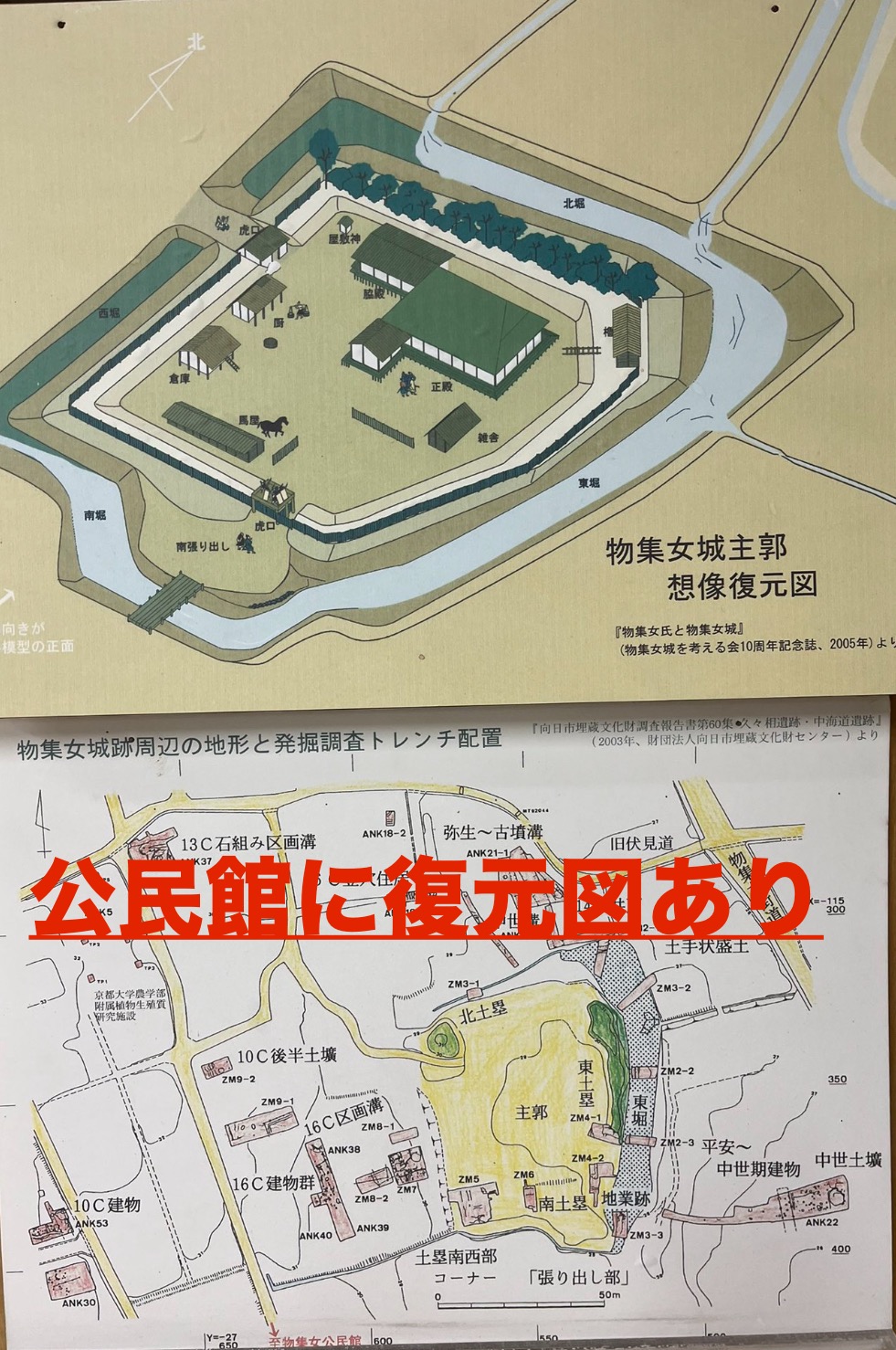
The most striking feature of Gokajo Castle is its vast grounds. It boasts the largest scale in the Tango region and possesses a complex structure with multiple baileys arranged around the main enclosure. Baileys line the ridge from the main enclosure at the mountaintop, forming a strong defensive network.
The relative elevation of the entire castle grounds is estimated at approximately 100 meters, utilizing the steep terrain to create a natural stronghold. The local topography clearly indicates that it was designed as an impregnable castle, difficult for attackers to approach.
Main Enclosure and Earthworks
The main enclosure is located in the center of the castle and is believed to have housed the lord’s residence and important facilities. Even today, clear traces of earthworks remain around the main enclosure, allowing us to understand the layout of the defensive structures at the time.
Earthworks are defensive structures built by piling up earth to prevent enemy intrusion. Judging from the height and width of the earthworks at Gokajo Castle, it is clear that considerable effort was put into their construction. Furthermore, artificially carved steep slopes called “kirigishi” can be seen in various places, demonstrating the numerous measures taken to hinder the advance of attackers.
Double Moat – Gokajo Castle’s Greatest Highlight
The most noteworthy remains when visiting Gokajo Castle are the double moats. A moat is a dry moat dug to cut across a ridge, and it is an important defensive structure that blocks enemy intrusion routes.
The double moat at Gokajo Castle has a structure in which two moats are arranged consecutively, enhancing its defensive effectiveness. Even if the attackers managed to break through the first moat, another moat would immediately await, resulting in heavy losses. At the site, one can truly appreciate the sheer scale of the moats, some several meters deep, and be amazed by the advanced castle-building techniques of the Sengoku period.
Continuous Vertical Moats – A Strategy for Flanking Defense
Another important feature of Gokajo Castle is the continuous vertical moat. Vertical moats are dry moats dug vertically along a slope, serving to defend against attacks from the flanks.
At Gokajo Castle, a “continuous vertical moat” system, where multiple vertical moats are arranged parallel to each other, can be observed. This was a strategy to divide and individually repel enemy soldiers climbing the slope. The structure allowed for efficient enemy repelling by attacking with bows and arrows or firearms from the earthen ramparts between the moats.
This continuous vertical moat is an important feature demonstrating the castle-building techniques of the late Sengoku period, indicating that Gokajo Castle was not merely an old mountain castle, but one that was modified and strengthened according to the times.
Layout of the Enclosures
The castle is arranged in a stepped pattern, with multiple enclosures (flat areas) centered around the main enclosure. Each enclosure is thought to have been used as a garrison for soldiers or a storage area for supplies. The enclosures are separated by steep slopes and earthworks, creating a multi-layered defensive structure where even if one enclosure is breached, the next can provide defense.
Even today, the flat areas of the enclosures are clearly identifiable, allowing visitors to appreciate the scale of the castle at the time. The large enclosures indicate that they could accommodate a considerable number of troops, demonstrating that Gokajo Castle was a military base prepared for large-scale battles.
Gokajo Castle Highlights and Visitor Guide
Main Points of Interest
When visiting Gokajo Castle, keeping the following points in mind will allow you to appreciate the castle’s charm more deeply.
1. The Path from the Entrance to the Main Enclosure
The path from the entrance to the main enclosure is thought to be the remains of the main road (front entrance) at the time. As you ascend this path, observing the cliffs and earthworks on both sides will help you understand the layout of the defensive structures.
2. Double Moat
Located on the middle slope of the castle, the double moat is the most impressive feature of Gokajo Castle. Standing before the deeply excavated moat, you can imagine the intensity of the battles fought there.
3. Around the Main Enclosure
The main enclosure and the surrounding baileys form the core of the castle. By observing the arrangement of the earthworks and cliffs, you can consider how the lord’s residence was protected.
4. Continuous Vertical Moats
The continuous vertical moats located on the side of the castle are remnants demonstrating the advanced castle-building techniques of the Sengoku period. Walk along the slope to observe the depth and continuity of the moats.
5. View
From the main enclosure, you can enjoy a panoramic view of the surrounding terrain. From the actual scenery, you can understand why Gokajo Castle was built in this location and from which directions the castle defended against enemies.
Important Points for Visiting
Gokajo Castle is a full-fledged mountain castle, and appropriate preparation is necessary for a visit.
Clothing and Equipment
- Comfortable clothing (long sleeves and long pants recommended)
- Trekking shoes or hiking boots
- Gloves (for gripping in bushes and on steep slopes)
- Hat and sunscreen
- Insect repellent (essential from spring to autumn)
- Drinking water and snacks
- Map or GPS device
Safety Precautions
- Avoid visiting alone; travel in groups
- Refrain from visiting on days with bad weather
- Be careful not to fall on steep slopes and moats
- Take care not to damage the ruins
- Always take your trash with you
Best Season for Visiting
The best time to visit Gokajo Castle is from autumn to spring.
Autumn (October-November)
The autumn foliage is beautiful, the temperature is comfortable, and it’s ideal for climbing the castle. This is the season when the undergrowth is relatively sparse, making it easy to observe the ruins.
Winter (December-February)
The ruins are easiest to see due to the fallen leaves. However, caution is needed regarding snow and ice.
Spring (March-May)
The fresh greenery is beautiful, and the weather is mild. However, undergrowth begins to grow from April onwards.
Summer (June-September)
Undergrowth becomes dense, and the danger of mosquitoes and venomous snakes increases, so it is not recommended for beginners.
Access Information
Access by Public Transportation
Gokajo Castle is inconveniently located for public transportation.
Nearest Station
The nearest station is Mineyama Station on the Kyoto Tango Railway Miyazu Line, but the castle ruins are approximately 15 kilometers away, making walking impractical. We recommend taking a taxi from the station or renting a car.
Access by Car
From Kyoto
- Approximately 30 minutes from the Kyotango-Omiya IC on the Kyoto Jukan Expressway via National Route 312 and prefectural roads.
From Osaka
- Approximately 60 minutes from the Maizuru-Nishi IC on the Maizuru-Wakasa Expressway via National Route 27, National Route 312, and prefectural roads.
Parking
There is no dedicated parking lot for the castle ruins, but there are a few parking spaces on the roadside near the entrance to the castle. However, please be considerate of local residents.
Ascent Route
It takes approximately 30-40 minutes on foot from the entrance to the main keep. Since it is an ascent of approximately 100 meters in elevation, those who are not confident in their physical fitness should not push themselves and should consider turning back midway.
The ascent route is not always clear in some places, so it is recommended to check a map beforehand and use a GPS app.
Nearby Tourist Attractions
Visiting the tourist attractions around Kyotango City in conjunction with a visit to Gokajo Castle will make your trip even more fulfilling.
Kaya Castle
Kaya Castle, where Ishikawa Naoyoshi served as lord, is closely related to Gokajo Castle. Visiting it before or after your Gokajo Castle visit will help you understand the sphere of influence of the Ishikawa clan.
Tango Chirimen History Museum
Kyotango City is famous as a production area for Tango chirimen silk. At the Tango Chirimen History Museum, you can learn about the traditional industry of this region.
Amanohashidate
Amanohashidate, one of Japan’s three most scenic views, is about a 40-minute drive from Kyotango City. You can enjoy the famous scenic spots of the Tango region in conjunction with your visit to Gokajo Castle.
Hot Spring Facilities
There are several hot spring facilities around Kyotango City where you can relax and soothe your tired body after climbing the castle. Yuhigaura Onsen and Kumihama Onsen are popular choices.
Historical Background of Gokajo Castle and Tango Province
The Isshiki Clan and Tango Province
Understanding the history of Gokajo Castle requires understanding the existence of the Isshiki clan. The Isshiki clan was one of the powerful shugo daimyo (provincial governors) of the Muromachi Shogunate, ruling over Tango and Wakasa Provinces.
During the Muromachi period, the Isshiki clan was a prestigious family, counted among the four Shikishoku (four powerful families), but gradually lost power during the Sengoku period (Warring States period). The period when Gokajo Castle was built was a time when the Isshiki clan still held firm control over Tango Province, and they had the luxury of entrusting important strongholds to their vassal, the Ishikawa clan.
Oda Nobunaga’s Unification of Japan and Tango Province
In the latter half of the 16th century, as Oda Nobunaga’s unification of Japan progressed, Tango Province was also affected. Nobunaga conquered various Sengoku daimyo throughout the country, expanding his sphere of influence.
The task of pacifying Tango Province was entrusted to Hosokawa Fujitaka (Yusai). Hosokawa Yusai was a cultured man known for his refined tastes, but he was also a brilliant military strategist. Under his command, his retainers, including Matsui Yasuyuki, captured castles throughout Tango Province, driving out the forces of the Isshiki clan.
The fall of Gokajo Castle was one event in this process of pacifying Tango and marked a major turning point in regional history.
Hosokawa Clan’s Rule of Tango
After the fall of Gokajo Castle, Tango Province came under the control of the Hosokawa clan. Hosokawa Yusai made Miyazu Castle his residence and governed Tango Province.
However, after the Battle of Sekigahara in 1600 (Keicho 5), the Hosokawa clan was transferred to Buzen Province (present-day eastern Fukuoka Prefecture), and Kyogoku Takatomo became the lord of Tango Province. Although Tango Province changed lords several times afterward, it continued to develop as an important region throughout the Edo period.
The Cultural Value of Gokajo Castle
Importance in Medieval Mountain Castle Research
Gokajo Castle is a historically significant site for studying the structure of medieval mountain castles. Well-preserved remains, including double moats, continuous vertical moats, earthworks, and steep slopes, demonstrate the castle-building techniques of the Sengoku period, providing insight into the actual state of castle architecture at that time.
Particularly noteworthy is its status as the largest castle site in the Tango region. This scale indicates that Gokajo Castle was not merely the residence of a local powerful family, but functioned as a military center for the region.
Preservation Status and Future Challenges
While the remains of Gokajo Castle are relatively well-preserved, its location in a mountainous area means that overgrown vegetation is making it increasingly difficult to identify some areas.
In order to maintain its value as a cultural property and pass it on to future generations, appropriate preservation and management are necessary. Surveys and maintenance activities by local governments and castle research organizations are expected. Furthermore, improving visitor etiquette to prevent damage to the remains is also a crucial issue.
Utilization for Regional Development
In recent years, initiatives utilizing castles for regional development have been underway throughout Japan. Gokajo Castle, with proper maintenance and improved access, has the potential to become a resource that attracts history enthusiasts and tourists.
It is hoped that through improvements to the castle’s access roads, the installation of information boards, and the creation of brochures, more people will visit Gokajo Castle and understand its history and value.
The Significance of Visiting Gokajo Castle
Visiting Gokajo Castle is not simply about viewing old castle ruins. It is about experiencing firsthand the history of Tango Province during the Sengoku period, the rise and fall of local powerful families such as the Isshiki and Ishikawa clans, the impact of Oda Nobunaga’s unification of Japan, and the exploits of the outstanding warrior Hosokawa Yusai.
Standing before the remains such as double moats and continuous vertical trenches, one can truly appreciate the immense effort the people of that time put into building and defending the castle. As you climb the steep slopes, imagining the battle between attackers and defenders will make history feel more vivid.
Gokajo Castle is a historical site that holds an important place in the history of Japanese castles. Visiting requires appropriate preparation and physical fitness, but it is well worth it. We recommend a visit to Gokajo Castle to history enthusiasts, castle fans, and anyone interested in the Sengoku period.
Summary
Gokajo Castle is the largest mountain castle in the Tango region, located in Kyotango City, Kyoto Prefecture. It was built by the Ishikawa clan, senior retainers of the Isshiki clan, and captured in 1582 by Matsui Yasuyuki, a retainer of Hosokawa Yusai.
The castle ruins retain well-preserved structures such as double moats, continuous vertical moats, earthworks, and steep slopes, making it a valuable historical site for learning about Sengoku period castle construction techniques. While climbing equipment is necessary for a visit, it is a place where you can fully appreciate the charm of a medieval mountain castle.
When you visit Kyotango City, be sure to stop by Gokajo Castle and experience the history and culture of the Sengoku period. Traces of history lie dormant in the mountains of Tango, waiting for you.