Maruoka Castle (Kameoka City, Kyoto Prefecture) Complete Guide | A Base for the Conquest of Tanba Province, Associated with Akechi Mitsuhide
Maruoka Castle, located in Kojō, Amabe-chō, Kameoka City, Kyoto Prefecture, is a medieval mountain castle used by Akechi Mitsuhide as an important base for his conquest of Tanba Province during the Sengoku period. Also known as “Amabe Castle,” this castle played a strategically important role in Mitsuhide’s pacification of Tanba Province under the orders of Oda Nobunaga. Currently preserved as a historical site within the grounds of Saiganji Temple, it retains its original appearance.
Historical Background of Maruoka Castle
Construction and Early History
While there are no clear records regarding the construction period of Maruoka Castle, it is believed to have functioned as a regional control base in Kuwata District, Tanba Province, during the medieval period. This area faced the Sasayama Road and was a strategically important location due to its key transportation hub.
Akechi Mitsuhide and the Conquest of Tanba
During the Tensho era (1573-1592), Oda Nobunaga ordered his vassal, Akechi Mitsuhide, to pacify Tanba Province. Mitsuhide began his full-scale conquest of Tanba in 1575, using Maruoka Castle as a crucial military base during this process.
The conquest of Tanba was a difficult battle for Mitsuhide. In particular, the Hatano clan, based at Yagami Castle, was a powerful force, and Mitsuhide faced numerous setbacks. Maruoka Castle, taking advantage of its location adjacent to the Sasayama Road, functioned as a forward base for the conquest of Yagami Castle.
The Battle Against the Hatano Clan
In 1579, Mitsuhide finally defeated Hatano Hideharu, the lord of Yagami Castle, marking a major turning point in the conquest of Tanba. It is believed that Maruoka Castle played a crucial role in this battle as a supply base and intelligence gathering center.
Changes in Role After the Construction of Kameyama Castle
After pacifying Tanba Province, Mitsuhide began construction of Kameyama Castle (present-day Kameoka City). Around 1580, when Kameyama Castle was completed, Mitsuhide’s base shifted to Kameyama Castle, and the military importance of Maruoka Castle declined. Subsequently, Maruoka Castle was abandoned, and the castle ruins were preserved as a historical site that conveys the history of the region.
Structure and Remains of Maruoka Castle
Castle Location and Layout
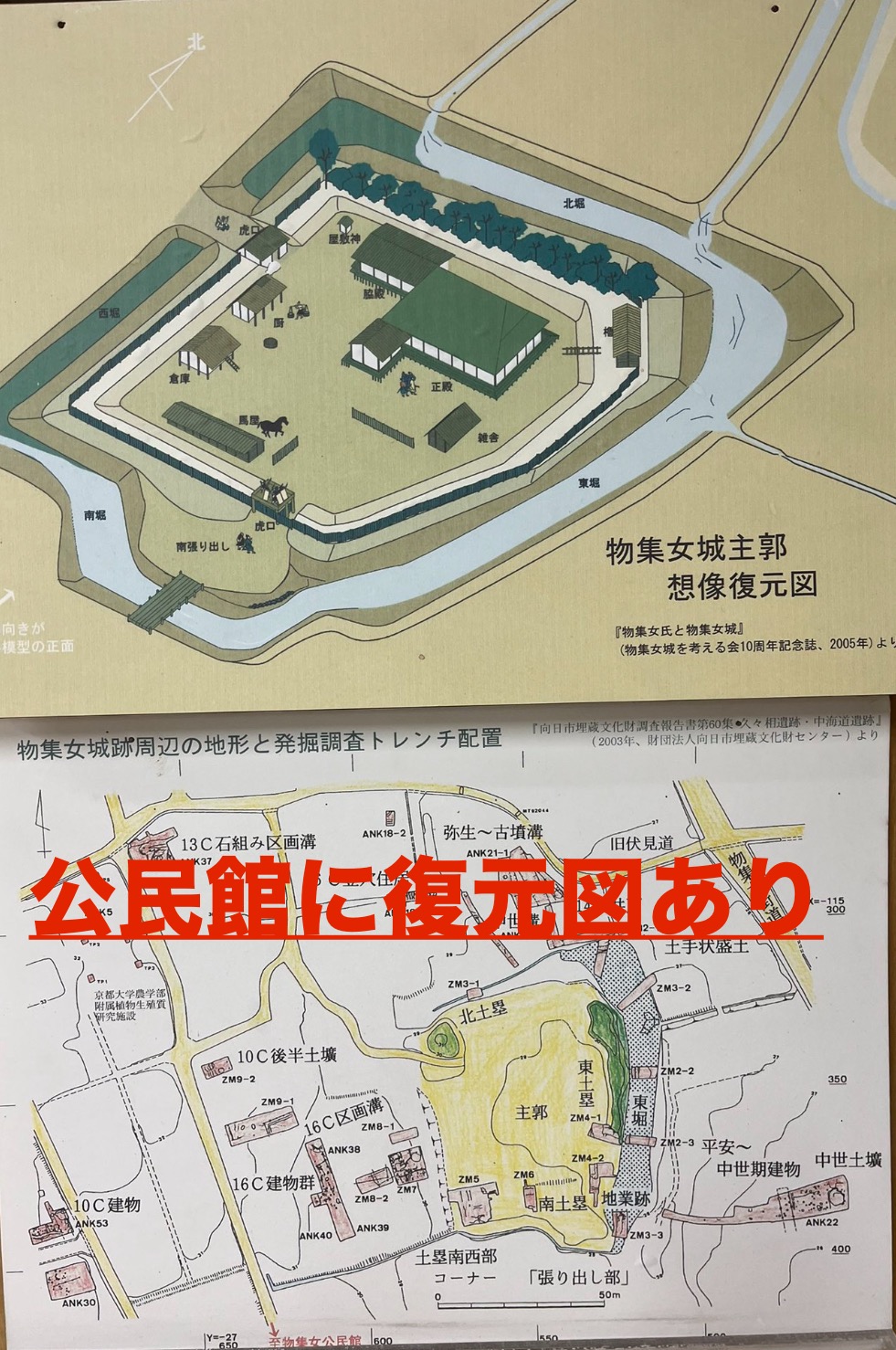
Maruoka Castle is a flatland castle built on a hill, exhibiting characteristics of a medieval castle that skillfully utilizes the surrounding terrain. The castle grounds extend to the area centered around the present-day Saiganji Temple, and at the time, it was fortified with moats and earthworks.
Existing Remains
Currently, the following remains can be confirmed at the Maruoka Castle site:
Kuruwa Remains: Parts of the topography of the central kuruwa (enclosure) of the castle remain, allowing us to estimate the size of the castle at the time. Traces of Earthworks: Around the grounds of Saiganji Temple, there are a few places where traces of earthworks can be seen.
Topographical Undulations: The topography characteristic of a castle remains, allowing visitors to feel the atmosphere of a medieval castle.
Historic Site Designation and Preservation Status
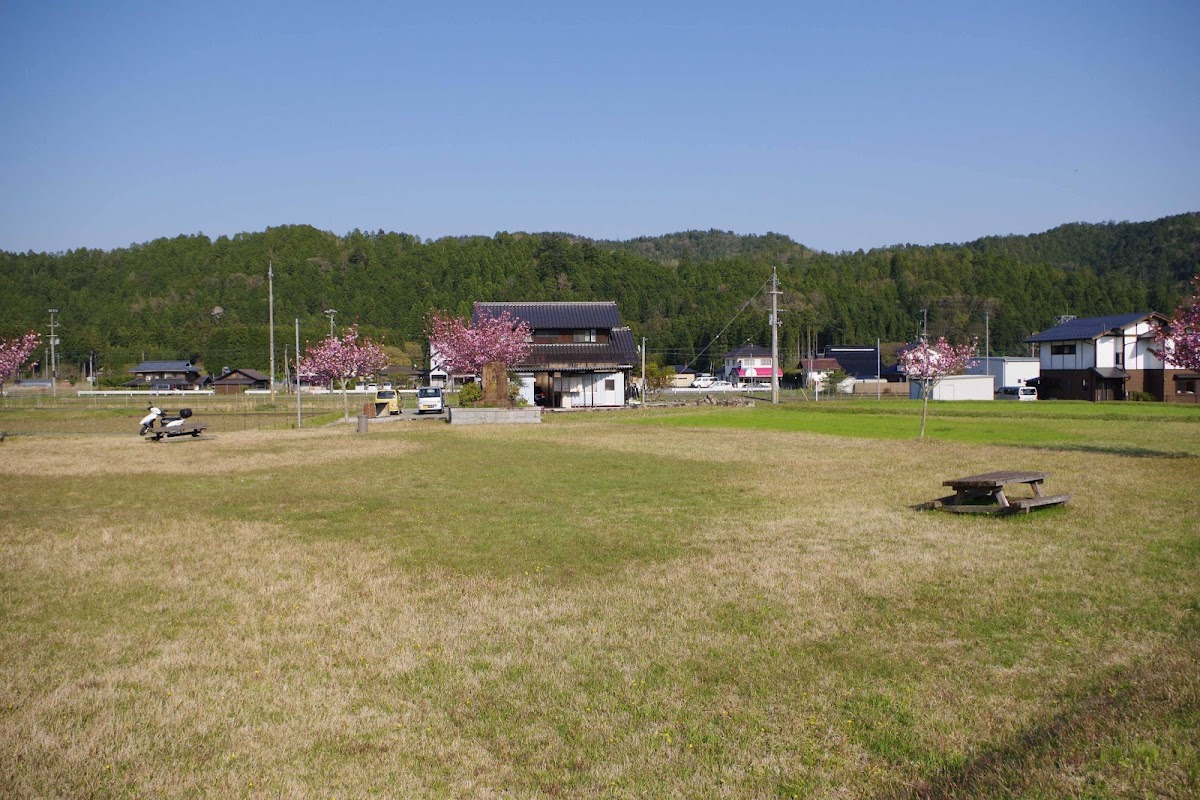
Maruoka Castle Ruins are recognized as an important historical heritage site in the region, and a stone monument inscribed “Historic Site Maruoka Castle Ruins” stands at the entrance to Saiganji Temple. This monument serves as an important landmark indicating the location of the castle ruins, providing clear guidance for visitors.
Strategic Importance of Akechi Mitsuhide and Maruoka Castle
Position in the Tanba Campaign
The reason Akechi Mitsuhide used Maruoka Castle as a base during his campaign in Tanba was its location. Facing the Sasayama Road, the castle was suitable for movement and transportation of supplies within Tanba, possessing ideal conditions as a forward base for the attack on Yagami Castle.
Function as a Strategic Base for Mitsuhide
Maruoka Castle is believed to have served the following functions:
- Military Base: A base for the assembly and deployment of troops
- Logistical Base: A place for the accumulation of supplies such as weapons and food
- Intelligence Gathering: A frontline base for gathering intelligence on the enemy
- Communication Relay: A relay point for maintaining communication with the home province
Relationship with Kameyama Castle
The relocation of the base from Maruoka Castle to Kameyama Castle indicates that Mitsuhide’s rule over Tanba Province had entered a stable period. Kameyama Castle was built closer to the center of Tanba Province and as a larger fortress. Maruoka Castle can be said to symbolize the transition from a “temporary base” to a “full-fledged base of control” in Mitsuhide’s conquest of Tanba.
Saiganji Temple and Maruoka Castle Ruins
Overview of Saiganji Temple
Currently, most of the Maruoka Castle ruins are within the grounds of Saiganji Temple. Saiganji Temple is a temple beloved by the local people and plays a cooperative role in the preservation of the castle ruins. ### Traces of the Castle Remaining on the Temple Grounds
Careful observation of the grounds of Saiganji Temple reveals topography and layout characteristic of a castle. The arrangement of the temple buildings and the elevation differences within the grounds may reflect the structure of the former castle.
Significance of the Historical Site Monument
The “Historical Site Maruoka Castle Ruins” monument at the entrance of Saiganji Temple serves to convey to future generations that this is a historically important place. The presence of the monument allows ordinary people to easily engage with history.
Access and Visiting Guide
Access by Public Transportation
From JR Kameoka Station:
- Get off at JR San’in Main Line “Kameoka Station”
- Approximately 30-40 minutes on foot from the station
- Alternatively, take the community bus and get off at the “Yobe” bus stop, then approximately 5 minutes on foot.
While walking from Kameoka Station using public transportation is a bit of a distance, it offers the charm of a stroll through the Kameoka city area.
Access by Car
From Kyoto:
- Approximately 10 minutes from the Kameoka Interchange on the Kyoto Expressway
- Via National Route 9 and Prefectural Route 407
From Osaka:
- Approximately 10 minutes from the Kameoka Interchange on the Kyoto Expressway
Parking Information
While Saiganji Temple has a parking lot for visitors, some visitors have reported that the entrance is difficult to find. The entrance to the parking lot is located behind the street where the stone monument is located, so please be careful when visiting for the first time. There are several parking spaces available, and it is free of charge.
Points to Note When Visiting
- Saiganji Temple is an active temple, so please observe proper etiquette when visiting.
- Photography is permitted on the temple grounds, but please do so with consideration for others.
- Since the remains are not clearly defined, learning about the castle’s history beforehand will deepen your understanding.
- Some areas may be slippery in rainy weather, so we recommend wearing appropriate footwear.
Estimated Visiting Time
While a visit to the Maruoka Castle ruins itself can be completed in about 30 minutes, if you plan to visit other sites associated with Akechi Mitsuhide in the surrounding area, it’s best to allow 2-3 hours.
Nearby Attractions
Kameyama Castle Ruins
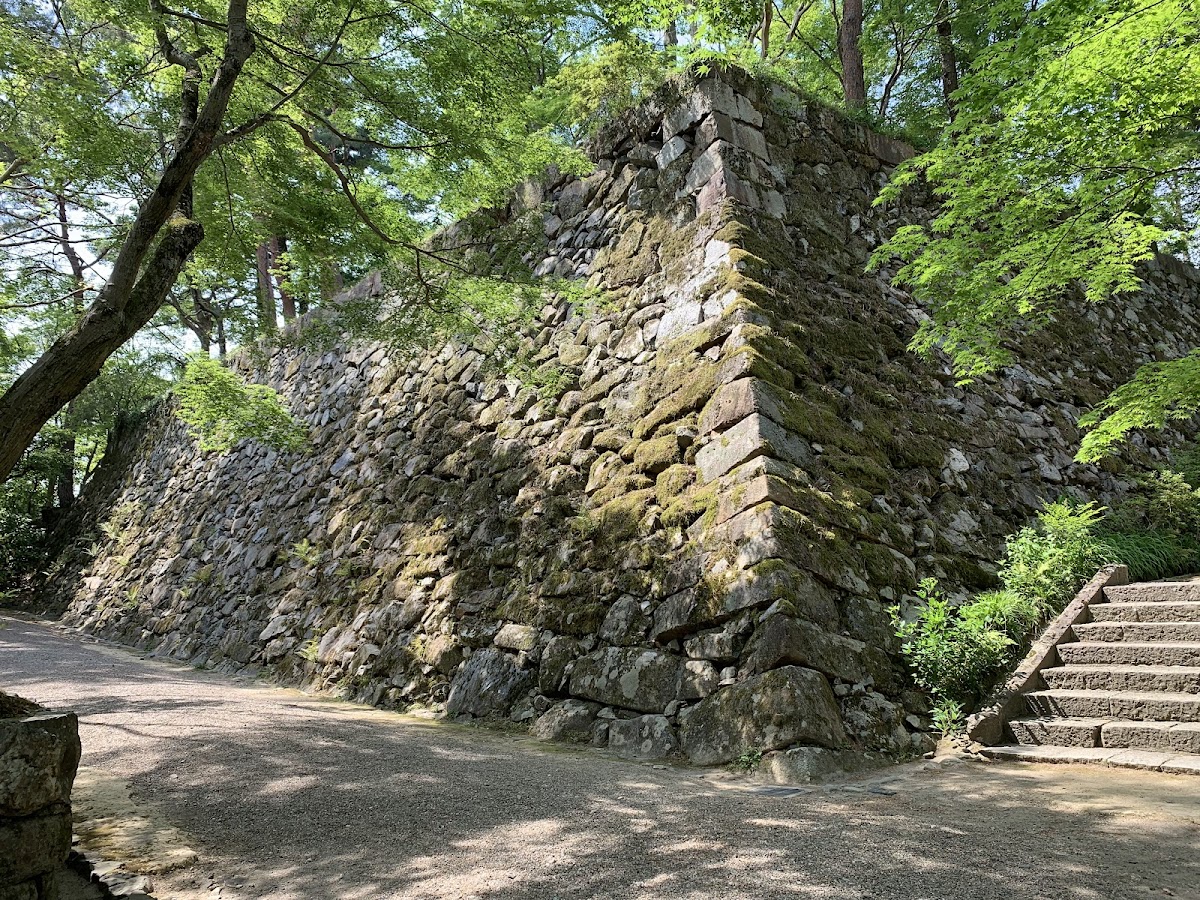
This is a full-fledged castle built by Akechi Mitsuhide after his conquest of Tanba. Currently, it is a facility of the Omoto-kyo religion, but remnants such as stone walls remain. It is an important spot where you can experience the history of the relocation from Maruoka Castle to Kameyama Castle.
Kameoka City Cultural Museum
This facility provides detailed information about Akechi Mitsuhide and the history of Tanba. Documents related to Maruoka Castle are also on display, and visiting them before or after your visit will deepen your understanding.
Kamioyama Castle
Another medieval castle located in Kameoka City, it may have functioned at the same time as Maruoka Castle. It is worth visiting in conjunction with Maruoka Castle for understanding the medieval castles of Tanba.
Emiji Castle
Also a medieval castle located in Kameoka City. For castle enthusiasts exploring the mountain castles of Tanba, it is a suitable spot to visit in conjunction with Maruoka Castle.
Historical Value of Maruoka Castle
Importance in the Study of Akechi Mitsuhide
Maruoka Castle is an indispensable historical site for understanding Akechi Mitsuhide’s conquest of Tanba. It is attracting attention from historians as a clue to understanding Mitsuhide’s military talent and strategic thinking.
Position in the History of Medieval Castles
Maruoka Castle, as a typical medieval flatland castle, is a valuable example that conveys the castle construction techniques and military thinking of the time. Unlike the early modern castles with their large stone walls and keeps, this castle has research value as a practical structure designed for actual combat.
Significance in Local History
In the history of Kameoka City, Maruoka Castle symbolizes the beginning of the Oda regime’s rule over Tanba Province. For the local people, it is an important historical site for understanding their hometown’s history.
How to Enjoy Visiting Maruoka Castle
Feeling the Romance of History
Standing in the quiet grounds of the current Seiganji Temple, imagining that this was once a military base for Akechi Mitsuhide evokes a sense of historical romance. Reflecting on Mitsuhide’s struggles in front of the monument is one of the great pleasures of visiting the castle ruins.
Reading the Topography
By observing the topography of the castle ruins, you can understand how medieval castles utilized the terrain. Walking while imagining the layout of the baileys and defensive lines will lead to new discoveries.
Photo Opportunities
The “Historical Site Maruoka Castle Ruins” monument is a classic spot for commemorative photos. Furthermore, the surrounding scenery viewed from the grounds of Saiganji Temple also makes for an interesting subject for imagining the view at that time.
Utilizing Castle Stamps and Castle Notes
It’s also recommended to keep a record of your visit as a memento of your castle tour. Obtaining related materials at tourist facilities in Kameoka City and keeping a record of your visit in a castle note will make your castle tour experience more fulfilling.
Tracing the Footsteps of Mitsuhide and the Conquest of Tanba
An Overview of the Conquest of Tanba
Akechi Mitsuhide’s conquest of Tanba was a long war lasting approximately four years, from 1575 to 1579. During this time, Mitsuhide captured several castles and repeatedly engaged in negotiations and battles with local lords.
Major Battles and Castles
The major battles during the conquest of Tanba are as follows:
- Battle of Kuroi Castle (1575): Mitsuhide was defeated in this battle against Akai Naomasa.
- Siege of Yagami Castle (1579): Hatano Hideharu was forced to surrender.
- Capture of Kuroi Castle (1579): The Akai clan was destroyed, completing the pacification of Tanba.
Maruoka Castle continued to function as a rear base for Mitsuhide during these battles.
Mitsuhide’s Path to the Honnoji Incident
The success of the Tanba conquest established Mitsuhide’s position within the Oda clan. However, the Honnoji Incident of 1582 dramatically changed Mitsuhide’s fate. Maruoka Castle holds historical significance as one of the places where Mitsuhide began his ascent to glory.
Information for Castle Enthusiasts
Castle Classification and Characteristics
- Type: Hilltop Castle
- Construction Period: Medieval (Details Unknown)
- Abandonment Period: Late Tensho Era (Estimated)
- Remains: Enclosures, Earthwork Traces, Topography
- Cultural Property Designation: City-Designated Historic Site (Confirmation Required)
Difficulty of Visiting
The difficulty of visiting Maruoka Castle Ruins is relatively low, making it easily accessible even for beginners. However, because the remains are not clearly defined, it may be more enjoyable for intermediate to advanced castle enthusiasts.
Comparison with Other Castles
Although it shares the same name as Maruoka Castle in Sakai City, Fukui Prefecture (which has an existing keep), they are completely different castles. Maruoka Castle in Kameoka City, Kyoto Prefecture, is a medieval mountain castle ruin, and no buildings remain.
Related Books and Materials
Numerous books have been published regarding Akechi Mitsuhide and the conquest of Tanba. The following resources are particularly helpful:
- *Akechi Mitsuhide and Tanba* (Regional History Research Book)
- *Kameoka City History* (Local Government History)
- *Comprehensive Guide to Japanese Castles* (Comprehensive Castle Information)
Checking the descriptions of Maruoka Castle in these resources will provide a deeper understanding.
Summary: The Charm of Maruoka Castle
Maruoka Castle in Kameoka City, Kyoto Prefecture, doesn’t boast flashy buildings or magnificent stone walls. However, its historical significance as a base for Akechi Mitsuhide, a key figure of the Sengoku period, in his conquest of Tanba, is immense.
Standing in the quiet grounds of Saiganji Temple and before the “Historic Site: Maruoka Castle Ruins” monument, one can easily imagine Mitsuhide undertaking the difficult task of pacifying Tanba approximately 440 years ago. Although few remains exist, it is a valuable historical site where one can feel the weight of history.
When visiting Kameoka City, be sure to visit Maruoka Castle Ruins along with other places associated with Mitsuhide, such as Kameyama Castle. This hidden gem offers a glimpse into Mitsuhide’s arduous struggles, a story not found in textbooks.
Maruoka Castle supported a crucial turning point in Mitsuhide’s career: the conquest of Tanba. Understanding its historical value will deepen your understanding of Akechi Mitsuhide himself. It is a historical site worth visiting not only for castle enthusiasts but also for history buffs, and it is hoped that it will continue to be carefully preserved.