Complete Guide to Shuzan Castle: A Thorough Explanation of Akechi Mitsuhide’s Last Castle Construction and the Remains of a Mountain Castle with All-Stone Walls
What is Shuzan Castle?
Shuzan Castle is a mountain castle from the late Sengoku period located in Keihoku Shuzan-cho, Ukyo-ku, Kyoto City, Kyoto Prefecture. Built on a mountain 480 meters above sea level, this castle holds historical significance as the last castle built by Akechi Mitsuhide around 1579 (Tensho 7) as a base for his conquest of Tanba Province.
Located at a crucial point for transportation and water transport, where the Shuzan Road (present-day National Route 162), connecting Wakasa Obama and Kyoto, and the Oi River (Katsura River), which flows to Kameyama Castle, intersect, it is believed that Akechi Mitsuhide, who was ordered by Oda Nobunaga to conquer Tanba, recognized the strategic importance of this region and built the castle.
The most distinctive feature of Shuzan Castle is its all-stone wall structure, said to be one of the largest in western Japan. This castle is a typical example of a castle from the Oda-Toyotomi period, utilizing stone walls, roof tiles, and foundation stones. Because it functioned as a castle for an extremely short period, it is a valuable historical site for studying the castle construction techniques and castle designs of the time.
History of Shuzan Castle
Background of Construction and Akechi Mitsuhide’s Conquest of Tanba
The construction of Shuzan Castle is rooted in Oda Nobunaga’s conquest of Tanba Province as part of his unification of Japan. In 1575, Nobunaga ordered Akechi Mitsuhide to pacify Tanba. Mitsuhide cautiously and steadily conquered the various forces in Tanba, and by 1579, he had almost completely pacified the region.
This region was originally controlled by the Utsu clan, but Mitsuhide attacked and captured Utsu Castle, deciding to build a new castle on Shiroyama, a more strategically important location. Keihoku, where roads connecting Wakasa, Omi, Tanba, and Kyoto intersected, was ideally located for monitoring the movement of people from various provinces.
Mitsuhide positioned Shuzan Castle as a relay point connecting his own residence, Sakamoto Castle (Shiga Prefecture), and Kameyama Castle (Kameoka City, Kyoto Prefecture), his base for controlling Tanba, making it a crucial point for managing Tanba. It is believed that Akechi Mitsutada, a senior retainer of Mitsuhide, became the castle lord.
The Honnoji Incident and the Fate of Shuzan Castle
Just over two years after the completion of Shuzan Castle, the Honnoji Incident occurred on June 2, 1582 (Tensho 10). Akechi Mitsuhide assassinated his lord, Oda Nobunaga, but was defeated by Hashiba Hideyoshi (later Toyotomi Hideyoshi) at the Battle of Yamazaki on June 13th of the same month, and lost his life while fleeing.
After Mitsuhide’s death, Shuzan Castle is believed to have been demolished by Hideyoshi’s forces. Castle destruction refers to the intentional act of destroying a castle to prevent it from being used as a military base again. Traces of collapsed stone walls and demolished buildings remain at the castle site, providing valuable evidence of castle destruction.
It is estimated that Shuzan Castle functioned as a fortress for only about three years. Due to this short period, its original state has been preserved almost entirely, making it an extremely important historical site for studying castle construction techniques of the Oda-Toyotomi period.
Structure and Highlights of Shuzan Castle
Overall Structure of the Castle
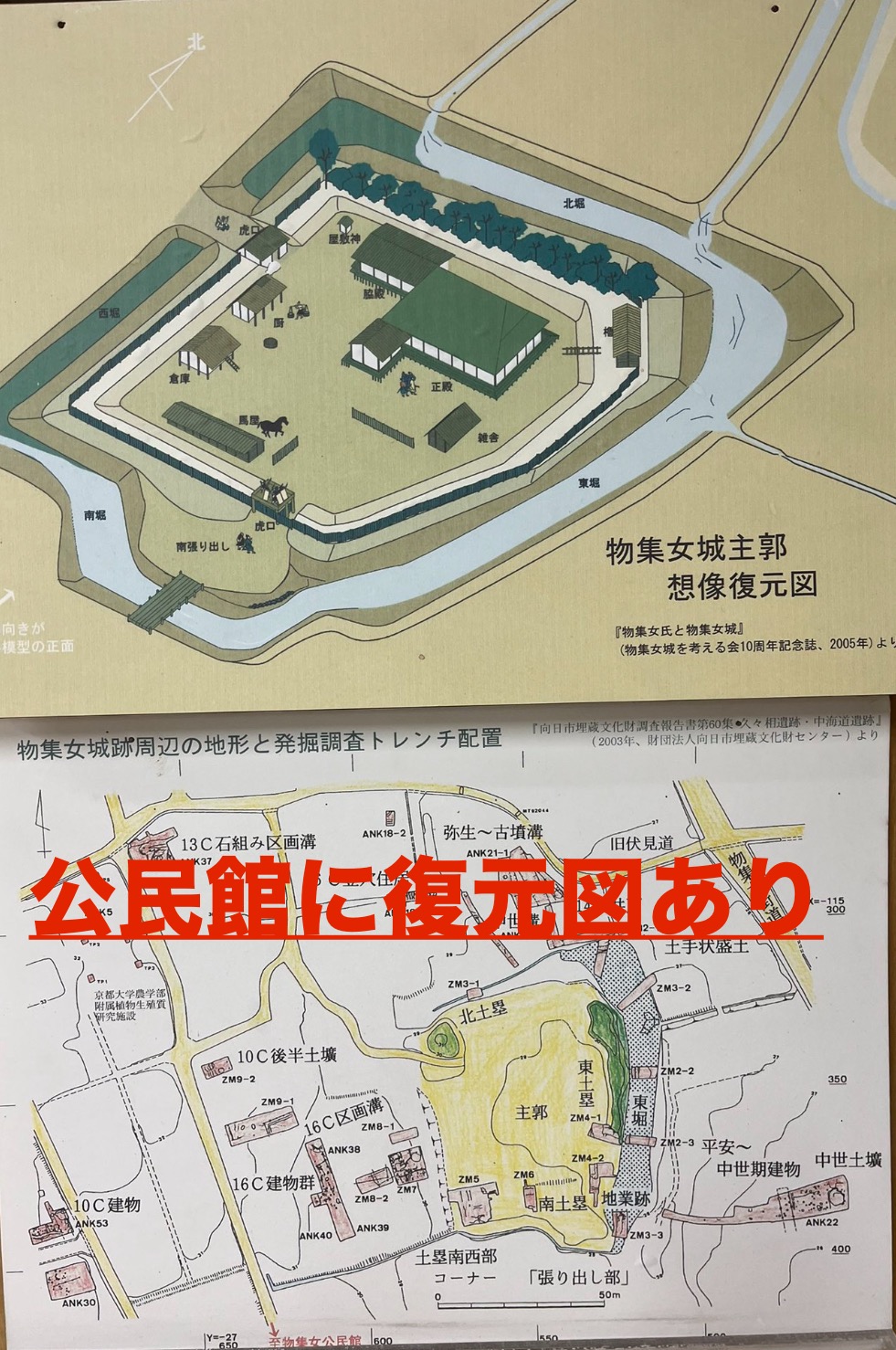
Shuzan Castle is a large mountain castle built on a mountain 480 meters above sea level, with a relative height of approximately 230 meters. The castle is broadly divided into the East Castle and West Castle, with the main enclosure located in the East Castle. The East and West Castles are connected by a ridge, forming a complex defensive system.
Higashi Castle is a typical example of a castle built entirely of stone walls during the Oda-Toyotomi period, with multiple baileys arranged in a stepped pattern. Nishi Castle, on the other hand, is primarily constructed of earthen ramparts, demonstrating a different construction technique from Higashi Castle. The reason why these two castles were built at the same time using different methods remains a mystery that has not yet been fully explained.
Remains of the Stone Walls
The greatest highlight of Shuzan Castle is undoubtedly its remains, which are entirely constructed of stone walls. Although many parts have been destroyed during the castle’s demolition, stone walls several meters high remain in excellent condition around the main bailey.
The stone walls were built using a technique called “nozurazumi,” demonstrating the high level of skill involved in stacking natural stones without gaps. The stone walls of the main bailey are particularly impressive, illustrating how Mitsuhide attempted to build such a strong castle in such a short time.
Evidence of the castle’s demolition can also be observed in areas where the stone walls were intentionally demolished. The sight of stones from the stone walls rolling down the slope is valuable evidence that tells the story of the castle’s historical fate.
Enclosures and Building Remains
The castle grounds consist of multiple enclosures, and it has been confirmed that there were foundation buildings in each. In the main enclosure, there are stone remains that appear to be the base of a keep, suggesting the possibility that a keep or a similar building stood here.
Roof tiles have been unearthed from each enclosure, indicating that the buildings used tiled roofs. This was cutting-edge technology at the time, proving that Mitsuhide invested considerable effort in this castle.
The enclosures are connected by stone steps, suggesting that the flow of movement within the castle was systematically designed. The castle design, which considered not only defense but also habitability and practicality, reflects Mitsuhide’s philosophy of castle construction.
The Mystery of the East and West Castles
As mentioned above, Shuzan Castle has two castle structures: the East Castle (with all stone walls) and the West Castle (primarily earthworks). Both castles are believed to have been built around the same time, but the reason for the use of different construction methods remains a mystery.
One theory suggests that the East Castle served as the main castle, with the West Castle as a secondary castle, forming a dual defensive system. Other theories suggest that the construction method may have been changed for some reason during the construction of the East Castle, or that the methods were intentionally separated for different purposes.
This mystery is one of the enigmatic charms of Shuzan Castle and continues to be debated among castle researchers.
Access to Shuzan Castle
Access by Public Transportation
When using public transportation to reach Shuzan Castle, the most common option is to take the JR bus.
If using JR Bus:
- Take the JR Bus bound for “Shuzan” (Takao/Keihoku Line) from JR Kyoto Station.
- Get off at the “Shuzan” bus stop (approximately 80 minutes).
- Walk approximately 10 minutes from the bus stop to the trailhead.
- Walk approximately 40-50 minutes from the trailhead to the main citadel.
Buses run only 1-2 times per hour, so it is recommended to check the timetable in advance. Be sure to check the return bus schedule in particular.
Access by Car
Access by car is also possible and is actually recommended due to fewer time constraints.
From Kyoto City:
- Head north on National Route 162 (Shuzan Kaido)
- Approximately 1 hour to the Shuzan area
- Use the “Woody Keihoku” roadside station as a landmark
Parking:
- Parking is available at the “Woody Keihoku” roadside station (free of charge)
- Approximately 10 minutes on foot from there to the trailhead
- There is also some parking space near Jigenji Temple
Hiking Route and Estimated Time
Shuzan Castle is a full-fledged mountain castle, so preparation for hiking is necessary.
Trailhead:
- The hiking trail begins near Jigenji Temple.
- It’s relatively easy to find as there are guide signs.
Estimated Time:
- From the trailhead to the main enclosure: Approximately 40-50 minutes
- Castle grounds tour: Approximately 60-90 minutes
- Descent: Approximately 30-40 minutes
- Total: Approximately 2.5-3 hours
Hiking Precautions:
- The hiking trail is well-maintained, but athletic shoes are essential as it is a mountain trail.
- Insect repellent is recommended in summer.
- Always bring drinking water.
- Be careful as it can be slippery in rainy weather and winter.
- Avoid hiking alone; visiting with multiple people is recommended.
Shuzan Castle Tourist Information
Visiting Hours and Fees
- Visiting Hours: No specific restrictions (however, visiting during daylight hours is recommended).
- Admission Fee: Free
- Closed Days: None (Open all year round)
Best Season
Shuzan Castle has its own charm in every season, but there are particularly recommended times to visit.
Spring (April-May):
- Beautiful fresh greenery and mild weather
- Ideal season for hiking
Autumn (October-November):
- Stunning autumn foliage
- The entire Shuzan Road is a famous spot for autumn leaves
- The view from the castle ruins is spectacular
Summer (June-August):
- Many insects and intense heat
- Early morning visits are recommended
Winter (December-March):
- Possibility of snowfall
- Hiking trails may freeze
- Should be avoided by those without experience
About the Castle Stamp
The Shuzan Castle stamp can be purchased at the roadside station “Woody Keihoku”.
- Sales Location: Woody Keihoku Roadside Station
- Price: Approximately 300 yen
- Design: A design featuring Akechi Mitsuhide and Shuzan Castle
The castle stamp is a popular souvenir among castle enthusiasts. Be sure to get one as a memento of your visit.
Nearby Tourist Attractions
Here are some nearby tourist attractions that you can enjoy along with your visit to Shuzan Castle.
Woody Keihoku Roadside Station:
- Sells local specialties from the Keihoku region
- Local vegetables and processed goods are popular
- Ideal for breaks and meals
Jigenji Temple:
- A temple near the trailhead of Shuzan Castle
- A temple associated with Akechi Mitsuhide
- A tranquil, ancient temple
Joshokoji Temple:
- A temple founded by Emperor Kogon during the Nanboku-cho period
- Designated a national historical site
- Also famous for its cherry blossoms
Shuzan Kaido (National Route 162):
- A historical road also known as the Wakasa Kaido
- Known as a famous spot for autumn leaves
- Popular as a driving route
Historical Value of Shuzan Castle
Importance in the Study of Oda-Toyotomi Style Castles
Shuzan Castle occupies an extremely important position in the study of castle history as a typical example of an Oda-Toyotomi style castle (a castle style from the era of Oda Nobunaga and Toyotomi Hideyoshi).
While possessing the three key elements of Oda-Toyotomi period castles—a fully stone-walled structure, tiled roofs, and stone foundations—Shuzan Castle remained largely untouched by later alterations due to its short functional period. Therefore, it serves as a kind of “time capsule,” preserving the castle-building techniques of the Tensho era.
Valuable Remains Showing the Reality of Castle Demolition
While numerous remains of demolished castles exist throughout Japan, Shuzan Castle is considered rare in its clear and well-preserved traces of destruction.
The castle boasts abundant evidence specifically illustrating how it was demolished, including intentionally collapsed stone walls and the complete loss of superstructures while foundation stones remain. This provides invaluable information for understanding the reality of castle abandonment at the end of the Sengoku period.
Akechi Mitsuhide’s Castle-Building Philosophy
Shuzan Castle, as the last castle built by Akechi Mitsuhide, is also important for understanding his castle-building philosophy.
Mitsuhide built several castles, including Sakamoto Castle, Fukuchiyama Castle, and Kameyama Castle, but Shuzan Castle can be considered the culmination of his efforts. His strategic vision for controlling a key transportation hub, his robust defenses incorporating the latest technology, and his practical design that considered habitability—all of these elements encapsulate Mitsuhide’s exceptional castle-building abilities.
Although his ambitions were thwarted by the Honnoji Incident, Shuzan Castle can be said to embody Mitsuhide’s ideal vision of a castle.
Practical Guide for Visiting Shuzan Castle
Clothing and Equipment
Shuzan Castle is a full-fledged mountain castle, so appropriate clothing and equipment are necessary.
Essential Equipment:
- Athletic shoes or trekking shoes
- Comfortable clothing (long sleeves and long pants recommended)
- Drinking water (500ml or more)
- Towel
- Hat
Helpful Items:
- Trekking poles
- Insect repellent spray (especially in summer)
- Work gloves (useful when touching stone walls)
- Camera (for photographing the ruins)
- Map or guidebook
- Portable food
Points for Visiting
Here are some points for efficiently visiting within a limited time.
Main Highlights:
- Main Enclosure Stone Wall (Best Preserved)
- Remains of the Keep Base
- Traces of Castle Destruction (Collapsed Stone Wall)
- Foundation Stones of Buildings in Each Enclosure
- Junction with West Castle
Photo Spots:
- View from the Main Enclosure (Panoramic View of Keihoku Town)
- Front View of the Stone Wall (Impressive Composition)
- Collapsed Stone Wall (Traces of Castle Destruction)
- Panoramic View of the Enclosure
Time Allocation:
- Ascent: 40-50 minutes
- East Castle Visit: 60 minutes
- West Castle Visit: 30 minutes (If Time Allows)
- Descent: 30-40 minutes
Safety Precautions
Visiting mountain castles involves certain risks. Please pay attention to the following points.
- Avoid visiting alone; travel in groups.
- Postpone visits on days with bad weather.
- Do not climb the stone walls (risk of collapse).
- Beware of wild animals (wild boars, venomous snakes, etc.).
- Check cell phone signal strength beforehand.
- Manage your time to descend before sunset.
- Do not push yourself if you are feeling unwell.
Map
Shuzan Castle is located in the Shuzan area along National Route 162 in Keihoku Shuzan-cho, Ukyo-ku, Kyoto City, Kyoto Prefecture. Starting from Michi-no-Eki Woody Keihoku, head towards Jigenji Temple to reach the trailhead.
You can check the approximate location by searching for “Shuzan Castle Ruins” or “Jigenji Temple” on map apps such as Google Maps. However, detailed information about the hiking trail may not be displayed in the app, so please proceed while checking local signposts.
The elevation of the castle mountain is 480 meters, and the main enclosure extends approximately 300 meters east-west and 200 meters north-south. The entire castle grounds, encompassing both the East and West Castles, extend over an even vast area.
Summary
Shuzan Castle is a historical site that holds an important place in the history of Japanese castles, as the last castle built by Akechi Mitsuhide and a typical example of a castle from the Oda-Toyotomi period.
It possesses a unique charm unlike other castles, with its magnificent remains constructed entirely of stone walls, traces of its destruction, and the appearance preserved due to its short period of function. Its fate, directly linked to the turning point of history, the Honnoji Incident, also gives this castle special significance.
While climbing requires a certain level of physical fitness, the view of Keihoku from the summit, the impressive stone walls seen up close, and the experience of walking through the tranquil baileys are special experiences that only visitors can enjoy.
Access from Kyoto city is relatively good, and a fulfilling day can be enjoyed by combining it with sightseeing in the surrounding area, such as taking a break and shopping at the Woody Keihoku roadside station or driving along the Shuzan Highway.
Shuzan Castle is sure to satisfy history buffs, castle enthusiasts, and mountain climbing aficionados alike. Be sure to visit this mountain castle, the last one built by Akechi Mitsuhide, and experience its history and romance for yourself.