Takaba Castle (Kumamoto Prefecture) Complete Guide | History, Highlights, and Access: A Thorough Explanation
Takaba Castle is a castle site located in Kamisho, Koshi City, Kumamoto Prefecture, dating from the medieval to the Sengoku period. Also known as “Koshi Castle,” it functioned as the political and military center of Koshi District in Higo Province for approximately 400 years, from the early Kamakura period until its fall in 1585. Currently, it is maintained as Takaba Castle Ruins Park and is known as a famous spot for cherry blossoms and fireflies.
History of Takaba Castle
Construction in the Kamakura Period and the Rule of the Takaba Clan
Takaba Castle is believed to have been built during the Kenkyu era (1190-1199) by Nakahara Morokazu, who was appointed as the jitō (land steward) of Koshi District in Higo Province by Minamoto no Yoritomo. Nakahara Morikazu later changed his name to Takaba Terutane. Initially, he resided at Haraguchi Castle, but later built and moved to Takaba Castle.
The Takaba clan ruled the Koshi district from the Kamakura period to the Muromachi period, controlling the area for approximately 330 years. Takaba Castle skillfully utilized the east-west oriented hilly terrain, developing into a formidable fortress with multiple layers of dry moats.
Abandonment of the Castle in Eisho 7 and the Entry of the Koshi Clan
In Eisho 7 (1510), a major turning point occurred during the time of Takaba Kintane, the 11th head of the Takaba clan. Because Takaba Kintane moved to Bungo Province with Otomo Yoshikane, Takaba Castle was temporarily abandoned.
However, in the following year, Eisho 8 (1511), Koshi Takamine moved from Ikegami Castle to Takesako Castle, renamed it “Koshi Castle,” and made it his residence. From then on, Takesako Castle became the center of Koshi County’s governance as the residence of the Koshi clan. The Koshi clan was a branch of the Kikuchi clan and a powerful military force in this region.
Shimazu Invasion and Fall of Takesako Castle in Tensho 13
In Tensho 13 (1585), the Shimazu clan of Satsuma, aiming to unify Kyushu, invaded Higo Province. The Shimazu army, led by Shimazu Iehisa, attacked Takesako Castle, and after fierce fighting, the castle fell. This battle brought to an end the approximately 400-year history of Takesako Castle.
After its fall, Takesako Castle was abandoned and disappeared from the historical stage, but the castle ruins still retain remains, conveying the history of Koshi County from the medieval period to the Sengoku period. ## Alternative Names and Names of Takesako Castle
Takesako Castle has several alternative names, each with its own origin.
Koshi Castle: This is the most common alternative name, adopted after the Koshi clan took control of the castle.
Kamisho Castle: This name originates from the place name Kamisho, Koshi City, where the castle is located.
Hebi-no-o Castle: This name is believed to have been given because the castle’s layout was winding like a snake.
Anano-jo Castle: This name is thought to originate from the many dry moats and cave-like remains found within the castle grounds.
These alternative names reflect the castle’s characteristics and historical changes, and it is still affectionately known as “Koshi Castle” by locals.
Structure and Layout of Takesako Castle
Defensive Design Utilizing the Topography
Takesako Castle was built by skillfully utilizing the ridge of a hill extending in an east-west direction. By making maximum use of the natural terrain, the castle achieved a structure that was easy to defend and difficult to attack. The castle grounds covered a considerable area, and it is believed that multiple baileys (kuruwa) were arranged there.
Main Bailey Site and Earthworks
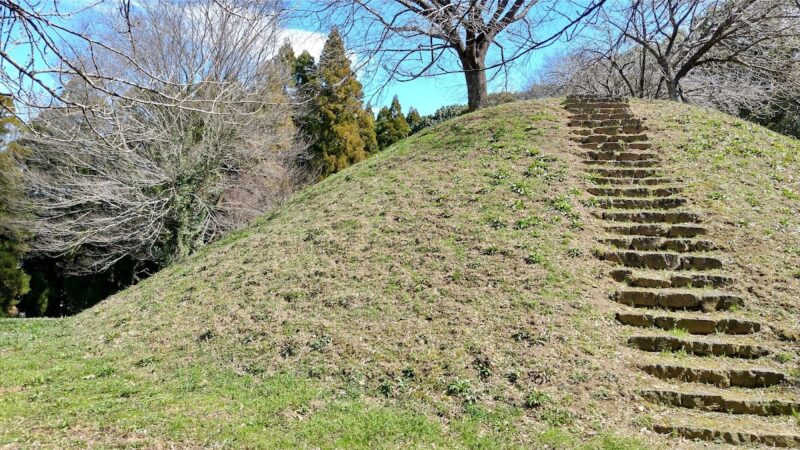
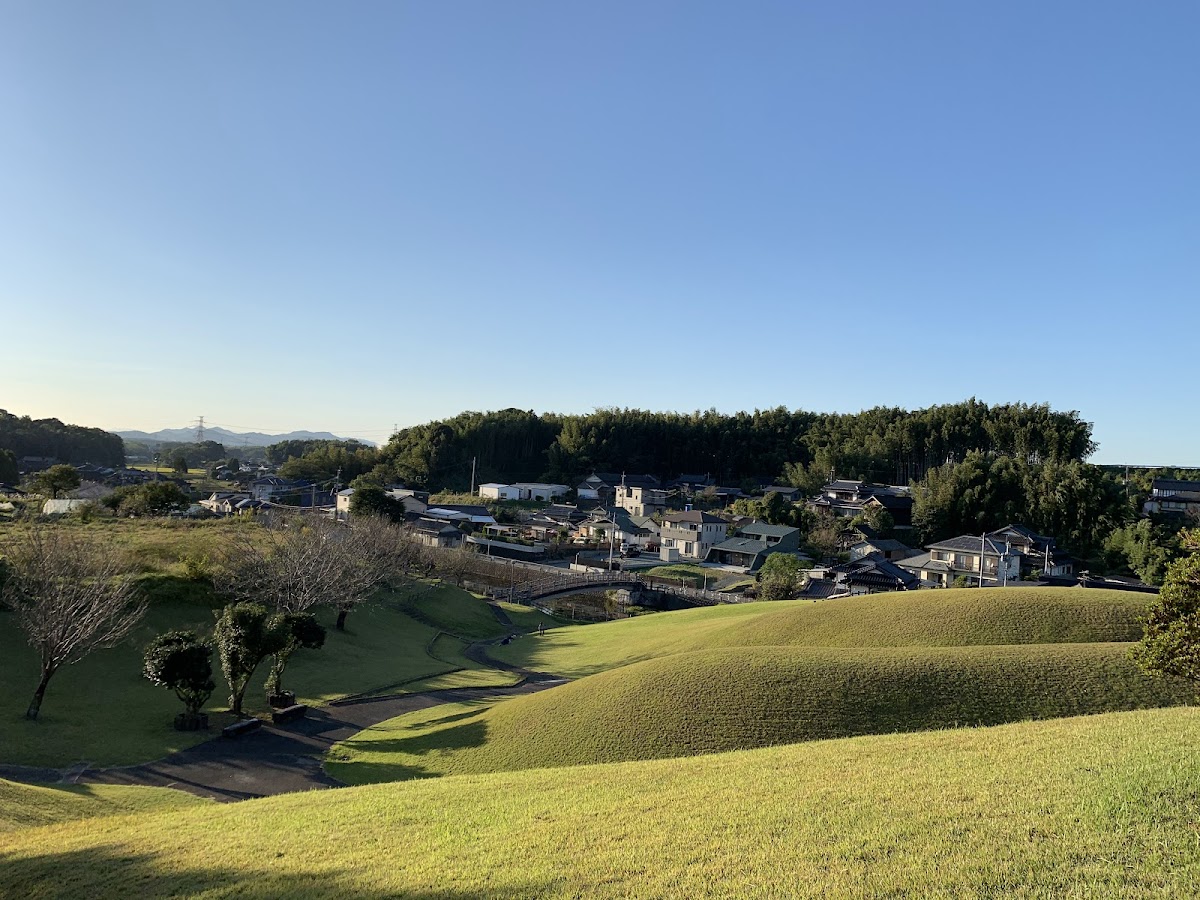
Currently, low earthworks remain around the main bailey site, which is maintained as Takesako Castle Ruins Park. Earthworks are earthen walls designed to prevent enemy intrusion, and are a fundamental structure for castle defense at the time. Although the area is now a modern park with planted grass, the shape of the earthworks reveals the original defensive structure.
Dry Moat Arrangement
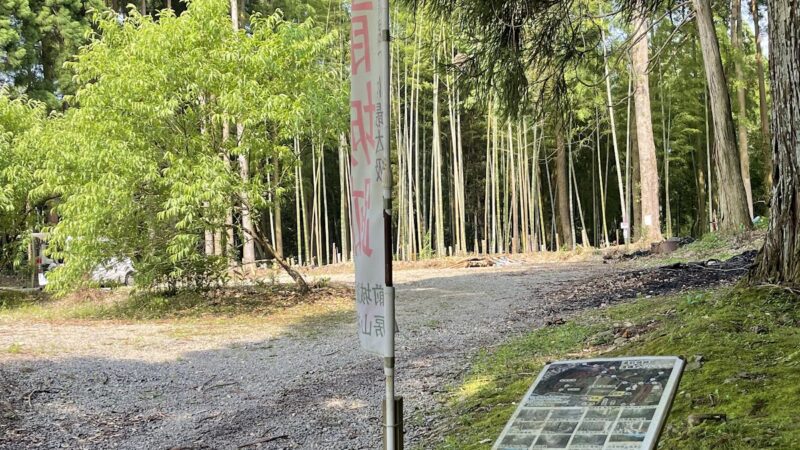
The most distinctive feature of Takesako Castle is its numerous dry moats. Dry moats, which do not hold water, were important defensive structures that hindered enemy advances. The moats surround the north side of the main bailey, and the complex arrangement of the moats can be seen on the old map displayed on the information board.
The topographical features of the time, such as the flow of ponds and rivers, remain largely unchanged, making it a valuable historical site for understanding the structure of medieval castles.
Highlights of Takesako Castle Ruins Park
Historical Plaza and Castle Remains
Takesako Castle Ruins Park features a historical plaza where visitors can learn about the history of the castle. Centered around the main keep, visitors can actually see the remains such as earthworks and dry moats, experiencing the structure of a medieval castle. Information boards are also installed, providing detailed explanations of the history and structure of Takesako Castle.
Bamboo Botanical Garden
The park also includes a bamboo botanical garden where visitors can observe various types of bamboo. This facility, fitting for a place where bamboo is included in the castle’s name, is one of the highlights during a stroll.
Cherry Blossom Viewing Spot
In spring, Takesako Castle Ruins Park becomes a popular cherry blossom viewing spot, attracting many visitors. Numerous cherry trees are planted throughout the park, painting the area around the main keep and the historical plaza pink. Enjoying cherry blossoms at this historic castle site offers a truly special experience.
Firefly Viewing Spot
In early summer, you can witness the spectacular dance of fireflies along the Higashitani River, which flows along the north side of the park. This unique sight, characteristic of this region’s rich natural environment, envelops the castle ruins park in a magical atmosphere at night. The best time for firefly viewing is considered to be from early to mid-June.
Nature Through the Seasons
Takesako Castle Ruins Park is developed utilizing the natural terrain, allowing visitors to enjoy beautiful scenery throughout the seasons. From cherry blossoms in spring, fireflies in early summer, lush greenery in summer, autumn foliage, and the tranquility of winter, each season offers a different facet of the park.
Cultural Property Designation of Takesako Castle
Takesako Castle Ruins are designated as a historical site by Koshi City and are protected as an important historical heritage of the region. Its historical value is recognized for being the political and military center of Koshi County in Higo Province for approximately 400 years, from the early Kamakura period to the end of the Sengoku period.
The castle ruins are well-preserved, with clearly visible remains such as earthworks and dry moats at the main keep site, making it a valuable historical site for the study of medieval castles.
Access Information
Location
〒861-1104 Kumamoto Prefecture, Koshi City, Kamisho, Shiroyama
Access by Car
- Approximately 15 minutes from Kumamoto IC on the Kyushu Expressway
- Approximately 30 minutes from central Kumamoto City via National Route 387
- Parking: Available (Free)
Parking is located near the park entrance, but it can be difficult to find for first-time visitors, so we recommend using a car navigation system or smartphone map app.
Access by Public Transportation
- Approximately 10 minutes by car from Haramizu Station on the JR Hohi Main Line
- Approximately 15 minutes by car from Miyoshi Station on the Kumamoto Electric Railway
Access by public transportation alone is somewhat inconvenient, so consider using a taxi or rental car.
Opening Hours and Admission Fee
- Opening Hours: Always open
- Admission Fee: Free
As it is a well-maintained park, you can generally stroll around freely.
Nearby Tourist Attractions
Kikuchi Shrine and Kikuchi Castle Ruins
Located approximately 12km north of Takesako Castle, Kikuchi Shrine is dedicated to the Kikuchi clan, who were active during the Nanboku-cho period. The Kikuchi Castle Ruins are also nearby, allowing you to learn about the history of the Kikuchi clan, who had close ties to the Koshi clan.
Kumamoto Prefecture Agricultural Park Country Park
This vast agricultural park in Koshi City offers opportunities to enjoy seasonal flowers and agricultural experiences. It’s a suitable spot to visit in conjunction with Takesako Castle Ruins Park.
Tourist Attractions in Kumamoto City
Major tourist attractions in Kumamoto City, such as Kumamoto Castle and Suizenji Jojuen Garden, are accessible in about 30 minutes by car. You can enjoy Kumamoto sightseeing in conjunction with a visit to Takesako Castle Ruins.
Points to Note When Visiting
Clothing and Items to Bring
Since the castle ruins are a park that utilizes the natural terrain, we recommend wearing comfortable shoes. In summer, the sun is strong, so it’s a good idea to bring a hat, sunscreen, and drinks.
Photography
Photography is generally permitted within the park, but please be considerate of other visitors. Especially during cherry blossom season and firefly season, many people visit, so please be mindful of proper etiquette when taking photos.
Consideration for Historical Site Preservation
The remains such as earthworks and dry moats are valuable cultural assets. Please be careful not to damage the remains or enter restricted areas.
The Appeal of Visiting Takesako Castle
Takesako Castle may be a relatively unknown castle site within Kumamoto Prefecture, but it is a historically important site that functioned as the center of Koshi District for approximately 400 years. While there are no large stone walls or remains of a keep, it is a valuable place to learn about the structure of a medieval castle that utilized the natural terrain.
Because it’s maintained as a park, even those not interested in history can enjoy the changing seasons, and it’s a popular place of relaxation for local residents. Many people visit especially during cherry blossom season and firefly season, experiencing the unique atmosphere where history and nature harmonize.
When sightseeing in Kumamoto, why not visit the Takesako Castle Ruins, where you can learn more about the region’s history, in addition to the major tourist spots? It’s a hidden gem where you can feel the history of Higo Province from the Kamakura period to the Sengoku period.
Summary
Takesako Castle was built by Takesako Terutane during the Kenkyu era of the Kamakura period. After the Takesako clan moved to Bungo Province in 1510, it became the residence of the Koshi clan and functioned as the center of Koshi County’s governance for approximately 400 years until it fell to the Shimazu clan in 1585.
Currently, it is maintained as Takesako Castle Ruins Park, where you can see the remains such as earthworks and dry moats surrounding the main keep. Protected as a designated historical site by Koshi City, it is a valuable historical site for learning about the structure of medieval castles.
In spring, it is a popular spot for cherry blossoms, and in early summer, it is a popular spot for firefly viewing. It is a charming place where history and nature harmonize. When you visit Koshi City in Kumamoto Prefecture, be sure to visit the Takesako Castle Ruins and reflect on the history of Higo Province.