History and Remains of Tozaki Castle (Kikuchi City) | The Kashima Clan’s Residence, a Key Point in the Kikuchi Eighteen Outer Castles
Located in the Ima district of Kikuchi City, Kumamoto Prefecture, Tozaki Castle is an important mountain castle that played a vital role in the “Kikuchi Eighteen Outer Castles,” a defensive system of the Kikuchi clan, a prominent family of Higo Province during the medieval period. Built on a hill on the south bank of the Kikuchi River, this castle was passed down through generations as the residence of the Kashima clan and played a crucial role in the defense of Moriyama Castle (Kumafu Castle), the main castle of Kikuchi.
This article provides a detailed explanation of Tozaki Castle, from its historical background to the characteristics of its existing remains and its strategic position within the Kikuchi Eighteen Outer Castles.
Basic Information on Tozaki Castle
Tozaki Castle is a medieval mountain castle built on a hill approximately 100 meters above sea level in the Ima district of Kikuchi City. It is also known as “Chausuyama Castle,” a name derived from the hill’s shape resembling a tea mill (chausu).
Location and Access
Address: Ima-Minami-Yamanoue, Kikuchi City, Kumamoto Prefecture (near 1188 Fujita)
Elevation: Approximately 101 meters (relative height approximately 50 meters)
Designation: Kikuchi City Designated Historic Site
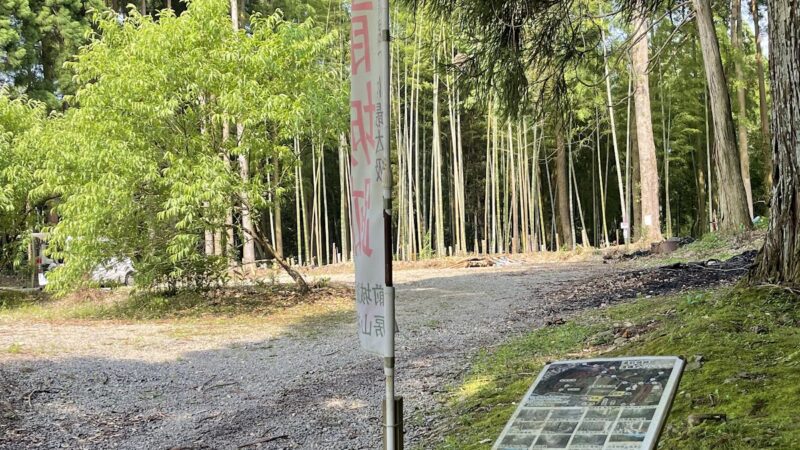
Access to the castle ruins is approximately 10 minutes by car southeast from Kikuchi city center. Located on the south side of the Kikuchi River, it is currently in a quiet environment surrounded by farmland and forests.
Map and Surrounding Environment
Tozaki Castle is situated in a location where the Kikuchi River could be used as a natural moat. The place name “Iyashiki” (居屋敷) remains at the western foot of the castle, and it is presumed that the residence of the castle lord, the Kashima clan, was located here. This place name is still used locally and is a valuable clue to understanding the layout of castles and residences in the medieval period.
Other castles of the Kikuchi Eighteen Outer Castles are scattered throughout the surrounding area, forming a defensive line in conjunction with castles such as Shirobayashi Castle, Kakemaku Castle, and Ichinari Castle.
What are the Eighteen Outer Castles of Kikuchi?
Understanding the Kikuchi Eighteen Outer Castles is essential to understanding Tozaki Castle. This is a collective term for the group of subsidiary castles positioned around the main castle, Kikuchi Castle (Moriyama Castle/Kumafu Castle), by the Kikuchi clan, a prominent family of Higo Province.
Composition of the Eighteen Outer Castles
The Kikuchi Eighteen Outer Castles consisted of the following castles:
Frontline Defense: Tozaki Castle, Shirobayashi Castle
Rear Defense: Kakemaku Castle, Ichinari Castle
Rear Support: Koganezuka Castle, Motoi Castle, Goshao Castle
Others: Takatori Castle, Kuzuhara Castle, Kameo Castle, Itai Castle, Mizushima Castle, Furuike Castle, etc.
These castles were arranged in concentric circles around the main Kikuchi Castle, forming a strategic network that cooperated with each other for defense.
Strategic Location of Tozaki Castle
Tozaki Castle was located southeast of Kikuchi Castle, on the south bank of the Kikuchi River, and served as a crucial base for the frontline defense of the main castle. It is believed to have utilized the natural barrier of the Kikuchi River to prepare for invasions from the south.
Its location on a hill approximately 100 meters above sea level allowed for a panoramic view of the surrounding terrain, likely enabling early detection of enemy movements and communication to the main castle.
History of Tozaki Castle
Construction Date and Builder
The exact construction date of Tozaki Castle is uncertain due to a lack of historical records, but it is estimated to have been built during the late Kamakura period to the Nanboku-cho period, when the Kikuchi clan expanded their power in Higo Province.
The Kikuchi clan played a central role in the Southern Court’s forces during the Nanboku-cho period, becoming a base for Southern Court forces in Kyushu. It is thought that they developed a group of subsidiary castles around the main castle during this period to strengthen its defenses.
About the Kashima Clan, Lords of the Castle
Tozaki Castle is known as the ancestral residence of the Kashima clan. The Kashima clan served as important retainers of the Kikuchi clan and protected this castle for generations.
While much of the Kashima clan’s detailed lineage remains unclear, fragmentary historical records suggest they participated in various battles alongside the Kikuchi clan. During the time when the Kikuchi clan wielded great power in Higo Province, the Kashima clan used Tozaki Castle as their base to defend the main Kikuchi castle.
The Rise and Fall of the Kikuchi Clan and Tozaki Castle
The Kikuchi clan reached its peak during the Nanboku-cho period, but their power gradually declined from the mid-Muromachi period onward. In the latter half of the 15th century, internal conflicts and struggles with neighboring forces weakened them, and ultimately, in the 16th century, Kikuchi rule came to an end due to pressure from the Otomo and Shimazu clans.
It is unclear when Tozaki Castle was last used, but it is believed that its military function declined along with the decline of the Kikuchi clan. It is highly likely that the castle had already been abandoned by the end of the Sengoku period.
Structure and Remains of Tozaki Castle
Characteristics of the Layout
Tozaki Castle is a hill castle built on an isolated hill approximately 100 meters above sea level. Remains can be found in two main areas of the castle site.
At the center of the castle is a circular platform approximately 12 meters in diameter, which is thought to be the main enclosure (honmaru). The structure shows concentric circles of enclosures spreading out from this main enclosure.
This concentric layout is a typical form of medieval mountain castles, a defensive system that makes maximum use of the limited terrain.
Existing Earthworks
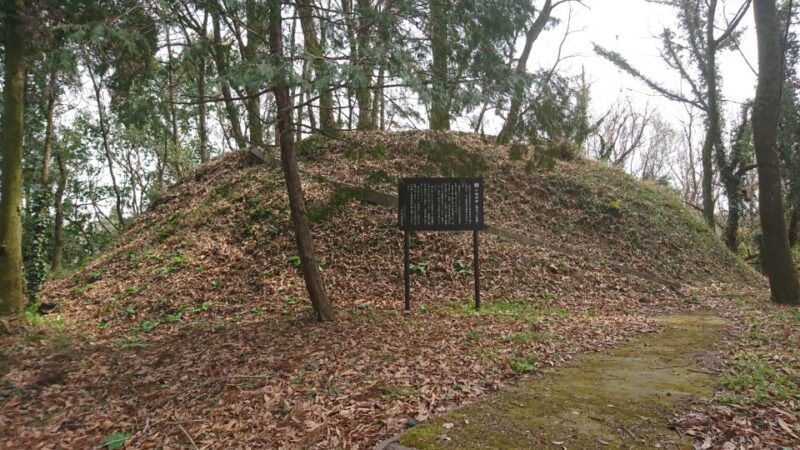
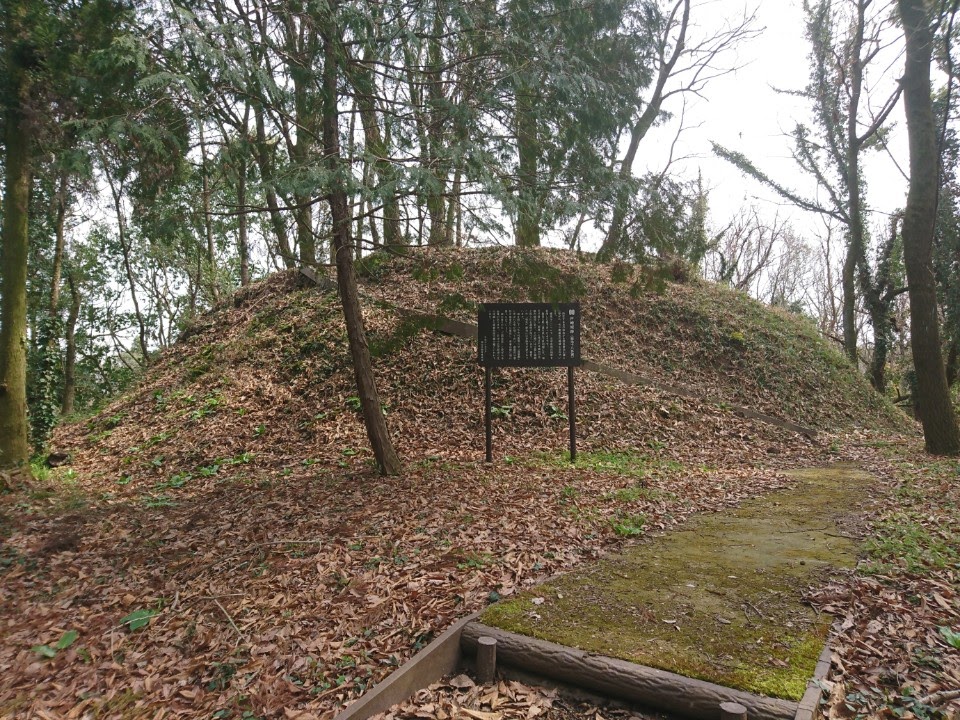
The most prominent remains of Tozaki Castle are the earthworks. Well-preserved earthworks remain around the main enclosure, conveying the castle-building techniques of the time.
The earthworks were built surrounding the enclosures, and their height varies depending on the location, but in the best-preserved areas, a height of approximately 1.5 meters can be observed. It is presumed that fences or walls were erected on top of the earthworks, enhancing their defensive capabilities.
The earthworks were constructed using a technique of excavating and piling up surrounding soil, a method that served two purposes: the excavated areas functioned as dry moats.
Dry Moats and Defensive Structures
Multiple dry moats can be identified at Tozaki Castle. These were important defensive structures that demarcated the baileys and prevented enemy intrusion.
The dry moats are arranged to surround the main bailey, and are particularly deeply excavated in the direction of the ridge (the direction most vulnerable to attack). Some dry moats are more than 2 meters deep, indicating a high level of defensive awareness at the time.
Vertical moats (ditches running vertically) can also be seen, a design intended to hinder the movement of enemy soldiers climbing the slopes.
Bailey Arrangement
Multiple baileys (flat areas) can be identified at Tozaki Castle. The second and third baileys are arranged concentrically or in a stepped pattern around the main bailey.
Each enclosure was demarcated by earthworks and dry moats, functioning as an independent defensive unit. The main enclosure was the largest, and the enclosures tended to become smaller towards the outer edges.
While no building foundations have been found within the enclosures, it is presumed that post-and-beam buildings and watchtowers once stood there. They likely served as barracks and armory facilities for soldiers during peacetime, and as battlefields during wartime.
Estimated Location of the Residence
Based on the place name “Iyashiki” (居屋敷), remaining at the western foot of the castle, it is believed that the residence of the castle lord, the Kashima clan, was located in this area.
Medieval castles typically combined a mountaintop fortified castle (a wartime base) with a residence at the foot of the mountain (a living area during peacetime). It is highly probable that Tozaki Castle also adopted this structure, suggesting that the clan lived in the residence during peacetime and fortified themselves in the mountaintop castle during wartime.
The current Iyashiki area is farmland and residential land, and no clear remains can be confirmed, but the place name preserves the memory of the medieval period.
Visitor Guide
User Information
Tozaki Castle Ruins are protected as a city-designated historical site, but they are not a particularly developed tourist facility. Visiting is free, but please note the following points:
Visiting Hours: No specific restrictions (daytime visits recommended)
Admission Fee: Free
Parking: No dedicated parking (space available on the roadside)
Restrooms: None near the castle ruins (use public facilities in Kikuchi city center)
Information Boards: Simple information boards available
Access Methods
Access by Car:
- Approximately 20 minutes from the Ueki Interchange on the Kyushu Expressway
- Approximately 10 minutes from the center of Kikuchi city
- Search for “Kikuchi-shi Ima” in your car navigation system
Public Transportation:
- Requires walking from the nearest bus stop
- Access by public transportation is inconvenient; using a car is recommended
Notes for Visitors
Tozaki Castle Ruins are located in an environment surrounded by forests and farmland. Please note the following points when visiting.
- Attire: Comfortable clothing and shoes are necessary as you will be walking on mountain trails.
- Season: In summer, vegetation can be overgrown, making it difficult to see the ruins.
- Private Property: The area around the castle ruins includes private property; do not enter restricted areas.
- Safety: Some areas have uneven ground; proceed with caution.
- Items to Bring: Bring drinking water, insect repellent, a map, etc.
Photo Spots
Recommended photo spots at Tozaki Castle Ruins:
- View from the Main Enclosure: A panoramic view of the Kikuchi Plain.
- Earthwork: A well-preserved cross-section of the earthwork.
- Dry Moat: A view of the deeply excavated dry moat.
- Panoramic View: To capture the entire castle ruins, shoot from a slightly distant location.
Nearby Attractions
Kikuchi Castle (Kumafu Castle/Moriyama Castle)
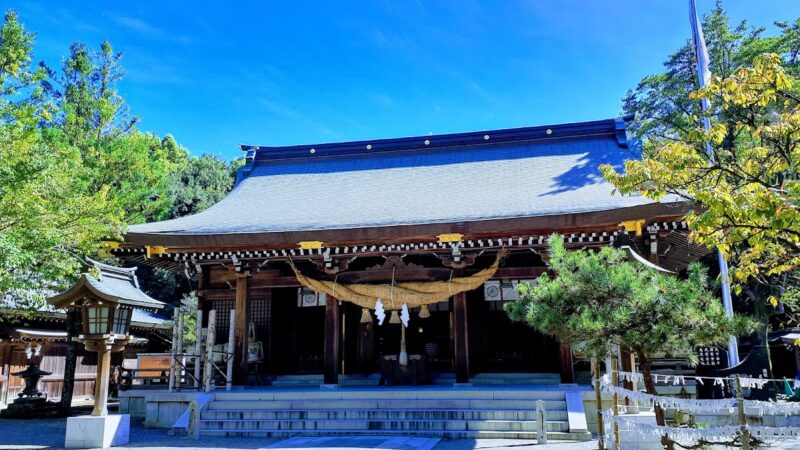
If you’ve visited Tozaki Castle, Kikuchi Castle, the main castle of the Kikuchi clan, is also a must-see. The castle ruins are located around Kikuchi Shrine in Kikuchi city, and there’s also the Kikuchi City Historical Museum where you can learn about the history of the Kikuchi clan.
Other Eighteen Outer Castles of Kikuchi
If you have time, try visiting the other eighteen outer castles besides Tozaki Castle. In particular, Shirobayashi Castle and Kakemaku Castle are relatively easy to access.
Kikuchi Valley
Kikuchi Valley, a representative tourist spot in Kikuchi City, is perfect for refreshing yourself after visiting the castle ruins. It’s a scenic area with beautiful streams and forests.
Kikuchi Onsen (Hot Springs)
Kikuchi city also has plenty of hot spring facilities. You can soothe your tired body after exploring the castle ruins.
Historical Value of Tozaki Castle
Importance in Kikuchi Clan Research
Tozaki Castle is an important historical site for understanding the Kikuchi clan’s system of rule. The Kikuchi Eighteen Outer Castles defense system is a valuable example of how local powerful families governed and defended their territories during the medieval period.
The Kikuchi clan played a central role in the Southern Court’s forces during the Nanboku-cho period, significantly influencing the history of Kyushu. Tozaki Castle, which preserves a part of the Kikuchi clan’s military system, is a historically valuable site for research purposes.
Resources for Medieval Mountain Castle Research
The layout and remains of Tozaki Castle exhibit typical characteristics of a medieval mountain castle. It possesses all the basic elements of a medieval castle, including a concentric arrangement of baileys, defenses using earthworks and dry moats, and a dual structure of a mountaintop fort and a residence at the foot of the mountain.
Such remains are valuable examples for studying medieval castle construction techniques and tactics.
Witnesses to Local History
Tozaki Castle and its lord, the Kashima clan, are important figures in the medieval history of the Kikuchi region. The continued existence of place names such as “Iyashiki” (residence) is evidence of how the local people have cherished their history.
As a regional historical heritage site, Tozaki Castle can be considered a cultural asset that should be passed down to future generations.
References and Historical Materials
Main documents and historical materials concerning Tozaki Castle:
*Kikuchi Fudoki*
The *Kikuchi Fudoki*, compiled by Shibue Matsuseki during the Kansei era of the Edo period, contains descriptions of the eighteen outer castles of Kikuchi, and also mentions Tozaki Castle. This document is a fundamental text for understanding the medieval history of the Kikuchi region.
*Place Names of Kumamoto Prefecture*
The Heibonsha Place Name Dictionary contains an overview and geographical information of Tozaki Castle, serving as basic material for castle site research.
Kikuchi City Board of Education Survey Report
The cultural property survey report by the Kikuchi City Board of Education includes the results of the Tozaki Castle remains survey.
Castle Research Journals
Studies on Tozaki Castle are also published in various castle research journals, providing access to specialized research findings.
Summary
Tozaki Castle is a medieval mountain castle located in Kikuchi City, Kumamoto Prefecture. It played a crucial role in the Kikuchi clan’s defense system, known as the “Eighteen Outer Castles of Kikuchi.” As the ancestral residence of the Kashima clan, it served as the frontline defense for Kikuchi Castle, contributing to the Kikuchi clan’s power maintenance.
Even today, remnants such as earthworks and dry moats remain well-preserved, making it a valuable historical site where one can experience the structure of a medieval mountain castle firsthand. Its location on a hill on the south bank of the Kikuchi River, its concentric arrangement of baileys, and the traces of a residence (as evidenced by the place name “Iyashiki”) all possess many characteristics of a medieval castle.
When visiting Kikuchi City, why not visit Tozaki Castle, along with the Kikuchi clan’s main castle, and reflect on the history of medieval Higo Province? The castle ruins, nestled in the quiet mountains, convey the spirit of the samurai from hundreds of years ago.