Shiki Castle (Amakusa District, Kumamoto Prefecture): A Complete Guide to its History and Highlights | Visiting the Ruins of the Amakusa Five Lords’ Castle
Shiki Castle is a medieval mountain castle located in Shiki, Reihoku-cho, Amakusa District, Kumamoto Prefecture. Known as the residence of the Shiki clan, one of the Amakusa Five Lords who wielded significant influence in the Amakusa region, it also played an important role as a base for Christian missionary work in Amakusa. Currently, it is maintained as Shiki Castle Ruins Park, serving as a place of relaxation for local residents.
Overview and Location of Shiki Castle
Shiki Castle is a flatland castle built on a hill approximately 80 meters above sea level, located in the center of Reihoku-cho, Amakusa District, Kumamoto Prefecture. Situated in a strategic location overlooking the Shiki area in the northwestern part of Amakusa Shimoshima Island, it controlled a key point for maritime traffic.
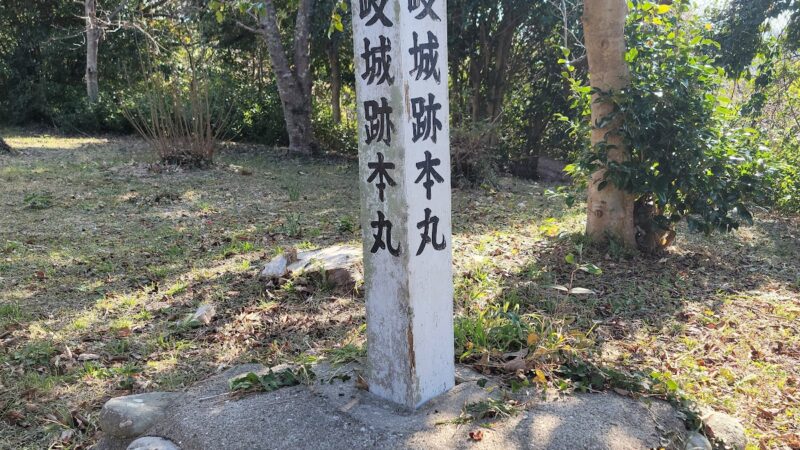
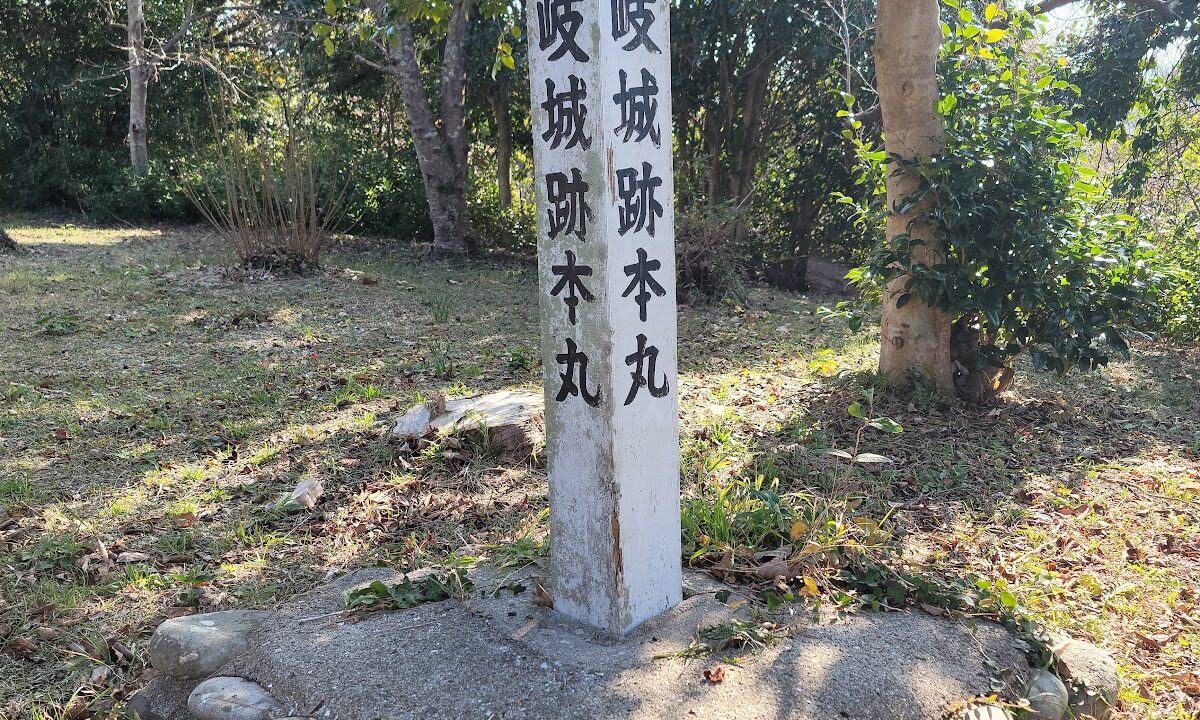
The castle’s structure is typical of a medieval mountain castle, with the main keep at its center, surrounded by multiple baileys and outworks. The site of the main keep is now occupied by a shrine dedicated to Shiki Rinsen, preserving a faint trace of its former appearance.
Located in Shiki, Reihoku-machi, Amakusa-gun, Kumamoto Prefecture, it is known as a castle ruin of particularly high historical value among the Amakusa Islands. The place name Shiki has appeared in historical documents since ancient times as one of the central locations of the Amakusa region, and it played an important role from the medieval to the early modern period.
History of Shiki Castle
Construction and the Rise of the Shiki Clan
There are various theories regarding the construction period of Shiki Castle, but it is presumed to have been built in 1205 (Genkyu 2) after Shiki Mitsuhiro, a member of the Kikuchi clan of Higo Province, was appointed as the jitō (land steward) of Shiki Rokugaura. The Kikuchi clan was a prominent family representing Higo Province (present-day Kumamoto Prefecture), and the history of the Shiki clan began when this family expanded into the Amakusa region.
The Shiki clan, as a branch of the Kikuchi clan, expanded their power in Amakusa and ruled northern Amakusa from Shiki Castle throughout the medieval period. Shiki Rokugaura refers to the six ports (harbors) around Shiki, and by controlling these key points of maritime traffic, they solidified their economic and military base.
The Sengoku Period and the Shiki Clan’s Golden Age
At the end of the Sengoku period, the Shiki clan reached its peak during the time of Shiki Shigetsune (commonly known as Shiki Rinsen). Shiki Rinsen was one of the Amakusa Five Lords and a powerful daimyo in the Amakusa region. The Amakusa Five Lords is a collective term for five local lords who ruled Amakusa, including the Shiki clan, as well as the Kamitsura, Sumoto, Oyano, and Amakusa clans.
During the time of Shiki Rinzen, Shiki Castle functioned as the political and military center of Amakusa, and the castle town prospered, attracting many retainers and merchants. It is believed that a strong fortification centered around the main keep was established, and defensive facilities such as outworks were also well-developed.
Connection with Christianity
Shiki Rinzen is known as the first lord in Amakusa to accept Christianity. In the mid-16th century, when Jesuit missionaries arrived in the Amakusa region, Shiki Rinzen showed a deep interest in Christianity and was baptized himself.
A Christian church was built in the town of Shiki Castle, and many of the local people converted to Christianity. The Shiki clan’s acceptance of Christianity had a significant impact on the spread of Christianity throughout the Amakusa region, and Amakusa became a region where Christian culture flourished. During this period, Shiki Castle played a crucial role as a religiously important center.
The Battle of Amakusa in the Tensho Era and the Fall of Shiki Castle
The fate of Shiki Castle was sealed by the “Battle of Amakusa in the Tensho Era,” which took place in 1589 (Tensho 17). After Toyotomi Hideyoshi’s conquest of Kyushu, part of Higo Province was given to Konishi Yukinaga, who developed Uto Castle as his residence.
Konishi Yukinaga sought the cooperation of the Amakusa Five during the construction of Uto Castle. However, the Amakusa Five, including Shiki Rinsen, refused. Their actions, aimed at maintaining their independence, incurred the displeasure of Toyotomi Hideyoshi.
In 1589 (Tensho 17), a combined force of Konishi Yukinaga and Kato Kiyomasa invaded Amakusa. Shiki Castle came under fierce attack, and although Shiki Rinsen continued to resist, he was ultimately forced to surrender. Rinsen retreated to Izumi in Satsuma Province (present-day Izumi City, Kagoshima Prefecture), and Shiki Castle was abandoned.
This battle marked the end of the era of the Amakusa Five, and the Amakusa region came under the control of the Konishi clan. Shiki Castle became a ruin and was never rebuilt.
After the Edo Period
During the Edo period, Amakusa became a shogunate territory (directly controlled by the shogunate) and later came under the control of the Higo Hosokawa clan. Shiki continued to function as a strategic point in northern Amakusa, but Shiki Castle was never used as a military base again.
After the Meiji era, Shiki Village continued to exist as a village in Amakusa County, and on January 1, 1955 (Showa 30), it merged with Tomioka Town and Sakasegawa Village to form Reihoku Town. The current Shiki district of Reihoku Town was the center of the former Shiki Village, and the ruins of Shiki Castle are a valuable legacy that conveys its history to the present day.
Structure and Remains of Shiki Castle
Layout and Defensive Facilities
Shiki Castle has a typical structure for a medieval mountain castle, with the main keep located at the highest point, surrounded by multiple baileys arranged in a stepped pattern. The main keep was the central part of the castle and is thought to have housed the lord’s residence and important facilities.
The outworks were independent baileys built to reinforce the defenses of the main keep and played an important role in preventing enemy intrusion. It is believed that Shiki Castle had multiple outworks, suggesting a robust defensive system.
It is presumed that defensive facilities such as earthworks and moats were built on the castle’s slopes, but due to changes in the terrain, it is difficult to fully reconstruct its original appearance. Nevertheless, even now, as a park, the undulations of the terrain can still give a sense of the medieval mountain castle’s character.
Existing Remains
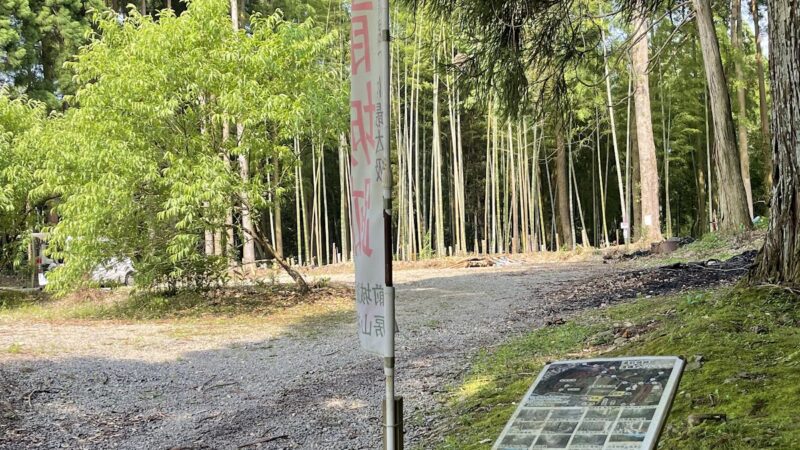
The Shiki Castle site is currently maintained as Shiki Castle Ruins Park and is used by local residents as a place for health promotion and relaxation. A shrine dedicated to Shiki Rinsen stands on the site of the former main keep, and it remains an object of local worship.
Walking paths are maintained within the park, and from the summit, you can enjoy a panoramic view of the town of Reihoku and the Amakusa Sea. On clear days, you can even see Mount Unzen Fugen and the Nagasaki Peninsula, giving you a real sense of Shiki Castle’s strategic location on a maritime transportation hub.
While no clear remains such as stone walls or buildings survive, the layout of the baileys and the undulations of the terrain allow you to imagine the scale and structure of the castle in its heyday. Information boards and explanatory signs are also installed to help visitors learn about the history of Shiki Castle.
History and Development of Shiki Village
Establishment of Shiki Village
Shiki Village was a village that once existed in Amakusa District, Kumamoto Prefecture. It was established on April 1, 1889 (Meiji 22), through the merger of Kamitsufukae Village, Shiki Village, Shirakio Village, Uchida Village, and Toshigara Village, following the implementation of the town and village system. Shiki flourished from ancient times as the center of northern Amakusa and had a history as a castle town of Shiki Castle.
Shiki Village was located in the northwestern part of Amakusa Shimoshima Island and was a key point for maritime traffic centered around Shiki Port. Its main industries were fishing and agriculture, and it played an important role in the economic activity of the Amakusa region.
Industry and Economy
The economy of Shiki Village was mainly supported by fishing and agriculture. Shiki Port was a good port facing the Amakusa Sea and flourished as a fishing base. Coastal fishing was particularly thriving, with landings of horse mackerel, mackerel, and sardines.
In agriculture, the warm climate was utilized for cultivating citrus fruits, and rice was grown on terraced fields. Sloping land agriculture, unique to the Amakusa region, developed, demonstrating ingenuity in effectively utilizing the limited flat land.
Shiki also functioned as a commercial center in northern Amakusa, hosting regular markets and serving as a trading hub with surrounding areas. The flow of goods through Shiki Port was also thriving, making it an important gateway connecting Amakusa to the mainland.
School Education and Culture
After the Meiji era, an elementary school was established in Shiki Village, becoming the center of education in the region. Shiki Elementary School (later Shiki Elementary School) provided educational opportunities for local children and contributed to human resource development.
The Shiki district has a rich cultural heritage, including its history from the Christian era and the legends of Shiki Castle. Local festivals and traditional events have also been passed down, playing a role in strengthening community bonds.
Merger into Reihoku Town
On January 1, 1955 (Showa 30), Shiki Village merged with Tomioka Town and Sakasegawa Village to form Reihoku Town. While this merger eliminated Shiki Village as an administrative unit, the Shiki district remains an important central area of Reihoku Town.
The name of Reihoku Town comes from its location in northern Amakusa. Even after the merger, the Shiki district continued to develop as one of the town’s administrative and economic centers, and the Shiki Castle ruins are preserved and utilized as an important tourist resource.
The Role of the Amakusa Five and the Shiki Clan
What are the Amakusa Five?
The Amakusa Five are a collective term for the five local lords who ruled the Amakusa Islands during the Sengoku period (Warring States period). The Shiki, Kamitsura, Sumoto, Oyano, and Amakusa clans were among those who held territories in Amakusa.
While each of the five clans was an independent lord, they sometimes acted in cooperation with others. Due to the geographical characteristics of Amakusa as an island region, they shared common interests in maritime traffic and trade, and sometimes formed alliances to resist foreign enemies.
The Shiki Clan’s Position
The Shiki clan was a powerful family among the Amakusa Five, controlling northwestern Amakusa from their base at Shiki Castle. Originating from the Kikuchi clan, the Shiki clan had strong ties to mainland Higo Province, and wielded considerable political influence in Amakusa.
During the time of Shiki Rinzen, the Shiki clan embraced Christianity, gaining contact with Nanban trade and Western culture. This brought economic benefits and enriched Amakusa culturally.
The End of the Amakusa Five
With Toyotomi Hideyoshi’s conquest of Kyushu, the independence of the Amakusa Five was threatened. Konishi Yukinaga’s refusal to cooperate with the construction of Uto Castle was a manifestation of the Five’s desire for independence, but it ultimately led to an attack by the Konishi-Kato allied forces, marking the end of the Amakusa Five’s era.
The lords of the Five, including Shiki Rinsen, were forced to surrender or retreat, and Amakusa came under the control of the Konishi clan. This event holds significant meaning in Amakusa’s history as a turning point from medieval regional rule to a modern centralized system.
Shiki Castle Ruins Tourist Information
Access
Shiki Castle Ruins are approximately a 3-hour drive from Kumamoto City and approximately a 40-minute drive from Amakusa Airport. Located in the center of Reihoku Town, in the northwestern part of Amakusa Shimoshima Island, it is accessible from National Route 389.
If using public transportation, take a bus from Amakusa Airport towards Reihoku Town, get off at the Shiki bus stop, and walk for about 10 minutes to reach Shiki Castle Ruins Park. However, since bus services are limited, it is recommended to check the timetable in advance.
Points to Note During Your Visit
Shiki Castle Ruins Park is free to visit and open year-round. There is a parking lot within the park, making it convenient to visit by car.
During your visit, you can visit the shrine built on the site of the main keep, reflect on Shiki Rinsen, and enjoy the view from the top. The panoramic view of the Amakusa Sea and the townscape of Reihoku Town makes you realize that Shiki Castle was built in a strategic location.
Information boards are installed within the park, allowing you to learn about the history and structure of Shiki Castle. Walking paths are also maintained, allowing you to stroll around and experience the atmosphere of a medieval mountain castle.
Nearby Tourist Attractions
Besides the Shiki Castle Ruins, Reihoku Town offers other historical and cultural sites such as the Tomioka Castle Ruins, the Tomioka Visitor Center, and the Reihoku Town Historical Museum. Tomioka Castle, in particular, is a coastal castle built during the Edo period, showcasing a different era of castle architecture compared to Shiki Castle.
Furthermore, the coastline facing the Amakusa Sea boasts beautiful scenery and is known as a famous spot for sunsets. When visiting the Shiki Castle Ruins, exploring the surrounding tourist attractions will allow you to deeply appreciate Amakusa’s history and nature.
Contact Information
For detailed information and tourist guidance regarding the Shiki Castle Ruins, please contact the Reihoku Town Hall or the Reihoku Town Tourism Association. The official tourism website also offers audio guides, allowing you to explore while listening to more detailed explanations.
The Influence of Shiki Castle on Amakusa History
Center of Christian Culture
Shiki Castle and the Shiki clan were pioneers in the spread of Christianity in Amakusa. Shiki Rinsen’s acceptance of Christianity led to its spread throughout the Amakusa region, and many of the local inhabitants became Christians.
This history is a crucial background that later led to the Amakusa-Shimabara Rebellion. The Shiki clan’s religious policies significantly influenced Amakusa’s reputation as a Christian land.
Political Center of Medieval Amakusa
Shiki Castle was one of the political and military centers of medieval Amakusa. As one of the Amakusa Five, the Shiki clan wielded considerable influence over regional political decisions, shaping Amakusa’s history.
The rise and fall of Shiki Castle symbolizes the transition from the medieval to the early modern period, and occupies an important position in Amakusa history as a turning point in history where the nature of regional governance changed dramatically.
Core of Regional Identity
Even today, the Shiki Castle ruins are cherished by local residents as one of the symbols of Reihoku Town. Shiki Castle Ruins Park is used as a place for health promotion and relaxation, and also functions as a place to learn about the local history.
Even today, local residents visit the shrine dedicated to Shiki Rinsen to pay their respects to their ancestors. The history of Shiki Castle is cherished and passed down in modern-day Reihoku Town as a core element of the region’s identity.
Summary
Shiki Castle is a medieval mountain castle located in Reihoku Town, Amakusa District, Kumamoto Prefecture. As the residence of the Shiki clan, one of the five prominent families of Amakusa, it played an important role in the history of Amakusa. It is presumed to have been built by Shiki Mitsuhiro, a member of the Kikuchi clan, and reached its peak during the time of Shiki Rinsen in the Sengoku period.
Shiki Rinsen is known as the first lord in Amakusa to accept Christianity, and Shiki Castle also functioned as a center of Christian culture. However, in the Tensho War of 1589 (Tensho 17), Shiki Castle was attacked and fell to a combined force of Konishi Yukinaga and Kato Kiyomasa.
Currently, the Shiki Castle ruins have been developed into a park, and a shrine dedicated to Shiki Rinsen stands on the site of the main keep. It is cherished by local residents and tourists alike as a valuable heritage site that conveys the history of Amakusa.
Shiki Village was established during the Meiji era and merged into Reihoku Town in 1955, but the Shiki area still occupies an important position as one of the central areas of Reihoku Town. The history of Shiki Castle symbolizes the spread of Christianity in Amakusa and the transition from the medieval to the early modern period, making it an indispensable element in understanding Amakusa history.
Visiting the Shiki Castle ruins allows one to reflect on the history and culture of medieval Amakusa, as well as the rise and fall of the Shiki clan. As one of Amakusa’s rich historical heritage sites, Shiki Castle will undoubtedly continue to be carefully preserved and utilized in the future.