Hayakawa Castle (Kamimashiki District, Kumamoto Prefecture) Complete Guide | Detailed Explanation of History, Builder, and Remains
What is Hayakawa Castle?
Hayakawa Castle (Sogawa-jo) is a medieval mountain castle located in Mifune-machi, Kamimashiki District, Kumamoto Prefecture. It is said to have been built in 1253 by Watanabe Omi-no-kami Hidemura, a vassal of the Aso clan.
The current Kamimashiki District in Kumamoto Prefecture consists of five towns: Mifune-machi, Kashima-machi, Mashiki-machi, Kosa-machi, and Yamato-machi, and is located in the central part of Kumamoto Prefecture. Hayakawa Castle is one of the important historical sites indispensable to understanding the history of Mifune-machi, the central town of Kamimashiki District.
Geographical Characteristics of Kamimashiki District
Kamimashiki District is located in the central part of Higo Province (present-day Kumamoto Prefecture) and has developed as a transportation hub since ancient times. The county borders the eastern side of Kumamoto City, occupying an important position connecting the Aso region and the Kumamoto Plain.
Mifune Town, where Hayakawa Castle was built, is located in the northwestern part of Kamimashiki County, situated on a hilly area through which the Midorikawa River system flows. This topographical feature was suitable for constructing a castle as a defensive stronghold during the medieval period.
History of Hayakawa Castle
Background of Construction and Kenchō 5 (1253)
Hayakawa Castle was built in Kenchō 5 (1253), during the mid-Kamakura period. This was a time when the Aso clan was expanding its power in Higo Province, strengthening its control over its territory by deploying family members and retainers throughout the region.
Watanabe Ōmi-no-kami Hidemura was a senior retainer of the Aso clan and was entrusted with governing this region. It is said that Hidemura changed his surname to “Hayakawa” when building the castle. This was a surname change derived from a place name, and it was common in the medieval period to adopt the place name of one’s territory as a surname. ### Relationship with the Aso Clan
The Aso clan was a powerful local family in Higo Province, possessing both religious and secular authority as the chief priest family of Aso Shrine. From the Kamakura period to the Sengoku period, the Aso clan controlled a vast territory, primarily in eastern Higo Province.
The Hayakawa clan (later the Watanabe clan), based at Hayakawa Castle, played a crucial role in governing the area around Kamimashiki County as a member of the Aso clan’s vassal group. It is believed that the castle functioned not only as a military base but also as a center of regional governance.
Hayakawa Castle in the Sengoku Period
With the arrival of the Sengoku period, Higo Province became a battleground for the power struggles of powerful Kyushu daimyo such as the Shimazu, Otomo, and Ryuzoji clans. The Aso clan also strived to maintain their territory while building complex diplomatic relations with these forces.
It is presumed that Hayakawa Castle also played a role as a defensive stronghold during this turbulent period. However, detailed historical records regarding specific battles and changes in castle lords are currently limited.
Changes Since the Early Modern Period
In 1587, after Toyotomi Hideyoshi’s conquest of Kyushu, Higo Province became the territory of Sasa Narimasa, and then Kato Kiyomasa. During this process, many medieval mountain castles were abandoned, and it is believed that Hayakawa Castle also ceased to exist with the end of the Sengoku period.
During the Edo period, under the rule of the Kumamoto Domain (Higo Domain), Kamimashiki District was developed, and Mifune Town flourished as a post town. Although Hayakawa Castle had already been abandoned, it remained in the local memory as a place name and legend.
Structure and Remains of Hayakawa Castle
Location and Layout of the Castle
Hayakawa Castle is presumed to have been a typical medieval mountain castle, utilizing the topography of the hilly terrain. Unlike castles on flat land, mountain castles are characterized by their design that maximizes the use of natural terrain to enhance defensive capabilities. The following elements are commonly found in medieval mountain castles:
- Main Enclosure (Honmaru): The central enclosure of the castle, where the lord’s residence and command post were located.
- Second Enclosure (Ninmaru, Sanmaru): A group of enclosures designed to defend the main enclosure.
- Moat: A dry moat dug across a ridge.
- Earthwork: A defensive wall made of piled-up earth.
- Vertical Moat: A moat dug along a slope.
Current Status of Remains
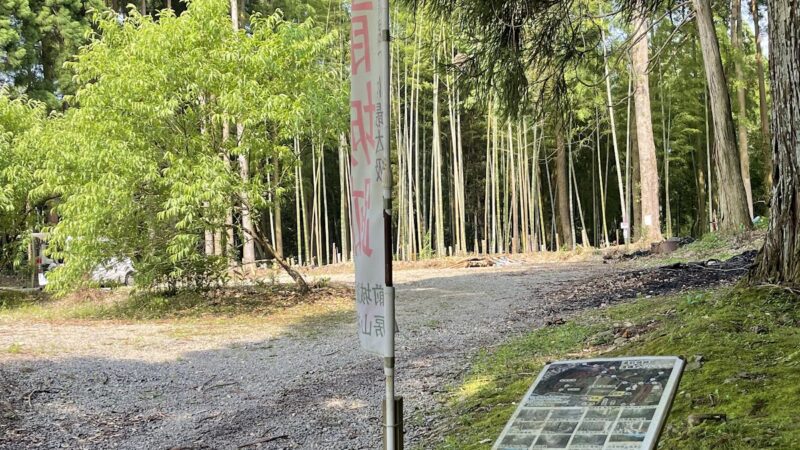
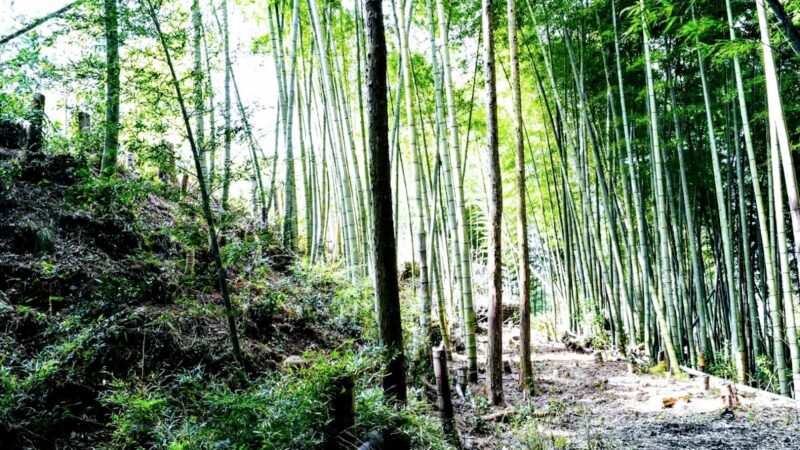
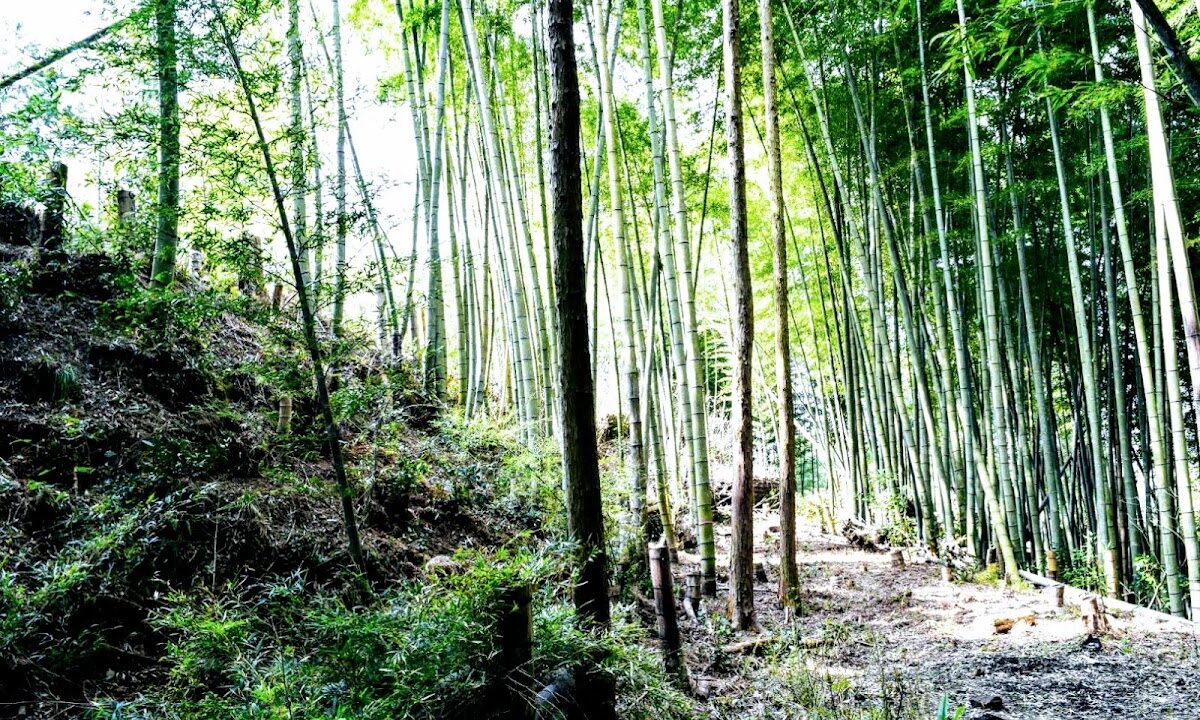
Currently, detailed reports on the remains of Hayakawa Castle are limited, but there is a possibility that some remains of a medieval mountain castle still exist. Compared to other mountain castles of the same period in Kumamoto Prefecture, the following remains may exist:
- Kuruwa (enclosure) remains: Flat, leveled areas
- Earthwork traces: Remnants of defensive structures made of earthworks
- Moat topography: Defensive lines cutting across ridges
- Castle access route: Traces of access routes to the castle
When visiting the site, sufficient consideration must be given to avoiding entry into private property and forests. From the perspective of cultural property protection, cooperation in preserving the remains is important.
Historical background of Kamimashiki County
Changes in County Boundaries
Kamimashiki County was one of the counties established in ancient Higo Province and was an important administrative division under the Ritsuryo system. The name “Kamimashiki” originates from the division of Mashiki County into upper and lower sections.
History from the Early Modern Period Onward
During the Edo period, Kamimashiki County consisted of several villages under the rule of the Kumamoto Domain. Following the Meiji Restoration and the abolition of the feudal domains, Kumamoto Prefecture was established, and the county system was reformed.
History since the Town and Village System
With the implementation of the Town and Village System in 1889 (Meiji 22), the consolidation of towns and villages progressed within Kamimashiki County. Mifune Town became a town in 1889 and developed as the central town of Kamimashiki County.
From the Showa to the Heisei era, town and village mergers progressed within Kamimashiki County. In 2005 (Heisei 17), Yabe Town, Seiwa Village, and Soyo Town merged to form Yamato Town, resulting in the current five-town system.
Culture and Historical Sites of the Kamimashiki Region
Besides Hayakawa Castle, Kamimashiki County has many other historical sites:
- History of Mifune Town: Mifune Town is known as the site of dinosaur fossil discoveries and is home to the Mifune Dinosaur Museum.
- Mashiki Town: It suffered significant damage in the Kumamoto Earthquake (2016), but reconstruction is progressing.
- Kashima Town: A town known for its spring water and abundant water resources.
- Kosa Town: A town rich in nature along the Midorikawa River.
- Yamato Town: Famous for historical buildings such as the Tsujun Bridge.
The Hayakawa and Watanabe Clans
About Watanabe Omi-no-kami Hidemura
Watanabe Omi-no-kami Hidemura, the builder of Hayakawa Castle, is thought to have held an important position among the retainers of the Aso clan. The official title “Omi-no-kami” was an honorary position granted by the imperial court, indicating a certain social status.
The fact that Hidemura changed his surname to “Hayakawa” was a manifestation of his intention to settle in this region and rule it for generations. For medieval samurai, territory and surname were inseparable, and adopting a place name as a surname demonstrated legitimacy as a feudal lord.
The Later History of the Hayakawa Clan
Due to limited historical records, the details of the Hayakawa clan’s subsequent history are unclear. However, it is highly probable that they continued to exist as vassals of the Aso clan until the Sengoku period.
After Toyotomi Hideyoshi’s conquest of Kyushu, many medieval samurai groups were disbanded or incorporated into new systems of rule. Similarly, it is presumed that the Hayakawa clan experienced significant changes during the transition to the early modern period.
The Position of Hayakawa Castle in the Castle System of Medieval Higo Province
The Aso Clan’s Castle Network
To control their vast territory, the Aso clan constructed a castle network with branch castles located throughout the region. Hayakawa Castle was an important base that played a key role in this network.
The main castles of the Aso clan included:
- Yabe Castle: One of the Aso clan’s main castles
- Kosa Castle: An important base in Kamimashiki District
- Mifune Castle: The central castle of the Mifune region
- Hayakawa Castle: A base in the northwestern part of Kamimashiki District
These castles worked in conjunction with each other to support the defense and governance of the territory.
Military Functions of Mountain Castles
Medieval mountain castles possessed the following military functions:
- Surveillance Function: Located on high ground overlooking the surrounding area, allowing for early detection of enemy movements
- Defensive Base: Strong defenses utilizing the terrain allowed for defense with a small number of troops
- Shelter: Also functioned as a place for the villagers to evacuate during wartime
- Logistical Base: A base for stockpiling weapons and food
Hayakawa Castle, as a mountain castle equipped with these functions, is also thought to have contributed to regional security.
Access and Visiting the Hayakawa Castle Ruins
Location and Transportation Access
The Hayakawa Castle Ruins are located in Mifune-machi, Kamimashiki-gun, Kumamoto Prefecture. For specific location information, please contact the Mifune-machi Board of Education or the Kumamoto Prefectural Cultural Properties Department.
Access Methods:
- By Car: Approximately 10-15 minutes by car from Mifune IC on the Kyushu Expressway (estimated)
- Public Transportation: Take a local bus from JR Kumamoto Station towards Mifune Town, then walk or take a taxi.
Precautions for Visiting
When visiting the ruins of a medieval mountain castle, please note the following:
- Consideration for Private Property: If the castle ruins are on private property, permission from the owner is required.
- Safety Measures: Mountain paths can be slippery; appropriate equipment (such as hiking boots) is necessary.
- Protection of Remains: Do not damage or remove any remains.
- Weather Check: Refrain from visiting in rainy or bad weather.
- Prior Contact: Contact the Mifune Town Board of Education in advance to confirm whether visits are permitted.
Cultural Value of Mifune Town and Hayakawa Castle
Importance in Local History
Hayakawa Castle is an important historical site for understanding the medieval history of Mifune Town and Kamimashiki District. The fact that a clear construction date of Kenchō 5 (1253) is recorded is a valuable reference point in the compilation of local history.
Status of Cultural Property Designation
Currently, it is not possible to confirm from publicly available information whether the Hayakawa Castle ruins are designated as a national, prefectural, or town-designated cultural property. However, as a medieval castle site, it has high academic value, and further research is expected.
Future Preservation and Utilization
In Kumamoto Prefecture, efforts are underway to preserve and utilize medieval castle sites. The following initiatives are expected regarding Hayakawa Castle:
- Academic Research: Confirmation and recording of remains through archaeological surveys
- Preservation Plan: Preservation and maintenance of the remains
- Information Dissemination: Installation of information boards and publication of materials
- Local Education: Utilization in local history education
- Tourism Resource: Utilization as part of historical tourism
Related Historical Sites in Kamimashiki District
When visiting Hayakawa Castle, you can gain a deeper understanding of the region’s history by also visiting other historical spots within Kamimashiki District.
Major Historical Sites in Mifune Town
- Mifune Dinosaur Museum: A museum in Mifune Town, known as one of Japan’s leading dinosaur fossil sites.
- Mifune Castle Ruins: Ruins of a medieval castle.
- Takagi Shrine: A historical shrine.
Other Historical Sites in Kamimashiki District
- Tsūjun Bridge (Yamato Town): A stone arch bridge designated as a National Important Cultural Property.
- Hamamachi Spring Water Group (Kashima Town): Spring water selected as one of Japan’s 100 Best Waters.
- Tsumori Castle Ruins (Mashiki Town): Ruins of a medieval mountain castle.
Current Status and Challenges of Hayakawa Castle Research
Limitations of Historical Sources
Currently, historical sources concerning Hayakawa Castle mainly consist of information recorded in Edo period geographical records such as the “Higo no Kuni Shi” (History of Higo Province). Due to the scarcity of medieval documents, which are primary sources, many aspects of the castle’s construction and the changes in its lords remain unclear.
The Need for Archaeological Investigation
Archaeological excavation is effective in supplementing the limitations of documentary sources. Excavation can potentially yield the following information:
- Precise structure and scale of the castle
- Identification of the period of use
- Clarification of lifestyle based on excavated artifacts
- Clarification of castle construction techniques
Contribution to Regional History Research
Research on Hayakawa Castle extends beyond simply revealing the history of a single castle, encompassing the following:
- Clarification of the Aso clan’s governing system
- Understanding the political structure of medieval Higo Province
- Enrichment of the regional history of Kamimashiki District
- Contribution to medieval castle research in Kyushu
Summary
Hayakawa Castle is a medieval mountain castle located in Mifune-cho, Kamimashiki District, Kumamoto Prefecture, built in 1253 (Kencho 5). It was constructed by Watanabe Omi-no-kami Hidemura, a vassal of the Aso clan, who later changed his surname to Hayakawa.
The current Kamimashiki District consists of five towns: Mifune, Kashima, Mashiki, Kosa, and Yamato, and is an important region in the central part of Kumamoto Prefecture. Hayakawa Castle is a valuable historical site that tells the story of the region’s medieval history, and further research, preservation, and utilization are anticipated.
Medieval mountain castle ruins are important cultural heritage sites for understanding Japanese history. It is hoped that academic research on Hayakawa Castle will progress with the cooperation of local residents, and that its historical value will be widely recognized.
When visiting Kamimashiki District, experiencing the historical heritage, including the Hayakawa Castle ruins, will allow you to feel the long history that this region has experienced.