Complete Guide to Kōsō Castle (Kochi Prefecture) | The Castle Ruins and History of the Kōsokabe Clan, One of the Seven Great Powers of Tosa
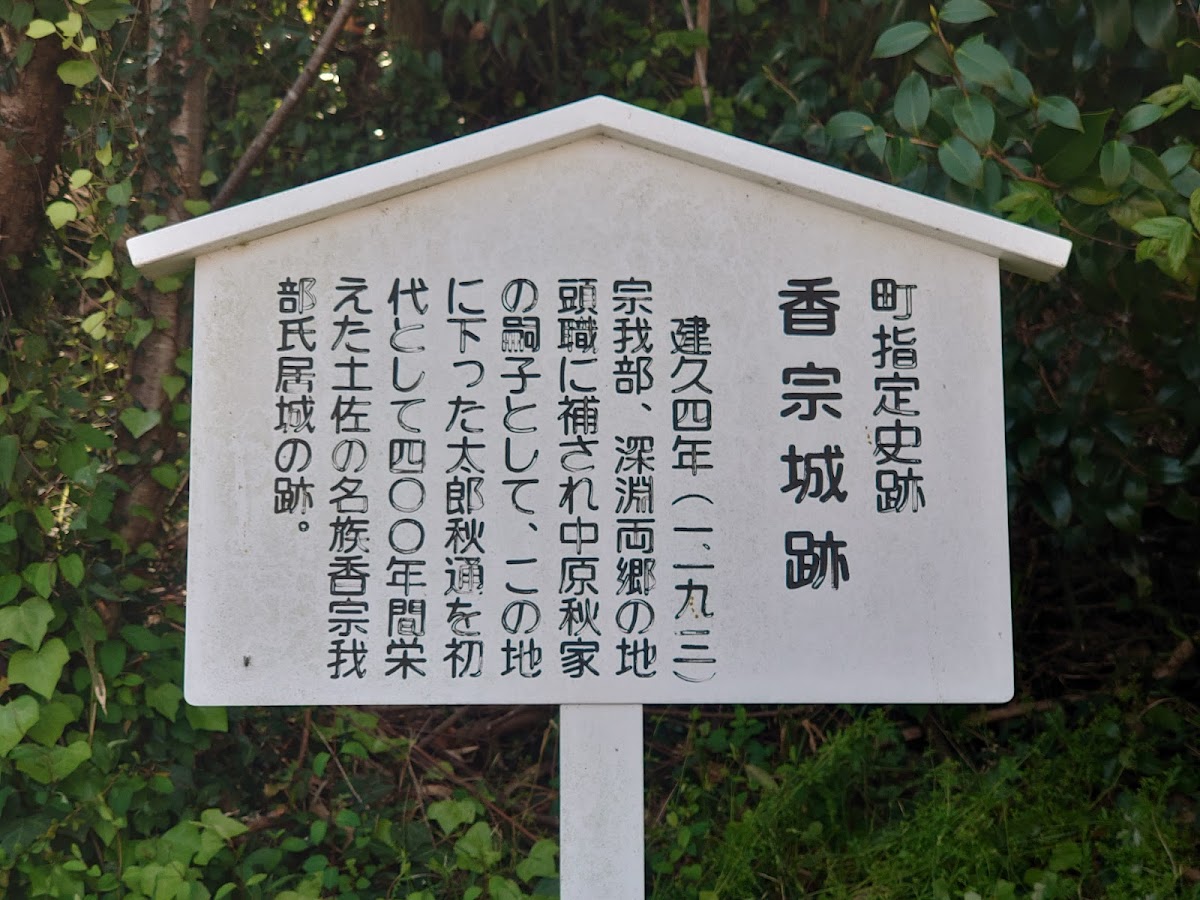
Located in Noichi-cho, Kōnan City, Kochi Prefecture, Kōsō Castle is a hilltop castle known as the residence of the Kōsokabe clan, who wielded considerable power in Tosa Province during the Sengoku period. As the base of the Kōsokabe clan, one of the Seven Great Powers of Tosa, it played a crucial role in the history of Tosa. Currently, a Hachiman Shrine is enshrined there, and a valuable historical site remains, with some of the original earthworks still standing.
This article provides a detailed explanation of Kōsō Castle, including its history, construction process, the rise and fall of the Kōsokabe clan, existing remains, and access methods.
Basic Information on Kōsō Castle
Kōsō Castle is a hilltop castle located in Doi, Noichi-cho, Kōnan City, Kochi Prefecture, also known as “Kōsokabe Castle.” Built on a hill approximately 30 meters above sea level, it occupied a strategic location overlooking the surrounding plains.
Location: 1545 Doi, Noichi-cho, Konan City, Kochi Prefecture
Castle Structure: Hilltop Castle
Construction Period: Mid-Muromachi Period (Estimated)
Builder: Nakahara Akiie
Main Lord: Kosokabe Clan
Current Status: Within the grounds of Hachiman Shrine, part of the earthworks remain
History and Construction of Kosokabe Castle
Construction by Nakahara Akiie
The exact construction date of Kosokabe Castle is uncertain, but it is said to have been built by Nakahara Akiie. Nakahara Akiie was the ancestor of the Yamada clan, who later based themselves at Kusume Castle, and was a powerful warrior who served Ichijo Tadayori.
Akiie adopted Nakahara Akimichi (Ichijo Akimichi), the eldest son of Ichijo Tadayori. Akimichi became the first head of the Kōsokabe clan, and the Kōsokabe clan would rule this region for the next 400 years. Nakahara Akiie played a crucial role as Akimichi’s guardian, laying the foundation for the Kōsokabe clan.
Establishment and Development of the Kōsokabe Clan
The history of the Kōsokabe clan begins when Akimichi, son of Ichijō Tadayori, was adopted into the Nakahara family and adopted the name Kōsokabe in this region. The Kōsokabe clan became a powerful force in Tosa Province, counted as one of the Seven Great Clans of Tosa.
The Seven Great Clans of Tosa refer to seven powerful clans that held sway in Tosa Province during the Sengoku period, including the Kōsokabe clan, Chōsokabe clan, Motoyama clan, Aki clan, Ōhira clan, Tsuno clan, and Ichijō clan. The Kōsokabe clan controlled the area around present-day Kōnan City and maintained its own sphere of influence.
The Relationship Between the Kōsokabe and Chōsokabe Clans
Alliance with Chōsokabe Kunichika
An essential aspect of understanding the history of the Kōsokabe clan is their relationship with the Chōsokabe clan, another of the seven powerful clans of Tosa Province. While both clans shared the name “Kabe,” they were originally separate families.
During the Sengoku period, various forces vied for supremacy within Tosa Province, but the Kōsokabe clan formed an alliance with Chōsokabe Kunichika. During this period, the head of the Kōsokabe clan, Chōsokabe Chikahide, cooperated with Chōsokabe Kunichika to oppose other forces within Tosa, particularly the Aki clan.
The Entry of Chōsokabe Motochika’s Younger Brother, Chikayasu
The relationship between the Kōsokabe and Chōsokabe clans deepened further during the time of Chōsokabe Motochika, the son of Chōsokabe Kunichika. During Motochika’s unification of Tosa Province, the Kōsokabe clan came under the control of the Chōsokabe clan.
At this time, Chōsokabe Motochika’s younger brother, Kōsokabe Chikataka (Chōsokabe Chikataka), was adopted into the Kōsokabe clan and became the lord of Kōsō Castle. Despite being Motochika’s brother, Chikataka inherited the Kōsokabe name and made Kōsō Castle his residence as the head of the Kōsokabe clan.
Chikakataka is known as a renowned general who supported his brother Motochika, fighting in various battles and contributing to the unification of Tosa and Shikoku. He was particularly active in the conquest of Sanuki Province and played a crucial role as a senior retainer of the Chōsokabe clan.
The Achievements of Kōsokabe Chikataka and the Battle of Hetsugigawa
Kōsokabe Chikataka played a vital role in Chōsokabe Motochika’s unification of Shikoku. He served as the vanguard in the conquest of Sanuki Province and achieved military distinction in many battles. Chikahiro’s military talent was highly regarded, and he enjoyed Motochika’s deep trust.
However, in 1587, while serving in Toyotomi Hideyoshi’s Kyushu campaign, he fought against the Shimazu army at the Battle of Hetsugigawa and was killed alongside Chosokabe Motochika’s eldest son, Nobuchika. This battle was a major blow to the Chosokabe clan, and the loss of Nobuchika, Motochika’s successor, cast a dark shadow over the clan’s future.
After Chikahiro’s death, the power of the Kosokabe clan declined, and it is believed that Kosokabe Castle gradually ceased to serve its purpose.
Layout and Structure of Kosokabe Castle
Location as a Hilltop Castle
Kosokabe Castle is classified as a hilltop castle. A hilltop castle is a castle built on low hills or plateaus in a plain, possessing characteristics intermediate between a flatland castle and a mountain castle. Koso Castle was built on a hill approximately 30 meters above sea level, offering a panoramic view of the surrounding plains.
This location was ideal for a lord’s residence, being close to the plains, the center of agricultural production, and also well-suited for defense.
Castle Scale and Structure
Due to the limited number of surviving remains, it is difficult to fully understand the detailed layout of Koso Castle. However, some of the earthworks from that time still remain, providing clues to the castle’s scale and structure.
It is believed that the castle consisted of a main enclosure surrounded by multiple baileys. With its strong defenses of earthworks and moats, it is presumed to have been a castle of a scale befitting one of the seven powerful Tosa domains.
Existing Remains and Highlights
Earthwork Remains
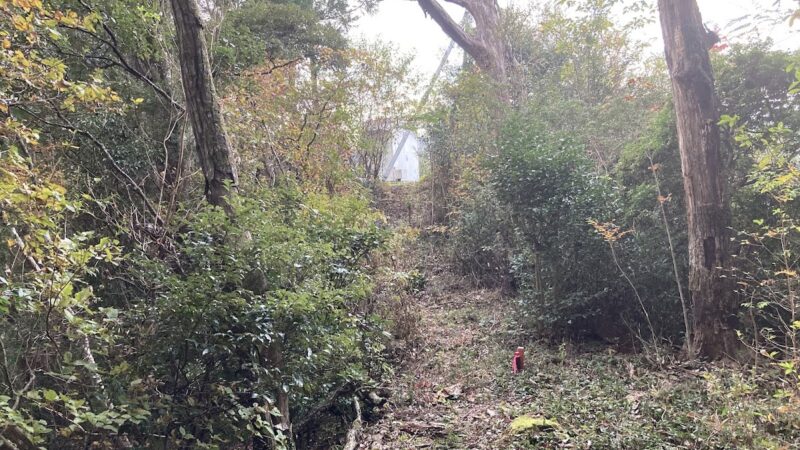
The most noteworthy remains at the Koso Castle site are parts of the earthworks. Earthen ramparts are defensive structures built by piling up earth, constructed around castles to prevent enemy intrusion. Even today, several hundred years after its construction, parts of the earthen ramparts of Kōsō Castle remain, conveying the appearance of the castle at that time.
The height and shape of the ramparts allow us to infer the castle’s defensive structure and scale. They are valuable historical remains for castle enthusiasts and history buffs.
Hachiman Shrine
Currently, a Hachiman Shrine is enshrined at the site of Kōsō Castle. Hachiman was worshipped as a god of war and revered by many samurai families. It is believed that the Kōsokabe clan also worshipped Hachiman, and it is possible that they enshrined a Hachiman Shrine within or near the castle.
The current Hachiman Shrine is an important place that conveys the history of Kōsō Castle and is carefully preserved by the local people.
Surrounding Topography
Walking around the Kōsō Castle site allows you to experience the topography of the hilly terrain on which the castle was built. Although the elevation difference is slight, the castle’s location offers a panoramic view of the surrounding plains. The castle’s construction, utilizing this terrain, is a fascinating point for understanding the castle-building techniques of the Sengoku period.
Access and Visiting Information for Kōsō Castle
Location and Transportation Access
Address: 1545 Doi, Noichi-cho, Kōnan City, Kōchi Prefecture
Using Public Transportation:
- Approximately 30 minutes by car from JR Kōchi Station
- Approximately 15 minutes on foot from Noichi Station on the Tosa Kuroshio Railway Gomen-Nahari Line
Using a Car:
- Approximately 10 minutes by car from Kōchi Ryōma Airport
- Approximately 20 minutes from Nangoku IC on the Kōchi Expressway
Parking and Notes for Visitors
Kōsō Castle ruins are located within the grounds of Hachiman Shrine, so parking spaces for worshippers may be available. However, since it is not a dedicated tourist parking lot, please be considerate of the shrine when visiting.
The castle ruins are not a developed tourist attraction, but are preserved as a local historical site. When visiting, please note the following:
- Respect private property and shrine grounds
- Take all your trash with you
- Do not damage the historical remains
- Be considerate of the lives of local residents
Estimated Visit Time
A visit to the Koso Castle ruins should take approximately 30 minutes to 1 hour. This is sufficient time to examine the remains of the earthworks, visit the Hachiman Shrine, and observe the surrounding topography.
Related Historical Sites Around Kōsō Castle
Castle Sites in Kōnan City, Kōchi Prefecture
In addition to Kōsō Castle, Kōnan City has several other castle sites:
- Yamakawa Doi Castle: Castle site located in Yamakawa-chō, Kōnan City
- Suekiyo Castle: Castle site in Noichi-chō, Kōnan City
- Amagamori Castle: Mountain castle in Kōnan City
- Fukuman Castle: Castle site in Kōnan City
- Naka Castle: Castle site within Kōnan City
- Higashi Jūman Castle: Castle site in Kōnan City
- Suenobu Castle: Castle site in Kōnan City
- Betsuyaku Castle: Castle site in Kōnan City
By visiting these castle sites, you can gain a deeper understanding of the history of Tosa Province during the Sengoku period.
Historical Sites Related to the Chosokabe Clan
Numerous historical sites related to the Chosokabe clan, who had deep ties to the Kosokabe clan, remain in Kochi Prefecture:
- Okotoyo Castle Ruins (Nankoku City): The Chosokabe clan’s base
- Kochi Castle (Kochi City): The Tosa Domain’s residence built by Yamauchi Kazutoyo
- Urato Castle Ruins (Kochi City): The residence of Chosokabe Motochika in his later years
Visiting these historical sites together will allow you to understand the Sengoku period history of Tosa in a more comprehensive way.
The Seven Lords of Tosa and Tosa Province in the Sengoku Period
What are the Seven Lords of Tosa?
The Seven Lords of Tosa refer to the seven powerful clans that competed for power in Tosa Province during the Sengoku period:
- Chosokabe Clan (Okō Castle): Ultimately unified Tosa
- Motoyama Clan (Motoyama Castle): A powerful clan in central Tosa
- Aki Clan (Aki Castle): A strong clan in eastern Tosa
- Kōsokabe Clan (Kōsō Castle): Rulers of the Kōnan region
- Ōhira Clan (Ōhira Castle): A power in western Tosa
- Tsuno Clan (Himenono Castle): A powerful clan in Takaoka County
- Ichijō Clan (Nakamura Castle): A court noble daimyo who descended from Kyoto
These forces repeatedly formed alliances and conflicts with each other, vying for hegemony in Tosa Province.
Unification of Tosa by Chosokabe Motochika
In the latter half of the 16th century, Chosokabe Motochika successively conquered the seven powerful Tosa states, achieving the unification of Tosa Province. Motochika expanded his power through superior military strategy and diplomatic skills, eventually achieving near-unification of the entire Shikoku region.
The Kosokabe clan formed an alliance with the Chosokabe clan relatively early on, and by adopting Motochika’s younger brother, Chikayasu, they survived as a branch of the Chosokabe clan. This choice allowed the Kosokabe clan to avoid extinction during the unification of Tosa and to play an important role as a senior retainer of the Chosokabe clan.
Historical Significance of Kosokabe Castle
Kosokabe Castle is a castle that occupies an important position in the Sengoku period history of Tosa Province. Its historical significance can be summarized as follows:
Base of the Seven Powers of Tosa
Kosokabe Castle served as the residence of the Kosokabe clan, one of the seven powerful Tosa states, and was a political and military center of Tosa Province during the Sengoku period. The Kōsokabe clan’s sphere of influence centered on the Kōnan region, and Kōsō Castle was the center of their control and governance.
Relationship with the Chōsokabe Clan
The history of the Kōsokabe clan’s alliance with the Chōsokabe clan, and their eventual integration as a branch family, is a classic example of power consolidation through kinship ties, strategic marriages, and adoptions during the Sengoku period. The succession of Chōsokabe Motochika’s younger brother, Chikayasu, to the Kōsokabe clan was part of the Chōsokabe clan’s strategy for unifying Tosa Province.
Witness to Local History
The Kōsō Castle ruins are a valuable historical site that tells the history of Kōnan City. The remaining earthworks convey the castle construction techniques of over 400 years ago. This historical site, preserved by the local people, plays an important role in local history education and as a tourist resource.
Points to Note When Visiting Kōsō Castle
Gathering Information Beforehand
Kōsō Castle Ruins are not a large-scale tourist attraction, so it is recommended to check maps and access methods beforehand. Since it may not be registered in car navigation systems, using smartphone apps such as Google Maps is convenient.
Appropriate Clothing and Equipment
For visiting the castle ruins, comfortable shoes and clothing suitable for movement are recommended. When observing the remains such as earthworks, be careful of your footing. Also, depending on the season, don’t forget insect repellent and sun protection.
Combining with Nearby Attractions
Since visiting Kōsō Castle Ruins can be completed in a relatively short time, it is recommended to combine it with other nearby tourist attractions. Because it is close to Kochi Ryoma Airport, it is a good place to stop at the beginning or end of your Kochi trip.
Kōnan City also has tourist facilities such as “Noichi Zoological Park” and “Nishijima Horticultural Park,” which can be enjoyed by families.
Summary
Koso Castle was a hilltop castle that played a crucial role in the history of Tosa Province during the Sengoku period, serving as the residence of the Kosokabe clan, one of the seven powerful clans of Tosa. Its construction by Nakahara Akiie, the development of the Kosokabe clan, their alliance with the Chosokabe clan, and the entry of Chosokabe Motochika’s younger brother, Chikayasu, are all essential elements for understanding the Sengoku history of Tosa.
Currently, it is a quiet historical site with a Hachiman Shrine and remnants of the earthworks, but its historical value is extremely high. When visiting Kochi Prefecture, be sure to visit the Koso Castle ruins and reflect on the history of the Kosokabe clan, a prominent family of Tosa.
Despite its convenient location just a 10-minute drive from Kochi Ryoma Airport, Koso Castle still quietly welcomes visitors as a valuable historical site where you can feel the spirit of the Sengoku period.