Hewa Castle (Tosa City, Kochi Prefecture) Complete Guide | History, Remains, and Access Information
Hewa Castle is a Sengoku period mountain castle located in Honmura Kojō, Tosa City, Kochi Prefecture. Built on Mt. Era, approximately 109 meters above sea level and 90 meters above ground level, this castle holds a significant place in history as an important base for the expansion of the Chōsokabe clan’s power in Tosa Province and as the stage for battles against the Ichijō clan.
This article provides a detailed explanation of Hewa Castle, from its historical background and castle structure to its highlights and access information for those planning to visit.
Basic Information on Tonami Castle
Alternate Names: Inohoki Castle, Inohoki Castle, Inohoki Castle, Iba Castle, Iba Castle
Location: Kojo, Honmura, Tosa City, Kochi Prefecture
Castle Structure: Mountain Castle
Construction Period: Unknown (Before the Sengoku period)
Builder: Unknown
Main Lords: Tsuno clan, Fukui clan (vassals of the Ichijo clan), Nagase clan (vassals of the Ichijo clan), Tonami clan (vassals of the Chosokabe clan)
Year of Abandonment: Estimated to be during the Tensho era
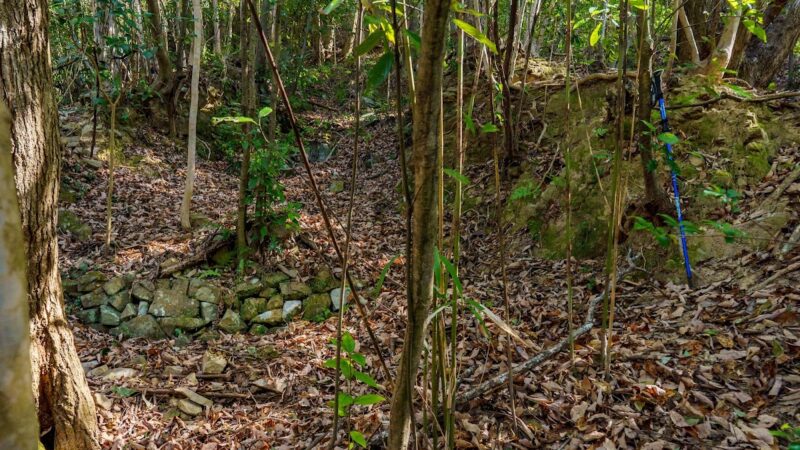
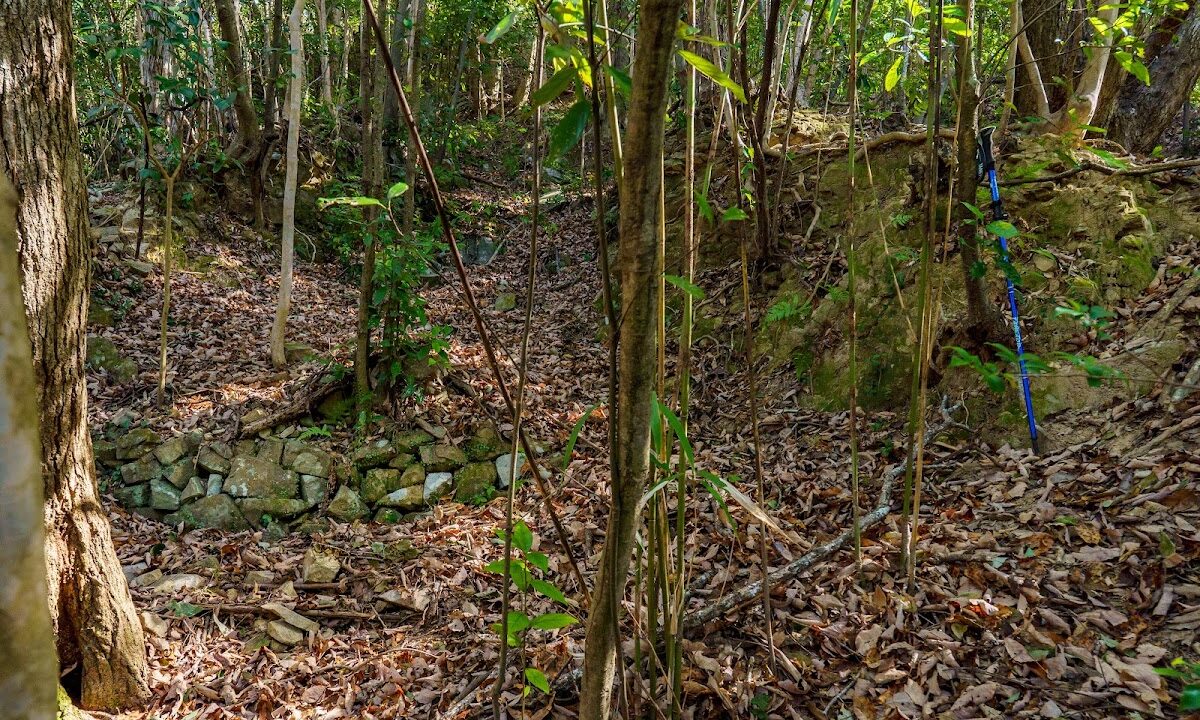
Remains: Enclosures, dry moats, trenches, vertical moats, earthworks
Designated Cultural Property: Tosa City Historic Site
Elevation: Approximately 109 meters
Relative Height: Approximately 90 meters
Tonami Castle is located south of the Tosa Parking Area on the Kochi Expressway, and was built skillfully utilizing the topography of the Erayama mountain, which stretches east to west. Even today, a stone monument and explanatory plaque are erected, preserving it as an important historical heritage site of Tosa City.
History of Tonami Castle
Tonami Castle Before the Sengoku Period
While there are no clear records of the initial construction date of Tonami Castle, it is known to have already functioned as an important base during the Sengoku period. Located at a strategic point in western Tosa Province, this castle was strategically important for controlling the Niyodo River basin.
In the early Sengoku period, it is believed to have been part of the Tsuno clan’s territory, under the control of Tsuno Motosane, lord of Himenono Castle. The Tsuno clan was one of the powerful local lords of Tosa Province, and held power mainly in Takaoka County.
Conflicts Between the Ichijo and Tsuno Clans
In Eisho 14 (1517), an important battle took place over Tonami Castle. Tsuno Motosane attempted to recapture Tonami Castle, which he had lost, but this attempt failed. Satake Kamonnokami, lord of Kure Castle, rushed to the scene as reinforcements for the Ichijo clan, and Tsuno Motosane was killed in the Battle of Eranuma.
This battle symbolized the expansion of the Ichijo clan’s power in western Tosa Province. During the Sengoku period, the Ichijo clan, based in Hata County, wielded immense power in Tosa Province, reigning as one of the Seven Great Powers of Tosa.
After Tsuno Motosane’s death, Tonami Castle is believed to have fallen under the control of the Fukui and Nagao clans, vassals of the Ichijo clan. The Ichijo clan established numerous branch castles throughout western and central Tosa Province, solidifying their sphere of influence.
Conquest by the Chosokabe Clan
In 1569 (Eiroku 12), Chosokabe Motochika, aiming to unify Tosa, intensified his invasion of Takaoka County. The Chosokabe army first captured Hasuike Castle, and the following year, in 1570, they also captured Tonami Castle.
During this period, Chosokabe Motochika was known as the “Outstanding Figure of Tosa” and was rapidly expanding his power. The capture of Tonami Castle became an important foothold for the Chosokabe clan’s advance into western Tosa Province.
After capturing Tonami Castle, Motochika appointed his cousin, Chosokabe Uemon Chikatake, as the castle lord. Tonami Chikatake adopted the name Tonami in this area and defended Tonami Castle as a key point in the Chosokabe clan’s western defenses.
Tonami Chikatake and the Tonami Clan
Tonami Chikatake was a trusted member of Chosokabe Motochika’s family and played an important role as the lord of Tonami Castle. His descendant, Tonami Chikakiyo, also served the Chosokabe clan and ruled the Tonami area even after the unification of Tosa.
During the Chosokabe clan’s unification of Tosa Province and their subsequent ambition to conquer Shikoku, Tonami Castle served as a stable rear base. However, when the Chosokabe clan surrendered during Toyotomi Hideyoshi’s conquest of Shikoku in 1585, Tonami Castle lost its military importance and is believed to have eventually been abandoned.
Structure and Layout of Tonami Castle
Overall Layout
Tonami Castle is a typical mountain castle built utilizing the east-west ridge of Mount Era. Multiple baileys are arranged around the main enclosure, and defenses are strengthened by moats and vertical trenches.
The castle’s location is on a hill overlooking the Niyodo River basin, making it suitable for monitoring the surrounding plains and roads. In modern geography, its location can be seen from the Kochi Expressway, south of the Tosa PA (parking area).
Main Enclosure and Baileys
The main enclosure of Tonami Castle is located at the mountaintop. The main enclosure is relatively flat and is presumed to have housed the lord’s residence and command post. The second and third enclosures are arranged in a stepped pattern around the main enclosure, further strengthening its defenses.
The enclosures skillfully utilize the natural terrain while clearly being leveled, demonstrating the advanced level of construction technology for mountain castles during the Sengoku period. There are elevation changes between each enclosure, a design intended to hinder enemy intrusion.
Moats and Vertical Moats
The moats and vertical moats are particularly noteworthy defensive features of Tonami Castle. The moats were dug to divide the ridge, blocking enemy access routes. The clearly visible moats today attest to the high level of civil engineering technology of the time.
Vertical moats are moats dug vertically along the slope, preventing enemies from climbing the slope and also functioning as rainwater drainage channels. Multiple vertical moats can be found at Tonami Castle, showcasing a defensive system unique to mountain castles.
Dry Moats
Dry moats are dry moats dug around the perimeter of a bailey. At Tonami Castle, traces of dry moats remain around the main bailey, indicating their importance as a defensive feature. Dry moats not only hindered enemy approaches but also increased the height of the baileys.
The depth and width of the dry moats vary depending on the location, but some can still be seen as undulations in the terrain, making them a point of interest for castle enthusiasts.
Earthworks
Traces of earthworks remain along the edges of the baileys. These earthworks served not only as defensive walls but also as screens to obscure the view into the baileys from the outside. In mountain castles of the Sengoku period, earthworks were more common than stone walls, and Tonami Castle is a typical example.
Highlights of Tonami Castle
Stone Monuments and Information Boards
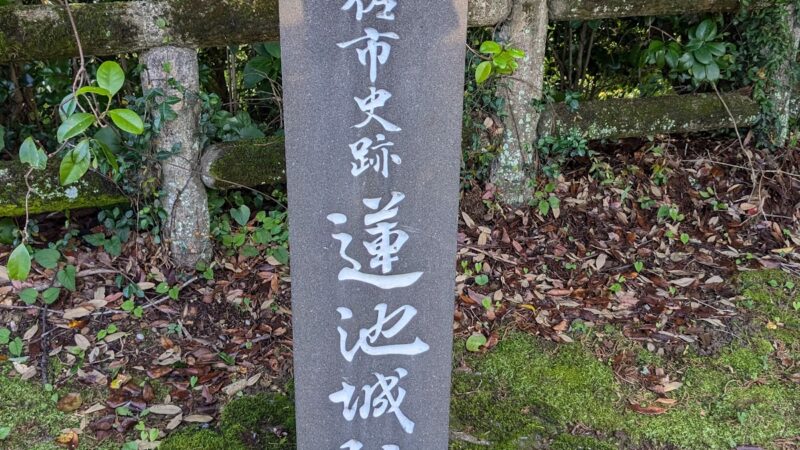
At the Tonami Castle ruins, there are stone monuments and information boards that convey the history of the castle. The stone monument is inscribed with “Tonami Castle Ruins,” indicating that this site was once an important castle.
The explanatory sign contains information about the history of Tonami Castle, its lord, and its structure, helping visitors understand the castle’s background. It’s also a popular photo spot, with many castle enthusiasts taking commemorative photos.
Remains of the Enclosures
Walking through the castle ruins, you can clearly see the flat surfaces of the enclosures. The main enclosure, in particular, has a spacious area, giving a real sense of the castle’s scale at the time.
Standing on the edge of the enclosures, you can overlook the surrounding landscape, understanding the castle’s strategic location. You can see the Niyodo River basin and the city of Tosa, allowing you to imagine the lord watching over his territory from this spot.
The Impressive Moat
The moat of Tonami Castle remains clearly visible even today, making it a particularly impressive sight among the remains of the mountain castle. Seeing the deeply excavated moats reveals the immense effort the people of that time invested in building the castle.
Standing at the bottom of the moat and looking up at the cliffs on either side, you can truly appreciate its defensive strength. The moats of Tonami Castle are also a valuable learning tool for studying castle structures.
Harmony with the Natural Environment
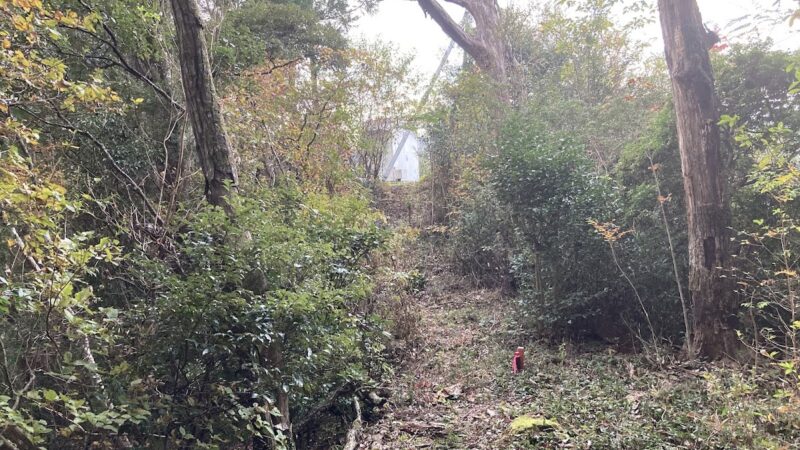
Tonami Castle ruins are now surrounded by abundant nature. The landscape, where the castle remains and nature harmonize, offers a sense of peace to visitors. Especially in spring with its fresh greenery and in autumn with its vibrant foliage, these are excellent times to enjoy both historical exploration and nature appreciation.
Strolling through the tranquil atmosphere unique to mountain castles, while reflecting on the Sengoku period, will be a blissful experience for history enthusiasts.
How to Access Tonami Castle
Access by Public Transportation
Using Trains and Buses:
- Get off at JR Dosan Line “Ino Station”
- Take the Tosa City Dragon Bus Ino/Ichinono Line
- Get off at the “Azaiguchi” bus stop
- The castle ruins entrance is approximately a 1-minute walk from the bus stop.
When using public transportation, it is recommended to check the timetable in advance as the number of buses is limited. The latest service information can be obtained from the Tosa City website or the tourist association.
Access by Car
Using the Kochi Expressway:
- Approximately 5 minutes from Tosa Smart IC
- Approximately 10 minutes from Tosa IC
From Kochi City:
- Approximately 20 minutes west on National Route 56
- Via the center of Tosa City to the Tonami area
Parking Information
There is no large dedicated parking lot around the Tonami Castle ruins, but there are a few parking spaces near the castle ruins entrance. On weekdays when there are fewer visitors, parking is usually not a problem.
However, it may get crowded on weekends and during castle events, so we recommend visiting early. When parking, please be considerate of local residents.
Precautions for Visiting the Castle
Since Tonami Castle is a mountain castle, the following preparations and precautions are necessary when visiting:
- Clothing: Comfortable clothing and non-slip shoes (trekking shoes recommended)
- Items to Bring: Drinking water, towel, insect repellent (summer)
- Time: Allow approximately 1-2 hours from arrival to sightseeing
- Weather: Be careful as the ground can be slippery in rainy weather
- Season: Take precautions against heatstroke in summer, and allow ample time in winter due to early sunsets
The mountain path is relatively well-maintained, but there are steep slopes, so those who are not confident in their physical fitness should not push themselves too hard.
Tourist Attractions Around Tonami Castle
Historical Sites in Tosa City
When visiting Tonami Castle, we recommend also visiting other historical sites in Tosa City.
Hasuike Castle Ruins: Like Tonami Castle, this castle was captured by the Chosokabe clan and is located within Tosa City. Having fallen the year before the capture of Tonami Castle, Hasuike Castle is an important historical site for understanding the Chosokabe clan’s westward expansion.
Usa Townscape: The Usa district of Tosa City retains its old townscape, allowing visitors to see historical buildings from the Edo period.
Nature and Tourist Facilities
Niyodo River: Known as “Niyodo Blue,” this clear river boasts the highest water quality in Japan. It’s close to Tonami Castle, making it ideal for nature walks and river activities.
Tosa City Dragon Square: A direct sales market where you can purchase fresh local agricultural and marine products, offering a glimpse into Tosa City’s food culture.
Hagakawa River Estuary: Known as a birdwatching spot, especially in winter when many migratory birds visit.
Surrounding Castles
For those who enjoy visiting castles, other castle ruins around Tosa City are also worth visiting:
Asakura Castle Ruins: The base of the Chosokabe clan, located in Kochi City. Approximately 30 minutes by car from Tonami Castle.
Urato Castle Ruins: The castle where Chosokabe Motochika made his base in his later years, located in Urato, Kochi City.
Sakawa Castle Ruins: The residence of the Fukao clan, located in Sakawa Town, west of Tosa City.
Visiting these castle ruins will give you a deeper understanding of the Sengoku period history of Tosa Province.
Tonami Castle and the Chosokabe Clan’s Unification of Tosa
Chosokabe Motochika’s Strategy
The capture of Tonami Castle was a crucial move in Chosokabe Motochika’s strategy for unifying Tosa. Motochika established his base at Okō Castle and gradually expanded his power.
Motochika’s strategy involved first conquering smaller castles in the surrounding area, securing bases, and gradually confronting larger forces. The capture of Tonami Castle was significant in driving a wedge into the Ichijō clan’s sphere of influence.
Conflict with the Seven Lords of Tosa
During the Sengoku period, Tosa Province had powerful local lords known as the “Seven Lords of Tosa”:
- Chōsokabe clan (Okō Castle)
- Motoyama clan (Motoyama Castle)
- Aki clan (Aki Castle)
- Tsuno clan (Himenono Castle)
- Ōhira clan (Ōhira Castle)
- Kōsokabe clan (Kami District)
- Ichijō clan (Nakamura Castle)
The battle for Tonami Castle was part of the power struggle among these Seven Lords of Tosa. The Chōsokabe clan ultimately destroyed the other six clans and unified Tosa.
The Role of the Tonami Clan
Tonami Chikatake and his family played a crucial role in the Chosokabe clan’s western defense. Using Tonami Castle as a base, they prepared for attacks from remnants of the Ichijo and Tsuno clans, and also served as a foothold for further westward expansion.
Within the Chosokabe clan, the Tonami clan enjoyed Motochika’s deep trust and is believed to have participated in important military operations. Their role as lords of Tonami Castle encompassed not only defense but also function as a base for regional control.
Preservation and Future of Tonami Castle
Designation as a Tosa City Historic Site
The Tonami Castle ruins are designated as a Tosa City historic site and are protected as an important cultural property of the region. The installation of stone monuments and explanatory signs provides visitors with an environment to learn about the history.
Preservation Activities and Challenges
Preserving mountain castles presents the challenge of coexisting with the natural environment. Problems include the obscuration of remains due to tree growth and erosion caused by wind and rain.
While local residents and castle enthusiasts regularly clean and maintain the ruins, there are limitations to these activities given the limited budget and personnel.
Utilization as a Tourism Resource
Tonami Castle is also an important tourism resource for Tosa City. Further development and information dissemination are expected to make it an attractive spot not only for history buffs and castle fans, but also for general tourists.
Recent castle and history booms have increased interest in medieval mountain castles like Tonami Castle. It is important to pass on this historical heritage to future generations while striking a balance between appropriate preservation and utilization.
Summary
Tonami Castle is a valuable Sengoku period mountain castle ruin remaining in Tosa City, Kochi Prefecture. As an important base in Chosokabe Motochika’s unification of Tosa, and as the stage for battles with the Ichijo clan, it is an indispensable part of the history of Tosa Province during the Sengoku period.
The clearly remaining ruins, such as baileys, moats, and vertical trenches, convey the castle construction techniques of the time. With stone monuments and explanatory signs, the site offers a pleasant environment for strolling and learning about history.
Its convenient location is also a major draw, being only about a 5-minute drive from the Tosa Smart Interchange on the Kochi Expressway and accessible by bus from JR Ino Station. When visiting Tosa City, be sure to stop by the Tonami Castle ruins and experience the atmosphere of the Sengoku period.
Alongside the clear waters of the Niyodo River and the rich natural beauty of Tosa City, Tonami Castle offers visitors a sense of historical romance and tranquility, truly making it a hidden gem of Kochi Prefecture.