Complete Guide to the History and Highlights of Sukumo Sumitomo Castle | A Thorough Explanation of a Hidden Historical Site in Sukumo City, Kochi Prefecture
Sukumo Sumitomo Castle, also known as “Sumitomo Castle,” is a historical mountain castle located in Sukumo City, Kochi Prefecture. As a valuable historical site remaining in this region near the westernmost point of Shikoku, it attracts attention from castle enthusiasts and history buffs. This article comprehensively explains everything you need to know before visiting, from the detailed history of Sukumo Sumitomo Castle and its highlights to access information and surrounding tourist attractions.
What is Sukumo Sumitomo Castle?
Basic Information
Sukumo Sumitomo Castle is the remains of a medieval mountain castle located in Sukumo City, Kochi Prefecture. While there are various theories regarding the exact construction date and builder, its name suggests a connection to Fujiwara Sumitomo, a well-known pirate of the Heian period.
Location: Sukumo City, Kochi Prefecture
Alternate Name: Sumitomo Castle
Castle Structure: Mountain Castle
Remains: Enclosures, moats, etc.
Origin of Name and Historical Background
The name “Sumitomo Castle” is believed to originate from Fujiwara no Sumitomo, who wielded power in the Seto Inland Sea during the mid-Heian period (Jōhei-Tengyō era, 931-947). Fujiwara no Sumitomo is a figure who played a part in the Jōhei-Tengyō Rebellion and is remembered in Japanese history for controlling maritime traffic from his base in Iyo Province (present-day Ehime Prefecture).
The Sukumo region faces the Bungo Strait and is located at a strategic point for maritime traffic connecting Shikoku and Kyushu. Therefore, it is highly likely that it was within Sumitomo’s sphere of influence, and his name is thought to have been preserved at the castle site. However, archaeological confirmation has not been obtained as to whether the remaining structures date back to Sumitomo’s time.
History of Sukumo Sumitomo Castle
Connection between the Heian Period and Fujiwara Sumitomo
Fujiwara Sumitomo, after assuming the local official position of Iyo no Jo (Jō of Iyo Province), organized a pirate force and brought the entire Seto Inland Sea region under his control. In 939 (Tenkei 2), he openly rebelled against the imperial court and wielded enough power to paralyze maritime traffic in the Seto Inland Sea.
The Sukumo region is close to Iyo Province and was located on a trade route to Kyushu via the Bungo Strait, making it highly likely that Sumitomo’s influence extended to this area. While it is unclear whether Sukumo Sumitomo Castle was actually used during this period, the presence of Sumitomo’s name in place names and legends suggests some kind of historical connection.
Transition from the Medieval to the Early Modern Period
Based on the actual remains, it is highly probable that Sukumo Sumitomo Castle was used from the Sengoku period to the Azuchi-Momoyama period. During this period, the Chosokabe clan was unifying Tosa Province (present-day Kochi Prefecture), and the Sukumo region came under their control.
Sukumo is located at the westernmost edge of Tosa Province, close to the border with Iyo Province, making it a strategically important location. Given these geographical conditions, it is believed that a fortress was built there for border security and monitoring of maritime traffic.
Sukumo in the Edo Period
In the Edo period, Yamauchi Toyofusa, a branch family of the Yamauchi clan of the Tosa Domain, took control of Sukumo, establishing the Sukumo territory. The political center during this period was Matsuda Castle (Sukumo Castle), and it is presumed that Sukumo Sumitomo Castle had already been abandoned.
Sukumo developed as an important port town governing the Iyo and Bungo Straits, and prospered as a port of call for ships traveling from the Kinki region to Kyushu via the Pacific Ocean. Historical relics from this period, such as the Matsuda Weir and the place where the Tosa Domain’s chief administrator, Nonaka Kenzan, and his family were confined, still remain today.
Structure and Remains of Sukumo Sumitomo Castle
Castle Location and Layout
Sukumo Sumitomo Castle was built as a mountain castle, possessing a defensive structure that utilized the surrounding terrain. Unlike castles on flat land, mountain castles are characterized by their ability to be easily defended with fewer troops by utilizing the natural terrain.
While detailed layout maps of the castle ruins are limited in publicly available documents, remains such as kuruwa (enclosures) and horikiri (ditches), which are typical features of medieval mountain castles, have been confirmed.
Major Remains
Kuruwa (Leveled Areas)
Multiple kuruwa, created by leveling the mountain slopes, have been confirmed. These were used for garrisoning, storing supplies, and as defensive bases.
Horikiri (Ditches)
Ditches dug to cut across ridges are important defensive structures to prevent enemy intrusion. Multiple horikiri have been confirmed at Sukumo Sumitomo Castle, making them important remains for understanding the castle’s defensive system.
Earthworks
Some traces of earthworks remain, suggesting they served a defensive role around the enclosure.
Preservation of the Remains
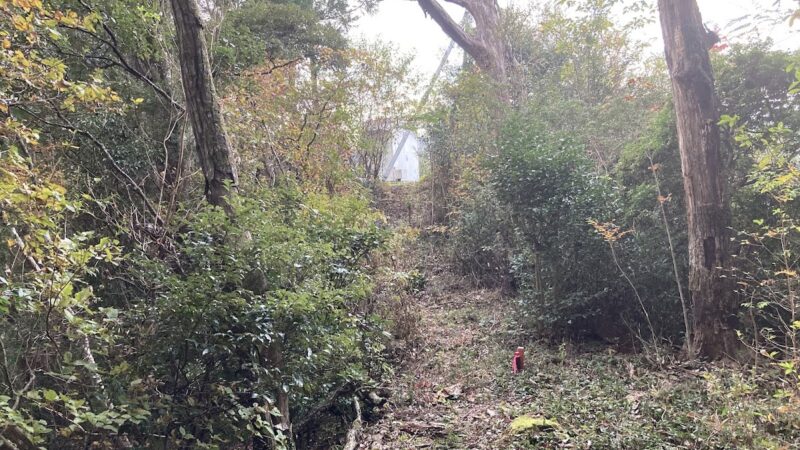
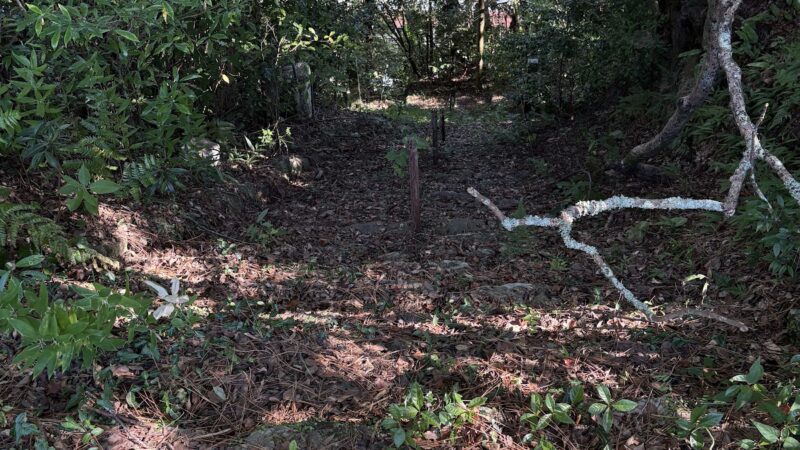
Due to years of weathering and overgrown vegetation, parts of the remains of Sukumo Sumitomo Castle are clearly visible, while others are not. The castle ruins have been only partially maintained, and visitors will be exploring by searching for historical traces within the natural surroundings.
Highlights of Sukumo Sumitomo Castle
A Mountain Castle Atmosphere Evoking Historical Romance
The greatest charm of Sukumo Sumitomo Castle is its natural, undeveloped mountain castle atmosphere. Because it hasn’t been commercialized, visitors can quietly reflect on history. It’s a place where the legend of Fujiwara Sumitomo, the pirate king of the Heian period, and the actual remains of a medieval mountain castle intertwine, creating a unique historical romance.
Views and Surrounding Landscape
As it is a mountain castle, it may be possible to see Sukumo city and Sukumo Bay from the castle ruins (depending on the season and vegetation conditions). The beautiful coastline of Tosa, near the westernmost point of Shikoku, offers visitors a special experience.
Observing Castle Ruins
For castle enthusiasts, the opportunity to actually observe ruins such as moats and baileys is a major attraction. Because there are few explanatory signs or guides, learning about the structure of mountain castles beforehand will allow for a deeper enjoyment.
The Joy of Historical Exploration
Visiting Sukumo Sumitomo Castle is not merely sightseeing; it includes an adventurous element of historical exploration. The process of searching for ruins with limited information and imagining the historical background is itself a great pleasure for history lovers.
Visiting Guide
Access Method
Access by Car
Access to Sukumo Sumitomo Castle is most convenient by car. From Kochi City, head west on National Route 56, arriving in Sukumo City in approximately 2 hours 30 minutes to 3 hours. Because the specific access roads to the castle ruins are limited in condition, it is recommended to check information with the Sukumo City Tourism Association or local tourist information center beforehand.
Access by Public Transportation
- Get off at Sukumo Station on the JR Dosan Line or Yodo Line.
- Get off at Sukumo bus stop on the Kochi Seinan Kotsu bus from Kochi city.
When using public transportation, the castle ruins are some distance from Sukumo Station and the city center, so you may need to use a taxi or rent a car.
Notes for Visitors
Clothing and Equipment
As it is a mountain castle, appropriate clothing and shoes for hiking are required. The following equipment is recommended:
- Trekking shoes or hiking boots
- Long-sleeved shirt and long pants (to protect skin from insect bites and vegetation)
- Hat
- Drinking water
- Insect repellent spray (especially from spring to autumn)
- Map or GPS device
Safety Precautions
- Avoid visiting alone; it is recommended to travel in groups.
- Avoid visiting on days with bad weather or when the footing is poor after rain.
- Check your cell phone signal strength in advance.
- Inform family or friends of your destination and expected return time before visiting.
Estimated Visit Time
For visiting the castle ruins, allow approximately 1 hour 30 minutes to 2 hours, including the ascent and descent. If you wish to carefully observe the remains, it is recommended to allocate more time.
Best Time to Visit
Spring (March-May)
The weather is mild and the castle is easy to climb during this time. Exploring the castle ruins amidst the fresh greenery is refreshing.
Autumn (October-November)
The weather is cool and comfortable, and you may be able to enjoy the autumn foliage.
Summer (June-September)
It is hot and humid, and there are many insects, so sufficient precautions are necessary. Visiting in the early morning is recommended.
Winter (December-February)
Although southwestern Kochi Prefecture is relatively mild, it can get cold in mountainous areas. Don’t forget to take precautions against the cold.
History and Culture of Sukumo City
Historical Background of Sukumo
Sukumo City is located in the southwestern part of Kochi Prefecture, at the westernmost tip of Shikoku, and is a port town facing Sukumo Bay to the south. It has developed as an important point for maritime traffic since ancient times, and in the early modern period, it prospered as the center of the Sukumo domain, a branch domain of the Tosa Domain.
In the early Edo period, Nonaka Kenzan, who played an active role as a chief administrator of the Tosa Domain, was also involved in the development of Sukumo, and constructed irrigation facilities such as the Matsuda Weir. However, later, Kaneyama fell from power, and a historical event occurred in which his family was imprisoned in Sukumo. Even today, the site of their imprisonment and cemetery remain as historical sites.
Major Historical Spots
Matsuda Castle (Sukumo Castle) Ruins
This is the site of Matsuda Castle, the political center of the Sukumo domain in the early modern period. It is a different castle from Sukumo Sumitomo Castle and is an important historical site for understanding Sukumo during the Edo period.
Matsuda Weir
This irrigation facility was built by Nonaka Kaneyama and is still used for agricultural water. It is a historical legacy demonstrating the high level of water management technology in Tosa.
Nonaka Kaneyama Family Imprisonment Site and Cemetery
This is the place where Nonaka Kaneyama, a high-ranking official of the Tosa domain who lost in political struggles, and his family were imprisoned. As a place that tells the story of the complex political history of the Tosa domain, it is a historical site of high value.
Enkoji Temple
Enkoji Temple, the 39th temple of the Shikoku 88 Temple Pilgrimage, is a representative temple of Sukumo City. As an ancient temple associated with Kobo Daishi Kukai, it attracts many pilgrims.
Sukumo’s Culture and Local Products
Sukumo City is blessed with abundant marine resources, and the seafood caught in Sukumo Bay is particularly renowned for its freshness and deliciousness. Agriculture, taking advantage of the warm climate, is also thriving, with the cultivation of citrus fruits such as pomelos.
Nearby Tourist Attractions
Tourist Facilities in Sukumo City
Sukumo City Sukumo History Museum
This facility clearly introduces the history and culture of Sukumo, as well as figures associated with Sukumo City, through exhibits such as models, videos, panels, and artifacts. Visiting before visiting Sukumo Sumitomo Castle will allow you to gain a deeper understanding of the region’s historical background.
Kochi-za Shrine
A historical shrine located in Sukumo City, it is a beloved center of local faith.
Daruma Sunset
This natural phenomenon occurs when the sunset over Sukumo Bay, under the right conditions, appears to resemble a “Daruma” doll. It’s most likely to be observed from autumn to winter and is a popular natural scenic spot representative of Sukumo.
Sukumo Resort Yashinoyu
A hot spring facility overlooking Sukumo Bay, perfect for relaxing after a day of sightseeing.
Nearby Attractions
Ashizuri Cape (Tosashimizu City)
Located east of Sukumo City, this is the southernmost cape of Shikoku. Highlights include the magnificent view of the Pacific Ocean and the Ashizuri Cape Lighthouse.
Kashiwajima Island (Otsuki Town)
A small island known for its crystal-clear waters, it’s a popular spot for diving and snorkeling.
Ehime Prefecture Nanyo Region
Sukumo City is close to the border with Ehime Prefecture, providing good access to tourist destinations in the Nanyo region of Ehime Prefecture. It’s possible to combine Sukumo with sightseeing in Uwajima Castle and Uwajima City.
Significance of Visiting Sukumo Sumitomo Castle
From a Historical Research Perspective
Sukumo Sumitomo Castle is a historical site that holds the potential for new discoveries through future research, precisely because academic investigation and maintenance have not been fully completed. For castle researchers and history enthusiasts, the many unexplained aspects are precisely what makes it so appealing.
Exploring the relationship between Fujiwara Sumitomo, an important figure of the Heian period, and the actual remains of a medieval mountain castle is an interesting topic in the study of Japanese castle history and local history.
Potential as a Tourism Resource
Currently a historical site known only to a select few, with proper investigation and maintenance, it has the potential to become an important tourism resource for Sukumo City. The castle ruins, bearing the name of the historically romantic “Sumitomo,” have the potential to be utilized as a narrative-driven tourist attraction.
A Window to Local History
Visiting Sukumo Sumitomo Castle provides an opportunity to learn about the deep history and culture of Sukumo City. The history of Sukumo, which has developed uniquely as the westernmost port town of Shikoku, is an important element in understanding the history of Tosa Province as a whole.
Advice for Castle Enthusiasts
Points for Preparation
When visiting Sukumo Sumitomo Castle, we recommend the following preparations:
- Obtain a Topographic Map: Check the route in advance using the Geographical Survey Institute’s topographic map or a hiking app.
- Learn about the Historical Background: Gain basic knowledge about Fujiwara Sumitomo and the history of Sukumo.
- Gather Local Information: Obtain the latest information from the Sukumo City Tourism Association or the Sukumo History Museum.
- Check Your Equipment: Don’t forget to prepare the necessary equipment for exploring the mountain castle.
Photography Tips
When taking photos of the ruins, paying attention to the following points will help you create a good record:
- Photograph baileys and moats from an angle that shows the difference in elevation.
- Photograph with people or trees to show the scale of the ruins.
- Morning light clearly shows the shadows of the ruins.
- Don’t forget to take wide-angle shots that include the surrounding landscape.
Comparison with other castle ruins in Tosa
Many castle ruins remain in Kochi Prefecture. Visiting them along with Sukumo Sumitomo Castle will allow you to gain a deeper understanding of Tosa’s castle culture:
- Kochi Castle: A representative Tosa castle with an existing keep
- Okotoyo Castle: A mountain castle that was the base of the Chosokabe clan
- Urato Castle: A castle symbolizing the transition period from the medieval to the early modern period in Tosa Province
- Nakamura Castle: The site of the residence of the Tosa Ichijo clan
Summary
Sukumo Sumitomo Castle is a historical mountain castle ruin remaining in Sukumo City, Kochi Prefecture, and is an interesting historical site named after Fujiwara Sumitomo, the pirate king of the Heian period. Because maintenance is limited, preparation is necessary for a visit, but this is precisely what makes it an adventurous historical exploration.
Sukumo, located near the westernmost point of Shikoku, has long played an important role as a key point for maritime traffic. Visiting Sukumo Sumitomo Castle is a valuable opportunity to experience the deep history and culture of this region. For castle enthusiasts and history buffs, this castle ruin, with its many unexplained aspects, is a fascinating spot with the potential for future research and discoveries. When visiting Sukumo City, be sure to stop by Sukumo Sumitomo Castle and experience the historical romance remaining at the western edge of Tosa.
The surrounding area also boasts numerous attractions such as Enkoji Temple, the Sukumo History Museum, and the Daruma Sunset, making a combined visit to Sukumo Sumitomo Castle a fulfilling historical and cultural experience. Before your visit, be sure to prepare thoroughly, prioritize safety, and fully enjoy the unique atmosphere of this precious historical site.