The History of Uryuno Castle and Nagaoka District – The Last Remaining Base of the Motoyama Clan in Kochi Prefecture
Uryuno Castle, located in Motoyama Town, Nagaoka District, Kochi Prefecture, is a mountain castle that played an important role in Tosa Province during the Sengoku period. Known as the base where the Motoyama clan resisted the invasion of Chosokabe Motochika to the very end, it is an indispensable historical site when discussing the Sengoku history of Tosa.
Overview and Location of Uryuno Castle
Uryuno Castle is a medieval mountain castle located in Uryuno, Motoyama Town, Nagaoka District, Kochi Prefecture. Built in the mountainous area along the Uryuno River, a tributary of the Yoshino River, it sits at an altitude of approximately 400 meters. This location was a strategic stronghold, securing a retreat route north from Motoyama Castle while defending against the invasion of the Chosokabe army.
The castle’s layout is typical of a mountain castle, with multiple baileys arranged around the main enclosure. The castle’s defensive design, which takes advantage of the steep terrain, is a distinctive feature, and remnants such as earthworks and moats can still be seen today.
The History of the Motoyama Clan and Uryuno Castle
The Power of the Motoyama Clan and Motoyama Castle
The Motoyama clan was a powerful local lord in Tosa Province, wielding influence primarily in Nagaoka County. Their base, Motoyama Castle (present-day Motoyama, Motoyama-cho), was the central fortress of the Motoyama clan, one of the seven powerful clans of Tosa. Until the mid-16th century, the Motoyama clan wielded significant influence in central Tosa.
Conflict with Chosokabe Motochika
In the 1560s, Chosokabe Motochika, aiming to unify Tosa, began to expand his power. Motochika successively conquered surrounding local lords, and the Motoyama clan became one of his targets. Motoyama Sadashige, the head of the Motoyama clan, fought fiercely against the Chosokabe army from Motoyama Castle, but was gradually pushed into a disadvantageous position.
Retreat to Uryuno Castle and the Siege
As maintaining Motoyama Castle became difficult, Motoyama Sadashige retreated to Uryuno Castle, defended by his uncle, Motoyama Shigesada. This castle became the last stronghold of the Motoyama clan, and Sadashige prepared for a fierce resistance. Uryuno Castle was protected by rugged mountainous terrain, making its capture difficult even for the Chosokabe army.
Surrender in 1571 and the End of the Motoyama Clan
Around 1571 (Genki 2), after a long siege, Motoyama Sadashige finally surrendered to Chosokabe Motochika. This surrender marked the end of the Motoyama clan’s history as an independent force, one of the seven powerful clans of Tosa. Uryuno Castle, as the stage for the Motoyama clan’s final resistance, became a crucial turning point in the unification of Tosa.
History and Changes of Nagaoka County
Ancient Nagaoka County
Nagaoka County (Nagaoka-gun, Nagaoka-no-gori) was one of the counties of Tosa Province that existed from ancient times. Its name appears in ancient documents such as the *Wamyō Ruijushō*, indicating its importance as a central region of Tosa Province. In ancient times, it also had a Shikinaisha (a shrine listed in the Engishiki), functioning as a center of religious worship.
Changes in County Boundaries
Historically, the boundaries of Nagaoka County have undergone numerous changes. From ancient to medieval times, it encompassed a wide area from the northern part of present-day Nangoku City to Motoyama Town and Ōtoyo Town. From the early modern period onward, the county boundaries fluctuated due to administrative reorganization, and further consolidation occurred during the Meiji era with the implementation of the town and village system.
History from the Early Modern Period Onward
During the Edo period, it came under the control of the Tosa Domain, and several villages were established within Nagaoka County. Following the Meiji Restoration and the abolition of the feudal domains, Nagaoka became part of Kochi Prefecture. In 1889, the implementation of the town and village system established a modern administrative division.
Changes Since the Town and Village System
At the time of the implementation of the town and village system in 1889, the following towns and villages were established in Nagaoka District:
- Nagaoka Village (part of present-day Nankoku City)
- Motoyama Village (later Motoyama Town)
- Otoyo Village (later Otoyo Town)
- Several other villages
These towns and villages underwent consolidation during the Showa-era municipal mergers. Nagaoka Village merged with Gomen Town and others in 1959 to form Nankoku City, separating from Nagaoka District.
Current Nagaoka District
As of 2025, only Otoyo Town remains in Nagaoka District. With a population of approximately 5,555 (estimated as of December 1, 2025), an area of 449.28 square kilometers, and a population density of 12.4 people/square kilometer, it exhibits the typical characteristics of a mountainous and hilly region.
Remains and Highlights of Uryuno Castle
Main Enclosure and Group of Enclosures
The main enclosure, the central part of Uryuno Castle, has a relatively large, flat area and is presumed to have been the residence of the castle lord. Multiple enclosures are arranged in a stepped pattern around the main enclosure, enhancing its defensive capabilities. These enclosures are thought to have been used for stationing soldiers and storing supplies.
Earthworks and Moats
Earthworks, built by piling up earth, remain in good condition within the castle grounds. The earthworks around the main enclosure, in particular, are tall, clearly demonstrating their function as defensive structures. Moats, cut across the ridge, can also be observed, showing ingenuity in preventing enemy intrusion.
The Path to the Castle and the Entrance
The path to the castle was steep, making it a difficult route for attackers. The entrance (koguchi) had a complex structure, designed to be difficult to breach. These remains suggest that the Motoyama clan had a strong will to resist the Chosokabe army.
History and Culture of Motoyama Town, Nagaoka District
Establishment of Motoyama Town
Motoyama Town has developed as the central town of Nagaoka District. Located in the upper reaches of the Yoshino River, its main industries are forestry and agriculture. Many historical sites associated with the Motoyama clan remain, such as the ruins of Motoyama Castle and Uryuno Castle, giving it the characteristics of a historical town.
Cultural Properties and Historic Sites
Besides Uryuno Castle, many historical assets are preserved within Motoyama Town, including the ruins of Motoyama Castle, ancient temples, and traditional buildings. These are valuable cultural heritage sites that tell the story of the town’s history, and efforts are being made to protect and utilize them.
Modern Motoyama Town
Currently, Motoyama Town is a small town with a population of approximately 3,000, but it is promoting community development that leverages its rich natural environment and historical heritage. The clear waters of the Yoshino River, the lush green mountains, and historical sites from the Sengoku period harmonize to create an attractive region.
Current Situation of Otoyo Town and Nagaoka District
Overview of Otoyo Town
Otoyo Town, the only municipality in Nagaoka District, is located in the northern part of Kochi Prefecture, in the upper reaches of the Yoshino River. It is a mountainous region surrounded by the mountains of the Shikoku Mountains, characterized by its rich natural environment. While its area is vast at approximately 315 square kilometers, its population is only about 3,000, indicating depopulation.
Tourism Resources
Otoyo Town has tourist facilities such as “Yutorist Park Otoyo,” where visitors can enjoy nature experiences and outdoor activities. Furthermore, its traditional rural landscape and cultural assets are also attracting attention as tourist resources.
Transportation Access
The most common route to Nagaoka District is via National Route 32 heading north from Kochi City. The JR Dosan Line also runs through the area, with several stations within Otoyo Town. However, public transportation is limited, so traveling by private car is recommended.
Points to Note When Visiting Uryuno Castle
Access Method
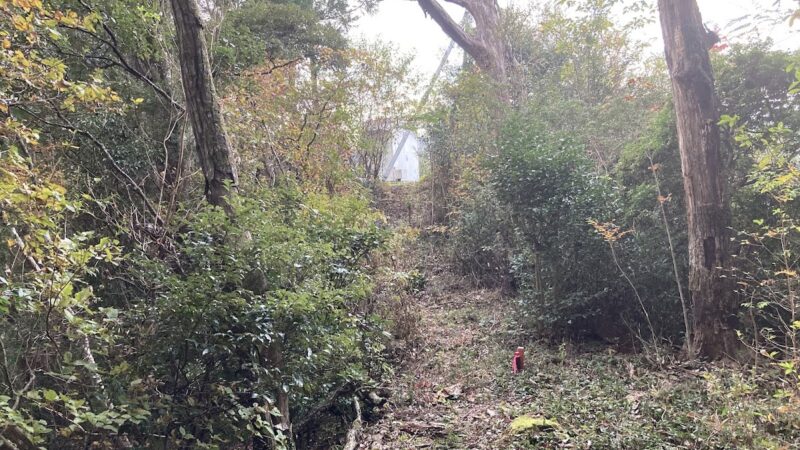
To reach the Uryuno Castle ruins, you need to travel by car from the center of Motoyama Town and then hike up from the entrance. Some parts of the hiking trail are not well-maintained, so appropriate equipment is necessary. Allow approximately 30 minutes to 1 hour for the climb.
Recommended Equipment for Visiting
The following equipment is recommended for visiting the mountain castle:
- Trekking shoes or hiking boots
- Long-sleeved shirt and long pants (for protection against bushes and insects)
- Hat and sunscreen
- Drinking water
- Map or GPS device
- Bear bell (for protection against wild animals)
Best Season for Visiting
The best time to visit Uryuno Castle is in spring (April-May) and autumn (October-November). In summer, the vegetation is overgrown, making the remains difficult to see, and there are also issues with heat and insects. In winter, caution is necessary due to the possibility of snow and ice.
Significance of Uryuno Castle in the Sengoku History of Tosa
The Road to Unifying Tosa
The fall of Uryuno Castle was a crucial turning point in Chosokabe Motochika’s unification of Tosa. By subduing the powerful Motoyama clan, Motochika established control over central Tosa and paved the way for further territorial expansion. ### Limitations of Mountain Castle Defense
The Battle of Uryuno Castle also demonstrates the limitations of mountain castle defense during the Sengoku period. Even the most formidable mountain castles struggled to withstand prolonged sieges. This lesson is believed to have influenced later castle design.
Local History Memories
Uryuno Castle is an important site that conveys the history of the region. The story of the Motoyama clan’s resistance and surrender has become part of the identity of the people of Nagaoka County, and is still used today as material for local history research and local education.
Nearby Historical Sites and Tourist Spots
Motoyama Castle Ruins
The ruins of Motoyama Castle, the base of the Motoyama clan, are also worth visiting. It is larger in scale than Uryuno Castle, and more clearly defined remains are preserved. It is close to the town center of Motoyama and relatively easy to access.
The Nature of the Yoshino River
The Yoshino River, which flows through Nagaoka County, is known as one of Japan’s three most turbulent rivers. You can enjoy the beauty of the clear stream and the scenic valleys, and activities such as rafting are also popular.
Cultural Properties of Otoyo Town
Otoyo Town also has buildings that are registered as National Tangible Cultural Properties. Traditional folk houses and religious buildings are preserved, allowing you to experience the history and culture of the region.
References and Research Materials
The following are materials for learning more about the history of Uryuno Castle and Nagaoka County:
- “History of Kochi Prefecture” (Prefectural History Compilation Materials)
- “History of Motoyama Town”
- “Chronological History of Tosa Province”
- “Chosokabe Motochika Chronicle”
- Various castle research books
- Local history materials held by the Kochi Prefectural Library
These materials can be viewed at the Kochi Prefectural Library and the Motoyama Town Library/Museum. Some materials are also available as digital archives online.
Summary
Uryuno Castle is a historical stronghold in Tosa Province during the Sengoku period, where the Motoyama clan resisted Chosokabe Motochika to the very end. Located in the mountainous area of Motoyama Town, Nagaoka District, Kochi Prefecture, the castle retains well-preserved remains such as earthworks and moats, making it a valuable historical site for understanding the structure of mountain castles of that era.
Nagaoka District is a historical district with a long history dating back to ancient times, and currently only Otoyo Town belongs to it. While facing challenges such as population decline and depopulation, community development is progressing, utilizing the rich natural environment and historical heritage.
Visiting Uryuno Castle is a valuable opportunity to experience the Sengoku history of Tosa and to touch upon the history and culture of this mountainous region. With appropriate preparation and equipment, why not visit this historical site?