

Takayama Castle (Kimotsuki District, Kagoshima Prefecture) Complete Guide | History and Highlights of a National Historic Site that Flourished as the Base of the Kimotsuki Clan
What is Takayama Castle?
Takayama Castle (Koyama-jo) is a medieval mountain castle located in Shintomi, Kimotsuki-cho, Kimotsuki-gun, Kagoshima Prefecture. It is known as the base of the Kimotsuki clan, who ruled extensively in Osumi Province. Also known as “Kimotsuki Castle” and “Takayama Honjo,” it is an important historical site designated as a National Historic Site on February 22, 1945.
As a multi-bailey mountain castle that skillfully utilizes the topography of the Shirasu plateau, it is considered one of the representative medieval castles of southern Kyushu, alongside Chiran Castle on the Satsuma Peninsula. As a strong mountain castle that never fell, its high level of defensive capabilities can still be seen in the remains of the castle site.
Basic Information about Takayama Castle
Location and Access
Location: Shintomi Honjo, Kimotsuki-cho, Kimotsuki-gun, Kagoshima Prefecture
Former Province: Osumi Province
Access Method:
- By Car: Approximately 30 minutes from the Higashi-Kyushu Expressway “Kanoya-Kushira JCT” via National Route 220
- By Public Transportation: Approximately 40 minutes by bus from JR Shibushi Station, then approximately 15 minutes on foot from the “Takayama” bus stop
- Parking: Parking available at the former Takayama Elementary School site (free)
Visiting Information:
- Free admission
- Toilets: Located at the former Takayama Elementary School site (caution advised due to dilapidation)
- Estimated Time Required: Approximately 30 minutes to 1 hour
Scale and Structure of the Castle
Takayama Castle is built on the tip of a Shirasu plateau extending east to west, with its highest point at an altitude of 82 meters. Located north of the confluence of the northward-flowing Takayama River and Honjo River, and bordered by the Kuriyama River to the north, it is a strategically important site.
The castle grounds consist of a central main enclosure (Honmaru), surrounded by multiple baileys such as the second bailey (Ninmaru), Yamabushi Castle, and Okumaru (Okumaru), separated by dry moats. The majority of the site is preserved as forest.
History of Takayama Castle
The Rise of the Kimotsuki Clan and Takayama Castle
The exact construction date of Takayama Castle is unclear, but it is believed that the Kimotsuki clan established their power in this area from the early medieval period. As a powerful local clan in Osumi Province, the Kimotsuki clan used Takayama Castle as their residence for 18 generations.
The ancestors of the Kimotsuki clan are said to date back to the late Heian period, and they gradually expanded their power from the Kamakura period to the Muromachi period. During the Sengoku period, they became a formidable force controlling almost the entire Osumi Province.
The Era of Kimotsuki Kanetsugu and the Golden Age
At the end of the Sengoku period, the Kimotsuki clan reached its peak during the reign of its 17th head, Kimotsuki Kanetsugu. Kanetsugu was known as a skilled warrior and expanded the Kimotsuki family’s territory to over 100,000 koku.
Major Military Achievements:
- Captured Obi Castle in Hyuga Province
- Gained control of Shibushi Castle
- Controlled major strongholds on the Osumi Peninsula, including Kanoya Castle
- Controlled almost the entire Osumi Province, boasting a power comparable to the Shimazu clan
During this period, the Kimotsuki clan, along with the Shimazu clan, was one of the two major powers in southern Kyushu, demonstrating its significant presence. Takayama Castle served as a symbol of the Kimotsuki clan’s power, playing a central role in both political and military affairs.
Conflict with the Shimazu Clan and the Fall of the Castle
In 1573 (Tensho 1), the conflict with the Shimazu clan, with whom they had long been rivals, intensified. Under attack from the Shimazu army led by Shimazu Yoshihisa, Takayama Castle finally fell. This battle significantly weakened the Kimotsuki clan’s power.
However, there is also a legend that it was a “strong mountain castle that had never fallen,” and it has been suggested that it may have actually surrendered through a peace agreement. In any case, this marked the end of the Kimotsuki clan’s era as an independent force.
The Road to Abandonment
Even after the castle’s fall, the Kimotsuki clan continued to rule the area, albeit with a significantly reduced territory. However, in 1580, they were ordered by the Shimazu clan to relocate to Ata (present-day Kinpo-cho, Minamisatsuma City).
With this, Takayama Castle was abandoned, marking the complete end of the Kimotsuki clan’s approximately 400-year rule over Takayama. The castle grounds were subsequently left neglected and returned to nature, but in 1945, it was designated a National Historic Site as an important historical heritage site, and remains so to this day.
Takayama Castle’s Layout and Remains
Layout Utilizing the Shirasu Plateau
The most distinctive feature of Takayama Castle is its layout, which skillfully utilizes the topography of the Shirasu plateau, unique to southern Kyushu. Shirasu is a geological layer formed from accumulated volcanic ash, easily forming nearly vertical cliffs and functioning as a natural defensive wall.
The castle was built on a long, narrow plateau stretching east to west, and each enclosure is separated by deep dry moats. These dry moats also take advantage of the characteristics of the Shirasu plateau, with sharp cliffs that make enemy intrusion difficult.
Honmaru (Main Enclosure)
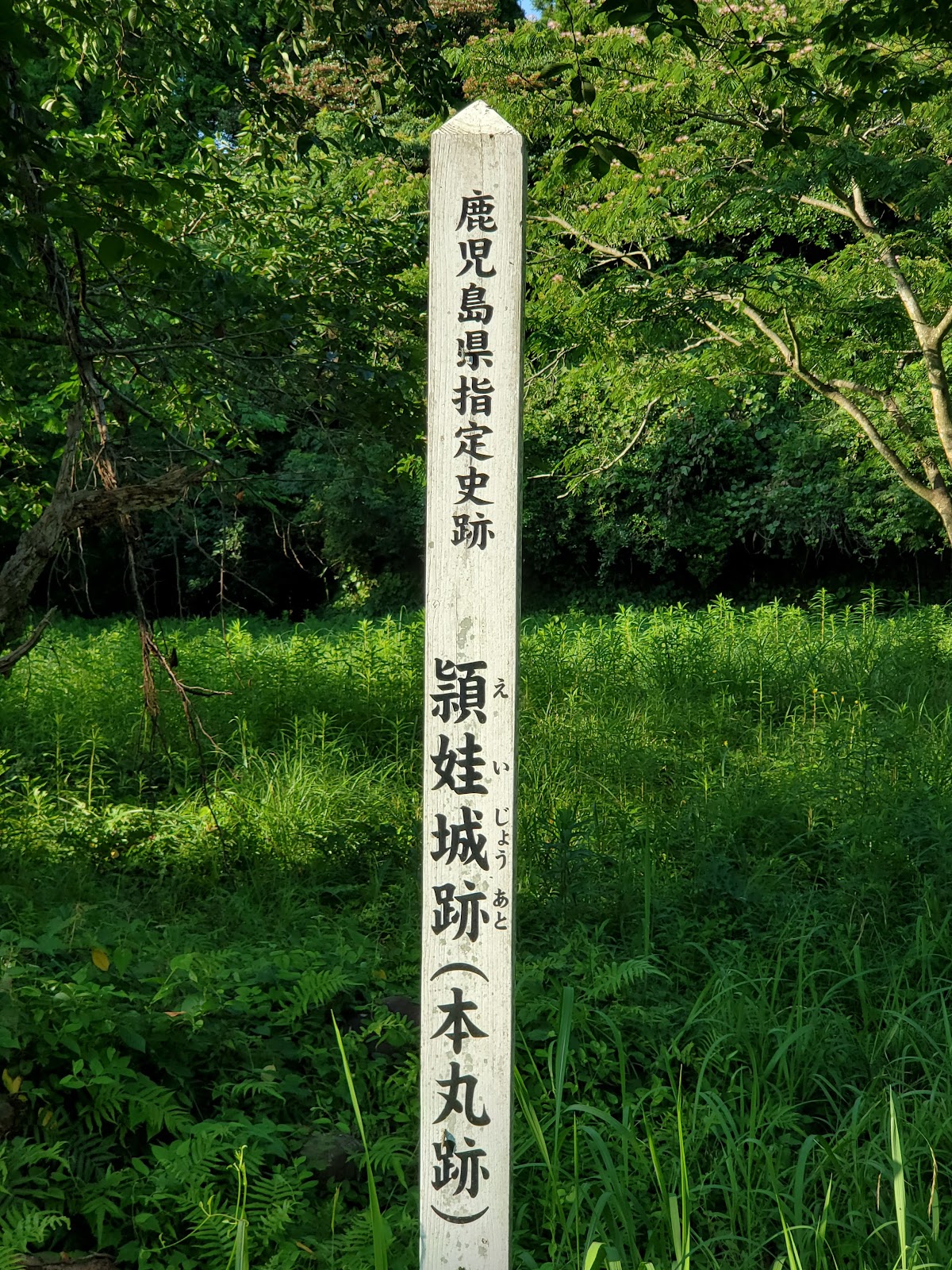
The Honmaru, the core of Takayama Castle, is located at the highest elevation. Although it is now a forest, the flat shape of the enclosures remains clearly visible, allowing us to imagine that major buildings such as the palace once stood there.
Traces of earthworks can also be seen around the Honmaru, indicating its function as a defensive structure. However, no stone structures such as stone walls have been confirmed, preserving its characteristics as a typical medieval earthen castle.
Ninomaru and Yamabushi Castle
The Ninomaru is the second most important enclosure after the Honmaru (main enclosure). Located east of the Honmaru, it is clearly demarcated by a dry moat. The Ninomaru also retains a well-preserved flat surface, suggesting it was used as a residence for senior retainers or a troop encampment.
Yamabushi Castle is an enclosure positioned as a subsidiary castle of Takayama Castle, possessing a highly independent structure. While its name suggests a connection to Shugendo practitioners, details remain unknown.
Okukuruwa and Dry Moats
At the back of the castle grounds is an area called the Okukuruwa, also strictly demarcated by dry moats. Takayama Castle’s dry moats are deep and sharp, making maximum use of the characteristics of the Shirasu plateau, and some still maintain a depth of several meters.
The layout of the dry moats is complex, requiring crossing them to move between enclosures, demonstrating ingenious defensive measures throughout.
Main Gate and Entrance
The remains of the main gate (Otemon), the primary entrance to the castle, have also been identified. The structure of the entrance (gate) is curved to prevent enemy intrusion, employing typical defensive techniques of medieval castles.
Earthworks and steep slopes are concentrated around the main gate, indicating that this was the most heavily fortified area within the castle.
Existing Remains
Although no buildings remain at Takayama Castle, the following remains are well-preserved:
- Kuruwa: Multiple flat areas including the main keep, second keep, Yamabushi Castle, and inner keep
- Dry Moat: Deep moats separating each keep
- Earthwork: Partially remaining around the main keep
- Cut Slope: Steep slopes carved into the Shirasu plateau
- Koguchi: Remains of entrances such as the main gate
These remains are valuable historical materials that convey the appearance of a medieval mountain castle to the present day.
Highlights and Walking Routes of Takayama Castle
Entrance to the Castle Ruins
The entrance to the Takayama Castle ruins is located near the former Takayama Elementary School site. A stone monument to Takayama Castle stands on the east side of the Takayama River, indicating the entrance to the historical site.
The former elementary school site currently houses fire-related facilities and a community center, and can be used as a parking space. In autumn, the ginkgo trees turn yellow, adding a seasonal touch to your stroll through the castle ruins.
Recommended Walking Route
- Stone Monument and Information Board (10 min): First, understand the castle’s overview at the entrance stone monument and information board.
- Main Gate Ruins (10 min): Visit the official entrance to the castle.
- Second Bailey (10 min): Understand the structure of the baileys while observing the dry moat.
- Main Bailey (15 min): Stroll through the central part of the castle and imagine what it was like in its heyday.
- Yamabushi Castle and Inner Bailey (15 min): If time permits, explore the surrounding baileys as well.
The entire course takes about an hour, but those who want to carefully observe the remains should allow 1.5 to 2 hours.
Points to Note When Visiting
- The majority of the castle ruins are in a forest, and there are areas where the footing is unstable.
- Wearing comfortable shoes and long sleeves and long pants is recommended.
- Insect repellent is necessary during the summer.
- Be careful as it can be slippery during and after rain.
- Information boards are limited, so it is recommended to check the materials in advance.
Takayama Castle and the Cultural Heritage of the Kimotsuki Clan
Historical Significance of the Kimotsuki Clan
The Kimotsuki clan was not merely a local powerful family, but played an important cultural and political role in southern Kyushu. In managing his domain centered around Takayama, the Kimotsuki clan is known for the following achievements:
- Protection of Temples and Shrines: Protected numerous temples and shrines, fostering the local religious culture.
- Development of Trade: Controlled ports such as Shibushi Port, promoting maritime trade.
- Promotion of Culture: Brought the culture of Kyoto to Osumi through exchanges with the capital.
Related Historical Sites in the Surrounding Area
When visiting Takayama Castle, visiting the following related historical sites will allow you to gain a deeper understanding of the Kimotsuki clan’s history:
Kimotsuki Clan Related Sites:
- Tsukazaki Great Camphor Tree: A giant tree associated with the Kimotsuki clan (National Natural Monument)
- Nikaido Family Residence: A residence of a descendant of a Kimotsuki clan retainer (Important Cultural Property)
- Shijukusho Shrine: A shrine revered by the Kimotsuki clan.
Other Castles:
- Shibushi Castle: An important base in Hyuga that the Kimotsuki clan temporarily controlled.
- Kanoya Castle: A major castle in Osumi Province.
- Chiran Castle: A mountain castle on a Shirasu plateau, rivaling Takayama Castle.
Takayama Castle and Medieval Castles of Southern Kyushu
Characteristics of Mountain Castles on Shirasu Plateaus
Medieval castles in Southern Kyushu stand apart from those in other regions due to their unique use of the Shirasu plateau terrain. Takayama Castle is a prime example, possessing the following characteristics:
- Near-Vertical Slopes: Steep slopes that take advantage of the properties of Shirasu
- Deep Dry Moats: Moats that are easy to excavate and resistant to collapse
- Non-Use of Stone Walls: Developed as earthen castles due to the scarcity of stone materials
- Complex Enclosure Arrangement: Irregular layout following the plateau’s topography
Comparison with Chiran Castle
Chiran Castle on the Satsuma Peninsula and Takayama Castle on the Osumi Peninsula are often referred to as the “two pillars of multi-enclosure mountain castles on Shirasu plateaus.” Comparison of the Two Castles:
Similarities:
- A multi-bailey mountain castle utilizing a Shirasu plateau
- Baileys defined by deep dry moats
- An earthen castle without stone walls
- A nationally designated historic site
Differences:
- Chiran Castle was a branch castle of the Shimazu clan, while Takayama Castle was the main castle of the Kimotsuki clan
- Chiran Castle’s remains are more clearly preserved today
- Takayama Castle boasts a unique location at the confluence of rivers
Access and Tourist Information for Takayama Castle
Detailed Access Information
Access by Car:
- From Kagoshima City: Approximately 2 hours (via National Route 220)
- From Kanoya City: Approximately 30 minutes (via National Route 220)
- From Miyazaki City: Approximately 2 hours 30 minutes (via National Route 220)
Public Transportation:
- Approximately 40 minutes by bus from JR Shibushi Station towards Kimotsuki Town
- Get off at the “Takayama” bus stop and walk for about 15 minutes to the castle ruins entrance.
Nearby Tourist Facilities
Kimotsuki Town Tourist Spots:
- JAXA Uchinoura Space Center: Rocket launch site tour (reservations required)
- Kimotsuki Town Historical and Folk Museum: Detailed exhibits on the Kimotsuki clan and Takayama Castle
- Yabusame Museum: Introduces the history and culture of Yabusame (mounted archery)
Accommodation:
- There are guesthouses and small hotels in Kimotsuki Town
- There are various accommodations in Kanoya City (about 30 minutes by car)
Food and Drink:
- You can enjoy local cuisine such as Kurobuta pork and local chicken in Kimotsuki Town
- You can purchase local specialties at the “Tarumizu” roadside station
Best Season for Visiting
- Spring (March-May): Beautiful fresh greenery and mild weather. The cherry blossom season is especially recommended.
- Autumn (October-November): You can see the autumn leaves, and the yellowing of the ginkgo trees is also beautiful. Comfortable Climate
- Summer (June-September): Many insects and hot weather; early morning visits are recommended.
- Winter (December-February): Mild climate makes visiting easier, but be aware of early sunsets.
Cultural Value of Takayama Castle
Significance as a National Historic Site
The designation of Takayama Castle as a National Historic Site on February 22, 1945, is based on the following historical and academic values:
- Political Center of Medieval Osumi Province: Important in regional history as the base of the 18 generations of the Kimotsuki clan.
- Typical Southern Kyushu Castle: A representative example of a mountain castle utilizing a Shirasu plateau.
- Preservation of Remains: Well-preserved baileys, dry moats, and earthworks.
- Sengoku Period History: An important stage in Sengoku period history, including conflicts with the Shimazu clan.
Efforts for Preservation and Utilization
Kimotsuki Town is actively working on the preservation and utilization of the Takayama Castle ruins:
- Maintenance such as grass cutting: Regular environmental maintenance
- Installation of explanatory signs: Providing information to visitors
- Implementation of guided tours: Guided tours by the Kimotsuki Town Tourism Association
- Research: Uncovering new findings through continuous academic research
Things to know before visiting Takayama Castle
Recommendation for pre-visit learning
To gain a deeper understanding of the castle ruins, it is recommended to study at the following facilities before visiting Takayama Castle:
Kimotsuki Town Historical and Folk Museum:
- Address: 1936 Nozaki, Kimotsuki-cho, Kimotsuki-gun, Kagoshima Prefecture
- Opening hours: 9:00~17:00 (Closed on Mondays)
- Admission fee: 200 yen for adults
- Exhibits: History of the Kimotsuki clan, model of Takayama Castle, excavated artifacts, etc.
Guided Tours
The Kimotsuki Town Tourism Association offers guided tours of the castle ruins conducted by its guide division. Guides well-versed in local history will provide detailed explanations of how to view the remains and the history of the Kimotsuki clan.
Contact Information:
- Kimotsuki Town Tourism Association
- Phone: 0994-67-2888
- Advance reservations required (contact recommended at least one week in advance)
Castle Visit Records
Takayama Castle is registered on castle information websites such as “Nippon Castle Tour” and “Kojodan,” allowing you to record your visit. Checking other visitors’ reviews before your visit is recommended as they can be helpful.
Summary: The Charm of Takayama Castle
Takayama Castle played a crucial role in the medieval history of southern Kyushu as the main castle of the Kimotsuki clan, who ruled Osumi Province for 18 generations. This multi-castle mountain castle, skillfully utilizing the Shirasu plateau, is a representative example of southern Kyushu castles, alongside Chiran Castle, and holds high academic value.
Although no structures remain today, the ruins of Takayama Castle—including the main keep, second keep, Yamabushi Castle, and inner bailey—clearly demarcated by dry moats, are a valuable historical legacy that conveys the appearance of a medieval mountain castle to the present day. While protected as a nationally designated historical site, it is an open historical site that can be freely visited, making it popular with history enthusiasts and castle fans.
When visiting Kimotsuki Town, be sure to visit Takayama Castle ruins and experience the glory of the Kimotsuki clan, who once rivaled the Shimazu clan, and the charm of a mountain castle on the unique Shirasu plateau of southern Kyushu. Visiting the nearby historical and folk museum and the JAXA Uchinoura Space Center in conjunction with the castle will allow you to enjoy both the history and modern aspects of Kimotsuki Town simultaneously.
.png)