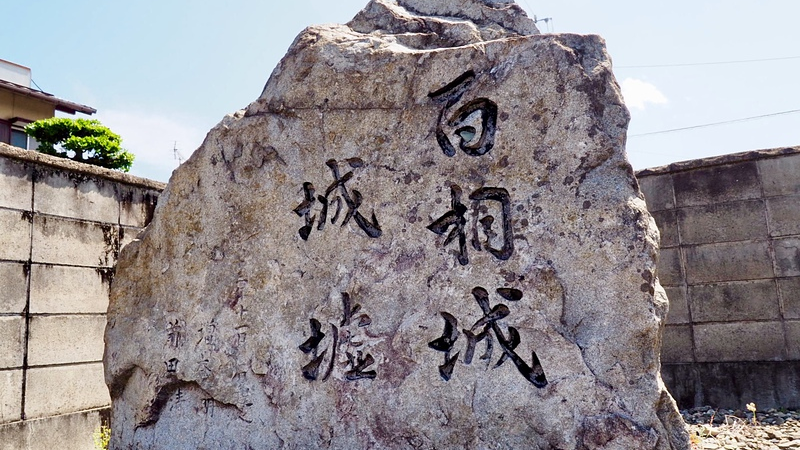
Yashima Castle (Kagawa Prefecture) Complete Guide | A Thorough Explanation of the History, Remains, and Highlights of this Ancient Mountain Castle
What is Yashima Castle? | An Ancient Mountain Castle Recorded in the Nihon Shoki
Yashima Castle (Yashima-jo, Yashima-no-ki) is an ancient mountain castle built on Yashima Island in Takamatsu City, Kagawa Prefecture. The Nihon Shoki, in the entry for the 6th year of Emperor Tenji’s reign (667 AD), clearly states, “Construction of Takayasu Castle in Wa Province, Yashima Castle in Yamada District of Sanuki Province, and Kaneda Castle in Tsushima Province.” It is one of the valuable ancient mountain castles recorded in historical texts.
Yashima is a plateau-like mountain approximately 5 km from north to south and 3 km from east to west. The southern ridge is 292 m high, and the northern ridge is 282 m high. While the mountaintop is relatively flat, it is surrounded by steep cliffs, providing an ideal natural fortress. Yashima Castle, built to make the most of its unique topography, features walls approximately 90% composed of natural cliffs, with artificial defensive structures kept to a minimum.
In ancient times, Yashima is believed to have been an independent island, separate from the mainland, unlike its present state. Its excellent location overlooking the Seto Inland Sea made it a strategically important point for monitoring and intercepting enemy navies advancing eastward.
Background to the Battle of Baekgang and the Construction of Yashima Castle
The Crisis Brought About by the Defeat at Baekgang
The construction of Yashima Castle stems from the devastating defeat of the Yamato court in the Battle of Baekgang in 663. The Japanese navy, dispatched to support Baekje on the Korean Peninsula, suffered a crushing defeat at the hands of the combined forces of Tang China and Silla. This defeat led the Yamato court to face the threat of a Tang-Silla invasion of the mainland.
Construction of a Defense System by Prince Naka no Ōe
Facing a crisis, Prince Naka no Ōe (later Emperor Tenji) rapidly constructed defensive facilities throughout western Japan. A series of ancient mountain castles were built from Tsushima and Kyushu to the Seto Inland Sea coast and even to the Kinai region. Yashima Castle was built in 667 as a crucial part of this defense line.
Yashima Castle, believed to have been built under the jurisdiction of the Iyo-no-Sōryō (a military administrator who oversaw several provinces including Iyo), had a clear strategic objective: to stop enemy naval forces advancing eastward across the Seto Inland Sea. Its location, offering a panoramic view of Takamatsu city and the Seto Inland Sea, was extremely effective for both early warning and defense.
Structure and Remains of Yashima Castle
Castle Walls and Defensive Line
The most distinctive feature of Yashima Castle is its defensive system, which skillfully utilizes the natural terrain. In February 1998, a local researcher discovered a stone wall on the southwestern slope near the upper part of Nanrei Mountain, which triggered a full-scale investigation.
Subsequent excavations revealed that earthworks previously identified on the northern and southern slopes of Nanrei Mountain were related to the newly discovered stone wall. Furthermore, similar topography was confirmed on the eastern slope, revealing that the outer perimeter (defensive line) of the ancient mountain castle, Yashima Castle, intermittently ran along the slopes near the upper part of the mountain.
Discovery of Castle Gate Remains
The excavations also uncovered the remains of several castle gates. These gates were important facilities defending the main access routes to the mountain castle. Their robust stonework strongly reflects the characteristics of Korean-style mountain castles.
The structure of the castle gates reveals the advanced civil engineering technology of the time and the strong sense of crisis of the Yamato court against invasions from Tang China and Silla.
Water Gate Facilities
Two important water gate facilities, the North Water Gate and the South Water Gate, have been discovered at Yashima Castle. Securing water was a matter of life and death for ancient mountain castles, and these water gates were crucial infrastructure enabling long-term sieges on mountaintops.
The water gates were not merely water supply facilities, but part of a complex system that efficiently collected, stored, and drained rainwater. This advanced water management technology is also evidence of the advanced castle-building techniques introduced from the Korean Peninsula.
Earthworks Arrangement
Artificial earthworks were constructed in areas that could not be defended by natural cliffs. These earthworks, combined with stone masonry, formed a strong defensive wall. It is believed that the earthworks of that time were much higher than they are today, effectively preventing enemy incursions.
History of Excavation and Research
Discovery of Stone Masonry in 1998
For a long time, Yashima Castle was a “phantom mountain castle,” mentioned in the *Nihon Shoki* (Chronicles of Japan), but with no concrete remains confirmed. However, in February 1998, the situation changed dramatically when a local historian discovered stonework on the southwestern slope of Nanrei.
This discovery marked a groundbreaking turning point in the study of Yashima Castle. Since then, full-scale excavation surveys have been conducted, primarily by the Takamatsu City Board of Education, and new remains have been revealed one after another.
Results of Continuous Excavation Surveys
Excavation surveys since 1998 have successively uncovered major components of the ancient mountain castle, including the north and south sluice gates, castle gates, and earthworks. These discoveries have gradually revealed the overall picture of Yashima Castle, confirming its scale and the sophistication of its structure.
In particular, the discovery of the sluice gate facilities provides valuable information for understanding the actual water management systems in ancient mountain castles. The structure and construction methods of the stonework also revealed that castle-building techniques from the Korean Peninsula were directly introduced.
Ongoing Development Projects
Takamatsu City is continuously implementing development projects aimed at preserving and utilizing the discovered remains. While prioritizing the preservation of the remains, appropriate maintenance is being carried out to allow visitors to imagine its former appearance.
Historical Significance of Yashima Castle
Characteristics as a Korean-Style Mountain Castle
Yashima Castle possesses the typical characteristics of a Korean-style mountain castle. A Korean-style mountain castle is an ancient mountain castle built using construction techniques from the Korean Peninsula, and has the following characteristics:
- A defensive system that makes maximum use of the mountainous terrain
- Sturdy castle walls constructed of stone masonry
- Advanced water management facilities
- Designed for long-term sieges
Yashima Castle possessed all of these elements and was an important military facility reflecting the tensions in East Asia in the late 7th century.
Position in Ancient Japan’s Defense System
Yashima Castle played an important role in the ancient Japanese defense line established after the Battle of Baekgang. It formed a multi-layered defensive network in conjunction with castles such as Kaneda Castle in Tsushima, Ono Castle and Kii Castle in Kyushu, and Takayasu Castle in the Kinai region.
Yashima Castle held extremely high strategic value, particularly as a base for monitoring and intercepting enemy navies advancing eastward across the Seto Inland Sea. Its location, offering panoramic views of Takamatsu city and the Seto Inland Sea, likely also functioned as an early warning system.
Connection to the Genpei War
Yashima is not only the site of an ancient mountain castle, but also known as an important battlefield from the Genpei War at the end of the Heian period. The Battle of Yashima in 1185, where the Minamoto army led by Minamoto no Yoshitsune launched a surprise attack on Yashima, a Taira stronghold, was a crucial battle that determined the outcome of the Genpei War.
The layered history of two different eras—ancient Yashima Castle and the medieval Battle of Yashima—is a major attraction of this site.
Highlights of Yashima Castle
Stone Masonry Remains
The stone masonry discovered on the southwestern slope of the southern ridge is one of the most important highlights of Yashima Castle. Stone masonry dating back over 1300 years still remains, allowing visitors to witness the advanced castle-building techniques of the time.
The method of stacking the stones and the types of stones used suggest the possibility of direct involvement from engineers from the Korean Peninsula. Observing the ancient stonework while imagining its former appearance will be a valuable experience that evokes a sense of historical romance.
Water Gate Remains
The remains of the North and South Water Gates are important historical sites demonstrating the high level of water management technology of the time. Through these actual remains, one can understand how crucial water supply was on the mountaintop and how it was achieved.
View
The view from the top of Yashima Mountain is breathtaking. You can see Takamatsu city, the Seto Inland Sea, and on a clear day, even the Shikoku Mountains in the distance. This view eloquently explains why Yashima Castle was chosen as a strategically important location.
Imagining ancient soldiers gazing upon the same scenery while monitoring the Seto Inland Sea will give you a sense of connection to history.
Access and Visiting Information
Access by Car
It’s approximately a 20-minute drive from the Takamatsu Chuo Interchange on the Takamatsu Expressway. Using the Yashima Skyway (formerly a toll road, now free), you can access the mountaintop parking lot directly. From the parking lot, the main historical remains are accessible on foot.
Access by Public Transportation
From JR Takamatsu Station or Kotoden Takamatsu Chikko Station, take the Kotoden Shido Line and get off at “Kotoden Yashima Station.” From there, you can reach the top of Yashima Mountain by hiking the trail or by using the shuttle bus (check operating days). The hiking trail also follows the route of the old pilgrimage route, allowing you to enjoy a hike while feeling the history.
Points to Note When Visiting
- Since many of the ruins are located on mountaintops and slopes, we recommend wearing comfortable shoes.
- The sun is strong in summer, so please bring a hat and drinking water.
- Access to some ruins may be restricted for preservation purposes.
- Visiting is generally free, but please cooperate in protecting the ruins.
Nearby Attractions
Yashima-ji Temple
Yashima-ji Temple, the 84th temple of the Shikoku 88 Temple Pilgrimage, is an ancient temple located on Mount Yashima. Visiting it in conjunction with a visit to the ancient mountain castle allows you to experience the multi-layered history of Yashima.
Shin-Yashima Aquarium
This unique aquarium, located on a mountaintop, mainly exhibits marine life from the Seto Inland Sea. It is recommended for family visits.
Battlefield of Yashima
The site of the ancient battlefield, which was the stage of the Genpei War, is also an important historical spot in Yashima. You can visit the battlefield known for the episode of Nasu Yoichi hitting the fan target.
Yashima Castle and the Ancient Mountain Castle Network
Comparison with Other Ancient Mountain Castles
Ancient mountain castles built around the same time as Yashima Castle exist throughout western Japan. Comparing it to castles such as Kaneda Castle in Tsushima, Ono Castle in Fukuoka Prefecture, and Takayasu Castle in Nara Prefecture reveals a comprehensive picture of ancient Japan’s defense system.
A distinctive feature of Yashima Castle is its utilization of its isolated island terrain. While many other ancient mountain castles were built on inland mountains, Yashima Castle was positioned to directly monitor key points of maritime traffic.
Historical Value for the Modern Age
Yashima Castle is a valuable historical heritage site that conveys the situation in East Asia in the 7th century and the responses of ancient Japan. Its academic value is extremely high, given that it possesses both documentary sources (the *Nihon Shoki*) and actual archaeological remains.
With recent excavations gradually revealing its full scope, Yashima Castle is an important site where further research is expected.
Summary
Yashima Castle (Kagawa Prefecture) is an ancient mountain castle built in 667 by order of Prince Naka no Ōe amidst the tense international situation following the Battle of Baekgang. It is clearly mentioned in the *Nihon Shoki* (Chronicles of Japan), and archaeological excavations since 1998 have uncovered numerous important remains, including stone walls, castle gates, water gates, and earthworks.
With its defensive system utilizing natural cliffs, advanced water management techniques, and castle construction techniques introduced from the Korean Peninsula, Yashima Castle is an indispensable historical site for understanding ancient Japan’s defense system. Its superb location overlooking the Seto Inland Sea eloquently speaks to its strategic importance in the past.
Yashima Castle, located on Yashima, also known as the site of the Genpei War, offers a multi-layered historical experience. Easily accessible from Takamatsu city center, it’s an attractive spot for history buffs and families alike. Touching the ancient stone walls and experiencing the views of yesteryear will vividly bring to life the history of over 1300 years ago.