Takahara Castle (Naoshima Town, Kagawa District) | Exploring the History of the Takahara Clan and a Coastal Castle in the Seto Inland Sea
Takahara Castle, located in Naoshima Town, Kagawa District, Kagawa Prefecture, is a medieval mountain castle built at a strategic point in the Seto Inland Sea. Situated in the Honmura district of Naoshima, it played an important role in monitoring maritime traffic. This article provides a detailed explanation of Takahara Castle’s history, remains, relationship with the Takahara clan, and current situation.
Overview and Location of Takahara Castle
Takahara Castle is a medieval mountain castle built in the Honmura district of Naoshima Town, Kagawa District, Kagawa Prefecture. Located on a hill overlooking the Seto Inland Sea, it possesses characteristics of a coastal castle. The castle ruins remain on a hill overlooking the current Naoshima Town Hall and the Honmura district settlement.
Naoshima is also known for having an undefined boundary with Tamano City, Okayama Prefecture, and is treated uniquely in Kagawa Prefecture’s area calculations. The fact that the historical center of this island was formed around Takahara Castle is of significant importance in Naoshima’s regional history.
Geographical Features
The location of Takahara Castle was ideal for monitoring maritime traffic in the Seto Inland Sea. The area below the castle is now a port, and it is believed that in the past, the cliff face directly faced the sea. This topographical feature allowed Takahara Castle to prevent intrusion from the sea while simultaneously controlling maritime traffic.
Naoshima is one of the islands in the Seto Inland Sea, located between Honshu and Shikoku, and has long been considered an important strategic point for maritime traffic. Takahara Castle’s layout maximizes this geographical advantage.
History of the Takahara Clan and the Castle
The main lords of Takahara Castle were the Takahara clan. The Takahara clan were local lords who ruled Naoshima during the medieval period and are believed to have been active as a maritime force in the Seto Inland Sea.
Origins and Power of the Takahara Clan
While historical records regarding the detailed origins of the Takahara clan are limited, it is highly probable that they were a family with naval characteristics based in the islands of the Seto Inland Sea. In the medieval Seto Inland Sea, local lords vied for power on each island, forming complex power dynamics over maritime trade rights.
It is presumed that the Takahara clan was one such local power in the Seto Inland Sea, operating from Naoshima and involved in maritime trade. The castle’s location suggests that maritime surveillance and port management were its primary functions.
Formation of the Castle Town
The Honmura district, the current administrative and cultural center of Naoshima Town, developed as a castle town for Takahara Castle. It is believed that samurai residences and merchant districts were arranged around the castle, and a road network connecting the port and the castle was developed.
The Honmura district still retains traces of its old townscape, allowing one to feel the historical continuity from the Takahara Castle era. The basic urban structure of the castle town formed the foundation for Naoshima’s subsequent development.
Layout and Remains of Takahara Castle
Takahara Castle retains typical remains of a medieval mountain castle. The main remains that have been identified include baileys, earthworks, and dry moats.
Arrangement of Baileys
Multiple baileys were arranged in the central part of the castle. It is presumed to have been a linear layout with baileys arranged in stages around the main bailey. Each bailey was cleverly positioned to utilize the terrain and incorporate features to enhance its defensive capabilities.
There are signs at the site indicating the locations of baileys. While the area to the left of the bailey is now a harbor, in the past, the cliff face directly faced the sea, creating a natural stronghold.
Earthworks and Moats
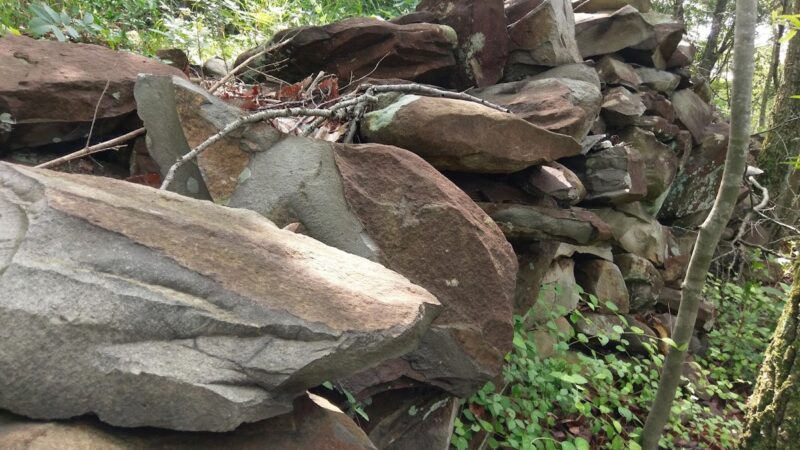
Traces of earthworks remain within the castle grounds. These earthworks surrounded the baileys, enhancing their defensive capabilities. Dry moats have also been identified, demonstrating various measures taken to prevent enemy intrusion.
In medieval mountain castles, earthen castles without stone walls were common. Takahara Castle exhibits the typical form of a medieval mountain castle, primarily featuring earthworks and moats for defense.
Current Status of Remains
While some remains of Takahara Castle still exist, many parts are believed to have disappeared due to later development. Nevertheless, basic remains such as baileys, earthworks, and moats can be identified, providing clues to the castle’s size and structure.
Currently, parts of the castle site are residential areas and public facilities, but the topographical features allow us to imagine the castle’s appearance in its heyday.
Characteristics as a Coastal Castle on the Seto Inland Sea
Takahara Castle, as a coastal castle facing the Seto Inland Sea, possessed important functions not only for land defense but also for monitoring and managing maritime traffic.
Strategic Point for Maritime Traffic
The sea area around Naoshima has long been an important maritime traffic route. Located at the intersection of the routes connecting Honshu and Shikoku, as well as east-west routes, it saw a large volume of ship traffic. It is believed that Takahara Castle had the function of monitoring and, when necessary, managing this maritime traffic.
In the medieval Seto Inland Sea, various naval forces competed for control of maritime traffic. The Takahara clan, as a force with naval characteristics, may have been involved in traffic in this region.
Defensive Functions of a Coastal Castle
Coastal castles needed to be prepared not only for attacks from land but also from sea. Takahara Castle utilized its topography, with a cliff overlooking the sea, to make intrusion from the sea difficult.
Furthermore, its location, offering a wide view of the sea from the castle, allowed for early detection of approaching enemy ships. This excellent visibility would have been useful not only for defense but also for monitoring maritime traffic.
The Position of Takahara Castle in Kagawa Prefecture’s Castles
Kagawa Prefecture has many famous castles, including Marugame Castle, Takamatsu Castle, Hiketa Castle, and Yashima Castle. Let’s examine the characteristics of Takahara Castle in comparison to these castles.
Comparison with Marugame Castle
Marugame Castle is a representative castle of Kagawa Prefecture with an existing keep. Also known as Kameyama Castle and Horai Castle, it is located in Ichibancho, Marugame City, Kagawa Prefecture. While Marugame Castle is a modern castle known for its high stone walls, Takahara Castle differs significantly in terms of era and structure, being a medieval earthen castle.
Comparison with Takamatsu Castle
Takamatsu Castle, also known as Tamamo Castle, is a water castle located in Tamamo-cho, Takamatsu City, Kagawa Prefecture. Known as one of Japan’s three great water castles, it features a distinctive structure with seawater drawn into its moat. Takahara Castle also faces the sea, but unlike Takamatsu Castle, it is not a large-scale water castle, maintaining the form of a more simple medieval mountain castle.
Similarities with Hikida Castle and Yashima Castle
Hikida Castle is located in Hikida, Higashikagawa City, Kagawa Prefecture, and is a mountain castle overlooking the Seto Inland Sea. Yashima Castle is also a fortress facing the sea, characterized by the fact that 90% of its walls are natural cliffs. These castles, like Takahara Castle, share the common characteristic of being fortresses closely related to maritime traffic in the Seto Inland Sea.
Similarities with Amagiri Castle and Katsuga Castle
Amagiri Castle (Amagiri Castle) is located in Okushirakata, Tadotsu-cho, Nakatado-gun, Kagawa Prefecture, and is a medieval mountain castle with remaining structures such as moats. Katsuga Castle is located in Saryo, Kinashi-cho, Takamatsu City, Kagawa Prefecture, and baileys and moats have been confirmed. These castles, like Takahara Castle, exhibit the form of a medieval mountain castle primarily consisting of earthworks and moats, showing structural similarities.
Other Castles in Kagawa Prefecture
Kagawa Prefecture has numerous medieval castles, including Yusa Castle (Yusa, Konan-cho, Takamatsu City, Kagawa Prefecture), Hoshiga Castle (Hoshiga Castle), Shiroyama Castle, and Sogawa Castle (Sogawa Castle). Takahara Castle, as one of these castles, occupies an important position in understanding the medieval history of Kagawa Prefecture.
Current Status of Takahara Castle Ruins
The current Takahara Castle ruins are adjacent to the residential area of Honmura district. While some remains can be seen, it is difficult to imagine the castle’s original appearance.
Access and Visiting
Takahara Castle ruins are accessible on foot from the Honmura district of Naoshima Island. Naoshima Island can be reached by ferry from Uno Port in Okayama Prefecture or Takamatsu Port in Kagawa Prefecture. Honmura district is an area that retains the traditional village landscape of Naoshima, allowing visitors to enjoy the old townscape along with exploring the castle ruins.
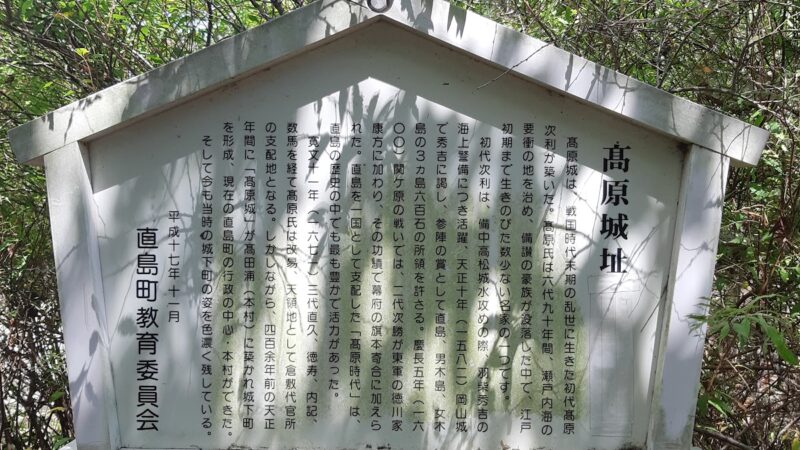
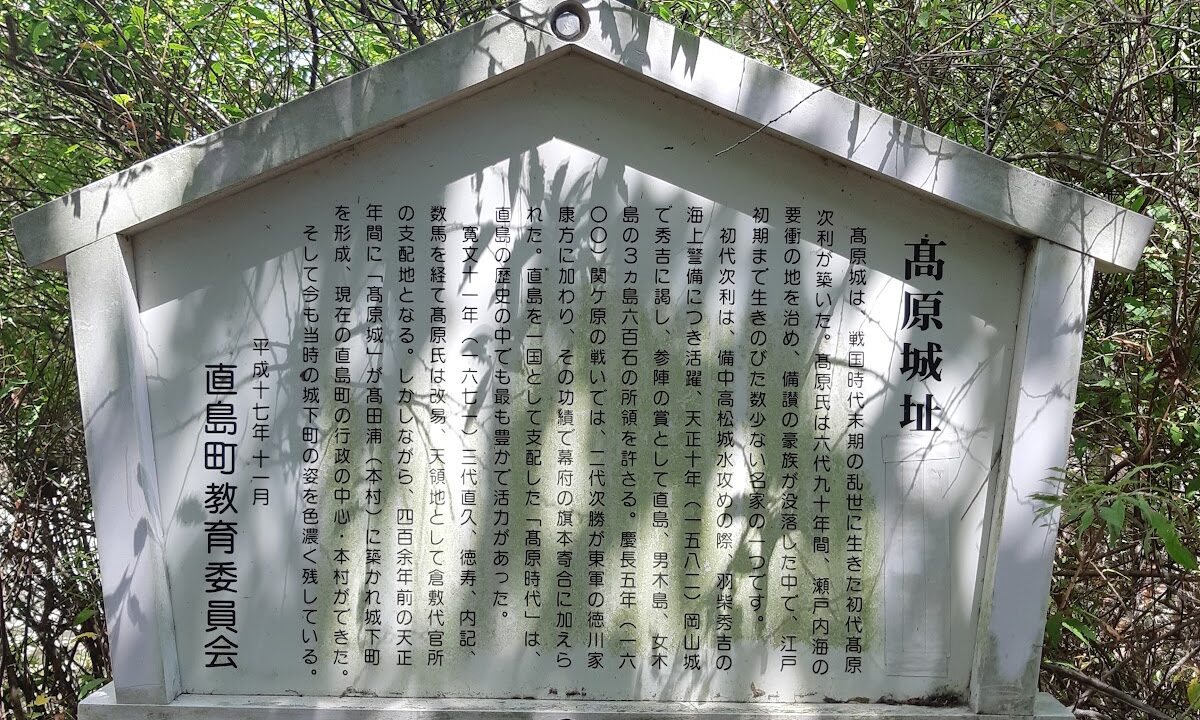
There are explanatory signs and markers at the castle ruins, allowing visitors to identify remains such as baileys. However, many of the remains are located within residential areas and woodlands, and clearly identifiable parts are limited.
Preservation Status and Challenges
Many parts of Takahara Castle’s remains have disappeared, and its preservation status is not necessarily good. Due to the expansion of residential areas and development, it is difficult to completely restore the castle to its original form.
However, the remaining remains are valuable cultural assets that convey the history of Naoshima Island, and appropriate preservation and utilization are required. It holds significant value as a resource for local history education and tourism, and further preservation efforts are anticipated.
Naoshima’s History and Takahara Castle
Takahara Castle played a crucial role in Naoshima’s history. The Honmura district, which developed as a castle town, still functions as the center of Naoshima today.
Naoshima in the Middle Ages
In the Middle Ages, Naoshima, as a key point for maritime traffic in the Seto Inland Sea, was influenced by various powers. During the period of the Takahara clan’s rule, it is presumed that they had complex relationships with surrounding powers over maritime traffic rights and fishing rights.
The waters around Naoshima were also a rich fishing ground, and fishing was an important industry. It is thought that the rulers of Takahara Castle also managed these marine resources.
Changes Since the Early Modern Period
With the end of the Sengoku period (Warring States period), Takahara Castle is believed to have been abandoned. During the Edo period, Naoshima came under the control of the Takamatsu Domain, and the Honmura district developed as a rural town.
Since the Meiji era, Naoshima has undergone a dramatic transformation as it was swept by the wave of modernization. Especially since the 20th century, it has developed as an industrial island with the construction of a copper refinery, and today it is also known as an island of contemporary art.
Modern Naoshima and Historical Heritage
While modern Naoshima is internationally known as an “art island,” historical heritage, including Takahara Castle, is also an important cultural resource. The old townscape of the Honmura district presents a valuable landscape that demonstrates historical continuity from the Takahara Castle era.
Naoshima Town is promoting community development that integrates history and contemporary art, and the Takahara Castle ruins may be positioned as part of this effort. The preservation and utilization of historical heritage is attracting attention as an initiative to create new value while protecting the region’s identity.
Current Status and Challenges of Takahara Castle Research
Research on Takahara Castle is not yet sufficiently advanced due to limitations in historical sources. Further research is expected in this field.
Limitations of Historical Sources
Primary sources concerning Takahara Castle and the Takahara clan are extremely limited. Records concerning local powerful families in the medieval period are easily lost, and historical records are particularly scarce for small-scale forces in island regions.
Therefore, much of the detailed history of Takahara Castle and the activities of the Takahara clan currently relies on speculation.
The Need for Archaeological Investigation
Given the limited amount of documentary sources, the importance of archaeological investigation is increasing. Excavation and surveying can reveal the structure, period, and artifacts used in castles.
However, given that many castle sites are now residential areas, large-scale excavations are difficult. The development of research methods combining non-destructive testing and small-scale trial excavations is needed.
Contribution to Regional History Research
Research on Takahara Castle has the potential to contribute not only to the regional history research of Naoshima but also to the overall research on medieval history in the Seto Inland Sea region. This is because it provides clues to understanding the realities of local powers in the island regions of the Seto Inland Sea, the management system of maritime traffic, and the activities of naval forces.
Further comparative research with surrounding castles and port ruins is expected to clarify the historical position of Takahara Castle.
Summary
Takahara Castle was a medieval mountain castle located in Naoshima Town, Kagawa District, Kagawa Prefecture, and served as an important base for monitoring maritime traffic in the Seto Inland Sea. Built by the Takahara clan, it formed the castle town that became the foundation of the present-day Honmura district.
The castle remains include baileys, earthworks, and moats, exhibiting a typical structure for a medieval mountain castle. Its location facing the sea indicates its function as a coastal castle.
Kagawa Prefecture has numerous castles, including Marugame Castle, Takamatsu Castle, Hikida Castle, Yashima Castle, Amagiri Castle, Katsuga Castle, and Yusa Castle, and Takahara Castle, as one of them, occupies an important position in understanding the medieval history of Kagawa Prefecture.
The current Takahara Castle site is adjacent to a residential area, and many of the remains have disappeared, but the remaining structures are valuable cultural assets that convey the history of Naoshima. Due to limitations in historical sources, research has not progressed sufficiently, but further advancements in archaeological surveys and local history research are anticipated.
Even in the modern era, as Naoshima develops as an “island of art,” historical heritage sites, including Takahara Castle, remain important elements in shaping the region’s identity. It is necessary to re-recognize the value of Takahara Castle as one of the elements supporting the charm of Naoshima, where history and modernity coexist.