A Complete Guide to the History and Highlights of Yusa Castle (Takamatsu City, Kagawa Prefecture) | From the Nanboku-cho Period to the Present
Located in Konan-cho, Takamatsu City, Kagawa Prefecture, Yusa Castle is a flatland castle that played an important role as a strategic point in Sanuki Province from the Nanboku-cho period to the Sengoku period. Currently, the Konan Historical and Folk Museum stands on the site, preserving the earthworks that remain from the past and conveying the history of the region. This article provides a detailed explanation of the history of Yusa Castle from its construction to the present day, its structure, and the remains that can be seen on site.
Historical Background and Construction of Yusa Castle
Origins of the Yusa Clan and Entry into Sanuki
The history of Yusa Castle dates back to the turbulent period of the Nanboku-cho period. Mashiko Shimotsuke-no-kami Akisuke, the ancestor of the Yusa clan, participated in the Battle of Toji Temple in Kyoto in 1336, following Ashikaga Takauji, and was killed in action. For this service, Akisuke’s son, Yajiro Hidesuke, was granted Ihara Manor in Kagawa County, Sanuki Province. Yajiro Hidesuke accompanied Hosokawa Yoriharu, the lord of Awa Province, to Shikoku. In recognition of his father’s achievements, he was granted territory in Sanuki Province. At this time, he changed his surname to “Yusa,” after the name of his territory, becoming the ancestor of the Yusa clan. The Yusa clan was originally a branch of the Mashiko clan of Shimotsuke Province (present-day Tochigi Prefecture), and is a typical example of a samurai group from the Kanto region that migrated to Shikoku during the Nanboku-cho period (Northern and Southern Courts period).
Construction and Location of Yusa Castle
After Yusa Hidesuke entered Sanuki Province, he established a residence in Yusa, Konan-cho, which is considered the beginning of Yusa Castle. The exact construction date is uncertain, but it is estimated to be the mid-1300s during the Nanboku-cho period.
Yusa Castle was built as a flatland castle. Yusa, Konan-cho, is located in a corner of the Sanuki Plain, situated on a slightly elevated area overlooking the surrounding rice paddies. Located approximately 5.5 km southwest of Ōsayama Castle, Yusa Castle was strategically positioned to coordinate with other strongholds within Sanuki Province. As a flatland castle, Yusa Castle served more as a base for territorial management than for combat, functioning as the ancestral residence of the Yusa clan.
The Development of the Yusa Clan and the Role of the Castle
From the Muromachi Period to the Sengoku Period
The Yusa clan maintained their power as a prominent local lord in Sanuki Province from the Nanboku-chō period onward. Based on the Ihara Manor, acquired through their service to Ashikaga Takauji, they expanded their influence into the surrounding areas. Yusa Castle played a crucial role not merely as a military base, but as a center of territorial control and as the residence of the Yusa family.
Throughout the Muromachi period, the Yusa clan, as local lords of Sanuki, established themselves in the local community, fulfilling their responsibilities as lords, including managing agricultural production, collecting taxes, and maintaining local security. It is believed that the residences of their retainers were located around Yusa Castle, forming a small but castle-town-like settlement. ### Chosokabe Motochika’s Invasion of Shikoku and the Battle of Yusa Castle
The most important event in the history of Yusa Castle is the attack by Chosokabe Motochika in 1583. Chosokabe Motochika of Tosa, aiming to unify Shikoku, intensified his invasion of Sanuki Province, conquering castles one after another.
At this time, the lord of Yusa Castle was Yusa Hidetake. Despite the fierce attack by the Chosokabe army, Hidetake’s skillful defensive tactics prevented the Chosokabe forces from capturing Yusa Castle. The strong resistance of Yusa Castle, a flatland castle, was so formidable that it forced Chosokabe Motochika to negotiate a truce.
This battle demonstrates that Yusa Castle was not merely a residence, but a fortress equipped with defensive facilities capable of withstanding actual combat. The defensive structures such as earthworks and moats functioned effectively, allowing a small number of defenders to repel a larger army.
Structure and Remains of Yusa Castle
Characteristics as a Flatland Castle
Yusa Castle was built as a typical flatland castle. Unlike mountain castles, castles built on flat land prioritize everyday habitability and the convenience of managing the territory.
The castle’s central area was the main enclosure, surrounded by earthen ramparts and moats. Due to its location in the plains of Sanuki, it was not possible to utilize high stone walls or natural fortifications, but the castle achieved practical defensive capabilities through the skillful placement of artificial defensive structures.
Existing Earthen Ramp and Remains
Currently, the Konan Historical and Folk Museum stands on the site of Yusa Castle, but some remains from the time still exist. The most important remains are the earthen ramparts. A portion of the earthen ramparts, built as a defensive structure for the castle, is preserved on the museum grounds, providing valuable clues to understanding the scale and structure of the castle at that time.
Existing Earthen Ramp and Remains
Currently, the Konan Historical and Folk Museum stands on the site of Yusa Castle, but some remains from the time still exist. The most important remains are the earthen ramparts. A portion of the earthen ramparts, built as a defensive structure for the castle, is preserved on the museum grounds, providing valuable clues to understanding the scale and structure of the castle at that time. Earthen ramparts are defensive structures built by piling up earth, serving to prevent enemy intrusion and also to ensure visibility from within the castle. The earthen ramparts of Yusa Castle are relatively high for a flatland castle, supporting its reputation as a strong fortress.
Furthermore, during the construction of the local history museum, some of the garden stones and trees from the old residence were utilized, allowing us to imagine the atmosphere of the Yusa clan’s time as a residence. These remains tell the story that Yusa Castle was not merely a military facility, but also a place of residence for the Yusa clan.
The Current State of the Konan Historical and Folk Museum and Yusa Castle Ruins
Construction of the Local History Museum and the Image of the Castle
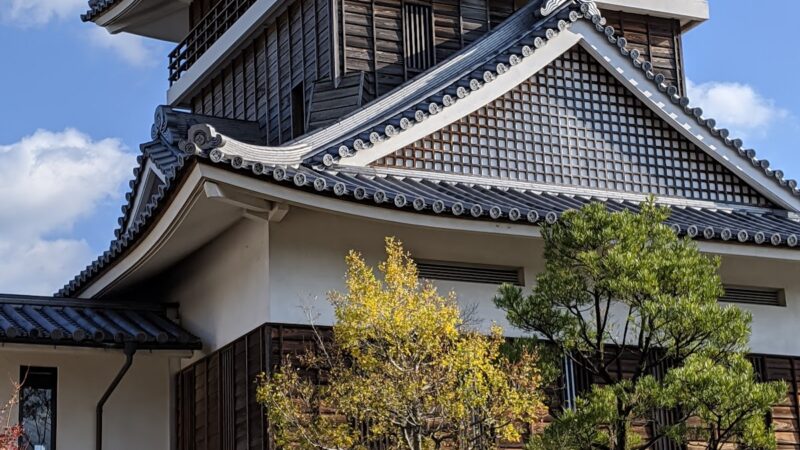
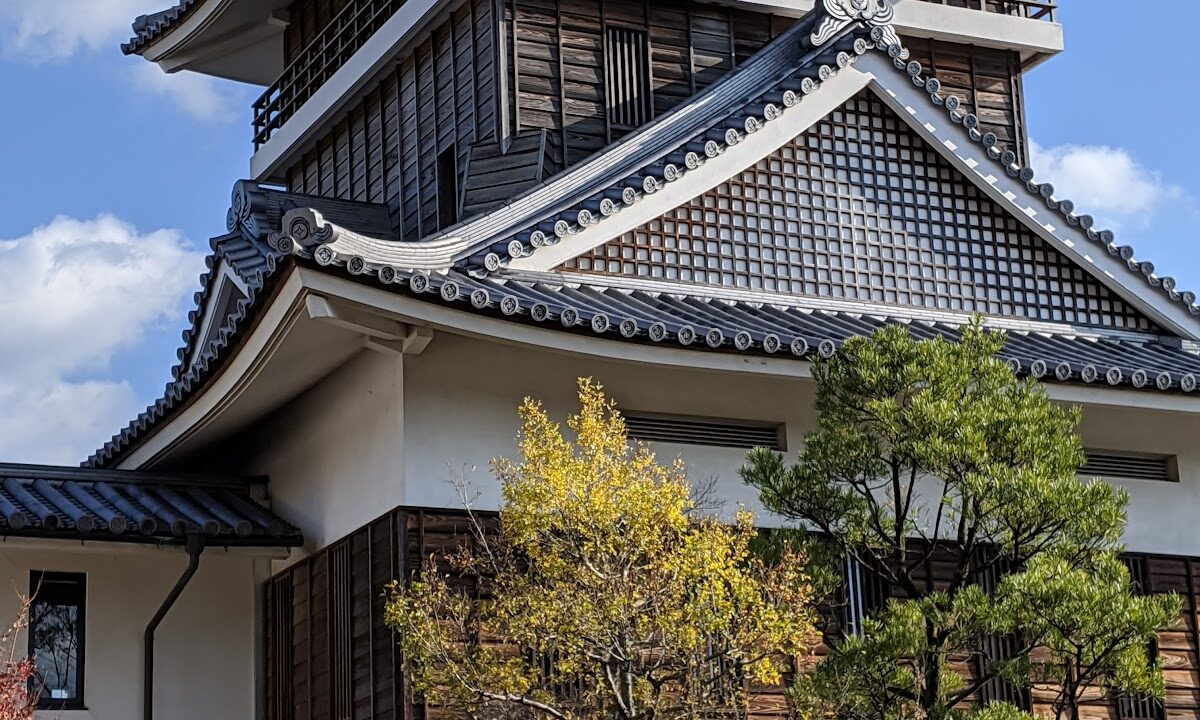
On May 3, 1998, the Takamatsu City Konan Historical and Folk Museum opened on the site of Yusa Castle. This building was designed to resemble a castle, and its exterior, modeled after a castle tower, is a distinctive feature. The mock castle tower-style building serves as a visual symbol of the castle that once stood on this site.
In constructing the local history museum, the garden was created by utilizing the castle’s earthworks, garden stones from the old residence, and some of the trees. While a new building, the incorporation of historical elements ensures that the history of Yusa Castle is passed down to the present day.
Museum Exhibits
The Konan Historical and Folk Museum features a history exhibition room, a folk exhibition room, and a library, allowing visitors to learn about the history and culture of Konan Town and the surrounding area.
In the entrance lobby, visitors are greeted by the “Yusa Furukawa Great Lion,” designated as a tangible folk cultural property of Kagawa Prefecture. This great lion is a valuable folk artifact symbolizing the region’s traditional culture.
The history exhibition room showcases the history of Yusa Castle, materials related to the Yusa clan, and the history of Sanuki from the Nanboku-cho period to the Sengoku period. Detailed information about Yusa Castle, including the Yusa clan’s lineage, the battles with Chosokabe Motochika, and the castle’s transformations, can be obtained.
The Folklore Exhibition Room displays materials related to the lives of the people of Konan-cho, allowing visitors to learn about the local folk culture through agricultural tools, daily necessities, and festival equipment.
Visitor Information and Access
The Takamatsu City Konan Historical and Folk Museum is located at 253-1 Yusa, Konan-cho, Takamatsu City, Kagawa Prefecture 761-1402. It is relatively easy to access, being close to Takamatsu Airport.
The museum regularly holds special exhibitions and cultural events, offering opportunities to experience traditional culture such as the “Yusa Castle Monthly Tea Ceremony.” The Yusa Castle Monthly Tea Ceremony is organized by the Yusa Castle Monthly Tea Ceremony Club and co-sponsored by the museum, and is held in the 2nd Training Room (Japanese-style room).
Yusa Castle and the Sanuki Castle Network
Relationship with Other Castles in Sanuki Province
Yusa Castle played a part in the castle network within Sanuki Province. The location of Yusa Castle, approximately 5.5 km southwest of Ousayama Castle, allowed for mutual cooperation, enabling the transmission of reinforcements and information in emergencies.
Sanuki Province, facing the Seto Inland Sea, is a strategically important location, and many castles have been built there since ancient times. Flatland castles like Yusa Castle, when combined with mountain castles, played a role in balancing peacetime territorial management with wartime defense.
Place in Shikoku History
The history of Yusa Castle is also important for understanding the medieval history of Shikoku as a whole. The history of Yusa Castle encapsulates important phases in Shikoku’s history, including the existence of samurai groups who migrated from Kanto to Shikoku during the Nanboku-cho period, the growth of local lords during the Muromachi period, and the Chosokabe clan’s attempt to unify Shikoku during the Sengoku period.
In particular, the battles with Chosokabe Motochika are valuable examples for understanding the invasion routes from Tosa to Sanuki and the nature of the resistance of the local lords of Sanuki. The fact that Yusa Castle did not fall and a peace agreement was reached demonstrates the defensive capabilities of Sanuki’s castles and the unity of the local samurai groups.
Points to Note When Visiting Yusa Castle
Recommended Exploring the Castle Ruins
When visiting the Yusa Castle ruins, we recommend first viewing the exhibits at the Konan Historical and Folk Museum. After gaining basic knowledge about the history and structure of Yusa Castle, viewing the actual remains will provide a deeper understanding.
Remnants of earthworks remain around the museum, and observing these allows you to appreciate the defensive facilities of a flatland castle. The old garden stones and trees used in the garden also provide clues to the time when the Yusa clan resided there.
The replica castle tower-style building, while not actually part of the original Yusa Castle, serves as a local landmark and a popular spot for photography.
Nearby Historical Sites
When visiting the Yusa Castle ruins, exploring the surrounding historical sites will allow you to gain a deeper understanding of Sanuki’s history. The area around Konan Town has numerous historical sites dating from the medieval to early modern periods, making it an ideal base for exploring Sanuki’s history.
Takamatsu City also has many other castle ruins, allowing you to comprehensively learn about Sanuki’s castle culture. Comparing flatland castles like Yusa Castle with mountain castles will help you understand the differences in their characteristics and roles.
Current Status and Challenges of Yusa Castle Research
Documentary Sources and Archaeological Investigations
Research on Yusa Castle has primarily relied on documentary sources. Records of the Yusa clan’s lineage and their battles with Chosokabe Motochika remain in military chronicles and local historical materials, and the castle’s history has been revealed through analysis of these.
However, archaeological excavations have been limited, and many aspects of the castle’s detailed structure and transformations remain unclear. While some investigations were conducted during the construction of the local history museum, a full-scale academic investigation remains a future challenge.
Efforts for Preservation and Utilization
The city of Takamatsu is taking the lead in the preservation and utilization of the Yusa Castle ruins. Through the operation of the Konan Historical and Folk Museum, efforts are being made to widely convey the region’s history to citizens while also preserving the remaining structures.
The remains, such as earthworks, are susceptible to weathering and vegetation, requiring proper maintenance. The local history museum conducts regular inspections and preservation work to pass these remains on to future generations.
Furthermore, attempts are being made to connect the history of Yusa Castle to modern life through cultural events and special exhibitions. Traditional cultural events such as the Yusa Castle Monthly Tea Ceremony play a role in connecting the past and present by conducting cultural activities in a historical location.
Summary: The Historical Significance of Yusa Castle
Yusa Castle is an important castle that witnessed the history of Sanuki Province from the Nanboku-cho period to the Sengoku period. Beginning as a base for samurai groups who migrated from the Kanto region to Shikoku, Yusa Castle developed into the residence of powerful local lords and demonstrated its importance as a formidable fortress that repelled the invasion of Chosokabe Motochika.
Currently, the Konan Historical and Folk Museum, built on the castle site, is an important facility that conveys the history of Yusa Castle to the present day. Along with the remaining earthworks and other structures, visitors can feel the historical significance of this place.
The history of Yusa Castle is a valuable case study for understanding Japanese medieval history, particularly the movements of local samurai groups from the Nanboku-cho period to the Sengoku period. It is also indispensable for studying the history of castles in Shikoku and the regional history of Sanuki.
When visiting Konan-cho in Takamatsu City, be sure to stop by the Konan Historical and Folk Museum and experience the history of Yusa Castle. The replica castle tower, the remaining earthworks, and the comprehensive exhibits inside the museum will surely bring the history of over 600 years ago back to life.