Ichinoseki Castle (Iwate Prefecture) Complete Guide: History, Highlights, and Access – A Thorough Explanation
Located in the heart of Ichinoseki City, Iwate Prefecture, Ichinoseki Castle is a fortress built on a small hill called Tsuriyama. While it is now developed as Tsuriyama Park and serves as a place of relaxation for citizens, a long history spanning from the Heian period to the Edo period lies behind it. This article provides a detailed introduction to Ichinoseki Castle, including its history, structure, highlights, and access methods.
Basic Information on Ichinoseki Castle
Ichinoseki Castle is also known as Tsuriyama-kan, Tsuriyama Castle, Takasaki Castle, and Ichinoseki Fortress, and belonged to Mutsu Province (Rikuchu). It is a mountain castle built on Tsuriyama, approximately 90 meters above sea level, and is situated in a strategic location facing the Iwai River.
- Location: Ichinoseki City, Iwate Prefecture
- Castle Structure: Mountain Castle
- Construction Period: Early Heian Period (tradition), effectively medieval
- Main Lords: Onodera clan, Kasai clan, Date clan, Tamura clan
- Current Status: Developed as Tsuriyama Park
History of Ichinoseki Castle
Heian Period: Legend of Sakanoue no Tamuramaro
There are various theories regarding the origin of Ichinoseki Castle, but the oldest legend states that Sakanoue no Tamuramaro established a camp in this area during his eastern expedition against the eastern barbarians in the early Heian period. Furthermore, records show that during the Tenki era (1053-1058), Iwai Goro Ienori, the younger brother of Abe no Sadato, built a fort in this area during the Former Nine Years’ War.
There is also a legend that Minamoto no Yoriyoshi and his son Yoshiie established a camp here, but historical records are scarce, and confirmation of these details has not been obtained. However, there is no doubt that this area was a strategically important military location from ancient times to the Middle Ages.
Middle Ages: The Era of the Kasai and Onodera Clans
Towards the end of the Muromachi period, Ichinoseki Castle became part of the territory of the Kasai clan, and the Onodera clan, a subordinate of the Kasai clan, made it their residence. The Onodera clan is believed to have been entrusted with governing this region as important retainers of the Kasai clan.
The Kasai clan was a powerful local family that ruled this region after the fall of the Oshu Fujiwara clan, but they were dispossessed of their lands in 1590 during Toyotomi Hideyoshi’s pacification of Oshu. As a result, the surrounding area, including Ichinoseki Castle, came under the control of the Date clan.
Early Edo Period: The Establishment of the Ichinoseki Domain and the Date Disturbance
The history of Ichinoseki Castle underwent significant changes during the Edo period. In 1641 (Kanei 18), Date Munekatsu, the tenth son of Date Masamune, established the Ichinoseki Domain with a 30,000 koku territory. Munekatsu governed the Ichinoseki Domain independently from the Sendai Domain and developed the castle town.
However, in 1671 (Kanbun 11), the Date Disturbance (Kanbun Incident) led to Munekatsu’s downfall and the confiscation of his territory. The Date Disturbance was a family dispute that divided the Sendai Domain and is one of the most representative family disputes of the Edo period, known for incidents such as the sword attack by Harada Kai. As a result of this incident, the Ichinoseki Domain ceased to exist after only one generation.
Late Edo Period: Tamura Clan Rule
In 1682 (Tenna 2), the Tamura clan, a branch of the Date clan, became the lord of the Ichinoseki Domain, and the Ichinoseki Domain was restored. The Tamura clan ruled Ichinoseki as a daimyo with a 30,000 koku domain until the Meiji Restoration.
During the Tamura clan’s rule, the town was further developed as a castle town, flourishing as a center of commerce and culture. The domain’s administrative office was located at the northeastern foot of Tsuriyama Mountain, and the area west of the current Nishijo Hospital is considered to be its former site.
After the Meiji Restoration: Transformation into Tsuriyama Park
After the Meiji Restoration, the Ichinoseki Domain was abolished due to the abolition of the feudal system and the establishment of prefectures, and Ichinoseki Castle was also abandoned. Subsequently, the castle site was developed into a park, which is now Tsuriyama Park. It is a popular place of relaxation for citizens and is also known as a famous cherry blossom viewing spot.
Structure and Layout of Ichinoseki Castle
Location and Topography
Ichinoseki Castle was a mountain castle built on Tsuriyama Mountain (approximately 90 meters above sea level) facing the Iwai River. With a relative height of approximately 60 meters, it was a strategically important location that utilized the river as a natural moat. At the summit of the mountain lies a vast, flat area called “Senjojiki,” which is believed to have been the main enclosure.
Castle Structure
Ichinoseki Castle possessed the typical structure of a medieval mountain castle and consisted of the following elements:
- Main Enclosure (Senjojiki): A flat area at the summit, where Tamura Shrine is currently located.
- Earthworks: Traces of earthworks separating each enclosure remain.
- Enclosures: Multiple enclosures were arranged in terraces.
- Moat: Traces of a dry moat remain in some areas.
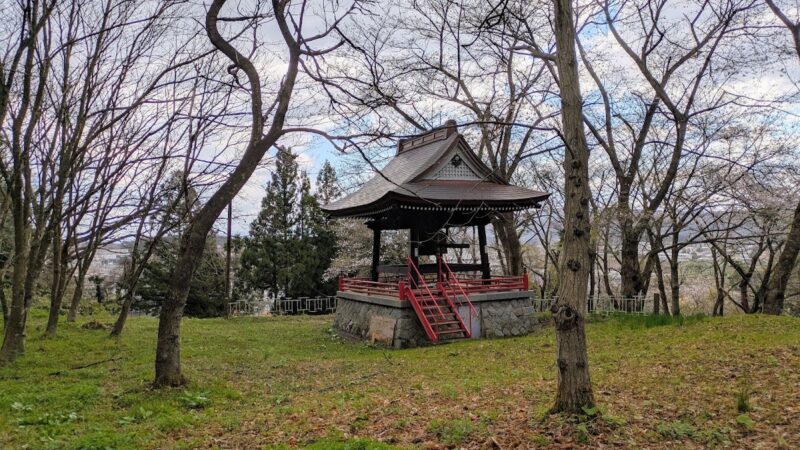
- Beacon Tower: Located behind the Tamura Shrine’s main hall at Senjojiki.
In the early modern period, the domain’s administrative office was established at the foot of the mountain, adding elements of a flatland castle. It can be said that Ichinoseki Castle during the Edo period possessed characteristics of both a mountain castle and a flatland castle.
Highlights of Ichinoseki Castle
Senjojiki and Tamura Shrine
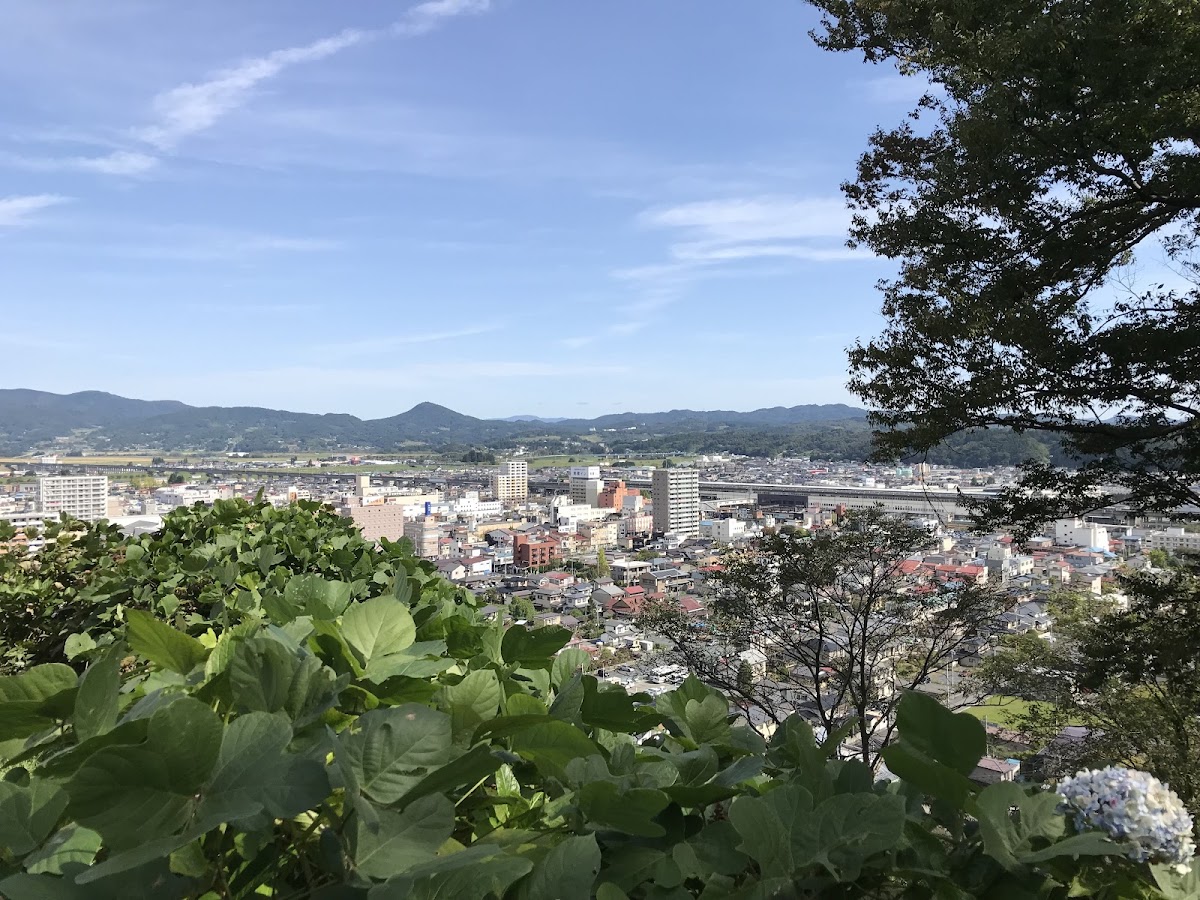
Senjojiki, located at the top of Tsuriyama Park, is the site of the main enclosure of Ichinoseki Castle. From this vast, flat area, visitors can enjoy a panoramic view of Ichinoseki city, captivating them with its magnificent scenery. Here, Tamura Shrine is enshrined, dedicated to the Tamura clan, the lords of the Ichinoseki domain.
Behind the shrine’s main hall, a “beacon tower” remains, a reminder that this castle once served as a center for information transmission.
Remains and Signboards
Within the park, traces of earthworks and enclosures remain, allowing visitors to understand the castle’s structure. Signboards and explanatory panels placed throughout the park provide information about the castle’s history and structure.
The remains of a well also exist, a valuable historical site that allows us to imagine life in those times. Some areas are protected by fences, demonstrating a balance between maintenance and preservation.
Charm as a Cherry Blossom Viewing Spot
Tsuriyama Park is known as one of the most famous cherry blossom viewing spots in Iwate Prefecture. In spring, approximately 300 cherry trees bloom, attracting many visitors. The view of the cherry blossoms and Ichinoseki city from Senjojiki is spectacular, and a visit during cherry blossom season is highly recommended.
Scenic Viewpoint
From the observation deck at Senjojiki, you can enjoy a 360-degree panoramic view of Ichinoseki city. The view, encompassing the Iwai River and distant mountains, truly conveys the strategic importance of this castle’s location.
Access to Ichinoseki Castle
Access by Train
- Approximately 11 minutes on foot (approx. 877 meters) from Ichinoseki Station on the JR Tohoku Main Line/Ofunato Line
- Head southwest from the station and proceed along National Route 284 to the entrance of Tsuriyama Park.
Access by Car
- Approximately 10 minutes from Ichinoseki IC on the Tohoku Expressway
- Proceed approximately 200 meters south from the Kami-no-hashi intersection on National Route 284 to reach the entrance to the walking trail.
Parking
Tsuriyama Park has two parking lots. The path from the parking lot to the Senjojiki observation deck is quite steep, so comfortable walking shoes are recommended. While there may be snow in winter, snow removal is regularly carried out.
Important Notes and Recommended Time to Visit
Clothing and Equipment for Your Visit
- Comfortable walking shoes are essential due to the steep slopes.
- Insect repellent is recommended during summer.
- Non-slip shoes and warm clothing are necessary during winter.
Recommended Time to Visit
- Spring (Early to Mid-April): Cherry blossom season. Enjoy the most beautiful scenery.
- Autumn (October to November): Beautiful autumn foliage, mild weather, ideal for strolling.
- Summer: Lush greenery and pleasant cool breezes.
- Winter: Snowscapes are charming, but caution is needed regarding footing.
Nearby Tourist Attractions
Ichinoseki City Museum
This facility offers detailed information about the history of Ichinoseki Castle and the Ichinoseki Domain. Materials related to the Tamura clan and the Date Incident are also on display.
Genbi Gorge
A representative scenic spot in Ichinoseki City, designated as a national scenic spot and natural monument. It’s about a 15-minute drive from Ichinoseki Castle.
Geibikei Gorge
A gorge counted among Japan’s 100 most beautiful landscapes, offering boat rides. It’s about a 30-minute drive from Ichinoseki Castle.
Motsuji Temple
One of the constituent assets of the World Heritage site “Hiraizumi,” this temple boasts a beautiful Jodo garden. It’s about a 20-minute drive from Ichinoseki Castle.
Cultural Value of Ichinoseki Castle
Importance in Regional History
Ichinoseki Castle played a crucial role as the political and military center of southern Iwate Prefecture from ancient times to the early modern period. Especially during the Edo period, it served as the administrative, economic, and cultural center of the Ichinoseki Domain.
Connection to the Date Disturbance
As a castle deeply involved in the Date Disturbance, a representative family dispute of the Edo period, it holds historical significance. This incident later became the subject of Kabuki and Kōdan (traditional Japanese storytelling), and became widely known.
Value in Modern Times
Currently, the Ichinoseki Castle ruins, now known as Tsuriyama Park and beloved by citizens, are a valuable cultural asset that conveys the region’s history and plays an important role as a place of relaxation for residents. It is also known as a famous cherry blossom viewing spot, attracting many visitors throughout the year.
Points to Note When Visiting Ichinoseki Castle
Estimated Time Required
It takes approximately 15-20 minutes to walk from the parking lot to Senjōjiki. Including time spent at Senjōjiki, allow about 1-1.5 hours in total. During cherry blossom season or if you want to stroll leisurely, about 2 hours will allow you to enjoy it at your own pace.
Photography Tips
- Panoramic view of the city from Senjojiki
- Collaboration of Tamura Shrine and cherry blossoms (spring)
- View from the signal fire platform
- Full view of Tsuriyama Mountain from the walking path
To Deepen Your Understanding of History
Preparing by studying at the Ichinoseki City Museum before visiting the castle ruins will allow you to understand the history more deeply. Also, carefully reading the explanatory signs placed throughout the site will deepen your understanding of the castle’s structure and history.
Summary
Ichinoseki Castle, located in Ichinoseki City, Iwate Prefecture, is a castle with a long history, beginning with the legend of Sakanoue no Tamuramaro and continuing through the Kasai, Onodera, Date, and Tamura clans. Currently, it is maintained as Tsuriyama Park and is popular with many people for its views from Senjojiki and its cherry blossoms.
With easy access within walking distance of Ichinoseki Station, it boasts rich nature and historical remains, making it a recommended spot not only for castle enthusiasts but also for general tourists. This site was the stage for the Date Incident, a significant historical event during the Edo period, making it a must-see for history buffs.
When you visit Ichinoseki, be sure to visit Tsuriyama Park and enjoy the magnificent view while reflecting on the history of Ichinoseki Castle. Visiting during cherry blossom season is especially wonderful. Ichinoseki Castle ruins, where you can fully experience the charm of history and nature in southern Iwate Prefecture, is a hidden gem of Tohoku and well worth a visit.