Nabekura Castle (Tono City, Iwate Prefecture) Complete Guide: A Thorough Explanation of History, Structure, and Highlights
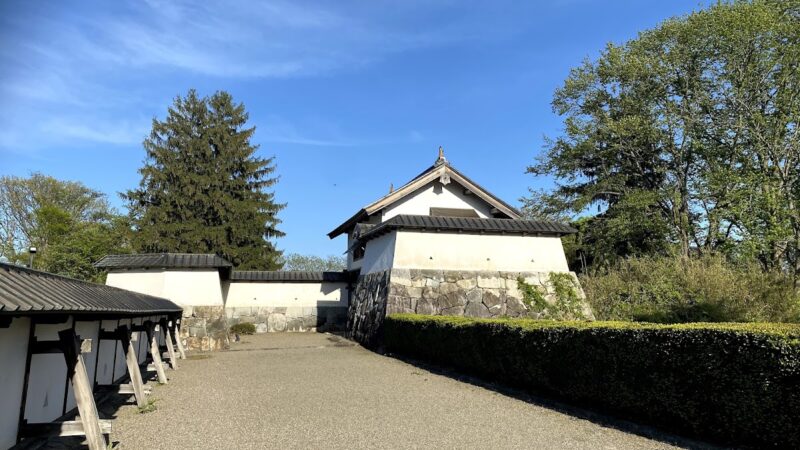
Nabekura Castle, built on Mount Nabekura at the southern edge of Tono City, Iwate Prefecture, is one of the largest medieval mountain castles in Iwate Prefecture. Also known as Tono Castle and Yokota Castle, it is currently designated a national historic site. Built by Asonuma Hirozato during the Tensho era (1573-1592), this castle served as the residence of the Tono Nanbu clan for over 240 years during the Edo period, and remains a valuable historical site as an active castle until its abandonment in 1869.
This article provides a comprehensive explanation of the charm of this magnificent castle, from its historical background and layout to its current highlights.
Overview and Location of Nabegura Castle
Nabegura Castle is located in Kokoji, Matsuzaki-cho, Tono City, Iwate Prefecture. It is built on Mount Nabegura (elevation 344 meters), an isolated hill at the foot of Mount Momiyama, which rises in the southern part of the Tono Basin. With a relative height of approximately 80 meters, it occupies a strategically important location overlooking the Sarugaishi River, which flows through the Tono Basin.
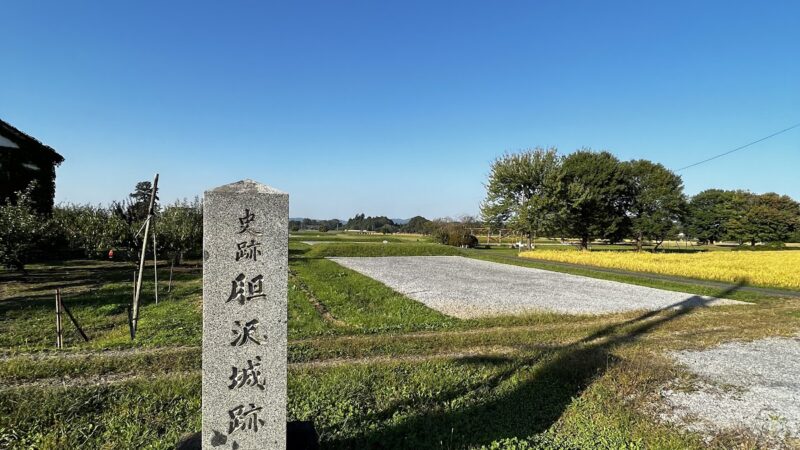
The castle ruins are currently maintained as “Nabegura Park,” a place of relaxation for Tono citizens, and are also designated as a “Tono Heritage Site” by Tono City. The remains of the mountain castle are remarkably well-preserved, with clearly visible defensive structures such as baileys, earthworks, dry moats, and trenches.
Value of National Historic Site Designation
Nabegura Castle was designated a national historic site because it is one of the largest multi-bailey mountain castles in Iwate Prefecture, and because it retains layers of remains from both the medieval castle of the Asonuma clan and the early modern castle of the Tono Nanbu clan. In particular, it is a rare example nationwide as a mountain castle that was actually used until the Meiji Restoration.
History and Background of Nabekura Castle
Construction by the Asonuma Clan
The history of Nabekura Castle begins in the Tensho era (1573-1592) when Asonuma Hirozato moved his residence from Kokoji Temple in Matsuzaki Town. The Asonuma clan was a powerful family that had ruled the Tono region since the Kamakura period. Initially called “Yokota Castle,” it was later renamed “Nabekura Castle.”
The Asonuma clan, as lords controlling Tono-ho (the twelve villages of Tono), established a strong system of control in the region. Nabekura Castle was not merely a military base, but also served as the political and economic center of the Tono region.
The Decline of the Asonuma Clan and the Arrival of the Nanbu Clan
After the Battle of Sekigahara in 1600, the political situation in the Tohoku region changed dramatically. The Asonuma clan eventually fell into decline, and the Tono region came under the control of the Nanbu clan.
In 1627 (Kanei 4), Nanbu Naoyoshi entered Tono from Hachinohe and made Nabekura Castle his residence. From then on, it served as the residence of the Tono Nanbu clan, with a stipend of 12,500 koku, for over 240 years until its abandonment in 1869 (Meiji 2).
Castle Development during the Tono Nanbu Clan Era
The Tono Nanbu clan was a branch of the Hachinohe clan of Nejo (Hachinohe City, Aomori Prefecture), and after entering Nabekura Castle, they carried out large-scale renovations to the castle. Interestingly, the same family members who had occupied various enclosures at Nejo were assigned to different enclosures at Nabekura Castle. This group-enclosure layout was a unique castle management method that enhanced family unity and defensive capabilities.
Throughout the Edo period, Nabekura Castle functioned as the center of the Tono domain’s administration, and the castle town also developed. The foundation of the current Tono city area was formed during this period.
Meiji Restoration and Castle Abandonment
In 1869 (Meiji 2), Nabekura Castle was abandoned due to the return of the feudal domains to the Emperor. However, the castle ruins were preserved as an important historical site in the region, and remain so to this day. Since the Meiji era, the castle ruins have been gradually developed into a park, becoming a place cherished by local residents.
Structure of Nabekura Castle
Nabekura Castle is a typical multi-enclosure mountain castle, with the main enclosure (Honmaru) located at the highest point, the second enclosure (Ninmaru) to the south, and the third enclosure (Sanmaru) to the east. While the remains visible today are mainly from the early modern period onward, it is believed that some medieval remains also exist.
Honmaru (Main Enclosure)
The Honmaru was located at the highest point of Mount Nabekura and served as the central defensive base of the castle. The remains of the main gate (Otemon) can be seen on the east side, and the remains of the rear gate (Karametemon) on the west side. Earthen ramparts surrounded the Honmaru, indicating its high defensive capabilities. From the main keep (Honmaru), one can enjoy a panoramic view of the Tono Basin, making it an ideal location for monitoring the Sarugaishi River and surrounding roads. This location is one of the reasons why Nabekura Castle functioned as a strategically important military point.
Second Bailey (Ninokuruwa)
The second bailey (Ninokuruwa) is located south of the main keep and is currently the burial ground of the Tono Nanbu family. This burial ground is historically significant, as it contains the remains of successive heads of the Tono Nanbu clan.
The second bailey is also surrounded by earthen ramparts and functioned as an important enclosure second only to the main keep. During the Tono Nanbu clan’s rule, it is believed that the residences of senior retainers and buildings for administrative affairs were located here.
Third Bailey (Sannomaru)
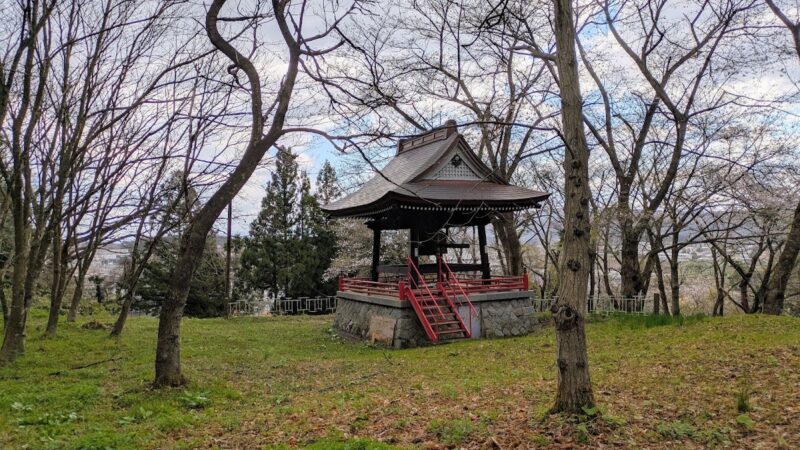
The third bailey (Sannomaru) is located east of the main keep and is now home to the “Nabekura Observation Deck.” This observation deck is a turret-like structure modeled after a castle tower, offering panoramic views of Tono city.
The remains of a training ground (baba) leading from the third bailey to the second bailey can also be seen, clearly illustrating the functional layout of the castle. The third bailey played a crucial role as the castle’s entrance and a key point for outer defense.
Earthworks, Dry Moats, and Moats
As defensive structures of Nabekura Castle, earthworks surrounding each bailey, dry moats to prevent enemy intrusion, and moats blocking the ridges are well-preserved. These remains exhibit the characteristics of a medieval castle built during the Asonuma clan era and are valuable resources for learning about mountain castle defensive techniques.
In particular, the moats were defensive structures built to prevent enemy intrusion along the ridges, and show ingenious use of the topography of Mount Nabekura. The height of the earthworks and the depth of the dry moats also indicate that this castle functioned as a full-fledged military base.
Group Bailey Layout
A distinctive feature of Nabekura Castle is its group bailey layout. This is a form in which multiple baileys are arranged while maintaining independence, with members of the Tono Nanbu clan each responsible for a specific bailey. This layout, inherited from Nejo Castle, was a unique castle management method of the Hachinohe clan, strengthening family unity and enhancing defensive capabilities.
Each enclosure was demarcated by earthworks and moats, allowing each to function as an independent defensive stronghold. This offered the advantage that even if one enclosure was breached, defenses could continue in other enclosures.
Current Nabekura Park and Highlights
Nabekura Observation Deck
The “Nabekura Observation Deck,” built in the third enclosure, is a turret-like structure modeled after a castle keep and is one of the main attractions when visiting Nabekura Castle. From the observation deck, you can enjoy a panoramic view of Tono city and the beautiful scenery of the Tono Basin.
The observation deck also houses exhibits on the history of Nabekura Castle and the culture of the Tono region, deepening your understanding of the castle ruins. The view from the observation deck is particularly spectacular during cherry blossom season and autumn foliage season.
Tono Nanbu Family Cemetery
The Tono Nanbu Family Cemetery, located in the second bailey, is a sacred place where successive heads of the Tono Nanbu clan rest. The cemetery is enveloped in a tranquil atmosphere, allowing visitors to reflect on the history of the Nanbu clan, who ruled Tono for over 240 years.
Information boards are installed around the cemetery, allowing visitors to learn about the achievements of each head of the clan and the history of the Tono Nanbu clan.
Remains of Enclosures, Earthworks, and Moats
Even now, as Nabekura Park, the castle remains are well-preserved. Walking paths are maintained, allowing visitors to tour the main bailey, second bailey, and third bailey, and actually see defensive structures such as earthworks, dry moats, and moats.
The earthworks around the main bailey are particularly high, giving a real sense of the castle’s scale at the time. The moats are also clearly visible, making it an ideal place to learn about the defensive techniques of mountain castles.
A Famous Spot for Cherry Blossoms and Autumn Leaves
Nabekura Park is also known as a famous spot for cherry blossoms and autumn leaves. In spring, approximately 200 cherry trees bloom, dyeing the entire castle ruins pink. It is a popular cherry blossom viewing spot for locals and attracts many visitors.
In autumn, the autumn leaves are beautiful, and the view of the Tono Basin from the observation deck is particularly spectacular. You can enjoy a landscape where the changing seasons and historical remains are in harmony.
Access and Visiting Information
Location
- Address: Kokoji, Matsuzaki-cho, Tono City, Iwate Prefecture
- Designation: National Historic Site, Tono Heritage Site
Access Methods
Access by Train
- Approximately 25 minutes on foot from JR Kamaishi Line “Tono Station,” or approximately 5 minutes by taxi
- Local buses are also available from Tono Station (get off at Nabekura Park Entrance)
Access by Car
- Approximately 50 minutes from Tohoku Expressway “Hanamaki IC” via National Route 283
- Approximately 10 minutes from Kamaishi Expressway “Tono IC”
- Parking: Free parking available at Nabekura Park (approximately 50 cars)
Visiting Information
- Admission Fee: Free (Open as a park at all times)
- Nabekura Observation Deck: Opening hours vary depending on the season (please check)
- Estimated Visiting Time: Approximately 1-2 hours
- Toilets: Public toilets available within the park
Points to Note When visiting Nabekura Castle Ruins, it is recommended to wear comfortable walking shoes. As it is a mountain castle, the terrain is uneven, and care must be taken of your footing when viewing the earthworks and moats.
While particularly beautiful during the cherry blossom season in spring and the autumn foliage season, it can also be crowded. If you want to leisurely explore the castle ruins, visiting on weekdays or early in the morning is recommended.
Nabekura Castle and the History and Culture of Tono
Connection to the Tono Monogatari (Tales of Tono)
Tono City is a sacred site for folklore, known for Kunio Yanagita’s “Tono Monogatari.” The Tono Basin, where Nabekura Castle is located, is a region where numerous folk tales remain, including legends of kappa (water imps) and zashiki-warashi (house spirits).
The history of Nabekura Castle is deeply intertwined with this folk culture of Tono. The townscape of Tono, which developed as a castle town, still preserves the scenery that served as the setting for these folk tales.
The Tono Nanbu Clan and Regional Governance
Despite being a small domain with a stipend of 12,500 koku, the Tono Nanbu clan made significant contributions to the cultural and economic development of the Tono region. Their rule laid the foundation for Tono through the development of the castle town, the improvement of roads, and the promotion of industry.
In particular, the development of Tono as a horse-breeding region was largely due to the encouragement of the Nanbu clan, and Tono horses became known as high-quality warhorses.
Preservation Activities as a Cultural Property
Since its designation as a national historical site, the Nabekura Castle ruins have been continuously preserved and maintained by Tono City. Regular archaeological excavations are also conducted, leading to the discovery of new remains and clarification of the castle’s structure.
A preservation society comprised of local residents is also active, working to preserve and utilize the castle ruins through cleaning and guided tours.
Nearby Attractions
Tono City Museum
Located about a 5-minute drive from Nabekura Castle, the Tono City Museum offers a comprehensive learning experience of Tono’s history and folk culture. There are also exhibits related to Nabekura Castle, and visiting before or after your castle ruins will deepen your understanding.
Tono Furusato Village
This open-air museum recreates the traditional rural landscape of Tono, with old houses such as Nanbu Magariya (a type of traditional Japanese house) relocated and preserved. It’s a facility where you can learn about the lives of ordinary people during the Nabekura Castle era.
Kappa-buchi (Kappa Pool)
This is the setting for the famous Kappa legend from the Tono Monogatari (Tales of Tono), located about 10 minutes by car from Nabekura Castle. It’s a popular tourist spot in Tono, attracting many visitors.
Research and Future Prospects of Nabekura Castle
Results of Archaeological Investigations
Recent excavations have advanced our understanding of the structure and changes of Nabekura Castle. In particular, the layered nature of the medieval remains from the Asonuma clan era and the early modern remains from the Tono Nanbu clan era is becoming clearer.
Excavated artifacts are revealing details about life in the castle and the trade relations of the time, and further research is expected.
Utilization as a Tourism Resource
In Tono City, the Nabekura Castle ruins are positioned as an important tourism resource, and efforts are being made to develop and utilize them. Multilingual signage and the introduction of a digital-based explanation system are also being considered.
In Tono City, known as the setting of “Tono Monogatari” (Tales of Tono), Nabekura Castle is expected to develop further as a core facility for historical tourism.
Collaboration with the Local Community
Collaboration with local residents is essential for the preservation and utilization of the Nabekura Castle ruins. Tono City is promoting initiatives to protect and utilize the castle ruins throughout the community, including citizen-participatory preservation activities and use in school education.
Throughout the year, various events such as cherry blossom festivals and history lectures are held, making it a popular place for both citizens and tourists to enjoy.
Summary
Nabekura Castle in Tono City, Iwate Prefecture, is a mountain castle of high historical value, built during the Tensho era by Asonuma Hirozato, and functioning as the residence of the Tono Nanbu clan for over 240 years during the Edo period. Located on Mt. Nabekura, at an elevation of 344 meters, the multi-bailey castle boasts one of the largest scales in Iwate Prefecture, with well-preserved remains including the main bailey, second bailey, third bailey, earthworks, dry moats, and trenches.
Currently designated a national historical site, the castle ruins, developed as Nabekura Park, serve as a place of relaxation for the citizens of Tono and an important historical tourist spot. From the Nabekura Observatory, visitors can enjoy panoramic views of Tono city and appreciate the beautiful scenery throughout the seasons, including cherry blossoms in spring and autumn foliage.
In Tono City, known as the setting for the Tono Monogatari (Tales of Tono), Nabekura Castle symbolizes the region’s history and culture. The castle’s history, spanning from the medieval period to the early modern period and up to the Meiji Restoration, is a valuable legacy that tells the story of the changing samurai culture and regional governance in the Tohoku region.
When you visit Tono, be sure to stop by the ruins of Nabekura Castle and experience the grandeur of the mountain castle overlooking the Tono Basin, as well as the weight of history etched into it.