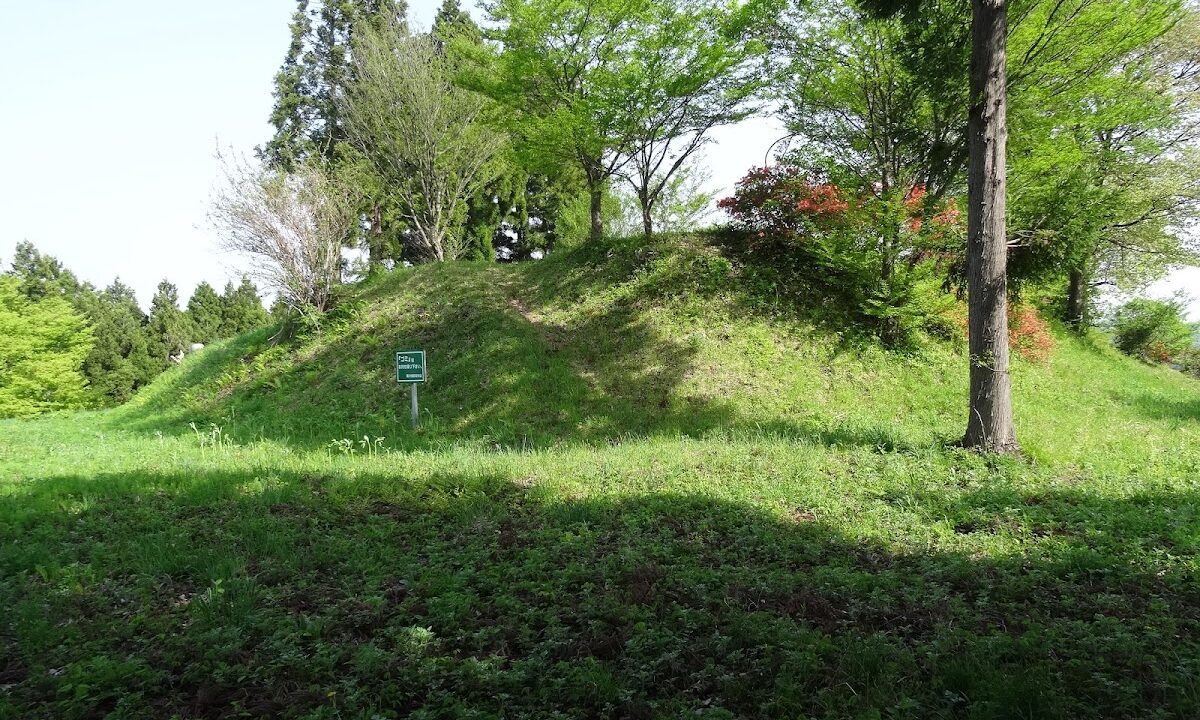
Complete Guide to Dokusawa Castle (Hanamaki City, Iwate Prefecture): The History of the Waga Clan’s Senior Retainer and Princess Katsume
Dokusawa Castle, located in Dokusawa, Towa-cho, Hanamaki City, Iwate Prefecture, is an important mountain castle that supported the sphere of influence of the Waga clan in Mutsu Province during the medieval period. Also known as “Dokusawa-kan,” this castle, built on land 240 meters above sea level with a relative height of 80 meters, still retains well-preserved remains such as baileys and moats, and is designated as a historical site by Hanamaki City. This article provides a detailed explanation of Dokusawa Castle, from its historical background and layout to its highlights and access methods.
History and Construction Background of Dokusawa Castle
Relationship between the Waga and Dokusawa Clans
The Dokusawa clan, who are said to have built Dokusawa Castle, were a family known as senior retainers of the Waga clan. According to the “Genealogy of the Minamoto-Waga Family,” the Dokusawa clan is said to have originated from Moriyoshi, the third son of Masayoshi, the 18th head of the Waga clan. The Waga clan was a powerful local lord that ruled the Waga district in the south-central part of Iwate Prefecture from the late Heian period to the Sengoku period, and the Dokusawa clan functioned as an important family supporting their system of rule.
The Dokusawa clan later came to be known as the Tadano clan, and it is thought that they held a particularly important position among the Waga clan’s retainers. Dokusawa Castle is presumed to have functioned as a defensive base in the southeastern part of Waga district and as the center of governance within the territory.
Construction Period and Medieval Characteristics
The exact construction date of Dokusawa Castle is unclear, but based on the characteristics of the remains and the style of its layout, it is thought to have been built in the medieval period, particularly around the 14th to 15th centuries. This period was a time of turmoil from the Nanboku-cho period to the Muromachi period, and samurai groups expanded their power throughout the Tohoku region, developing castles and fortifications as defensive structures.
Dokusawa, Towa-cho, where Dokusawa Castle is located, is close to the Sarugaishi River basin, a tributary of the Kitakami River, and was also a strategically important transportation hub. The fact that it was developed as a flatland castle with the main citadel at the mountaintop indicates that its function as a defensive base in times of emergency was emphasized. On the other hand, it is presumed that a residence was located at the foot of the mountain during peacetime, showing the typical lifestyle of medieval samurai who used both mountain castles and flatland residences.
The Sengoku Period and the Downfall of the Waga Clan
With the arrival of the Sengoku period, the Waga clan repeatedly clashed with the Nanbu clan. After Toyotomi Hideyoshi’s siege of Odawara in 1590, the Waga clan’s territory was temporarily secured by the pacification of Oshu, but they lost power in the ensuing turmoil.
In the “Iwasaki Rebellion” (Waga-Hienuki Rebellion) that occurred around the time of the Battle of Sekigahara in 1600, former retainers of the Waga clan rose up against the Nanbu clan. It is not clear what role the Dokusawa clan played in this turmoil, but it is thought that Dokusawa Castle disappeared from the historical stage along with the collapse of the Waga clan’s sphere of influence. ### Relationship with the Legend of Katsujohime
An interesting legend associated with Dokusawa Castle sometimes points to a connection with Katsujohime, a concubine of Date Masamune. Katsujohime is said to have been from Waga County, and some researchers speculate on a connection to the Dokusawa clan, but there is currently no definitive historical evidence to support this.
However, this legend is intriguing as it suggests that Dokusawa Castle may not have been merely a military base, but rather a residence of a powerful local figure, possessing a certain level of cultural standing.
Layout and Structure of Dokusawa Castle
Characteristics of the Concentric Terraced Fortifications
The most distinctive feature of Dokusawa Castle is its layout, known as the “concentric terraced fortifications.” This system, centered around the main enclosure, arranges terraced baileys around it, cleverly utilizing the mountainous terrain for defense.
The main enclosure is located on the mountaintop at an altitude of approximately 240 meters, and multiple baileys are arranged along the ridges extending north and east from there. Each enclosure is demarcated by earthworks and trenches, creating a structure that allows for the gradual prevention of enemy incursions.
Main Enclosure and Surrounding Enclosures
The main enclosure is the central part of the castle and is thought to have housed the lord’s residence and command post. A clear flat area remains today, and traces of earthworks can be seen around it. The main enclosure is relatively compact, which is typical for mountain castles.
A belt-shaped enclosure is positioned around the main enclosure, forming a defensive line. These belt-shaped enclosures are long, narrow enclosures surrounding the main enclosure, functioning as spaces for monitoring approaching enemies and launching attacks with arrows and stones.
Trenches and Defensive Structures
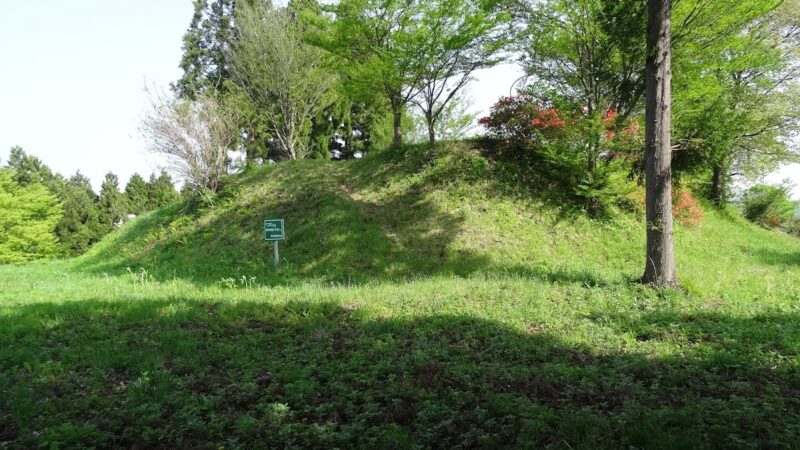
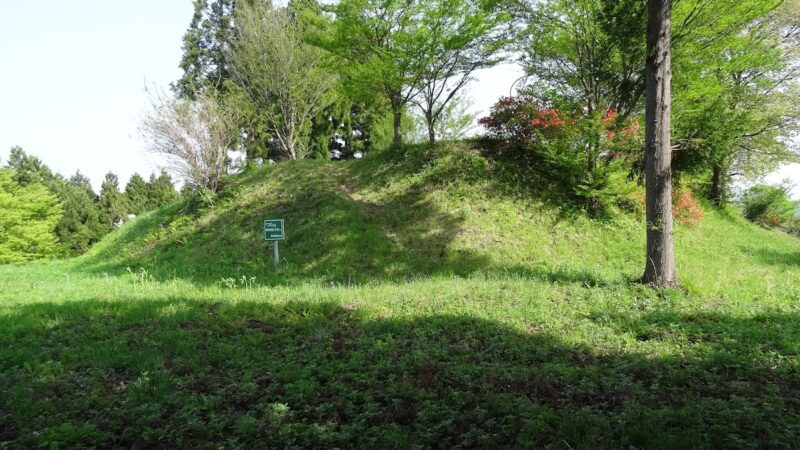
Multiple trenches have been identified at Dokusawa Castle. These are important defensive structures that cut off the ridgeline to prevent enemy incursions. The trenches were dug deep into the mountain slopes and remain clearly visible as geographical features.
The large scale of the moat separating the main enclosure and the second enclosure demonstrates its importance in the castle’s defense. These moats served to slow the advancing army and give the defenders time to maneuver.
Earthworks and Cut Slopes
Earthworks were constructed around the perimeter of each enclosure, enhancing its defensive capabilities. These earthworks, artificially created by piling up earth, protected against enemy arrows and thrown stones, and also functioned as lookout posts and attacking positions.
Furthermore, steep slopes called “kirigishi” (cut slopes) were constructed along the edges of the enclosures. These were created by further excavating natural slopes to make them steeper, effectively making ascent difficult for the enemy. The cut slopes of Dokusawa Castle remain clearly visible today, making them valuable historical remains that demonstrate the technological level of medieval castle construction.
Highlights and Remains of Dokusawa Castle
Entrance and Information Board
The ascent to Dokusawa Castle begins at the entrance located along Prefectural Road 284 (Kitakami-Towa Line). There is parking available near the entrance, making it accessible by car. An information board, installed by the Hanamaki City Board of Education, provides detailed information on the history and layout of Dokusawa Castle.
This information board includes information on the Dokusawa clan’s lineage, the castle’s structure, and historical background. Reading it before your ascent will deepen your understanding of the castle. The information board is regularly updated, demonstrating consideration for visitors.
Ascent Route and Site Conditions
The ascent route from the entrance to the main enclosure is a mountain path climbing approximately 80 meters in elevation. The path is maintained in a near-natural state, allowing you to experience the atmosphere of a medieval mountain castle. However, some areas have unstable footing, so wearing appropriate hiking boots is recommended.
Along the path to the castle, you can observe the elevation changes of the baileys and the traces of earthworks. Crossing the moats, in particular, allows you to appreciate their depth and scale, and you’ll be amazed by the high level of medieval castle construction technology.
View from the Main Bailey
Upon reaching the main bailey, you can enjoy a panoramic view of the surrounding landscape. The mountain ranges of the Kitakami Highlands and the plains of the Sarugaishi River basin spread out below, giving you a real sense of Dokusawa Castle’s strategic location for monitoring a vital transportation hub.
On clear days, you can even see the distant mountains of the Kitakami Mountains, and it’s easy to imagine that the castle lords of the Sengoku period also gazed upon this view while observing developments within their territory.
Preservation of the Remains
The remains of Dokusawa Castle are relatively well-preserved compared to other medieval castles in Iwate Prefecture. In particular, the shapes of the baileys, the elevation of the earthworks, and the depth of the moats are clearly visible, making it easy to grasp the overall layout of the castle.
In recent years, local preservation societies and the board of education have been carrying out maintenance activities, including the installation of information boards and the maintenance of the approach to the castle. However, excessive development has been avoided, and the care taken to preserve the original appearance of the remains is commendable.
Access and Visiting Guide
Location and Basic Information
Location: Dokusawa, Towa-cho, Hanamaki City, Iwate Prefecture (Nakauchi 9th District)
Classification: Hilltop Castle (Mountain Castle)
Builder: Dokusawa Clan
Main Lords: Dokusawa Clan (Tadano Clan)
Remains: Enclosures, outer enclosures, earthworks, moats
Designation: Hanamaki City Designated Historic Site
Elevation: Approximately 240 meters
Relative Height: Approximately 80 meters
Access by Car
Dokusawa Castle is easily accessible by car. From the Hanamaki-Minami Interchange on the Tohoku Expressway, take National Route 456 and then turn onto Prefectural Route 284 (Kitakami-Towa Line). The journey from Hanamaki-Minami Interchange takes approximately 30 minutes.
The entrance to the castle is located near the intersection of Prefectural Route 284 and National Route 456. Signposts are installed along the road, making it relatively easy to find. There are a few parking spaces in front of the entrance, but during busy times, consider the surrounding area when parking.
Access by Public Transportation
If using public transportation, the nearest station is Tsuchizawa Station on the JR Kamaishi Line. The distance from Tsuchizawa Station to Dokusawa Castle is approximately 3 kilometers, taking about 40 minutes on foot. Since bus services are limited, consider taking a taxi.
Estimated Visiting Time and Points to Note
The estimated visiting time for Dokusawa Castle, including a round trip from the entrance to the main enclosure and a thorough observation of the remains, is approximately 1 to 1.5 hours. Taking photographs and comparing them with a map may require additional time.
Please note the following points when visiting:
- Clothing: As it is a mountain castle, appropriate hiking boots and comfortable clothing are essential.
- Season: Spring to autumn is the best time to visit, but insect repellent is necessary during the summer.
- Weather: It is best to avoid visiting in rainy weather as the ground can become slippery.
- Equipment: Bringing drinking water, a map, and a camera is recommended.
- Time: It is important to plan with ample time to descend before sunset.
Nearby Historical Spots and Tourist Information
History and Culture of Towa Town
Towa Town in Hanamaki City, where Dokusawa Castle is located, was once a thriving area as part of Waga District. Historical sites from the medieval to early modern periods are scattered throughout the surrounding area, and visiting them along with Dokusawa Castle will allow you to gain a deeper understanding of the region’s history.
Towa Town boasts a wealth of unique local cultural resources, including the Tannaiyama Shrine and Narushima Washi paper. Narushima Washi, in particular, is a traditional craft with a history of over 1000 years, and its techniques are still being passed down today.
Nearby Castles
When visiting Dokusawa Castle, exploring the surrounding castles will provide a more comprehensive understanding of the Waga clan’s sphere of influence and the castle culture of medieval Iwate.
Terabayashi Castle: A medieval castle located within Towa Town, like Dokusawa Castle, and known for its connection to the Waga clan. It’s about a 15-minute drive from Dokusawa Castle, making a combined visit possible.
Futago Castle: One of the Waga clan’s strongholds in Kitakami City, with larger castle remains. An important castle site for understanding the history of the Waga clan.
Toriyagasaki Castle: A mountain castle near the city center of Hanamaki, known as the residence of the Hienuki clan. An interesting point of comparison as a castle of a regional power alongside the Waga clan. ### Tourism Resources of Hanamaki City
Hanamaki City is known as the hometown of Kenji Miyazawa, and boasts numerous facilities related to him, such as the “Kenji Miyazawa Memorial Museum” and the “Kenji Miyazawa Fairy Tale Village.” Furthermore, Hanamaki Onsenkyo is one of Tohoku’s leading hot spring resorts, allowing visitors to refresh themselves in the hot springs after touring the castles.
Historical Value and Future Preservation of Dokusawa Castle
Academic Value
Dokusawa Castle holds significant academic value as a castle of a regional lord in the Tohoku region during the medieval period. Its distinctive concentric, terraced layout is a valuable example of the development process of medieval castles, and further research is expected to yield additional insights.
In particular, Dokusawa Castle is indispensable for understanding the governing system of the local lord, the Waga clan, and the arrangement of their vassals’ castles. If archaeological excavations are conducted in earnest, a more detailed historical picture may be revealed based on the construction period and artifacts used.
Utilization as a Local Resource
Dokusawa Castle is a valuable historical resource of Hanamaki City and a key element in shaping the region’s cultural identity. In recent years, interest in castle tourism has been growing nationwide, and Dokusawa Castle, through proper maintenance and information dissemination, has the potential to contribute to regional development.
Continuous preservation activities by local preservation societies and the board of education, including the installation of information boards and maintenance of viewing paths, are underway, and sustainable utilization is expected in the future.
Preservation Challenges
On the other hand, there are challenges in preserving Dokusawa Castle. Due to its nature as a mountain castle, there are concerns about the deterioration of the remains due to overgrown trees and soil erosion. Furthermore, the impact on the remains due to foot traffic from an increase in visitors must also be considered.
Developing an appropriate preservation and management plan and continuing preservation activities in collaboration with local residents and castle enthusiasts are essential for passing on Dokusawa Castle to future generations.
Summary: The Charm and Significance of Visiting Dokusawa Castle
Dokusawa Castle, located in Dokusawa, Towa-cho, Hanamaki City, Iwate Prefecture, is a valuable historical site as a medieval hilltop castle built by the Dokusawa clan, important retainers of the Waga clan. Its concentric, terraced layout and clearly preserved remains such as baileys, earthworks, and moats beautifully convey the characteristics of a medieval castle, making it a worthwhile place to visit not only for castle enthusiasts but for anyone interested in history.
Visiting Dokusawa Castle allows for a multifaceted understanding of history, including the regional society and samurai life of medieval Tohoku, and the development of castle construction technology. Furthermore, the view from the main bailey offers a valuable opportunity to relive the scenery seen by the castle lords of the Sengoku period.
When visiting Hanamaki City, be sure to visit Dokusawa Castle along with places associated with Kenji Miyazawa and hot springs. You’ll be able to feel the romance of medieval history amidst the well-maintained remains and abundant nature. It is hoped that appropriate preservation and utilization will continue, and that it will be passed down as a beloved historical site to many people.